17 points
17 points
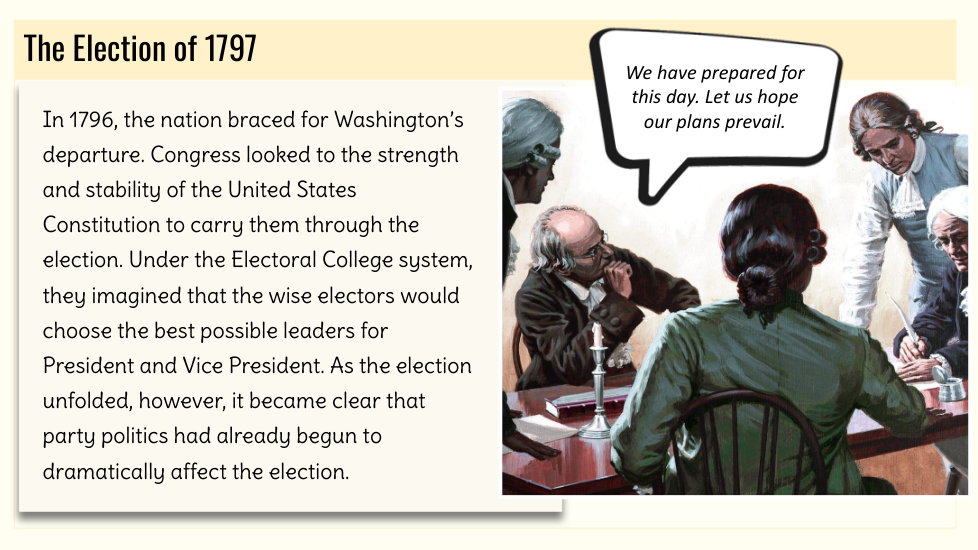
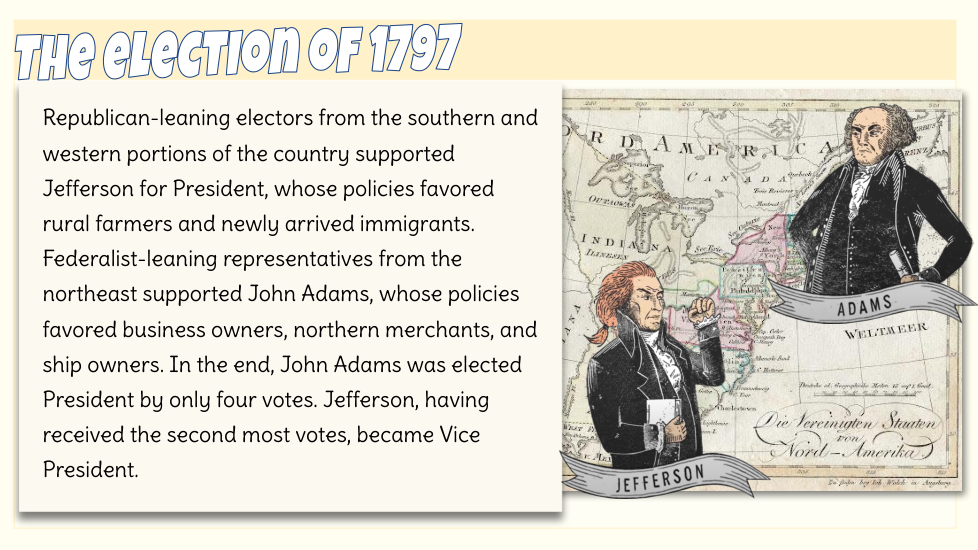
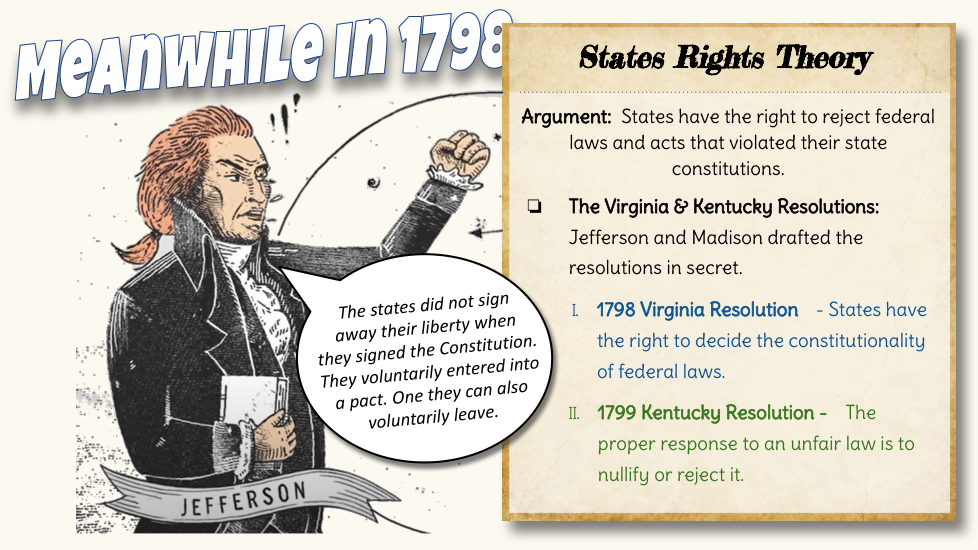
By 1796, how had the growth of political parties corrupted the process of electing the President and Vice President?
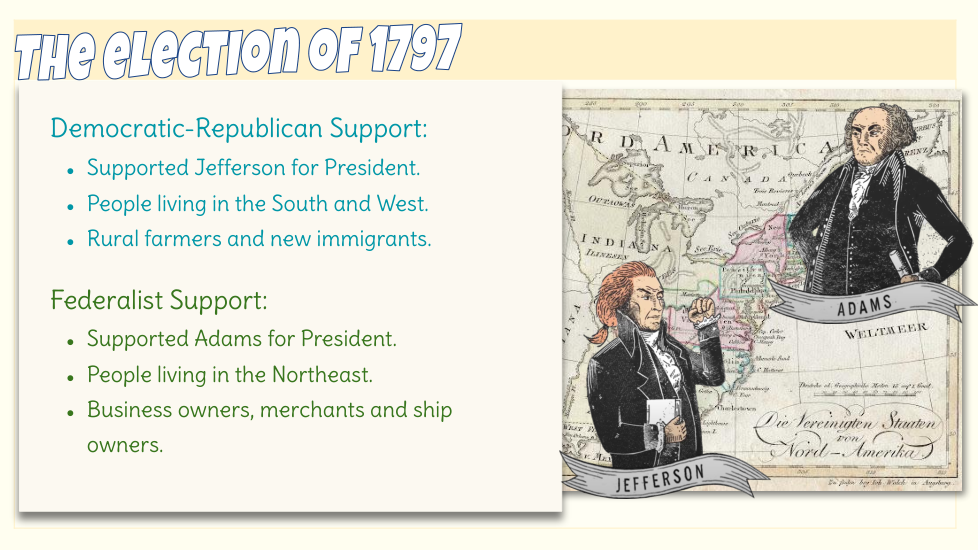
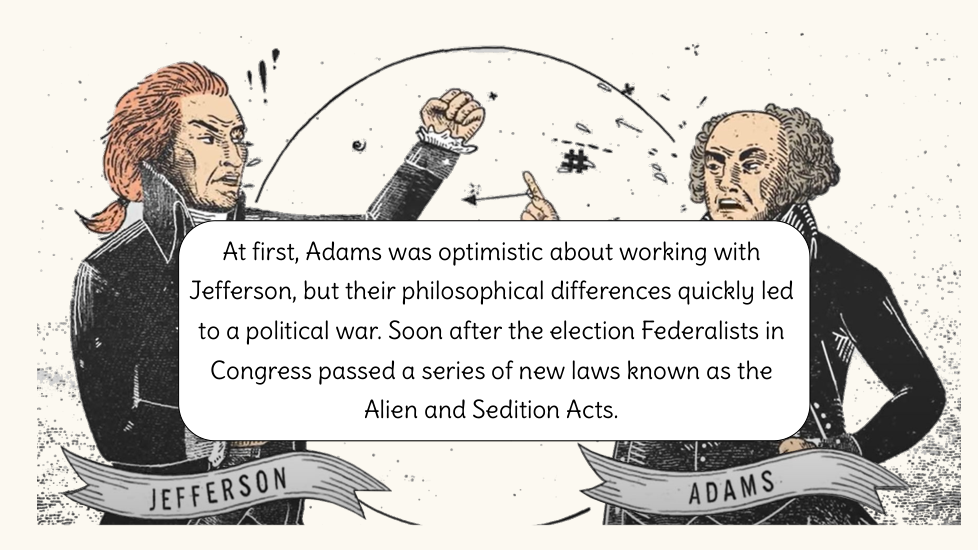
Consider the type of person in each description and decide whether they would likely have supported the Federalists or Jeffersonians.
| Draggable item | arrow_right_alt | Corresponding Item |
|---|---|---|
A small farmer in western Pennsylvania. | arrow_right_alt | Federalists |
A clothing manufacturer in New York. | arrow_right_alt | Jeffersonians |
The owner of a shipping companty in Boston. | arrow_right_alt | Jeffersonians |
A newly arrived immigrant from Ireland. | arrow_right_alt | Federalists |
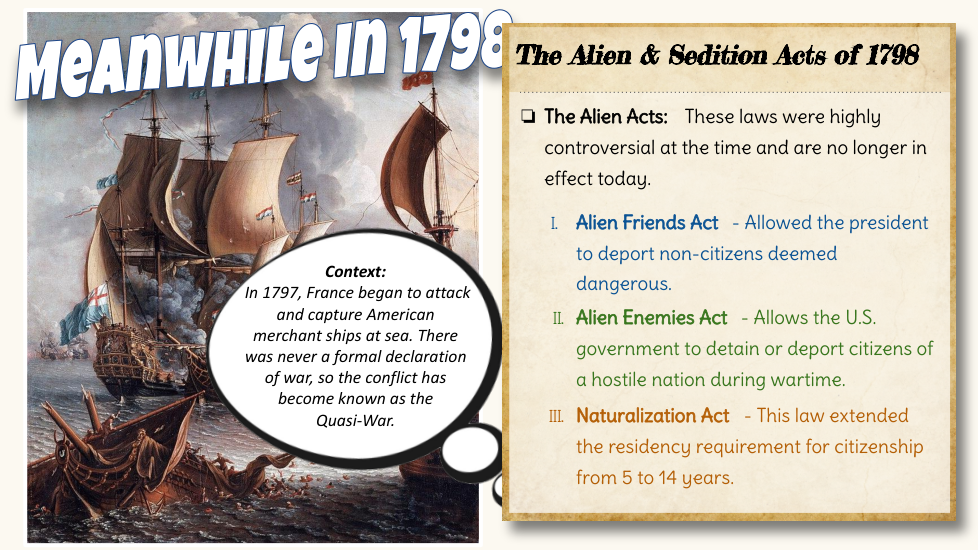
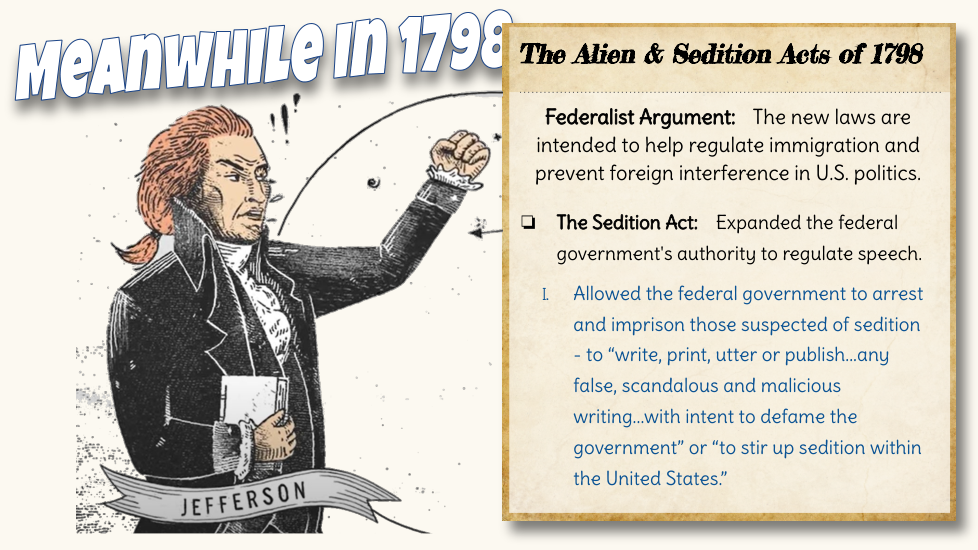
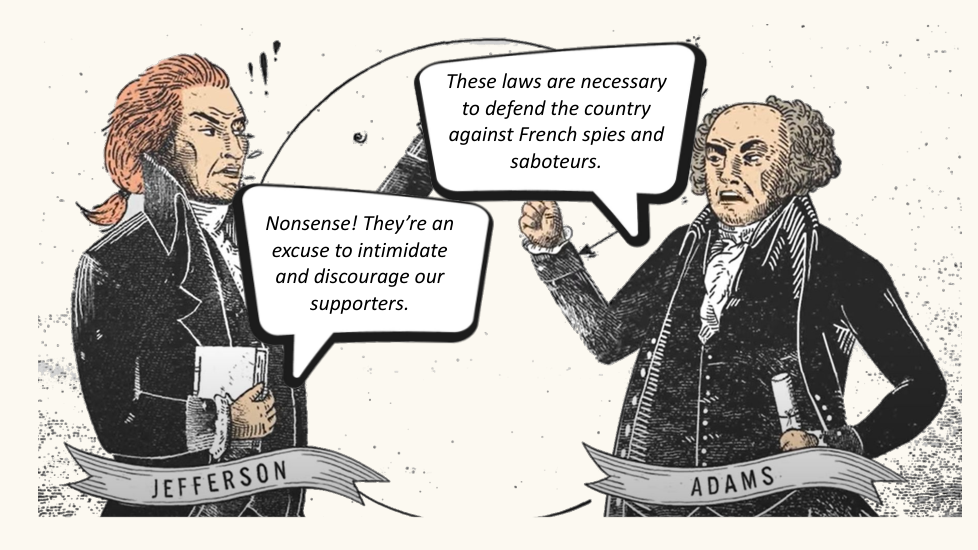
Move the provisions of the Alien and Sedicion Acts of 1798 into their respective laws.
Gave the President expanded power to deport non-citizens deemed to be a threat to the United States.
Gave the President expanded power to arrest and deport citizens of a foreign enemy in a time of war.
Extended the residency requirement for citizenship from 5 years to 14 years.
The Alien Friends Act
The Alien Enemies Act
The Naturalization Act
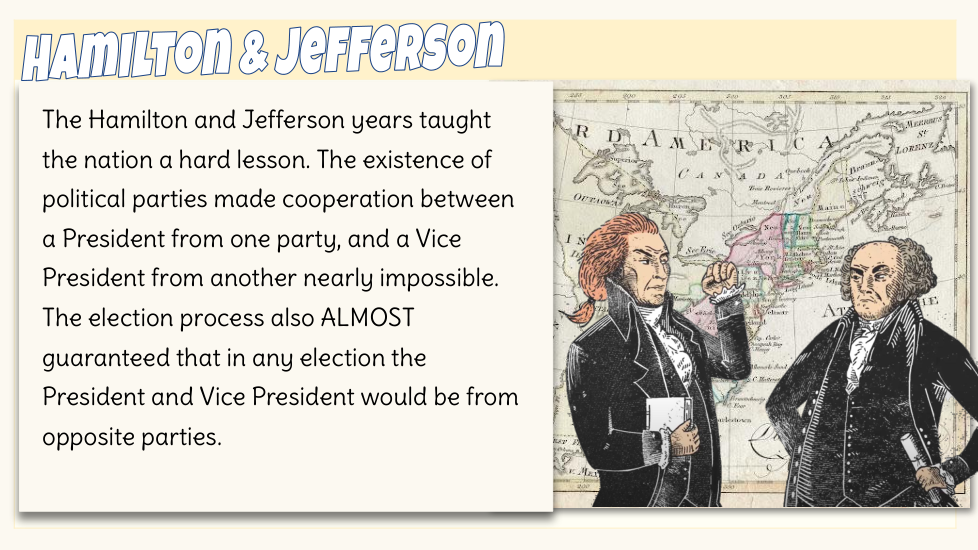
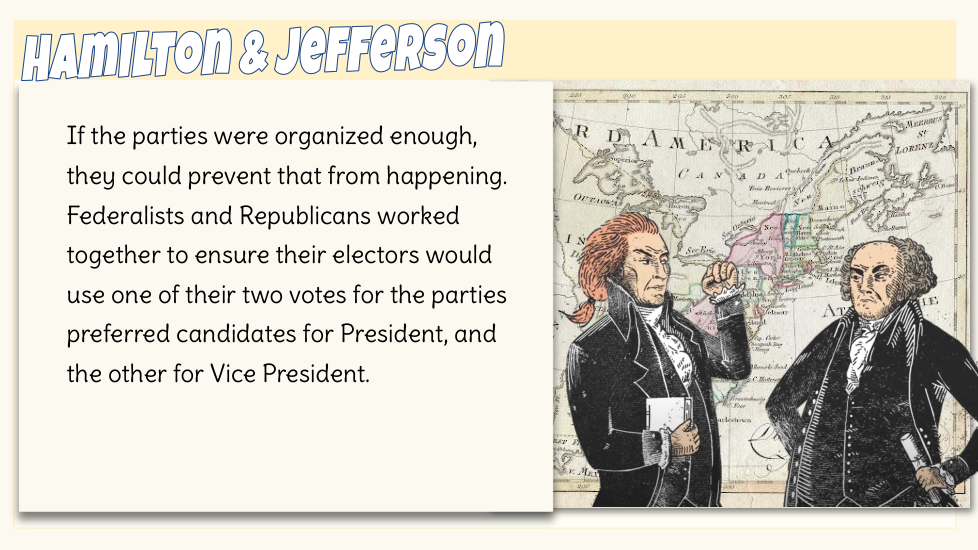
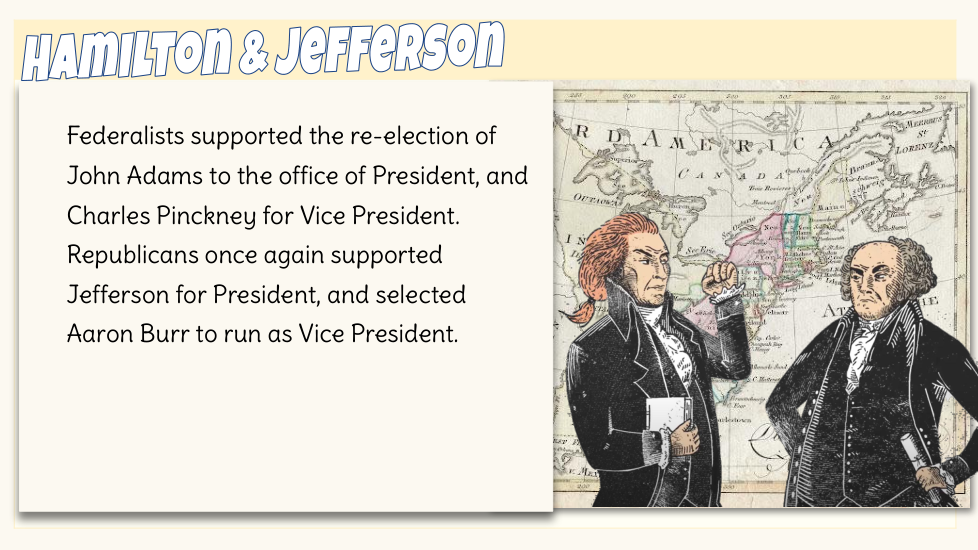
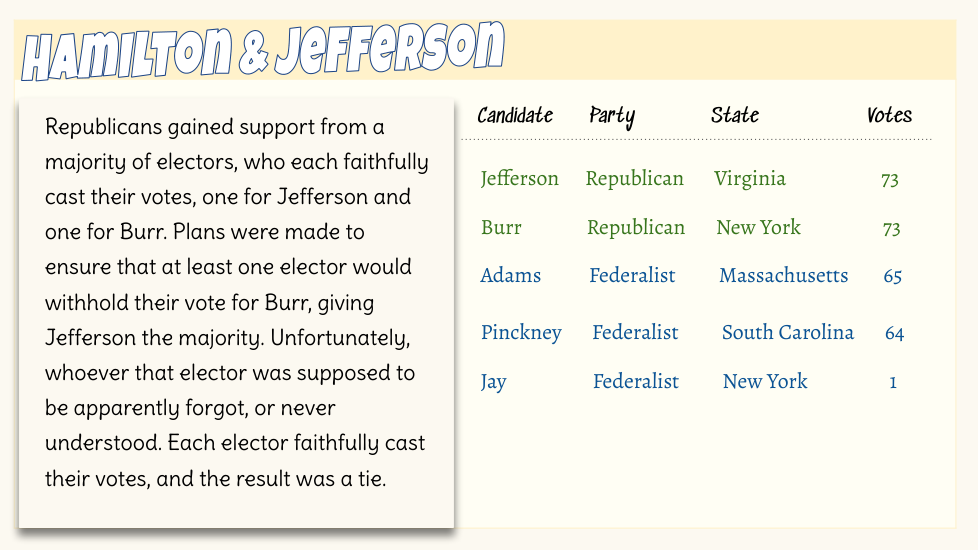
How could political parties organize to ensure the President and Vice President were selected from the same party?
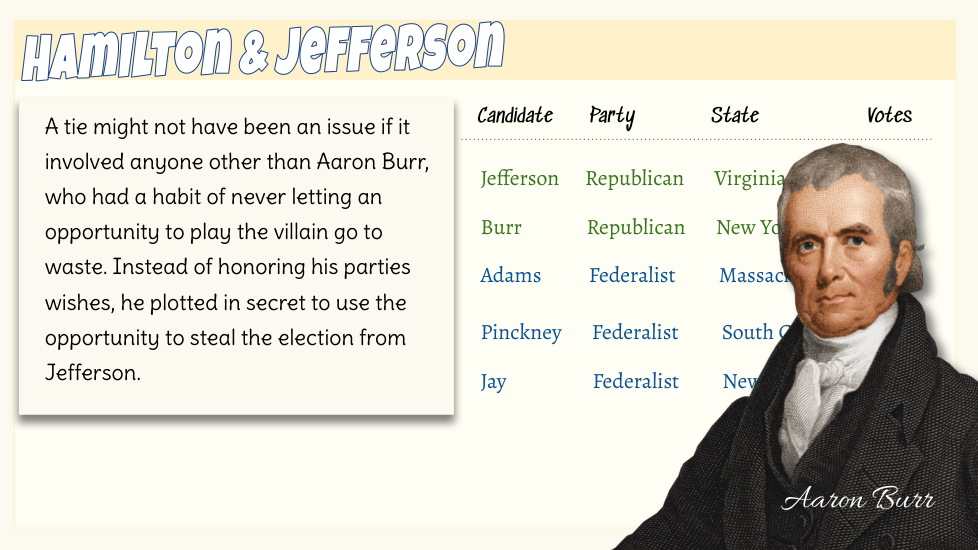
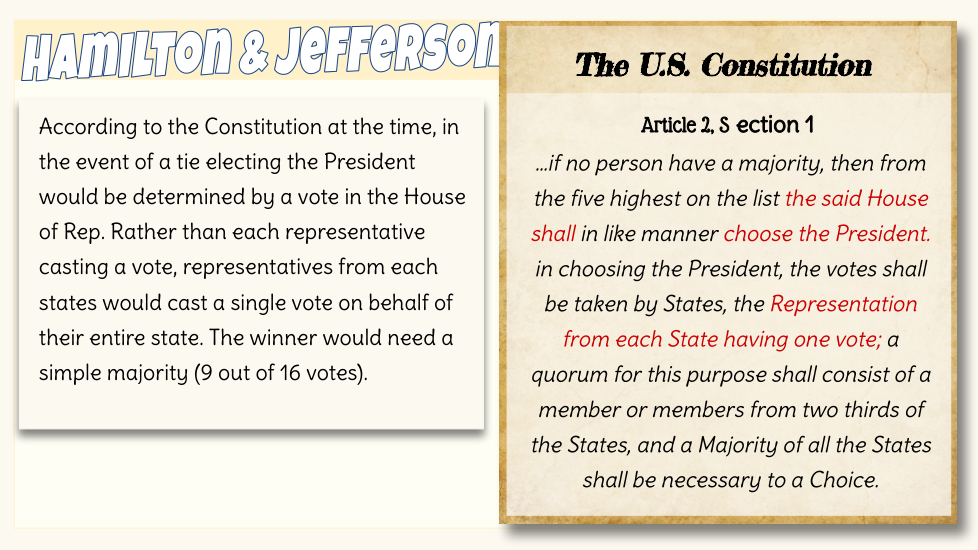
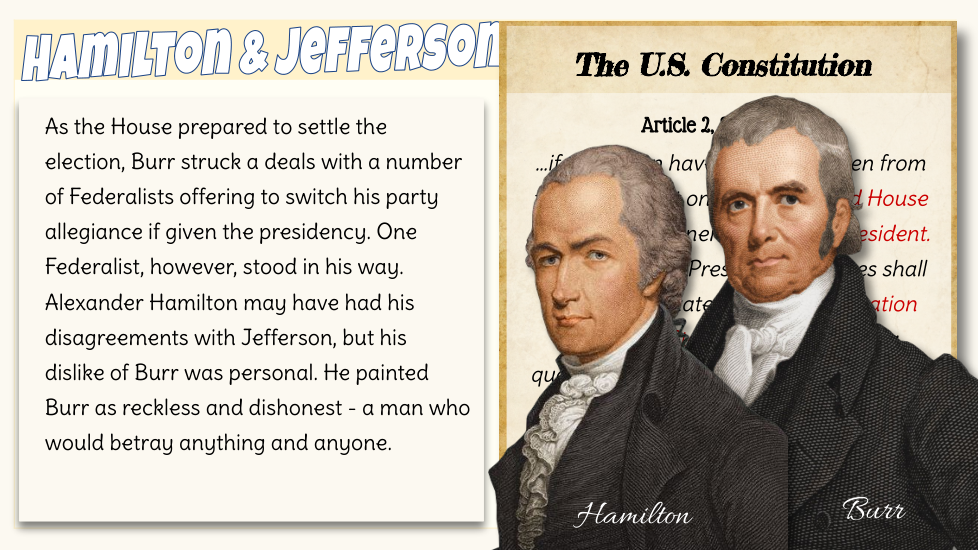
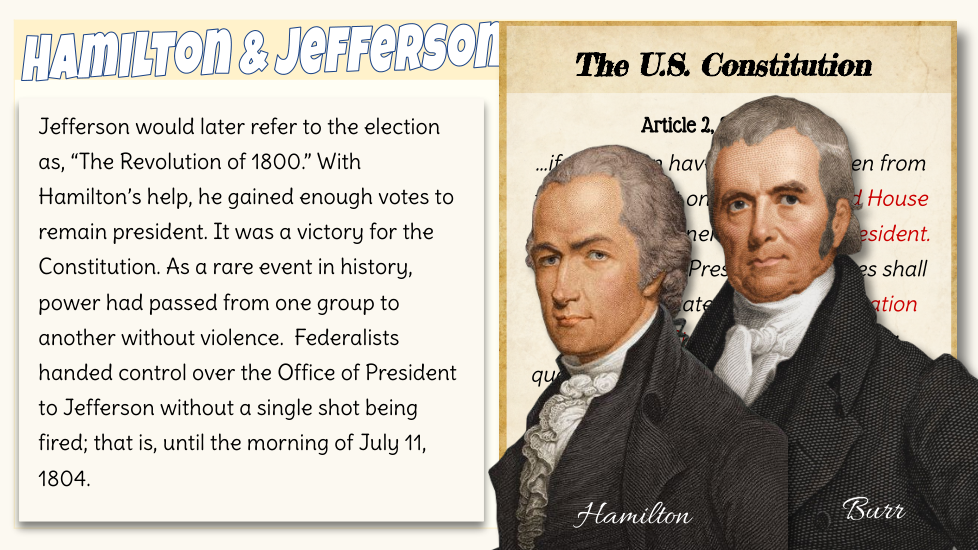
Alexander Hamilton's support for Jefferson ultimately contributed to the downfall of the Federalist Party, which Hamilton had originally helped to create. Do you think his actions were justified? Why/Why not?
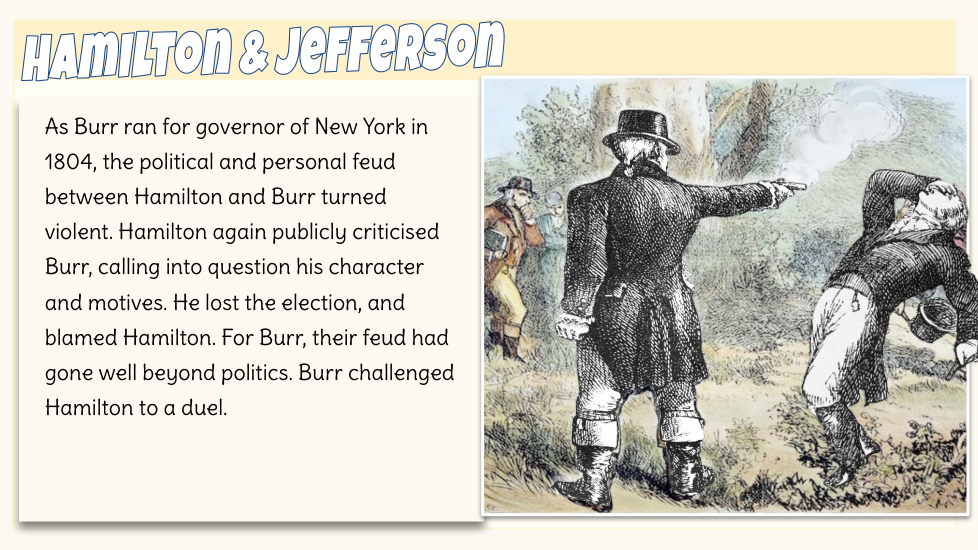
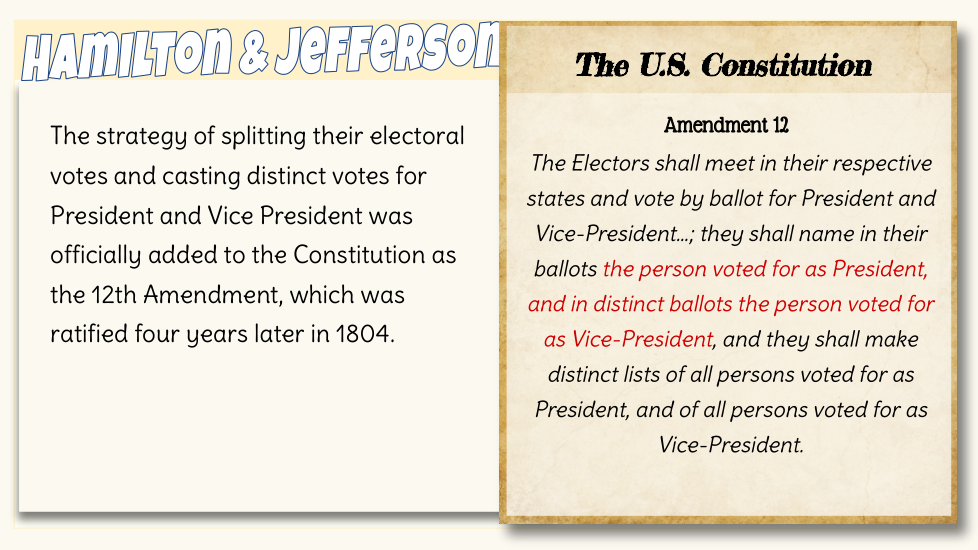
How had the process of electing the President changed by 1804? Name the amendment that was added, and explain what it required of electors.