Wtudents explore the key political events and challenges that shaped the early years of the United States under President George Washington. Topics include the formation of political parties, the debate over a national bank, the implementation of excise taxes, and the Whiskey Rebellion. Through an examination of Washington’s leadership and the competing visions of Thomas Jefferson and Alexander Hamilton, students will gain an understanding of how these events influenced the nation's political development.
Federalists believed in a
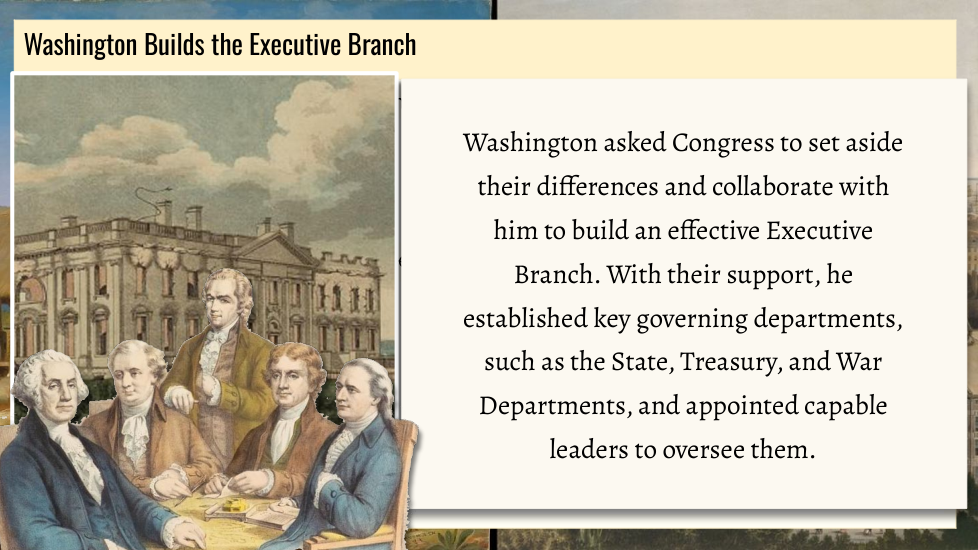
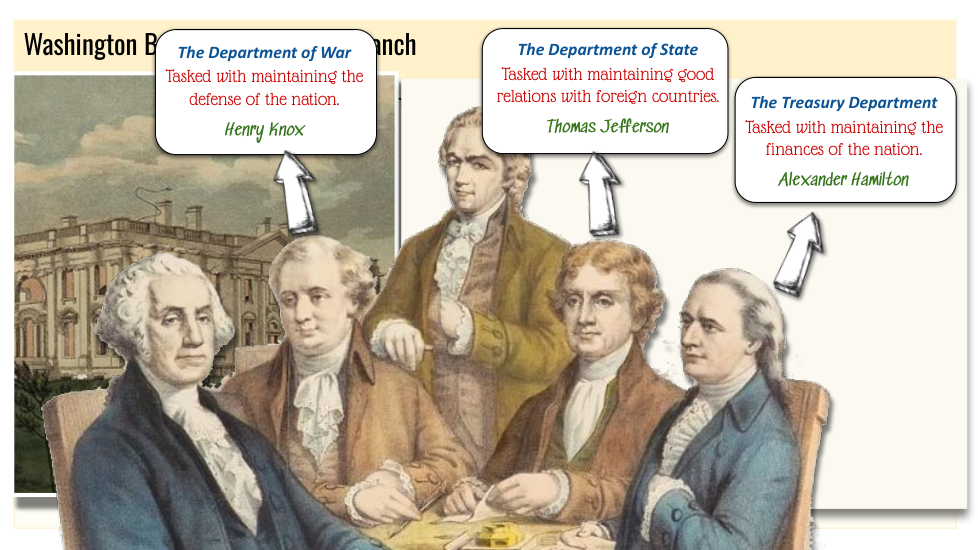
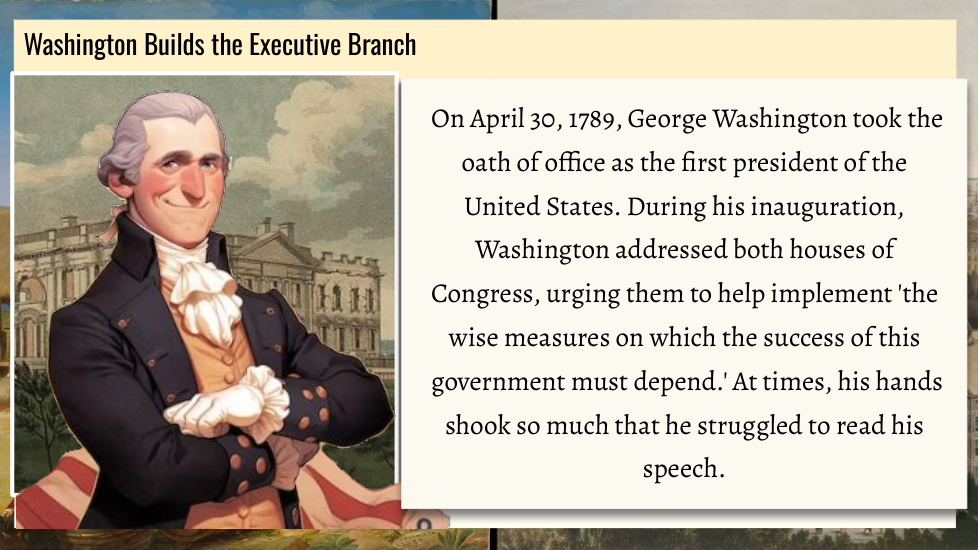
What did Washington ask of Congress in his inaugural address?
Drag the labels below into their proper category.
Tasked with maintaining good relations with foreign countries.
Tasked with maintaining the defense of the nation.
Tasked with maintaining the finances of the nation.
Alexander Hamilton
Thomas Jefferson
Henry Knox
The Department of War
Department of State
Department of Treasury
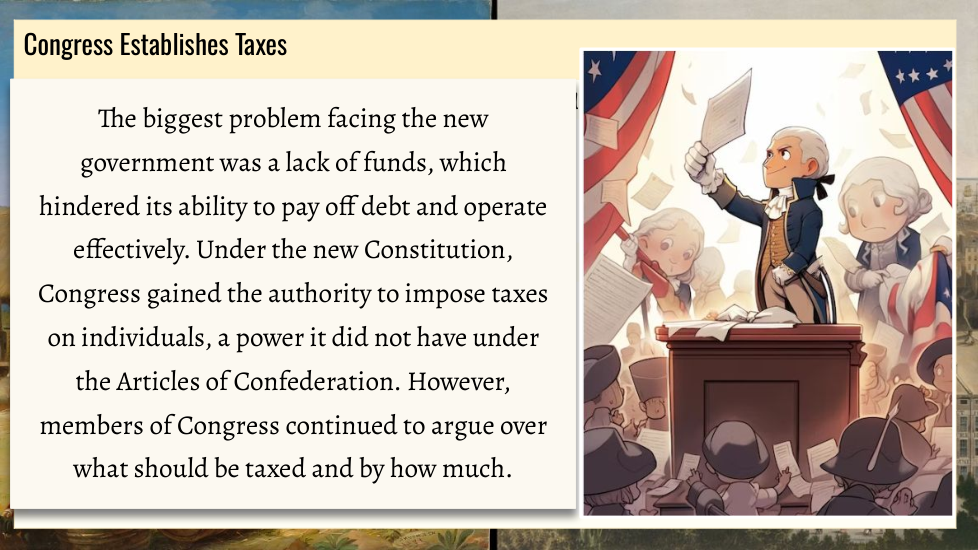
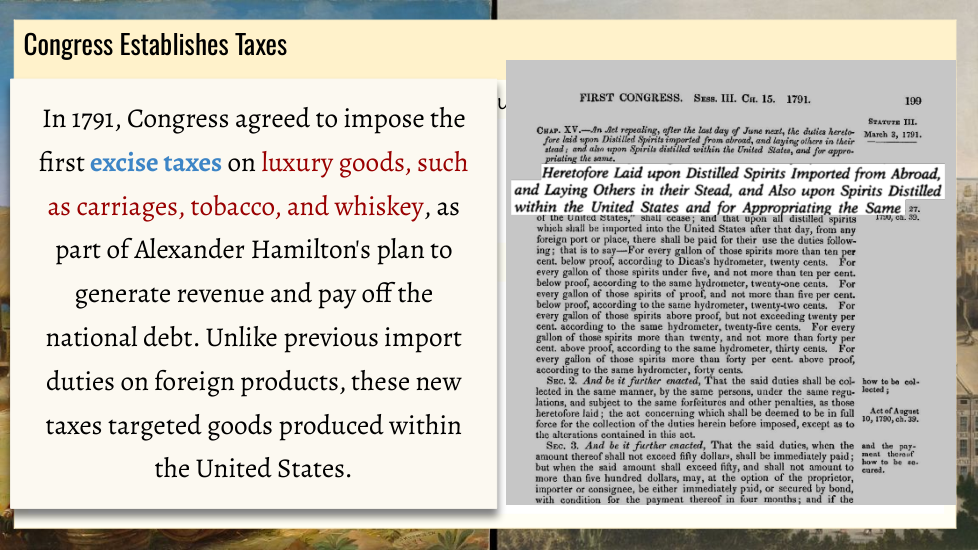
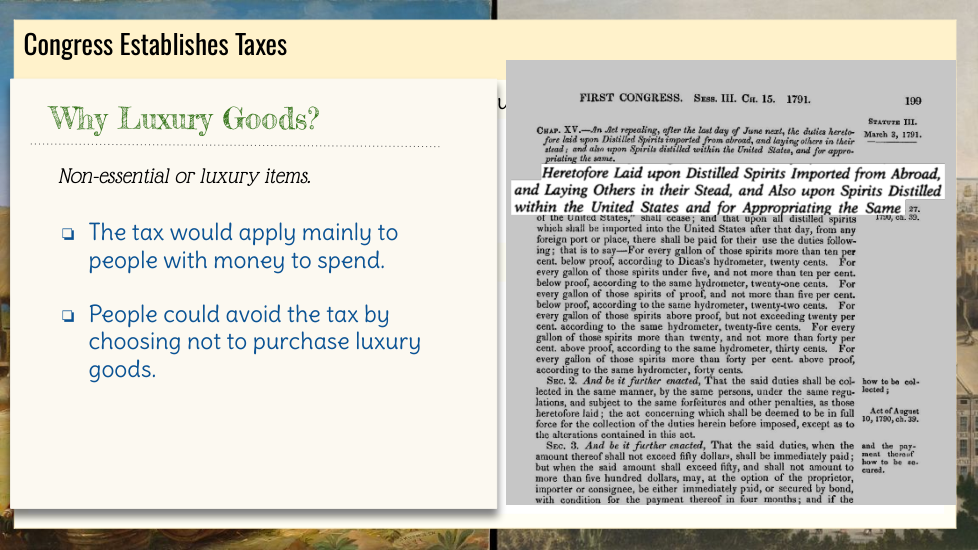
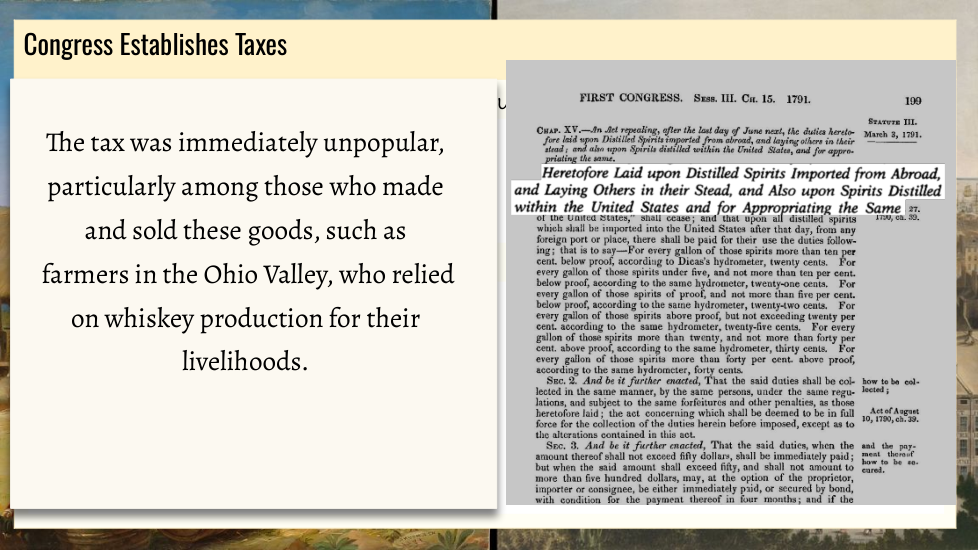
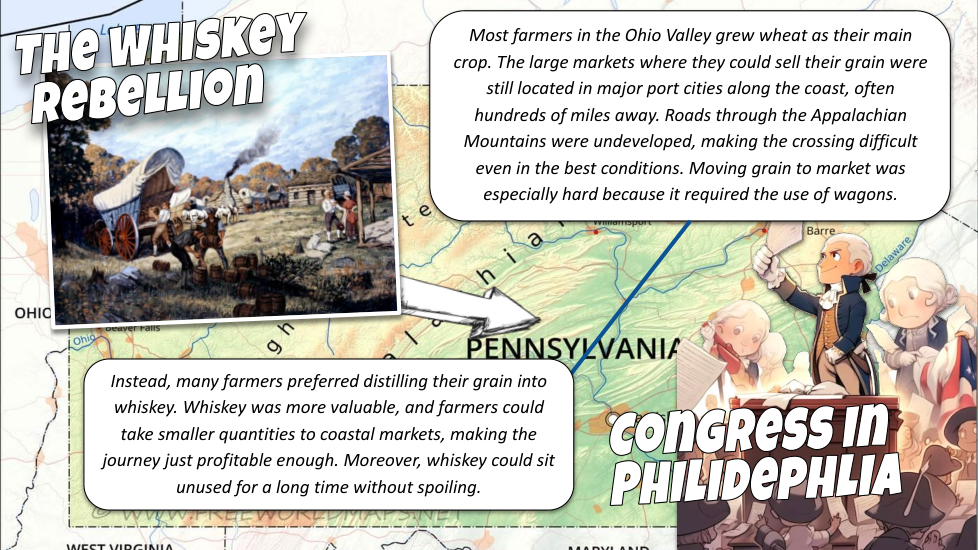
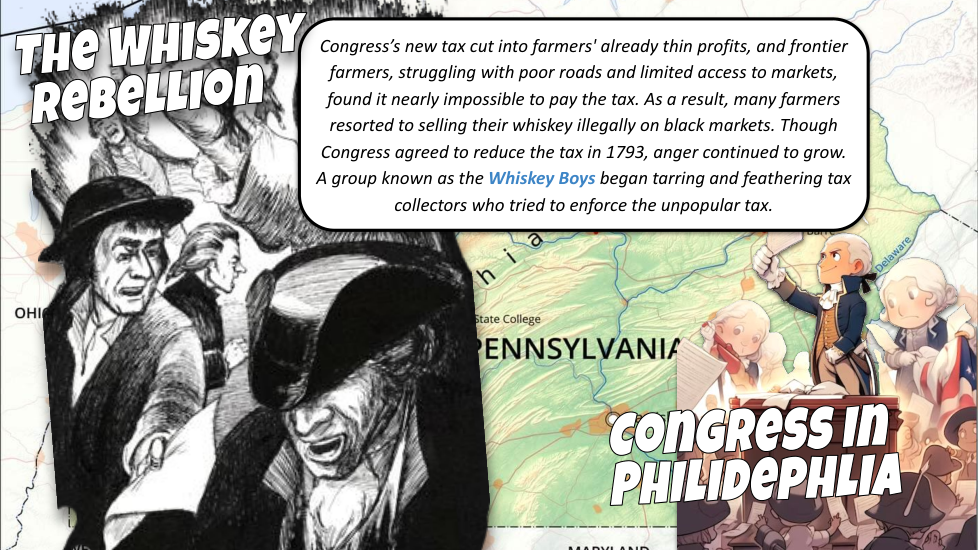
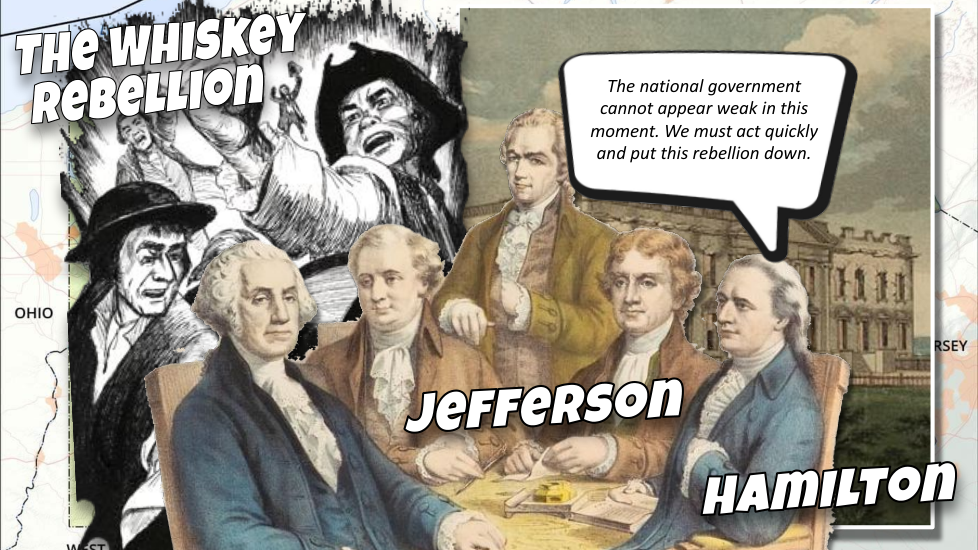
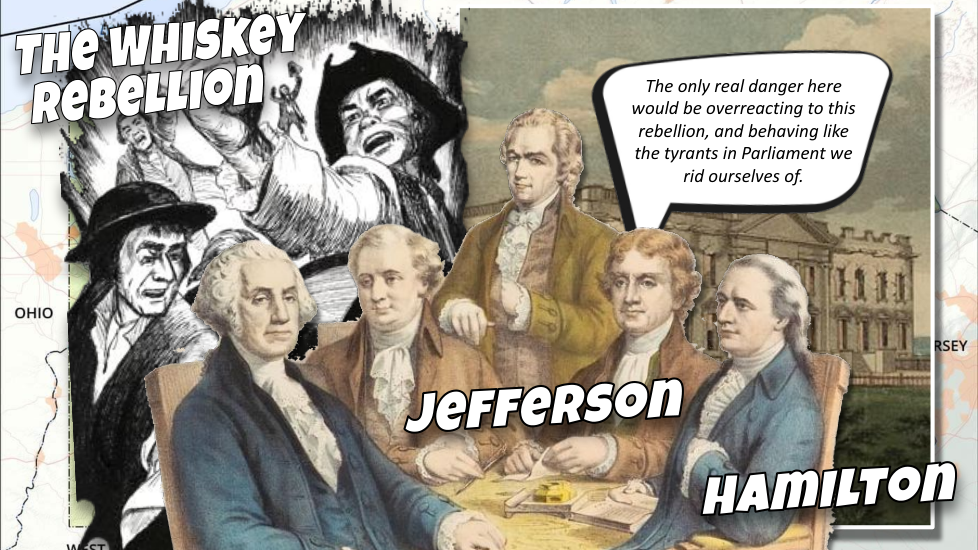
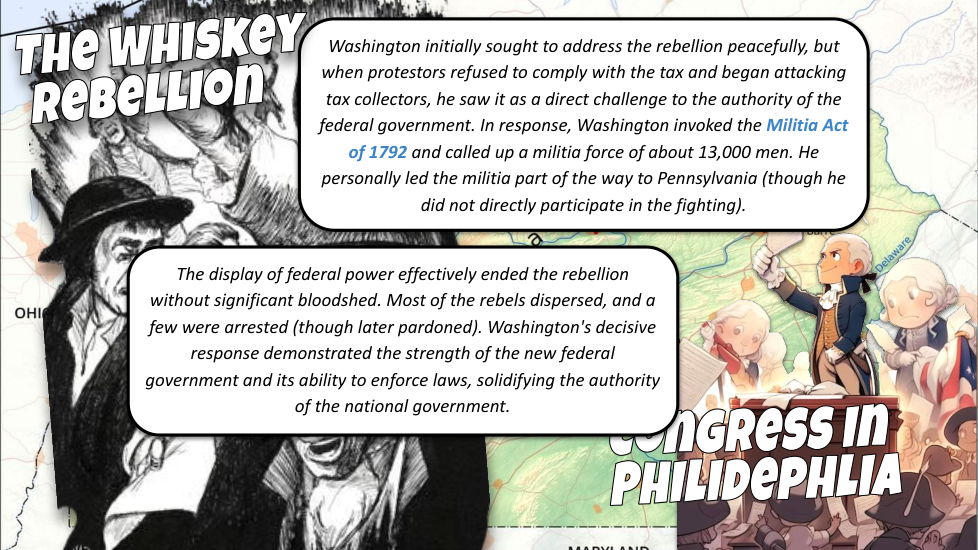
Which group was affected most by Congress' new excise taxes?
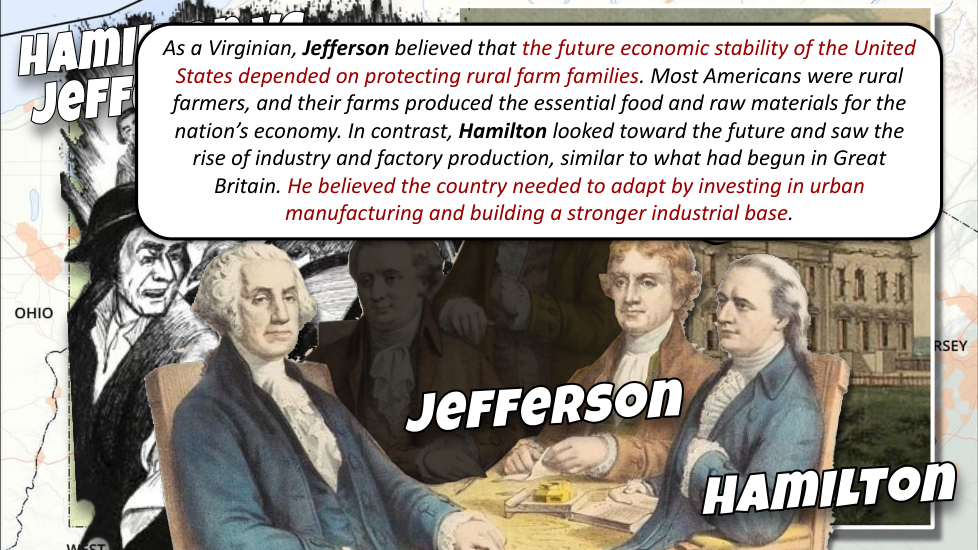
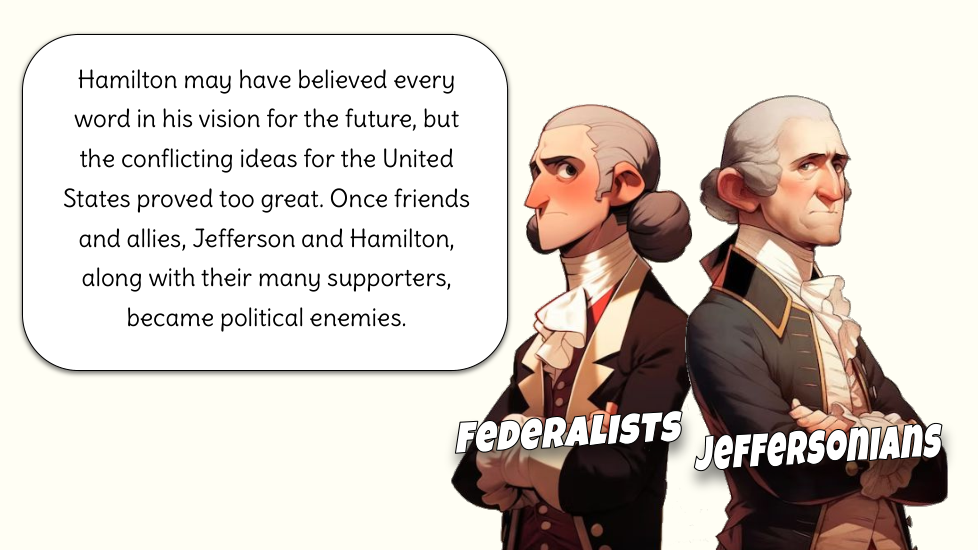
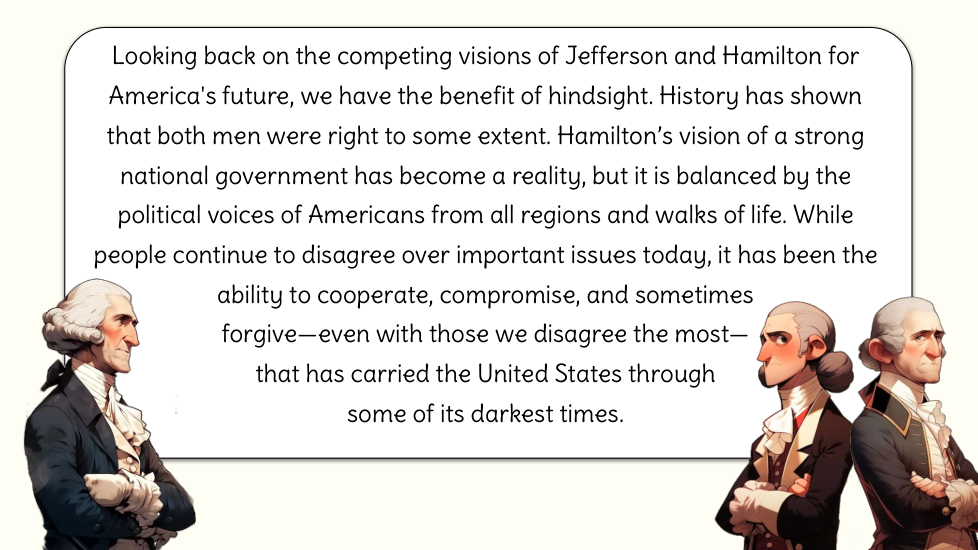
Drag the views to their respective founder.
The future economic stability of the United States depends on protecting rural farm families.
The country needs to adapt by investing in urban manufacturing and building a stronger industrial base.
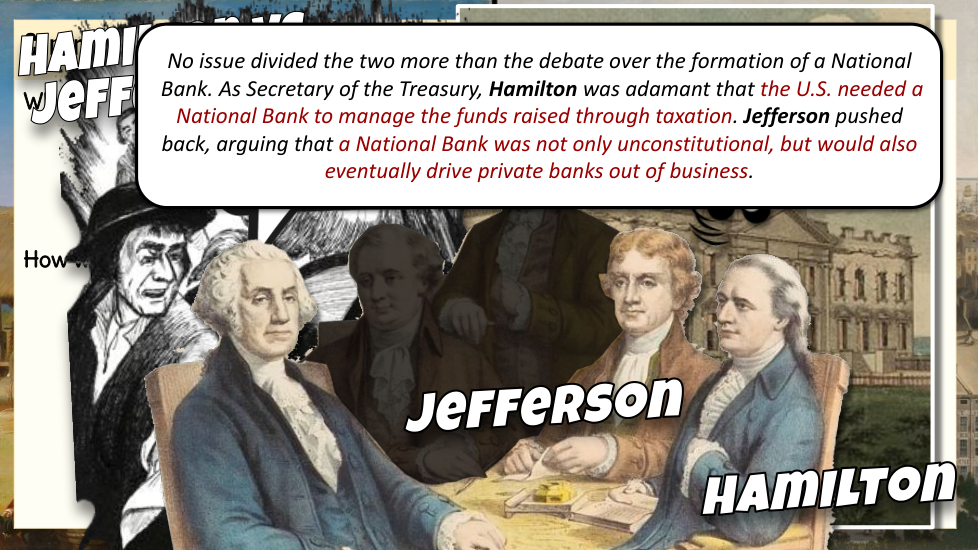
The U.S. needs a National Bank to manage money raised through taxation.
A National Bank is not only unconstitutional, it will also drive private banks out of business.
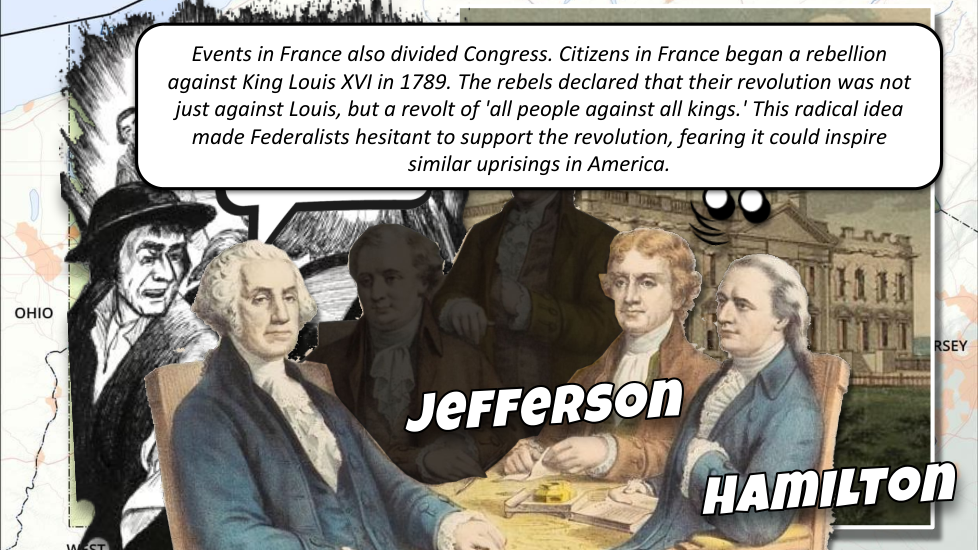
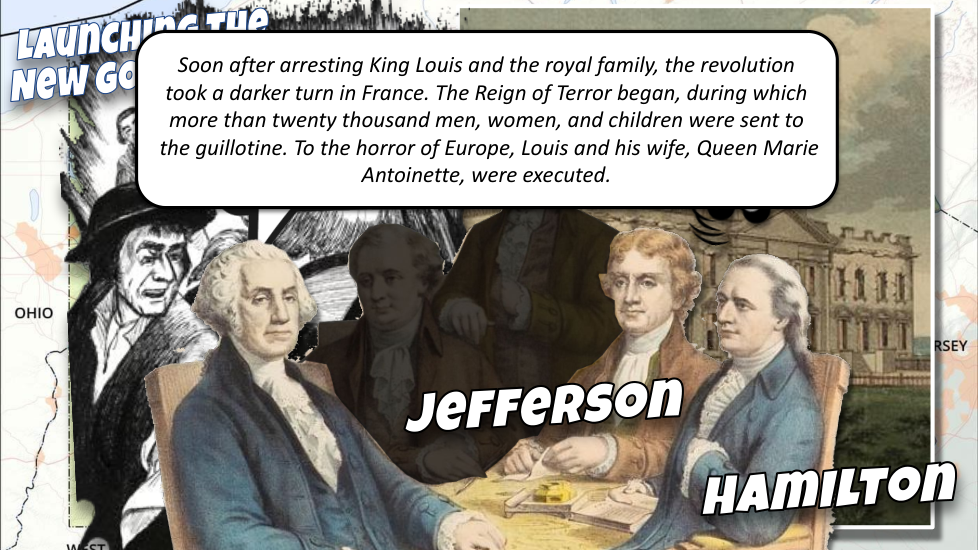
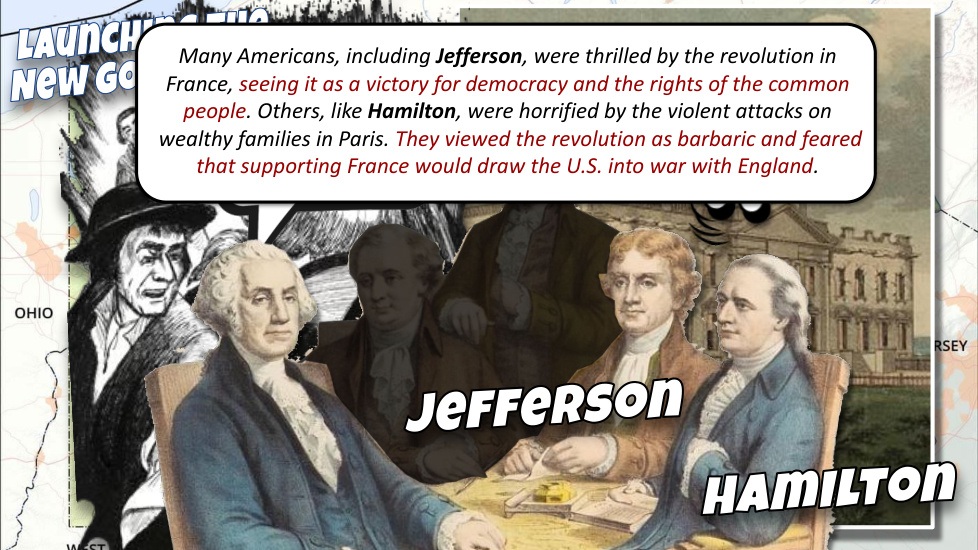
The revolutionary victory in France is a victory for democracy and the rights of the common people.
The revolution in France has become barbaric and supporting it will only draw the U.S. into war with England.
Hamilton
Jefferson
Choose one of the prompts below and write a response.
Prompt 1 - Consider the assertion made about the disagreements between Hamilton and Jefferson at the end of the lesson - "History has shown that both men were right to some extent. Hamilton’s vision of a strong national government has become a reality, but it is balanced by the political voices of Americans from all regions and walks of life."
Do you agree or disagree with the assertion? Why or why not?
Prompt 2 - While people continue to disagree over important issues today, it has been the ability to cooperate, compromise, and sometimes forgive—even with those we disagree the most—that has carried the United States throughsome of its darkest times.
Think of a historical event, social issue, or crisis that required Americans to cooperate, compromise, or forgive. Why was it important for Americans to cooperate, compromise, or forgive?