Earth is a planet that revolves around the Sun. It takes one year to complete one revolution. Earth is composed (made) of rock. It is much smaller than the Sun.
Because of liquid water and an atmosphere, Earth can support life. The sun provides energy and light for Earth. Earth’s gravity allows organisms, objects, and water to be pulled toward Earth.
Our Sun is 93,000,000 miles away from Earth. The sun’s diameter is 100 times the size of Earth’s diameter.
The Sun is composed of hot gases and plasma. Its atmosphere is also made of hot gases. The Sun produces light and heat for our solar system.
Because of the Sun’s strong gravitational pull, eight planets, as well as their moons and other natural satellites, orbit the Sun.
Our Moon revolves around Earth. It takes about 29 days for the Moon to make one complete revolution around Earth.
The Moon is composed of rock and has valleys, mountains, and craters. The Moon has no atmosphere, allowing objects in space to hit its surface and form craters. It is about 1⁄4 the size of Earth. Because the Moon has less mass than Earth, it also has less gravity. Earth has about 6 times as much gravity as the Moon.
1 point
1
Question 1
1.
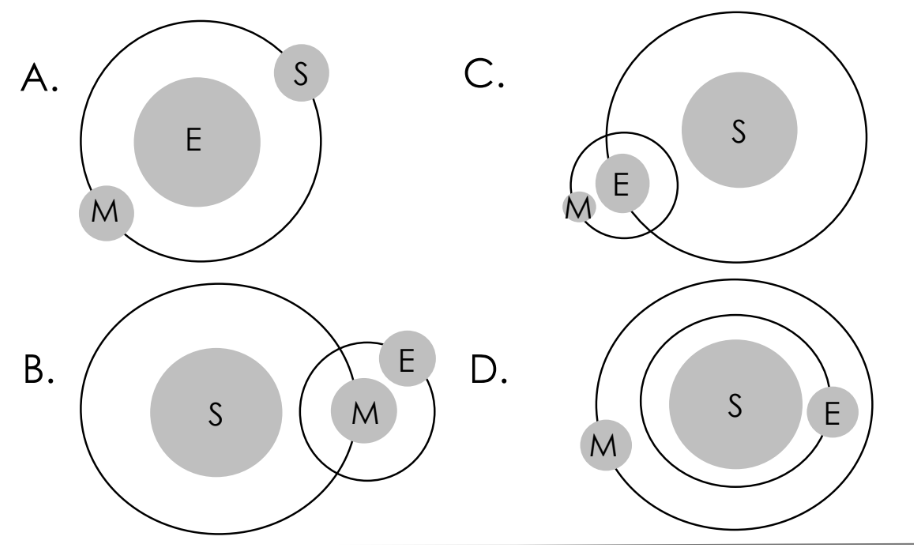
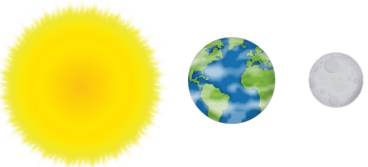
Which of the following correctly represents the arrangement of the Sun, Earth, and Moon system?
1 point
1
Question 2
2.
Which planet is located between Jupiter and Uranus?
1 point
1
Question 3
3.
Which phenomenon is caused by the tilt of Earth’s axis during planetary revolution and involves the changing of temperatures and daylight amounts during different parts of the year?
1 point
1
Question 4
4.
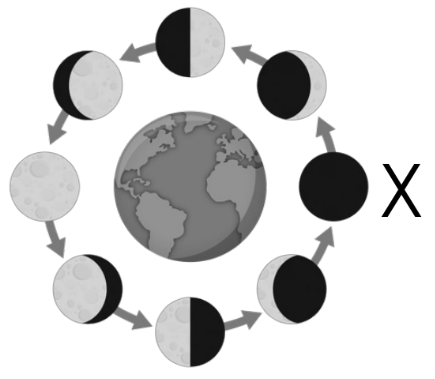
Which moon phase i indicated by the letter X in the diagram?
1 point
1
Question 5
5.
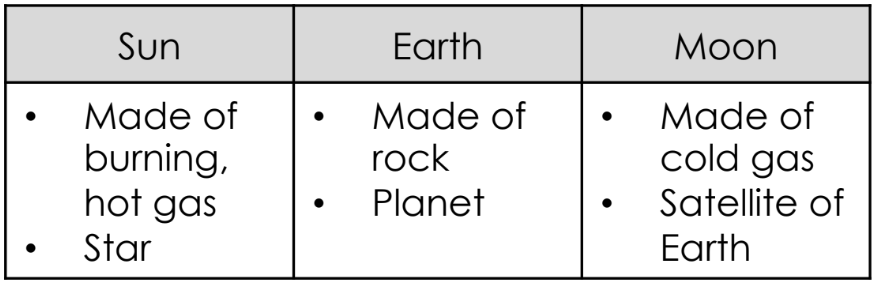
A student made a chart with information about the Sun, Earth, and Moon.
Which item on the chart is incorrect?
1 point
1
Question 6
6.
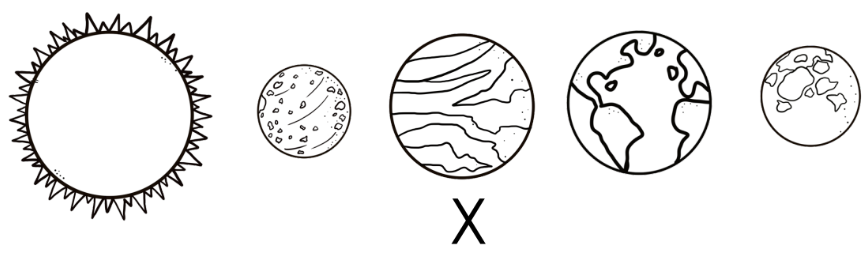
The inner planets are shown below.
Which planet is indicated by the X in the diagram?
1 point
1
Question 7
7.
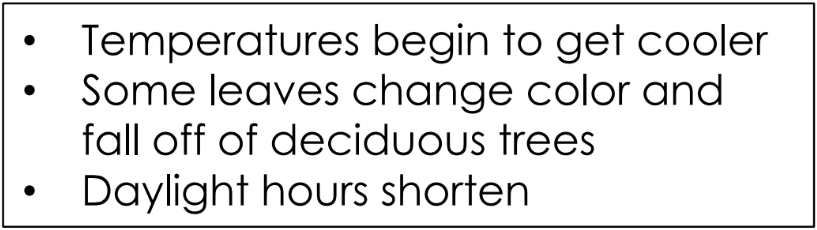
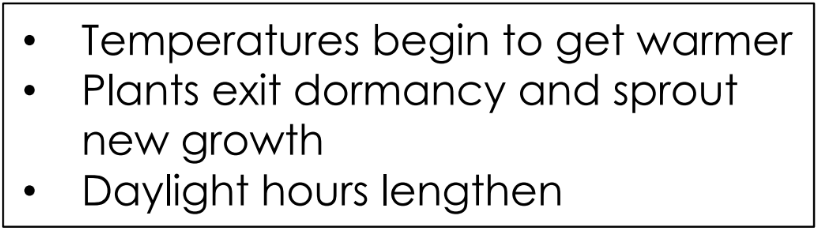
Which season is described below?
1 point
1
Question 8
8.
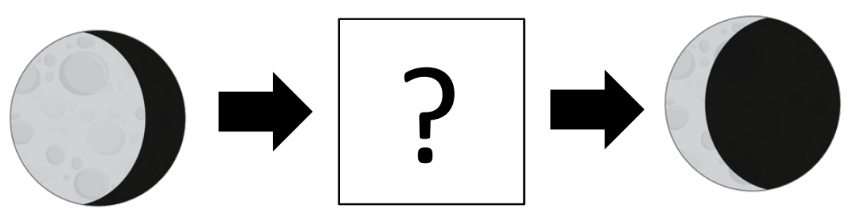
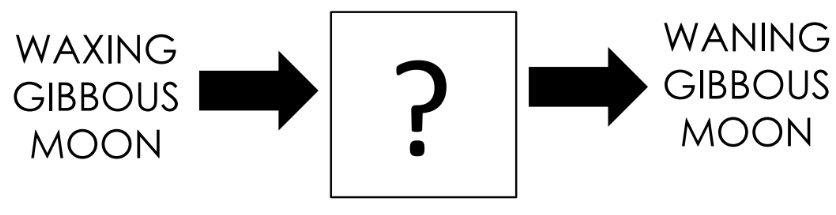
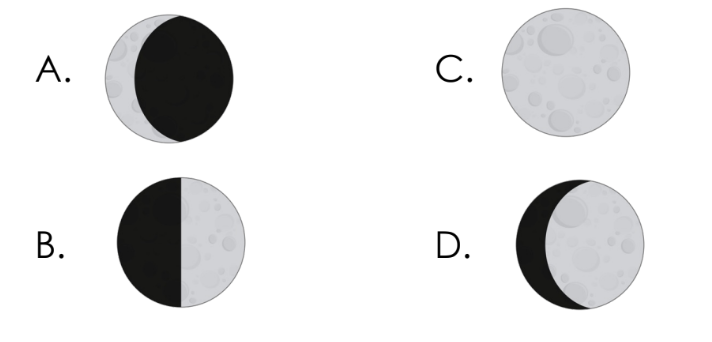
Which Moon phase occurs between the two phases that are shown?
1 point
1
Question 9
9.
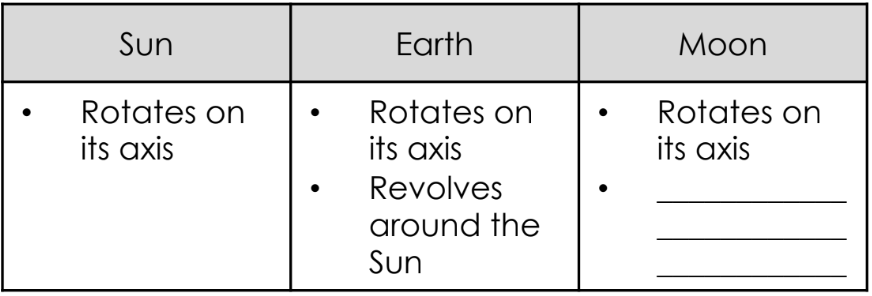
The chart describes the movement of the Sun, Earth, and Moon.
Which phrase belongs in the empty space?
1 point
1
Question 10
10.
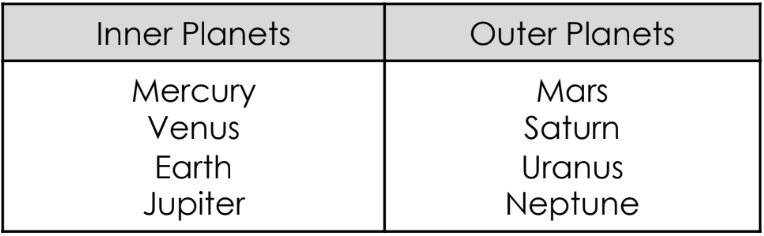
A student made a chart to categorize the planets.
Which items on the list are incorrect?
1 point
1
Question 11
11.
Which season is described below?
1 point
1
Question 12
12.
Identify the phase of the Moon that occurs BETWEEN the two given phases.
1 point
1
Question 13
13.
Which answer choice correctly describes the length of time that it takes Earth to rotate and revolve?
1 point
1
Question 14
14.
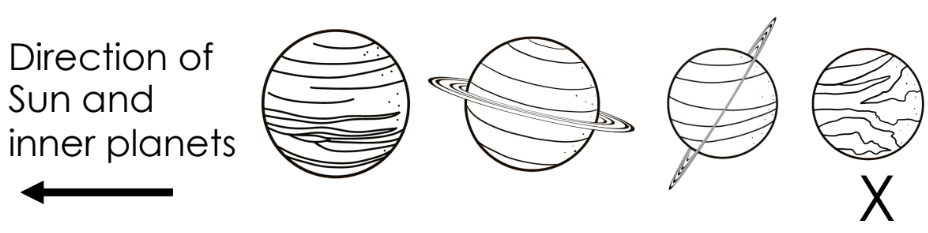
The outer planets are shown below.
Which planet is indicated by the X in the diagram?
1 point
1
Question 15
15.
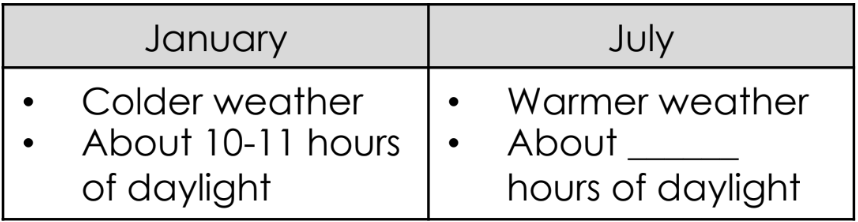
The chart describes conditions for Austin, Texas during two months of the year.
Which of the following choices could fill the blank?
1 point
1
Question 16
16.
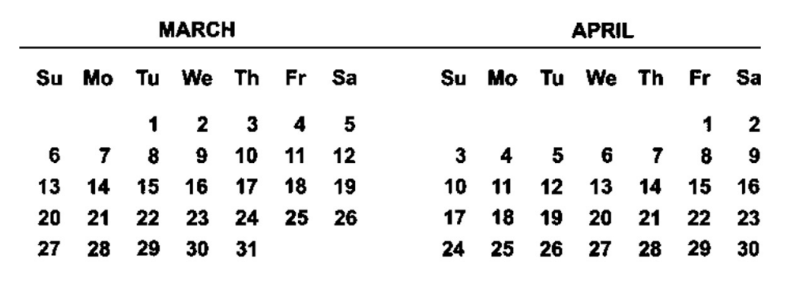
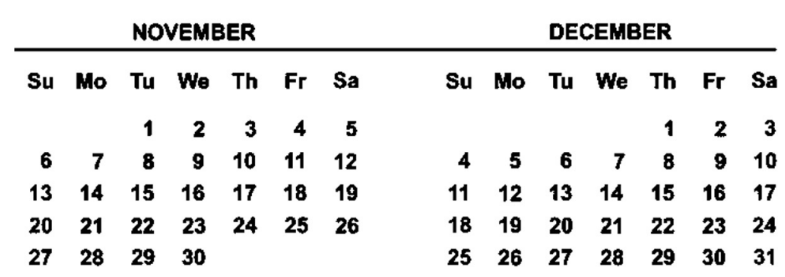
If March 2 is a Full Moon, when could you expect the next Full Moon to occur?
1 point
1
Question 17
17.
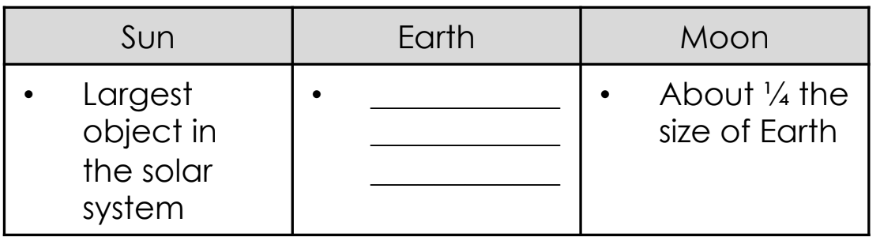
The chart lists facts about the Sun, Earth, and Moon.
Which phrase could belong in the blank area?
1 point
1
Question 18
18.
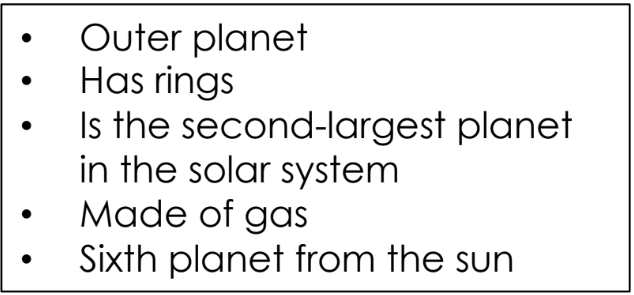
An astronomer is studying a planet with the following characteristics:
Which planet is being studied?
1 point
1
Question 19
19.
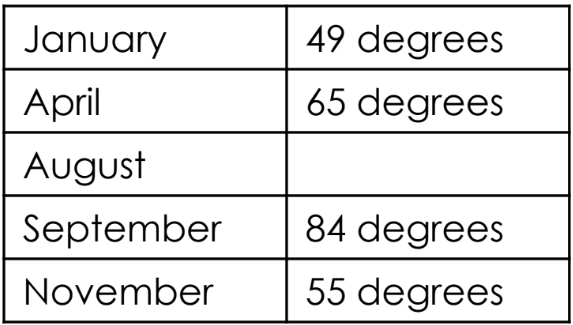
The average temperatures that occurred in Dallas in 2023 are shown below.
Which temperature belongs in the blank?
1 point
1
Question 20
20.
If December 17 is a First Quarter Moon, when would you estimate that the PREVIOUS First Quarter Moon had occurred?