Transition metals are usually found in the Earths crust as compounds, but ._________ is found as the metal itself.
arrow_right_alt
potassium
We can make stainless steel by mixing iron with
arrow_right_alt
chromium
The metal that will float in water is
arrow_right_alt
copper
The electrical wiring in a house is usually made from
arrow_right_alt
gold
1 point
1
Question 2
2.
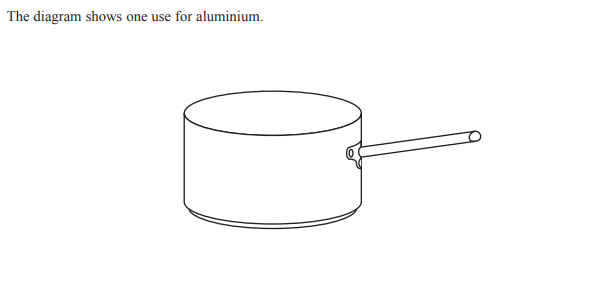
The diagram shows one use for aluminum. Which two of the following are properties of aluminum that make it suitable for making saucepans?
2 points
2
Question 3
3.
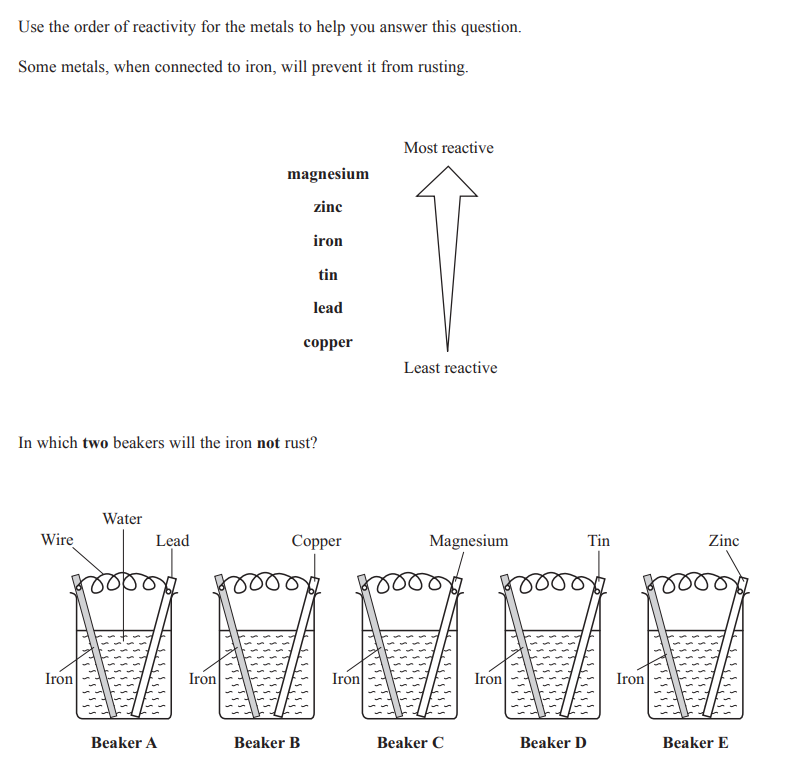
Use the order of reactivity for the metals to help you answer this question. Some metals, when connected to iron, will prevent it from rusting. In which two beakers will the iron not rust?
1 point
1
Question 4
4.
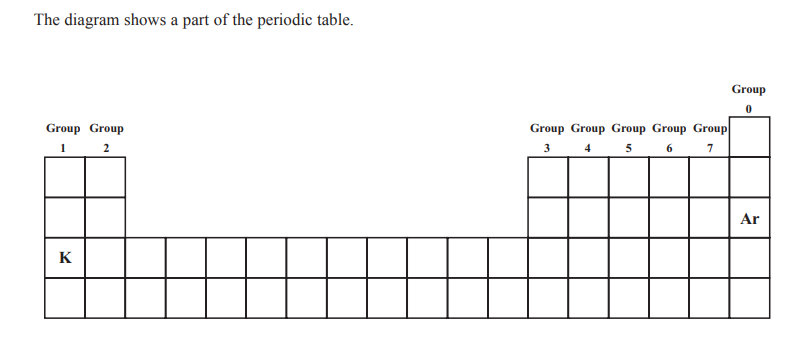
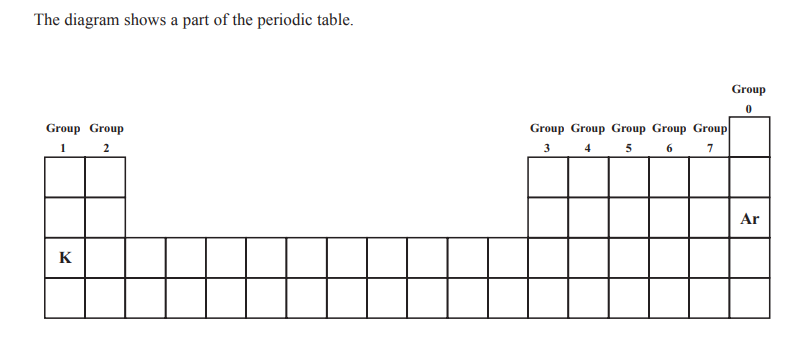
In the periodic table, the chemical elements are arranged in vertical Groups. Within each Group, the elements have:
1 point
1
Question 5
5.
Argon is placed before potassium in the table even though:
1 point
1
Question 6
6.
8.3 In the periodic table, the transition elements are found:
1 point
1
Question 7
7.
8.4 There are over 100 elements in the periodic table. More than half of the elements are:
1 point
1
Question 8
8.
9.1 The Group 1 metals:
1 point
1
Question 9
9.
9.2 The Group 1 metals and the transition metals:
1 point
1
Question 10
10.
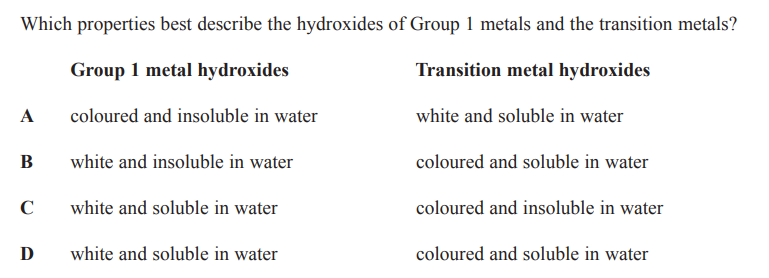
9.3 Which properties best describe the hydroxides of Group 1 metals and the transition metals?
1 point
1
Question 11
11.
9.4 When compared to the Group 1 metals, most transition metals:
1 point
1
Question 12
12.
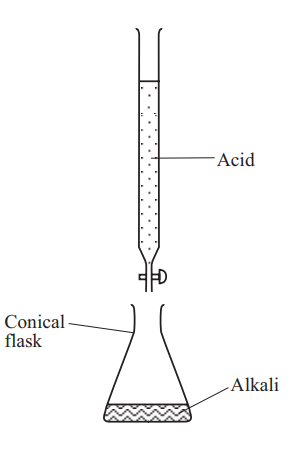
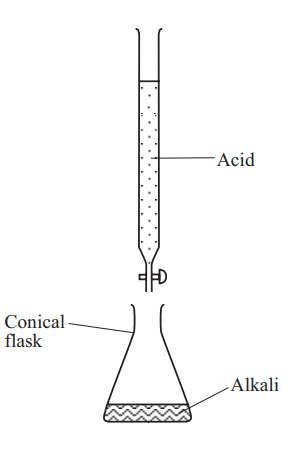
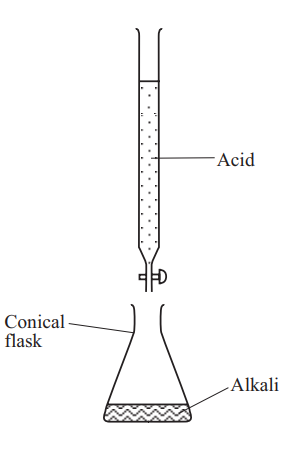
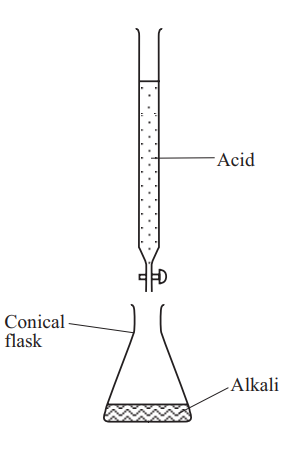
When an acid and an alkali react together a salt + _____________ forms
1 point
1
Question 13
13.
This type of reaction is called:
1 point
1
Question 14
14.
Which acid and which alkali would you use to produce sodium chloride?
1 point
1
Question 15
15.
The solution of sodium chloride produced in this reaction will be acidic rather than neutral if it contains excess:
1 point
1
Question 16
16.
The solution of sodium chloride produced in this reaction will be alkaline rather than neutral if it contains excess:
4 points
4
Question 17
17.
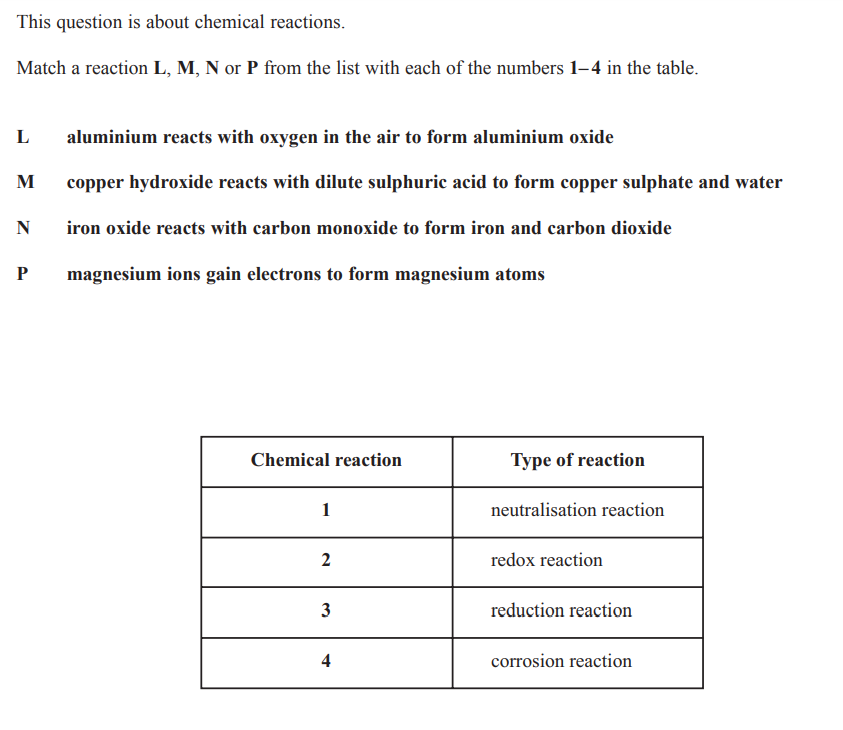
Draggable item
arrow_right_alt
Corresponding Item
4
arrow_right_alt
M
1
arrow_right_alt
N
3
arrow_right_alt
P
2
arrow_right_alt
L
1 point
1
Question 18
18.
This question is about ammonia and nitric acid and the reaction between them. Choose the two statements from P, Q, R, S, and T, which are correct.
1 point
1
Question 19
19.
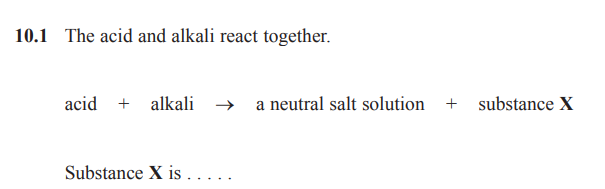
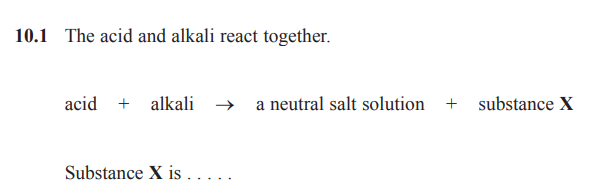
The acid and alkali react together. acid + alkali → a neutral salt solution + substance X. Substance X is . . . .
1 point
1
Question 20
20.
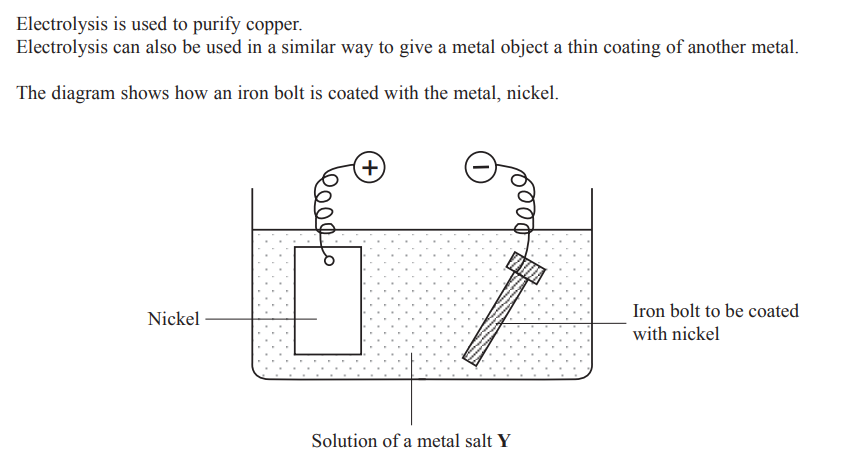
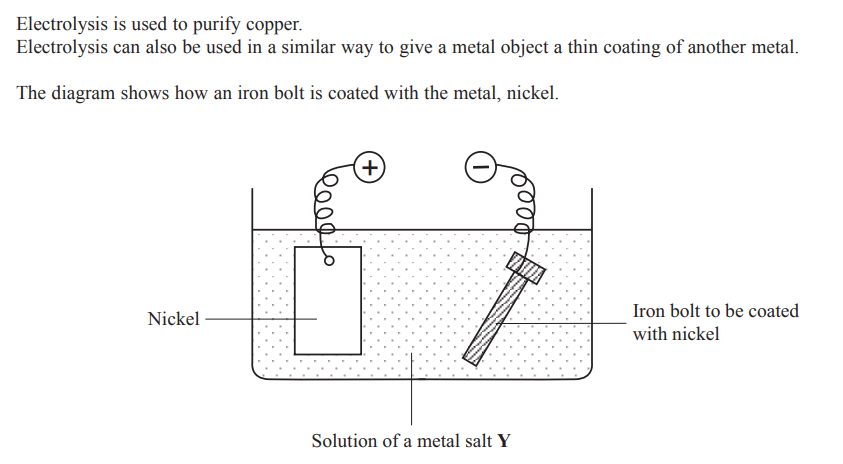
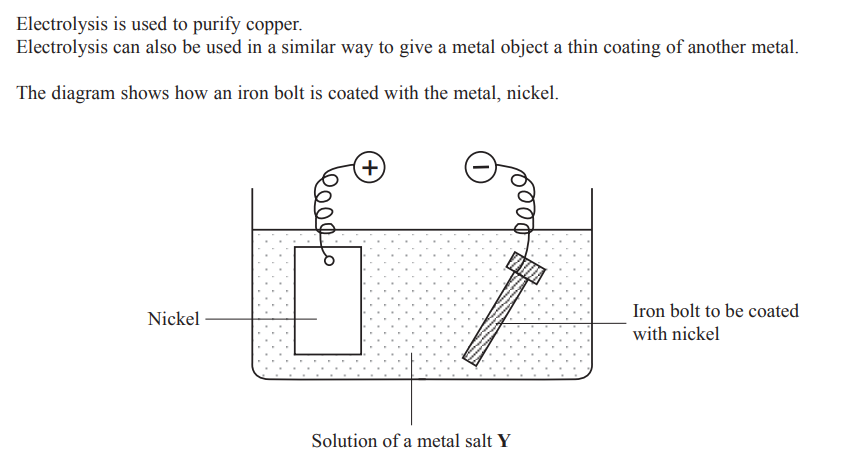
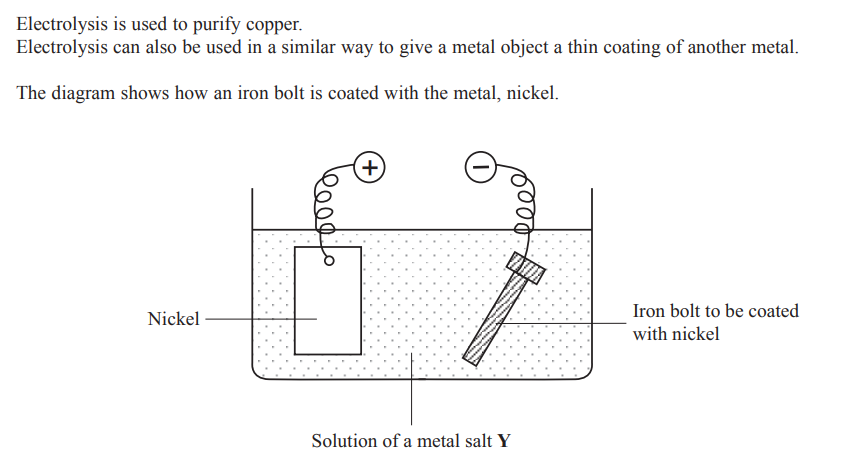
Electrolysis is used to purify copper. Electrolysis can also be used to give a metal object a thin coating of another metal. The diagram shows how an iron bolt is coated with the metal, nickel.
A suitable metal salt Y would be:
1 point
1
Question 21
21.
Which of the following statements describes what happens at the positive electrode?
Electrolysis can also be used in a similar way to give a metal object a thin coating of another metal.
1 point
1
Question 22
22.
Which of the following statements describes what happens at the negative electrode?
Electrolysis can also be used in a similar way to give a metal object a thin coating of another metal.
1 point
1
Question 23
23.
8.4 The reaction at the negative electrode is:
1 point
1
Question 24
24.
Comparison of alkali metals and transition metals
Both alkali and transition metals____________ electricity easily.
Because they are hard, transition metals do not .________ as easily as alkali metals.
Transition metals react less quickly than alkali metals with water and oxygen so ____________ more slowly.
Group 1 metals react with water to make _____________ solutions (+ hydrogen gas)
Alkali metals _________ at a much lower temperature than transition metals because the metallic bonds are weaker.
Transition metals form _____________ compounds
Other Answer Choices:
coloured
conduct
cut
melt
corrode
alkaline
1 point
1
Question 25
25.
Which two of the following substances dissolve in water to form alkaline solutions?