You will need a picture of the salamanders to be able to do part 2 of this - there are about 12 questions related to it and it's just easier to have it on paper. Please do not write on the paper given.
BONUS: Share something you have learned from what we have talked about in class. (You do not have to answer this, however this question may help you earn back a point/earn bonus).
Share how head lice are able to stay attached to hair OR something else you learned from one of the DEEP LOOK VIDEOS in the section CREEPY CRITTERS like hairworms, face mites, etc)
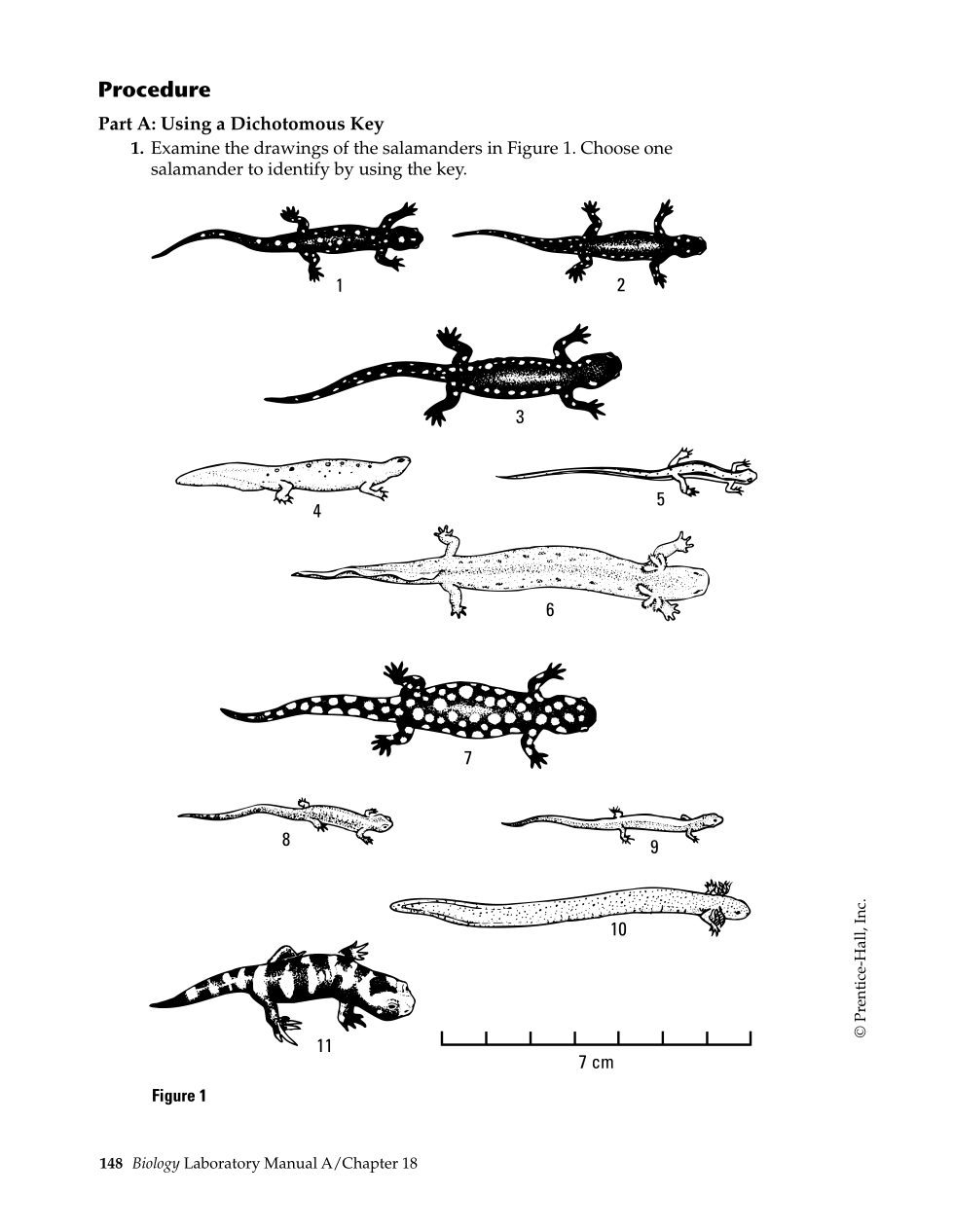
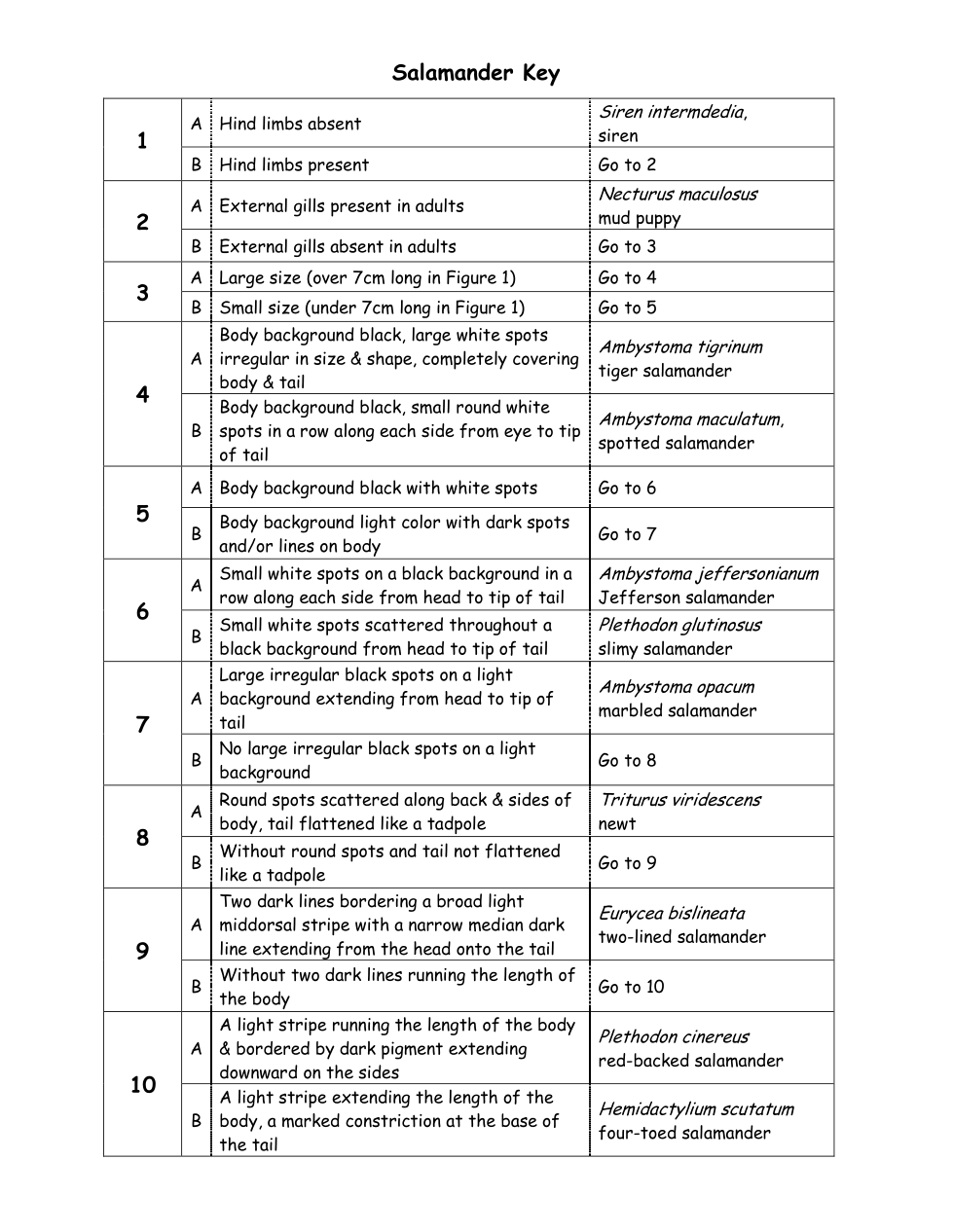
Identify the common name of organism #1
How many of the salamanders share the same genus?
How many of the salamanders share the same species?
How many the salamanders share the same phylum? (THINK HERE)
Identify the common name of organism #3
Identify the common name of organism #4
Identify the common name of organism #5
Identify the common name of organism #7
Identify the common name of organism #8
Identify the common name of organism #10
Which of the following best describes the purpose of a dichotomous key?
All of the following have a nucleus except...
Members of this kingdom are all multicellular and heterotrophic
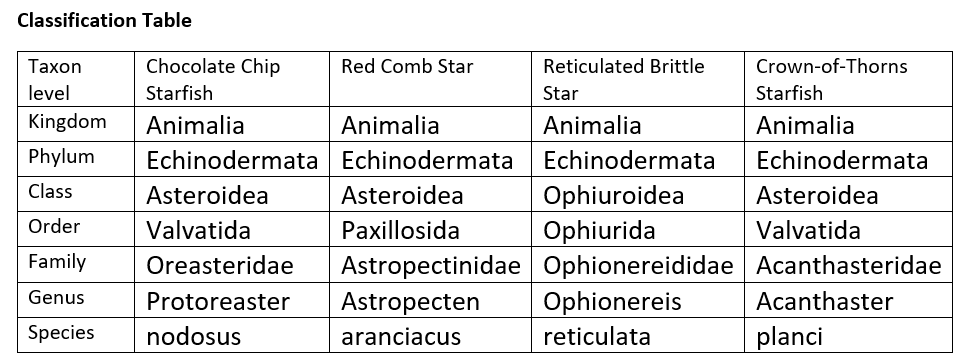
Which one is the least related to the other three stars? Provide evidence from the chart to support your answer.
Who would Acanthaster brevispinus be most closely related to?
What is the scientific name of the Chocolate Chip Starfish?
Which of the taxon levels are the largest and most broad?
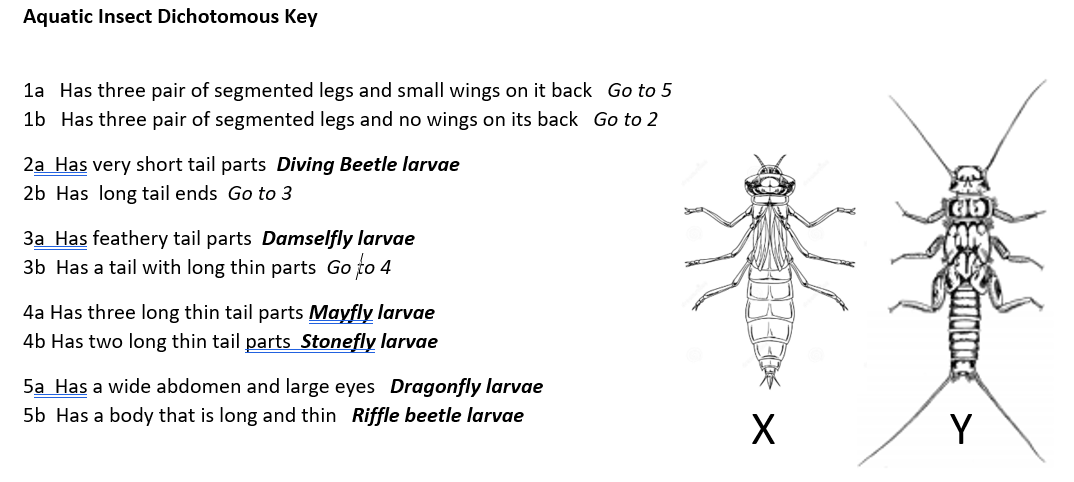
Use the dichotomous key to determine the correct classification of the insect in the diagram X (has wings).
Use the dichotomous key to determine the correct classification of the insect in the diagram Y (does not have wings).
When they were testing the sharks olfactory senses, what were two items they used?
How are bull sharks different from other sharks?