New van Gogh Painting
Listen to the presentation. Then answer the questions.
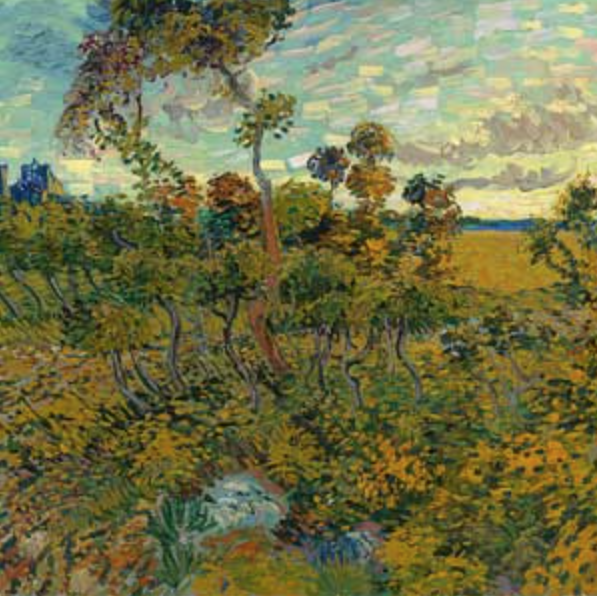
Ɛhia
1
SL.6.3
Ɛhia
1
SL.6.3
Ɛhia
1
SL.6.2
Ɛhia
1
SL.6.2
A student is writing a letter for his teacher about using technology for class projects. The student wants to revise the draft to include a conclusion. Read the draft of the letter and complete the task that follows.
Dear Mr. Marek,
I feel strongly that projects assigned in science class should include technology. Requiring students to use technology will help us acquire the skills we need. For example, I know that our next topic is going to be "survival." A possible project would be an Internet-based activity. We could begin our study with technology by researching the exploration of Antarctica. This continent features towering icebergs and huge humpback whales. We could read amazing stories from early scientists and explorers and even connect to real-world experts. We could also link to various websites to study weather and landforms.
Using our technology tools, we could gather information to show life within a scientific research station in Antarctica.
Revise the student's paragraph on using technology for class projects. Choose the sentence that would make the best conclusion for the paragraph.
A student is revising an informational paragraph from a peer's science notebook. Read the draft of the paragraph and complete the task that follows.
My partner and I wondered what would happen to the speed of a model car. I was curious about the speed of roller coasters too because I think they will go slower on wood tracks. We wondered if we put the car on different surfaces, what would happen to the speed of the car. I predicted that the speed of the car would be slower on carpet than on cardboard. We used the same weight on the car for each test and we measured how long it took the car to travel six feet using a stopwatch. We wrote the time for each test in a data table to keep track of our work and we did the test five times on cardboard and five times on carpet. We figured out the average speed of all five trials. We did five tests and my prediction was right. The average speed on the carpet was 2.3 seconds slower than the tests we did on the cardboard.
Choose the sentence that is distracting or does not maintain the focus of the paragraph.
A student is writing a narrative for class about a boy helping his mother. Read the draft paragraphs from the narrative and complete the task that follows.
Andy stirred the large pot of soup, watching as orange carrots and white potatoes bubbled in the broth. He and his mom had spent the morning cutting and dicing onions, celery, and green beans. After they added the spices, a wonderful aroma filled the kitchen, but Andy had other things on his mind.
As he watched the steam escape from the pot, Andy imagined his friends playing in the park. Everyone's having fun but me, he thought to himself. If I'm lucky, we can start another game of touch football after lunch.
"Andy," his mother said, interrupting his thoughts, "thank you for helping out. I know this is not how you wanted to spend your Saturday morning. Everything has been so difficult since I broke my wrist, but you have made things much better."
Write an introduction to the narrative that sets up the action to come. Type your answer in the space provided.
A student is writing an article for her student newspaper about a new club at her school. Read the draft of the article and complete the task that follows.
It's Thursday afternoon, and Mrs. Martinez's room is buzzing with excitement. The students who have formed the robotics club are meeting for the first time. "I've been hoping to be in a club like this for a long time," Jose Torres says. "It feels good to be around people who have the same interests as me." Many students nod in agreement with Jose Torres; they all seem to feel the same way.
The meeting opens with Mrs. Martinez showing pictures of different robots. Students discuss the idea of each robot, the things it performs, and the mechanics involved in making it. The discussion is very interesting. After being a part of the meeting, this reporter wants to join the club!
Read the underlined sentence from the paragraph. Choose two words that would be more precise to replace the words "idea" and "things" in the sentence.
A student needs to edit her draft of a paragraph about beluga whales.
Click to highlight three errors in grammar usage that should be edited.
The beluga, or white whale, is one of the smallest species of whale.
Read the following pairs of sentences that include one mistake in pronoun usage. Then read the question that follows.
For each pair of similar sentences, choose the sentence with the correct pronoun.
Janet and me learned about the solar system and space travel in science class. /
The World's Oldest Pottery
Listen to the presentation. Then answer the questions.
New van Gogh Painting
Listen to the presentation. Then answer the questions.
A student is writing a research report about fireflies. Read the sentences from her report and the directions that follow.
All About Fireflies
When people think of fireflies or lightning bugs, they most likely don't think of beetles. But, fireflies are actually members of the beetle family. Most fireflies have wings. There are about 2,000 different firefly species throughout the world. They thrive in warm, humid environments. Fireflies make light inside their bodies; they have special light organs under their abdomens that make them glow. The process is called bioluminescence. Fireflies light up in order to attract mates and also to defend themselves.
Choose two sources that would most likely give the student more information for the paragraph from her report.
A student is writing a research report about the benefits of honey. The student found a source. Read the source and click on one claim that the author makes that is supported by credible, or trustworthy, evidence.
Source 1: Benefits of Honey
For centuries, people around the world have enjoyed honey. It is delicious and natural, and has long been used for baking or as a sweetener for tea. Today, many people use honey to help with health concerns. According to a blog, honey has been shown to fight bacteria that could cause food poisoning. The blog goes on to describe how honey can help people who have leg sores that are hard to treat. People who eat honey can feel more calm.
A student is writing a research report about the importance of laughing. Read the paragraph from her report and the directions that follow.
Laughing
It doesn't matter who you are or where you live in the world. People everywhere understand what laughter means. However, what is funny in one part of the world may not be funny at all somewhere else. It depends a lot on the language and customs of a particular place. Oftentimes, laughter can be used to relieve people from thinking about serious matters. Laughter is also a very important part of helping people get well when they are sick. Laughing out loud actually exercises the abdominal, or stomach, muscles and helps the body relax. Also, laughter helps blood pressure by lowering it.
Another benefit of laughter is that it can have a positive effect on people's moods. Lastly, laughter boosts the immune system. It increases overall health and well-being.
The student found information in different sources. Choose two pieces of information that support the claim in the student's paragraph.
Choose the sentence that has no errors in grammar usage.
A student is writing an advertisement to persuade other students to join a new school club. Read the draft of the advertisement and answer the question that follows.
Come Join the Fun!
Are you bored sometimes after school? Do you wish there were cool activities available to kids our age? You are not alone. There are many other students who feel the same way you do. The question is: Are YOU willing to speak up and make something happen? Your answer should be YES. Those of you who want to start a new school group for enjoyable after-school activities should meet at 2:00 on Friday in room 201. Ms. Fredrick, a student counselor, will answer our questions and offer solutions. But we need more people to make this happen! See you there!
The student wants to replace the word enjoyable. Which replacement best fits the author's intended purpose and audience?
A student is writing a letter to the editor of a local newspaper about the city's addition of bicycle lanes. Read the draft of the letter and answer the question that follows.
Dear Editor,
During the past several weeks, much work has been done on the streets that I take to school. The construction was a real pain. However, the road work has just been completed, and the main street that I use to get to school now has a dedicated bicycle lane. This is fantastic! I love riding my bicycle, but I was not able to ride to school in the past due to the heavy traffic on Sheridan Road. With the new bike lane, I will now be able to ride my bike and be assured of my safety. I should be able to get to school now in half the time. I want to thank the city planners for adding bicycle lanes to roads all around the city. This will make our city a much nicer place to live.
Sincerely,
Jason Montgomery
The author of the letter wants to replace the underlined phrase. Which replacement best fits the author's intended audience?
Choose the sentence that does not use parentheses correctly.
A student is writing a short story for her language arts class. The student wants to revise the draft to help the reader visualize the main character. Read the draft of the story and answer the question that follows.
The Tryout
Sophia opened the door slightly and peeked into the large room. There was already a group of students who had gathered close to the stage. Sophia's teacher, Mrs. Claremont, was checking names on a clipboard before the auditions for the school play began.
Sophia had decided to try out for the school play after her best friend had convinced her that it would be fun. Now, she was afraid that she might have made a mistake. As she moved closer to the stage, she realized that there were at least 20 students who had come to try out for roles in the play.
Mrs. Claremont said, "Students, we will begin the auditions for the lead female role in a few minutes. All of the girls who are trying out for this role should take a seat in the first row near the stage."
Choose the best sentence to help the reader visualize the main character.
A student is writing a report for a science project about Madagascar hissing cockroaches. Read this excerpt of the student's draft and complete the task that follows.
Madagascar hissing cockroaches have a shiny brown sheen, no wings, and one pair of antennae. Male hissing cockroaches differ from females by displaying large black horns, which they use in battles with other males. A winning roach will sometimes hiss at the loser. But most of the time, a roach hissing means the roach is feeling threatened or is looking for a mate. The roaches make the hissing sounds by releasing air through their breathing holes.
They live in forests in logs or beneath wet leaves and eat fruit or plants.
Choose the sentence that would best introduce the topic.
A student is writing an argumentative essay for his teacher about recycling programs in school. Read the draft of the essay and complete the task that follows.
Review Our Recycling Program
Our school's recycling program was created many years ago. Some people feel that it is out of date. We have the blue recycling bins for paper and cans in our school, but is that enough? We still send a huge amount of garbage to the landfill each day.
One student group believes we should have a target for zero garbage going to the landfill. That means everything would have to be recycled. Others point out that this would be very expensive. We would have to compost all of the food scraps, for example.
Both sides agree that we should reduce the amount of waste we send to the landfill. So let's jump into the dumpster and see what we actually throw away every day. That survey should give us a better idea of how to improve our recycling efforts.
Read the underlined text. Choose the sentence that would be more appropriate for the stated audience.
A student is writing a story for a literary magazine about a wildlife photographer. Read the draft of a part of the story and answer the question that follows.
A Graceful Crane
A light fog fell on the forest as Mary got really low behind a tree trunk. Her hands firmly clasping the camera, Mary fixed her glance on the crane standing in the middle of a stream. It held its head up, as if alerted to Mary’s presence. The minutes passed, but the tall bird still did not move as the gentle gray tally lapped against its thin legs. Mary had taken several photos but was hoping for the bird to strike a different pose.
What is a more specific word or phrase to replace the underlined words?
Select the two sentences that use pronouns correctly.
Which two sentences do not have errors in grammar usage?
A student is writing a narrative for her teacher about a child on a hot day. Read the draft of the narrative and complete the task that follows.
Sweat dripped down Frank's face as he stood in line at the ice cream truck. He looked dreamily at the frozen fruit pop that a girl had just purchased. His mouth watered as he imagined the taste of the sweet treat. The kid in front of him couldn't decide between a fruit pop and a chocolate freeze. The sweltering heat made his wait bad, but he knew relief would come soon.
To add more description, select the two best pairs of words to replace the words looked and bad.
A student is writing a story about his neighbor for the school magazine. Read the draft of the story and complete the task that follows.
Treasure or Trash
My retired neighbor, Mr. Taylor, walks every day along the nearby beach with his dog, looking for interesting objects. He is not collecting seashells and driftwood. No, he collects and reuses some objects that fall off of passing ships and get to land. He has unlikely ways of using these objects around his yard. Mr. Taylor uses hard hats and boots for flowerpots in his garden. He does not buy new hoses, pipes, or fishing nets because he finds them on the beach.
The writer wants to replace the underlined phrase and word to make his meaning more exact. Which phrase and word would make his word choice better? Choose two answers.
The penguin is a type of flightless bird.
It typically has a white belly and dark-colored back and wings.
This disteenct coloring helps to hide it from predators in the sea.
The penguin's large head, short neck, and long body are designed for swimming.
The penguin's wings serve as paddles, and its feet are webbed for easier and faster swimming in the ocean.
All of these features make it perfectly suited for life in the sea.
Click on the two sentences that contain spelling errors.
A student is writing an essay for her student newspaper about how technology affects our communication. The student wants to make sure that she has used the right words to communicate her message more clearly. Select two words that need to be more specific.
Communication
Communication has changed. In the past people would write a letter, make a phone call, or pay a visit to stay in touch. Now we have things like email, instant messaging, and text messaging. Much of the time these tools make it possible to avoid all of the old ways of communicating. Without even saying a word aloud, we can talk to people on the other side of the planet. These ways of communicating can be okay, but people seem to be losing the ability to talk face-to-face. Watch people on a bus or standing in a line. Many of them prefer to type on their cell phones rather than speak with the people around them. The speed of communication has increased, but its quality has not. A text message can be fast, but it does not usually carry the same meaning as the look on someone's face.
Select two words that need to be more specific.
A student is writing a report for science class about how plants make their own food. Read the report and complete the task that follows.
Plants need food to survive, just as animals do; but, unlike animals, they do not eat solid foods. Instead, plants get most of the food they need from the sun through a process called photosynthesis. Using this process, plants can absorb the sun's light energy to make their own food. Although they cannot move around to find food, plants can make their food anywhere as long as they have three things: carbon dioxide, water, and light.
Carbon dioxide is a chemical that is in the air. Every time you inhale, you breathe in chemicals, including oxygen and carbon dioxide. Plants breathe, just like us. They even have little openings that can look like mouths, but they are too small for us to see without a microscope. When we breathe in, we want to breathe in oxygen. Plants want to breathe in carbon dioxide. Plants also drink. This is why you need to water plants or they will die. They use their roots to suck water up into their bodies, and their little mouths to breathe in the carbon dioxide. Once they have both of these things, all they need is light.
A plant's leaves consist of many tiny cells where photosynthesis happens. Inside the cells are tiny things called chloroplasts. Chloroplasts are what makes leaves green, and they are also what takes the carbon dioxide, the water, and the light, and turns them into sugar and oxygen. The sugar is then used by the plants for food, and the oxygen is breathed out into the atmosphere.
This is why photosynthesis is so important to animals. Most animal life requires oxygen to live and would not survive if the air contained too much carbon dioxide. Plants make animal life possible by absorbing carbon dioxide and turning it into oxygen. In turn, when animals breathe, they turn that oxygen back into carbon dioxide so the cycle can start over again.
This is why photosynthesis is so important to humans—we, too, rely on it to survive.
Write an introduction to the report that establishes and introduces a clear claim about how plants make their own food.
A student is writing a research report comparing the governments of Mexico and the United States. She found a print source that is trustworthy and has accurate information. Read Source 1 and the
directions that follow.
Source 1
The government of Mexico is very much like that of the United States of America. They are both federal republics. Mexico has states that are ruled together as one country. This is similar to the United States. The President of Mexico is elected by a popular vote for a six-year term. This is a bit different from the United States, in which the president serves a four-year term. The president in both countries has a cabinet of advisers. The president of Mexico runs the government and represents the country around the world. This is similar to the president of the United States.
The student needs to find additional sources that contain accurate information about her topic.
Which source contains information that accurately supports the information in Source 1?
A student is writing a report about the Electoral College. Read both sources and the directions that follow.
The Founding Fathers were political leaders and statesmen who helped form the United States of America. One of the jobs of our Founding Fathers was to determine the best way for our nation to elect a president. After looking back to the ancient Romans, the Founding Fathers began to set up the Electoral College system we still use today. Basically, a state is assigned a number of electoral votes based on the total number of senators and representatives it has. The candidate who wins the most votes in a state (the popular vote) is usually then awarded the number of electoral votes assigned to that state. The candidate who ends up with the most electoral votes wins the election. Although this system has worked for many years, there are some problems with it. On some occasions, a candidate has won the popular vote nationally but ended up losing the Electoral College vote. However, there are not any immediate plans to change our current voting system.
The United States Constitution spells out the details of the Electoral College. It was set up to help balance the power among small and large population states. Now, even in our elections today, we are actually voting for our electors who in turn cast votes for the president. Typically the candidate with the most popular votes in a state will then win the electoral votes. However, an elector is not required to vote for the candidate that wins the popular vote, and there have been a few cases where an elector has voted for another person. The formal meeting of the Electoral College actually happens a few weeks after the presidential election. In most cases our election has already been decided by that time, but they meet, nonetheless.
The student took notes about information in the sources.
Which note correctly paraphrases, or restates, information from both sources?
A student is writing a report about the Boundary Waters Canoe Area Wilderness. Read both sources and the directions that follow.
Source 1
The Boundary Waters Canoe Area Wilderness is part of the Superior National Forest. This forest is near the border of Minnesota and Canada. Many people visit this area each year to hike, paddle, and fish. Most people carry their gear in a canoe so that they can remain for a few days. The trails from one lake to the next are called “portages.” Some of the portages are fairly short, and others may be several miles long. There is much wildlife to be seen here. It is not uncommon to see eagles, loons, deer, otters, moose, and an occasional bear. Most lakes do not allow motors, so any time spent here will be quite peaceful.
Source 2
In order to protect the environment, camping in the Boundary Waters Canoe Area Wilderness is allowed at certain sites only. You may not camp along portages. The campsites are spread out on lakes and designated with markers. Each campsite has a simple toilet and a fire grate. The only wood that should be used for burning is wood that is dead or on the ground. Do not cut down live trees for fires. There may be times in the summer when no fires are allowed. If it has not rained, check with the forest rangers before entering the area. As always, please leave all campsites cleaner than they were when you arrived.
The student took notes about information in the sources.
Which note correctly paraphrases, or restates, information from both sources?
A student is writing a report about gymnastics. Read both sources and the directions that follow.
Source 1
Gymnastics is one of the world's oldest sports and can be traced back thousands of years. In 2,000 B.C., the men and women of ancient Greece developed the sport of bull jumping, which is similar to the vaulting exercises you see today in modern gymnastics. In bull jumping, the athlete would run towards a charging bull, grab its horns, and either vault onto the bull's back or vault over the bull in a somersault landing on his feet on the other side of the bull! This early event required both courage and strength, as well as grace and style. The Ancient Romans used gymnastics as part of their military training to improve the strength, balance, and flexibility of soldiers. In the 1800s, gymnastics exercises using rings, bars, balls, and mats were developed by gymnasts in Germany and Sweden. Gymnastics have been a part of the modern Olympic Games since they were first held in 1896. Today, there are eight different events in Olympic gymnastics for men and women.
Source 2
Gymnastics is the practice of athletic exercises for the development of the body, especially those exercises performed with apparatus, or equipment, such as rings, pommel horse, bars, and balance beam. Although gymnastics was likely practiced in ancient Egyptian and Chinese cultures, it's best associated with the early Greeks. They practiced gymnastics in preparation for war, as jumping, running, discus throwing, wrestling, and boxing helped produce the strong muscles necessary for hand-to-hand combat. Because military training was necessary at that time, gymnastics became the main focus of ancient education. Men's gymnastics events are scored on an individual and team basis, and presently include the floor exercise, horizontal bar, parallel bars, rings, side horse (also called pommel horse), vaulting, and combined exercises, which combines the scores of the other six events. Combined exercises for women were first held in 1928, and the 1952 Olympics had all of the events for women. Women's gymnastic events include balance beam, uneven parallel bars, combined exercises, floor exercises, vaulting, and rhythmic sportive gymnastics.
The student took notes about information in the sources.
A student has made a plan for research. Read the plan and the directions that follow.
Research Report Plan | |
|---|---|
Topic: | wind energy |
Audience: | classmates and teacher |
Purpose: | to inform |
Research Question: | Can wind provide us with energy? |
Choose two credible, or trustworthy, sources that will most likely provide the information needed for the report.
A student is writing a research report about snowflakes for her science teacher. Read the trustworthy sources that the student found and the directions that follow.
Source 1: Snowflakes' Infinite Patterns by Cheryl Button
You've heard that all snowflakes are different, but have you ever wondered why? There are so many possible ways for a snowflake to form. When you look through a microscope at a snowflake, you can pick out hundreds of separate details. Since all those details could have formed a bit differently or in slightly different places, it's easy to see that the number of ways for a snowflake to form is vast. Therefore, it's unlikely that any two snowflakes have ever looked identical.
Source 2: Crystal Hexagons by Joseph Sparks
Can any two snowflakes be identical? Snow crystals, as scientists call snowflakes, are single crystals of ice. They form in six-sided shapes, or hexagons. To form snow crystals, you need water, which is made of two hydrogen atoms and one oxygen atom (H2O), forming a water molecule. Atoms and molecules can connect in a variety of ways, and when it comes to water, they connect to form a six-sided pattern that looks like lace. As a crystal falls to the earth, its formation will be affected by how warm and moist the air is. For example, more moisture makes more branches on the crystal. Even though the sides might look similar, they're not exactly the same. As each flake falls through the atmosphere, it's blown around by the wind, making each side slightly different. So, is it really true that no two snowflakes are alike? Yes!
The student wants to include information from the sources in her report but does not want to plagiarize the authors' ideas from the sources. Read the paragraph from the student's report.
Do you know why no two snowflakes are exactly alike? I've done some research, so I can give you the answer. To make snow, you need water. The molecules in water can come together in many different ways, and water molecules can even look like lace. When a snow crystal forms, it will be six-sided, or a hexagon shape. According to "Crystal Hexagons," the air temperature and its moisture content both have something to do with making the shape of each new snowflake. For example, a snowflake can form more branches when the air it is in contains a lot of moisture. “Crystal Hexagons” also explained that the wind can change the shape of a snowflake too, and it can even cause the branches on a crystal to be a little different from one another. In fact, "Snowflakes' Infinite Patterns" said you should look very closely at a snowflake to see all the tiny branches, then you can see "all those details could have formed a bit differently or in slightly different places." That's why all snowflakes are different.
Read the text and answer questions 1–8.
Eureka!
by James Baldwin
There was once a king of Syracuse whose name was Hiero. The country over which he ruled was quite small, but for that very reason he wanted to wear the biggest crown in the world. So he called in a famous goldsmith, who was skillful in all kinds of fine work, and gave him ten pounds of pure gold.
“Take this,” he said, “and fashion it into a crown that shall make every other king want it for his own. Be sure that you put into it every grain of the gold I give you, and do not mix any other metal with it.”
“It shall be as you wish,” said the goldsmith. “Here I receive from you ten pounds of pure gold; within ninety days I will return to you the finished crown which shall be of exactly the same weight.”
Ninety days later, true to his word, the goldsmith brought the crown. It was a beautiful piece of work, and all who saw it said that it had not its equal in the world. When King Hiero put it on his head it felt very uncomfortable, but he did not mind that—he was sure that no other king had so fine a headpiece. After he had admired it from this side and from that, he weighed it on his own scales. It was exactly as heavy as he had ordered.
“You deserve great praise,” he said to the goldsmith. “You have wrought very skillfully and you have not lost a grain of my gold.”
There was in the king’s court a very wise man whose name was Archimedes. When he was called in to admire the king’s crown he turned it over many times and examined it very closely.
“Well, what do you think of it?” asked Hiero.
“The workmanship is indeed very beautiful,” answered Archimedes, “but—but the gold—”
“The gold is all there,” cried the king. “I weighed it on my own scales.”
“True,” said Archimedes, “but it does not appear to have the same rich red color that it had in the lump. It is not red at all, but a brilliant yellow, as you can plainly see.”
“Most gold is yellow,” said Hiero; “but now that you speak of it I do remember that when this was in the lump it had a much richer color.”
“What if the goldsmith has kept out a pound or two of the gold and made up the weight by adding brass or silver?” asked Archimedes.
“Oh, he could not do that,” said Hiero; “the gold has merely changed its color in the working.” But the more he thought of the matter the less pleased he was with the crown. At last he said to Archimedes, “Is there any way to find out whether that goldsmith really cheated me, or whether he honestly gave me back my gold?”
“I know of no way,” was the answer.
But Archimedes was not the man to say that anything was impossible. He took great delight in working out hard problems, and when any question puzzled him he would keep studying until he found some sort of answer to it. And so, day after day, he thought about the gold and tried to find some way by which it could be tested without doing harm to the crown.
One morning he was thinking of this question while he was getting ready for a bath. The great bowl or tub was full to the very edge, and as he stepped into it a quantity of water flowed out upon the stone floor. A similar thing had happened a hundred times before, but this was the first time that Archimedes had thought about it.
“How much water did I displace by getting into the tub?” he asked himself. “Anybody can see that I displaced a bulk of water equal to the bulk of my body. A man half my size would displace half as much.”
“Now suppose, instead of putting myself into the tub, I had put Hiero’s crown into it, it would have displaced a bulk of water equal to its own bulk. All, let me see! Gold is much heavier than silver. Ten pounds of pure gold will not make so great a bulk as say seven pounds of gold mixed with three pounds of silver. If Hiero’s crown is pure gold it will displace the same bulk of water as any other ten pounds of pure gold. But if it is part gold and part silver it will displace a larger bulk. I have it at last! Eureka! Eureka!”
Forgetful of everything else he leaped from the bath. He ran through the streets to the king’s palace shouting, “Eureka! Eureka! Eureka!” which in English means, “I have found it! I have found it! I have found it!”
The crown was tested. It was found to displace much more water than ten pounds of pure gold displaced. The guilt of the goldsmith was proved beyond a doubt. But whether he was punished or not, I do not know, neither does it matter.
The simple discovery which Archimedes made was worth far more to the world than Hiero’s crown.
“Eureka!” by James Baldwin, from Thirty More Famous Stories Retold. In the public domain.
Click on the two sentences that best support the conclusion that Archimedes is very observant.
Which sentence best summarizes a central idea of the text?
Read the sentence from the text.
"Anybody can see that I displaced a bulk of water equal to the bulk of my body.
What does the word bulk most likely mean?
Summarize what happens after Archimedes sees his bath water overflowing. Use key events from the text to support your summary.
Which statement is most accurate about both the goldsmith and Archimedes?
What effect does the conversation between Archimedes and the king have on the reader's understanding of the events in the plot?
What conclusion can be drawn about the character of Archimedes? Support your answer with details from the text.
Read the sentence from the text.
"He ran through the streets to the king's palace shouting, 'Eureka! Eureka! Eureka!' which in English means, 'I have found it! I have found it! I have found it!'"
What effect does the author create by repeating the word "Eureka"?
Read the text and answer questions 9–16.
What Is a Spacesuit?
by David Hitt
A spacesuit is much more than a set of clothes astronauts wear on spacewalks. A fully equipped spacesuit is really a one-person spacecraft. The formal name for the spacesuit used on the space shuttle and International Space Station is the Extravehicular Mobility Unit, or EMU. "Extravehicular" means outside of the vehicle or spacecraft. "Mobility" means that the astronaut can move around in the suit. The spacesuit protects the astronaut from the dangers of being outside in space.
Why Do Astronauts Need Spacesuits?
Spacesuits help astronauts in several ways. Spacewalking astronauts face a wide variety of temperatures. In Earth's orbit, conditions can be as cold as minus 250 degrees Fahrenheit. In the sunlight, they can be as hot as 250 degrees. A spacesuit protects astronauts from those extreme temperatures.
Spacesuits also supply astronauts with oxygen to breathe while they are in the vacuum of space. They contain water to drink during spacewalks. They protect astronauts from being injured from impacts of small bits of space dust. Space dust may not sound very dangerous, but when even a tiny object is moving many times faster than a bullet, it can cause injury. Spacesuits also protect astronauts from radiation in space. The suits even have visors to protect astronauts' eyes from the bright sunlight.
What Are the Parts of a Spacesuit?
The spacesuit consists of several pieces. The Hard Upper Torso covers the astronaut's chest. The arm assembly covers the arms and connects to the gloves. The helmet and Extravehicular Visor Assembly are designed to protect the astronaut's head while still allowing him or her to see as much as possible. The Lower Torso Assembly covers the astronaut's legs and feet. The flexible parts of the suit are made from several layers of material. The layers perform different functions, from keeping oxygen within the spacesuit to protecting from space dust impacts.
Underneath the spacesuit, astronauts wear a Liquid Cooling and Ventilation Garment. Tubes are woven into this tight-fitting piece of clothing that covers the entire body except for the head, hands and feet. Water flows through these tubes to keep the astronaut cool during the spacewalk.
On the back of the spacesuit is a backpack called the Primary Life Support Subsystem. This backpack contains the oxygen that astronauts breathe during a spacewalk. It also removes carbon dioxide that astronauts exhale. The backpack also provides electricity for the suit. A fan moves the oxygen through the spacesuit and life support systems, and a water tank holds the cooling water that flows through the Liquid Cooling and Ventilation Garment.
Also attached to the back of the suit is a device called the Simplified Aid for Extravehicular Activity Rescue, or SAFER. SAFER has several small thruster jets. If an astronaut became separated from the space station, he or she could use SAFER to fly back.
What Other Spacesuits Have Astronauts Worn?
NASA's first spacesuits were developed for the Mercury program. Mercury was the first time NASA astronauts flew into space. These simple suits were based on pressure suits worn by U.S. Navy pilots. Astronauts did not go on spacewalks then. The Mercury suits were worn only inside the spacecraft.
NASA's first spacewalks took place during the Gemini program. The suits used for Gemini were more advanced than the Mercury suits. But the Gemini suits were simpler than today's spacesuits. These suits did not contain their own life support. Instead, they connected to life support systems on the Gemini spacecraft with a cord called the umbilical.
Spacesuits designed for the Apollo program had to do things the first suits did not. These spacesuits had to protect astronauts walking on the moon. Unlike the other suits, the Apollo suits had boots made to walk on a rocky surface. The Apollo suits also contained a life support system, similar to the Portable Life Support Subsystem on the current suit. Having a life support system on the spacesuit allowed the astronauts to explore away from the lunar lander. Spacesuits similar to the Apollo suits were used on the Skylab space station. Like the Gemini suits, the Skylab suits connected to life support systems on the spacecraft via an umbilical.
What Spacesuits Are Worn Today?
In addition to the EMU, NASA astronauts wear other suits today. The Advanced Crew Escape Suit is the orange suit that astronauts wear during launch and landing of the space shuttle. This suit cannot be worn during spacewalks. Sometimes, NASA astronauts will wear the Russian Orlan spacesuit. This suit is the Russian version of the EMU and is used for spacewalks. Another Russian suit is the Sokol. Like the Advanced Crew Escape Suit, the Sokol is designed only to be used inside a spacecraft. It is used on the Russian Soyuz spacecraft.
“What is a Spacesuit?” by David Hitt, from nasa.gov. © 2008 by NASA Education. In the public domain.
Select the two sentences from the text that best support the inference that extra-vehicular space exploration would not have been possible without spacesuits.
Which sentence best summarizes the central idea of the text?
This question has two parts. First, answer part A. Then, answer part B.
Part A
What is most likely the author's intent by mentioning "A spacesuit is much more than a set of clothes astronauts wear on spacewalks" at the beginning of the text?
Part B
Which sentence from the text best illustrates the conclusion made in part A?
Read the paragraph from the text and the directions that follow.
Spacesuits also supply astronauts with oxygen to breathe while they are in the vacuum of space. They contain water to drink during spacewalks. They protect astronauts from being injured from impacts of small bits of space dust.
Space dust may not sound very dangerous, but when even a tiny object is moving many times faster than a bullet, it can cause injury. Spacesuits also protect astronauts from radiation in space. The suits even have visors to protect astronauts' eyes from the bright sunlight.
What is the author's central idea in this paragraph? Use evidence from the text to support your answer.
This question has two parts. First, answer part A. Then, answer part B.
Part A
Which of these inferences about the author's purpose is supported by the text?
Part B
Which sentence from the text best supports your answer in part A?
What conclusion can be drawn about the author's relevance of evidence regarding spacesuits? Support your answer with evidence from the text.
The following question has two parts. First, answer part A. Then, answer part B.
Part A
Which idea from the presentation is unclear?
Part B
Which change should the speaker make to correct the error?
What is the most likely reason the speaker includes the sentence "So it's possible that about two hundred centuries ago, ice age kids were walking into the family cave, peeking into pots and asking, 'What's for dinner?''
Which of the following best describe the central ideas of the presentation? Select two options.
The following question has two parts. First, answer part A. Then, answer part B.
Part A
Which conclusion is best supported by evidence from the presentation?
Part B
Which sentence from the presentation provides evidence that best supports your answer in part A?
What is the most likely purpose of the presentation?
Which details from the presentation support the idea that it is not easy to determine whether a work of art is genuine or fake? Select two options.
Read the text and answer the questions.
by Stephen Ornes
Scientists report that bees and flowers appear to have a charged communication. In addition to a flower's color and scent, its electric field may also bring in bees, a new study shows.
Say you're a flower and you can't reproduce unless bees come by to move your pollen. How can you use your blooms to ensure those bees don't pass you by? Try communicating with them—electrically.
Although colors and smells can help, a new experiment suggests electric fields may also bring in the bees.
Flowers maintain small electric fields around them. Bees can not only detect those fields, but they may also tell the insects which blooms are most likely to offer a nectar reward, a team of scientists recently reported.
Flowers growing in the ground have a natural negative electric charge, notes Daniel Robert. He's a sensory biologist at the University of Bristol in England who worked on the new study. Their blooms conduct electrons—the particles that carry negative charge—from the air to the ground. Throughout the air, positive electric charges abound, he explains. So bees, as they buzz about, can become positively charged.
“Anything flying through the air, whether it's a baseball, 767 jumbo jet, or a bee, acquires a strong positive electrostatic charge due to interaction with air molecules,” Stephen Buchmann told Science News. Buchmann, who did not work on the study, is an entomologist. A scientist who studies bugs, he works at the University of Arizona in Tucson. Robert and his coworkers showed that bees notice electric fields and can use them to pick among flowers.
The scientists set up 30 identical metal disks covered with purple plastic to resemble flowers. Half of the disks were wired to create small electric fields, and half weren't. The disks with electric fields contained a sweet solution; the unwired ones held a bitter solution.
Scientists then sent in the bees and kept track of where they went. Toward the tail end of 50 visits to the “flowers,” most bees had learned to find the sweet ones. Then the researchers unplugged the fake sweet flowers and tried the experiment again. This time, when the fields were off, the bees never learned. Even after 50 visits, they found the sugar only about half the time—no better than if left to chance.
The test showed the bees could detect the fields. “The big question is how bees do this,” Lars Chittka of Queen Mary University of London told Science News. Chittka, also a sensory biologist, did not work on the new study. He suspects that the tiny hairs on a bee's body may bend when it comes close to a charged flower.
Robert and his coworkers studied the electric fields of real flowers, petunias, to better understand how bees and flowers might communicate. The scientists took measurements of a flower before and after a charged bee approached it. The flower's field reacted to the approaching bee with a small increase in strength. That electrical boost lingered for a little while after the bee had flown away.
That short-lived surge may help tell a different approaching bee that all of the flower's nectar has just been drunk. That bee would be able to sense the change in the flower's electric field, and move on to find a flower full of nectar.
Or, as Robert told Science News, the flower could signal to the bee: “I'm still pretty and smell nice, but come back later.”
Read the selection from the text:
“Anything flying through the air, whether it's a baseball, 767 jumbo jet, or a bee, acquires a strong positive electrostatic charge due to interaction with air molecules,” Stephen Buchmann told Science News. Buchmann, who did not work on the study, is an entomologist. A scientist who studies bugs, he works at the University of Arizona in Tucson.
Robert and his coworkers showed that bees notice electric fields and can use them to pick among flowers.
Select the statement that best explains why the author chose to include this selection.
Read the sentences from the text.
Scientists report that bees and flowers appear to have a charged communication. In addition to a flower's color and scent, its electric field may also bring in bees, a new study shows.
The word charged has multiple meanings. What does the word charged most likely suggest about bees and flowers in the text? Select two options.
The following question has two parts. First, answer part A. Then, answer part B.
Part A: Which statement best summarizes the central idea of the text?
Part B: Which sentence from the text best supports your answer in part A?
The reader can conclude that picked flowers do not have an electrical charge. Click the two sentences that best support this conclusion.
Flowers maintain small electric fields around them. Bees can not only detect those fields, but they may also tell the insects which blooms are most likely to offer a nectar reward, a team of scientists recently reported.
Flowers growing in the ground have a natural negative electric charge, notes Daniel Robert. He's a sensory biologist at the University of Bristol in England who worked on the new study. Their blooms conduct electrons — the particles that carry negative charge — from the air to the ground. Throughout the air, positive electric charges abound, he explains. So bees, as they buzz about, can become positively charged.
Read the text and answer the questions.
When it comes to coins, I'm a master detective—if I do say so myself (and I do). And my favorite cases always involve my favorite items: coins!
Coins in your pocket, coins at the store, and coins under the couch cushions...seems like coins are everywhere. Why in the world would anyone collect them?
That's the first thing you need to learn about coin collecting: the reasons why people collect coins. And there are plenty!
People love to collect stuff—all kinds of stuff. Here are some kinds of collections and reasons why they're collected:
Souvenirs, so people can remember places, people, or special events.
Key rings, to see how many different designs they can find.
Tools, to trace the way making them has changed over the years.
Bottles, to enjoy the beauty of different shapes and colors.
We collect coins for all these reasons, and more!
Coins can be souvenirs—both of the event they show and of how you got the coins.
Coins come in many designs and metals.
The way they're made has changed over the years.
They're often just plain beautiful to look at.
Whether you have a lot of money to spend on coin collecting or none at all, it's an interesting hobby for everyone. Here are some other reasons to collect coins:
To learn about history.
To learn about foreign lands.
So they can enjoy the way coins capture moments of history, time, and people's lives.
Because of an interest in art, science, animals, or some other theme.
For the joy of learning about the coins themselves.
To display and share with others.
For the challenge of completing a collection.
As an investment in their culture.
To enjoy belonging to a coin club or meeting fellow collectors from around the world.
For the excitement of finding rare coins in their pockets!
Metal was used for money even before it was made into coins. But each little piece of metal had to be weighed every time it was spent to find out how much it was worth. Imagine the clever person who first got the idea of stamping the piece's weight right onto the metal! We don't know that person's name, but we do know about the first people who stamped pieces of metal with weights and other marks.
In about 1000 B.C., people in China made coins out of bronze. Later on in Lydia (now part of Turkey), coins were struck under King Ardys, who lived from 652 to 615 B.C. Lydia's coins were stamped with symbols and were made of electrum, a natural metal that's made up of gold and silver. There was lots of electrum on Lydia's river banks and mountains.
King Croesus of Lydia (561 to 546 B.C.) made coins that showed the royal symbol of two facing lions on the front, and a bull on the back. His coins were 98 percent pure gold—pretty amazing, since the way they processed precious metals in those days was so primitive.
Ptolemy I of Egypt (323 to 285 B.C.) was the first ruler to have his own image put on coins. Kings and queens still do this today.
People have collected coins for centuries. At first, only kings and other rich people collected coins, so collecting has been called "the king of hobbies" and "the hobby of kings."
In fact, the first collector we know of was a king: Augustus Caesar, the first emperor who ruled Rome. He lived from 63 B.C. to 14 A.D., and our eighth month (August) is named after him.
Augustus not only collected coins but he gave coins as gifts. Many of the Roman emperors who ruled after Augustus also had large collections. So did rich and royal families during the Middle Ages.
One of the first famous American collectors was Joseph Mickley. But Americans didn't start collecting coins until after the days of the colonists, when the early settlers had settled down. Since then, more and more people have enjoyed collecting coins, no matter what their age or income. After all, coins are something that everybody can get their hands on!
Modern American coins are the easiest coins for modern Americans to collect, so let's take a closer look at this current currency.
Each year, the United States Mint makes between 14 and 20 billion coins that circulate (get passed around when buying and selling), and a bunch more that don't circulate because they are made to be collected. The circulating coins are all made at the United States Mint branches in Philadelphia and Denver. The branches in San Francisco and West Point specialize in coins that don't circulate.
How does the author’s point of view develop over the course of the text?
Read the sentences from the text.
When it comes to coins, I'm a master detective—if I do say so myself (and I do). And my favorite cases always involve my favorite items: coins!
What does the underlined phrase “I’m a master detective” suggest about the author of the text?
Read the sentence from the text.
Each year, the United States Mint makes between 14 and 20 billion coins that circulate (get passed around when buying and selling), and a bunch more that don't circulate because they are made to be collected.
What does the use of the word “Mint” suggest? Select two options.
The author used sets of bullet points in the text. What are the most likely reasons why the author structured the text this way? Select two options.
The following question has two parts.
First, answer part A. Then, answer part B.
Read the paragraph from the text and the directions that follow.
Each year, the United States Mint makes between 14 and 20 billion coins that circulate (get passed around when buying and selling), and a bunch more that don't circulate because they are made to be collected. The circulating coins are all made at the United States Mint branches in Philadelphia and Denver. The branches in San Francisco and West Point specialize in coins that don't circulate.
What is the central idea of the paragraph?
Part B: Which detail from the text best supports your answer in part A?
What inference can be made about the author’s opinion on coin collecting? Use evidence from the text to support your answer.
Read the text. Then answer the questions.
The early Sun was warm, but Nyota shivered with excitement as she walked with her father, Mutimura, up the high green mountain. Until today, Nyota had never traveled this far from home.
She had never taken the mountain path up into the dense rain forest where mountain gorillas lived. In this pristine forest reserve in the Virunga Mountains of central Africa, the rare and beautiful apes were free to live undisturbed in their native habitat. Nyota’s father had been hired by the government to preserve the habitat and to protect the animals so that people would have a greater appreciation for the gorillas. Mutimura sometimes led groups into the forest to observe the gorillas in the wild. Today, only Nyota accompanied him.
Nyota thought of her own life, a daily routine which consisted of helping around the house, preparing for school, and walking down the mountain to class. Today would be different.
“I’ve always wanted to see gorillas,” Nyota said shyly. “And I’m not afraid when I’m with you, Papa.”
“They are gentle creatures, my dear,” said Mutimura. “They have no desire to harm you. At the same time, we must be cautious, because the gorillas are wild animals. The leader of each troop is a big silverback male, and he will defend his troop if he feels they are threatened. I know I can trust you to be respectful and to follow my directions.”
Nyota shivered again at the thought of the big animals. The only wild animals she saw at home were playful monkeys. Now and then the monkeys swung out of the trees to tear apart flowers from her mother’s garden and nibble at nectar or to grab ripe fruit off the guava tree near the house. Nyota could not imagine how it would feel to actually see the largest apes—the mountain gorillas.
“How big is a gorilla?” Nyota asked her father as they made their way up the mountain, stepping carefully as the path narrowed and became tangled with undergrowth.
“The largest male is no taller than a man like me, but his chest and arms are so big and strong, he can weigh four hundred pounds,” Mutimura said. “The females might be half that size, but they would still weigh twice as much as you.”
“That’s big!” Nyota said.
The path came to an end, and they were surrounded by towering trees and thick underbrush. Ferns and vines merged together, almost concealing the sky. Mutimura cleared a path for walking.
Now it was late morning, and the damp air was full of birds singing and insects buzzing.
Mutimura waded across pools of running water, carrying Nyota on his back.
“Papa, I want to help track the gorillas,” Nyota said. “What should I look for?”
Mutimura stopped short. “This,” he said, pointing to an evergreen tree with bent and broken branches dangling close to the ground. “This is what we are looking for. A group of gorillas slept up in this tree last night.”
“Will they come back tonight?” Nyota asked.
“No,” replied Mutimura. “They make a new nest each night, in a different place. But they don’t range far. This whole mountainside is their home, and everything they desire to eat grows right here. Gorillas choose from about a hundred plants—roots, shoots, fruits, and tree bark—for their daily diet. We’ll probably discover some remains of their breakfast soon.”
A little farther in the underbrush, there it was: bamboo peeled and nibbled, strewn on the ground.
“We’re getting close,” Mutimura said. “We must advance carefully, so as not to surprise them.”
He chopped some more vines, and as the vegetation dropped to the forest floor, Nyota gasped. Through the clearing, on the far side of the ravine, she saw a troop of eight or nine mountain gorillas. It looked as if they were on a picnic, lolling about and sampling the foods the hillside had to offer.
Mutimura and Nyota stood quietly. If the gorillas sensed a human presence, they seemed undisturbed, casually going on about their activities. A baby clung to the back of a female, who was grooming the gorilla beside her, picking through the shiny black fur to find insects or burrs.
The largest gorilla lounged in the ferns, peeling a stalk of wild celery and eating the tender flesh inside. Two small gorillas squealed and leaped over a mossy log to chase each other. One ran up the black hairy arm of the silverback and across his huge white shoulders. When the second young gorilla followed, another gorilla made a sound, as if reminding the young gorilla to show respect to his elders.
The silverback picked up the second youngster with one hand and dangled him over his head for a moment before letting him scamper away after his playmate. Then he lay back as if to nap. There was a comfort and peacefulness in the air.
When Mutimura motioned that it was time to go, Nyota turned and followed him in silence. In her heart was the hope that the mountain gorillas would live here in peace for ages to come.
Which sentence best summarizes the first three paragraphs of the text?
What is the most likely reason the author included the details about Nyota seeing monkeys around her house in the text?
Read the sentence from the text.
Ferns and vines merged together, almost concealing the sky.
What is an antonym, or opposite, of the word concealing as it is used in the sentence?
Which sentence from the text best supports the inference that a knowledgeable guide is needed to find gorillas in the forest?
How does the author develop the relationship between the silverback gorilla and the other gorillas? Select three options.
This question has two parts. First, answer part A. Then, answer part B.
Part A: Click on the statement that best provides an inference that can be made about the narrator’s feelings toward gorillas.
This question has two parts. First, answer part A. Then, answer part B.
Part B: Click on the sentence from the text that supports your answer in part A.
Click on two sentences that best support the conclusion that the forest reserve provides for the gorillas.
“No,” replied Mutimura. “They make a new nest each night, in a different place. But they don’t range far. This whole mountainside is their home, and everything they desire to eat grows right here. Gorillas choose from about a hundred plants—roots, shoots, fruits, and tree bark—for their daily diet. We’ll probably discover some remains of their breakfast soon.”
Summarize what happens after Nyota first sees the gorillas. Use key events from the text to support your summary.
What inference can be made about Mutimura’s relationship with the gorillas? Support your answer with details from the text.
Choose all of the notes that correctly paraphrase, or restate, information from both sources.
Click on one sentence in the paragraph that is plagiarized.