1
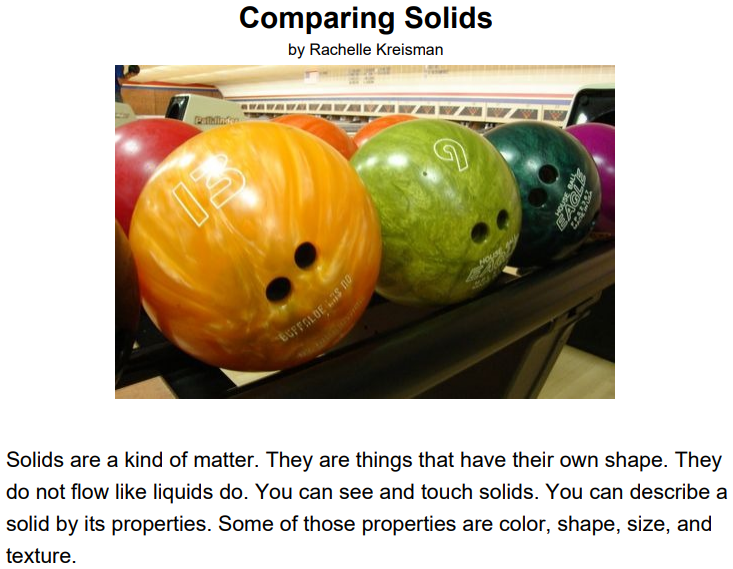
Which of these is a property of the bowling balls in the picture?
Which of these is a property of the bowling balls in the picture?
1
How can you describe a solid?
How can you describe a solid?
This Formative is OPTIONAL unless Ms. Brunett tells you that you must complete it because you have 4 or more absences. It has 4 assignments. Each assignment you complete will improve your grade on one missing or incomplete class assignment, or it will count as one assignment for a day when you were absent. If you have no missing or incomplete class assignments, and if you were not absent, each assignment will be worth 10% extra credit. This Formative is due Thursday, December 19th.
Este Formative es OPCIONAL a menos que la Sra. Brunett le indique que debe completarlo porque tiene 4 o más ausencias. Tiene 4 tareas. Cada tarea que complete mejorará su calificación en una tarea de clase faltante o incompleta, o contará como una tarea por un día en el que estuvo ausente. Si no tiene tareas de clase faltantes o incompletas, y si no estuvo ausente, cada tarea valdrá un 10% de crédito adicional. Este Formative debe entregarse el jueves 19 de diciembre.
Ntugomba kuzuza iyi Formative keretse Madamu Brunett akubwiye ko ugomba kuyuzuza kuko ufite 4 cyangwa byinshi udahari. Ifite inshingano 4. Buri mukoro urangije uzamura amanota yawe kumurongo umwe wabuze cyangwa utuzuye, cyangwa bizabarwa nkinshingano imwe kumunsi mugihe udahari. Niba udafite umukoro wabuze cyangwa utuzuye, kandi niba utari uhari, buri mukoro uzaba ufite agaciro ka 10% byinguzanyo. Iyi Formative riteganijwe kuwa kane, 19 Ukuboza.
هذا النموذج التكويني اختياري ما لم تخبرك السيدة برونيت بضرورة إكماله لأنك تغيبت 4 مرات أو أكثر. يحتوي النموذج على 4 واجبات. كل واجب تكمله سيحسن درجتك في واجب واحد مفقود أو غير مكتمل، أو سيحسب كواجب واحد ليوم كنت غائبًا فيه. إذا لم يكن لديك واجبات مفقودة أو غير مكتملة، وإذا لم تكن غائبًا، فستستحق كل مهمة 10% رصيدًا إضافيًا. موعد تسليم هذا النموذج التكويني هو الخميس 19 ديسمبر.
Which of these is a property of the bowling balls in the picture?
How can you describe a solid?
Why are bowling balls and tennis balls similar?
Why are tennis balls and bowling balls different?
What state of matter are both bowling balls and tennis balls?
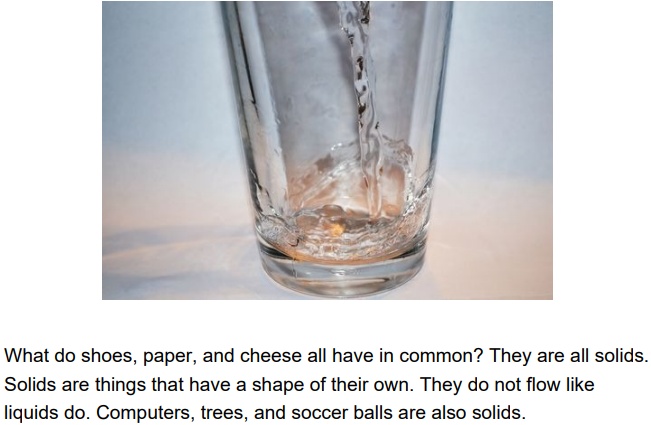
Which of these is a solid?
What happens when you pour a liquid into a container?
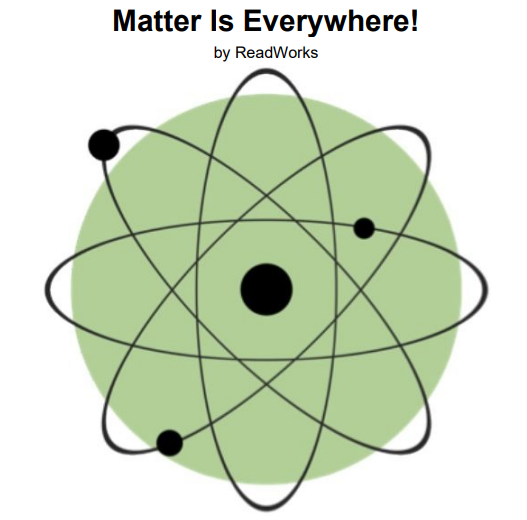
What do you see in the picture?
What is everything around us made of?
How are liquids and solids different from gases?
What is diffusion?
Imagine you sprayed perfume in the corner of a room. Based on the passage, what is the concentration of perfume particles like in that corner, compared to in the rest of the room?
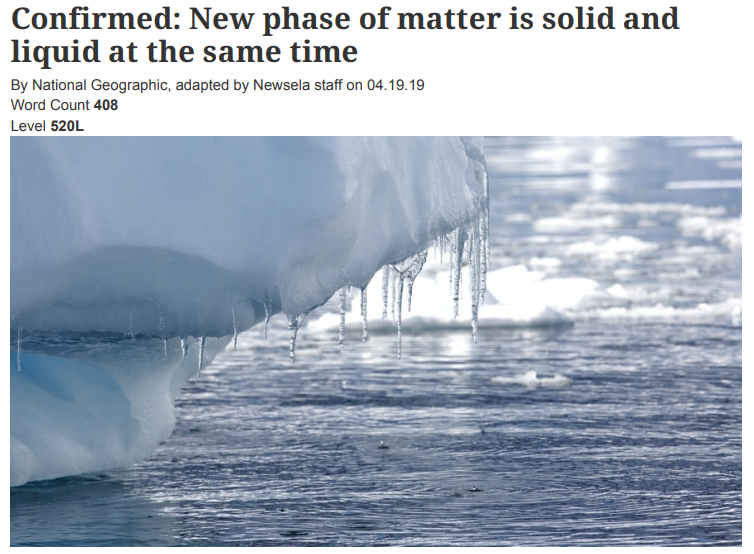
What do you see in the picture?
What is the new state that scientists have found?
How does the organization of atoms affect a material?
Why did the chains in potassium atoms disappear?
How were the chains between the X's and the remaining potassium crystals different?
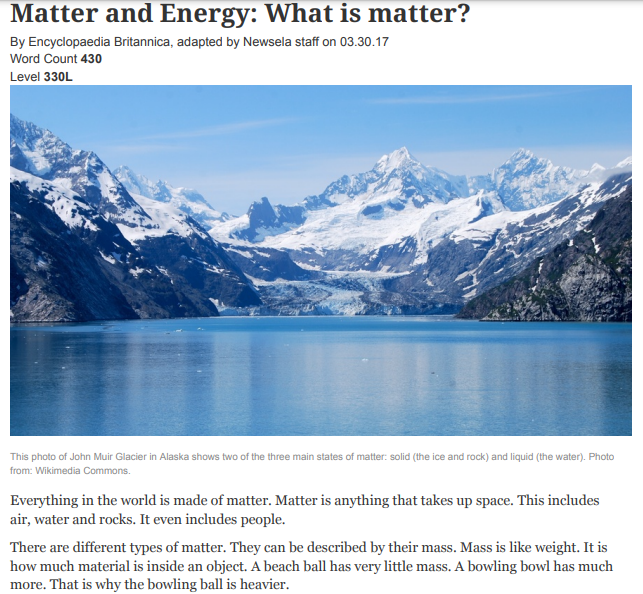
What is matter?
If a brick has more mass than a feather, which of these is true?
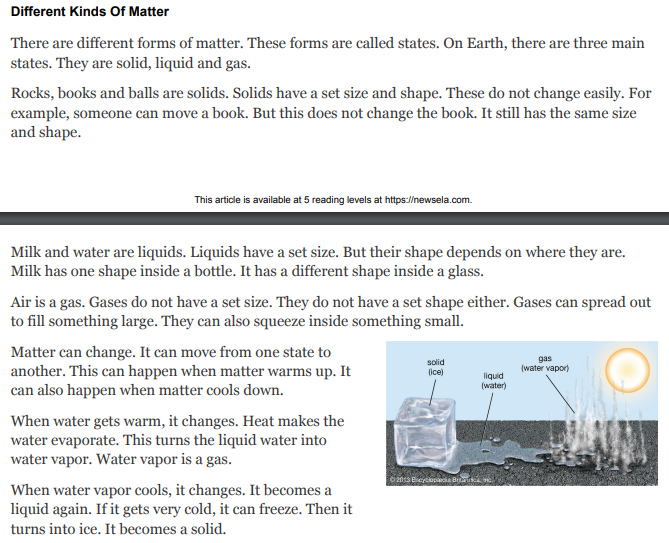
How are solids, liquids, and gases different?
What happens to liquids when they get very cold?
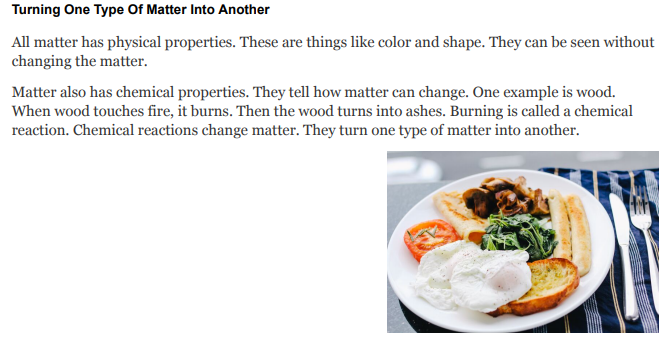
What do chemical properties tell us?
Why does the author describe the balloon and inflatable pool toys filling up with air?
What do scientists use to help label materials?
How does sodium change because of high pressure?
Why is Marius Millot excited about the computer system?
How can matter change state?
Based on the article, which of the following is TRUE?