1
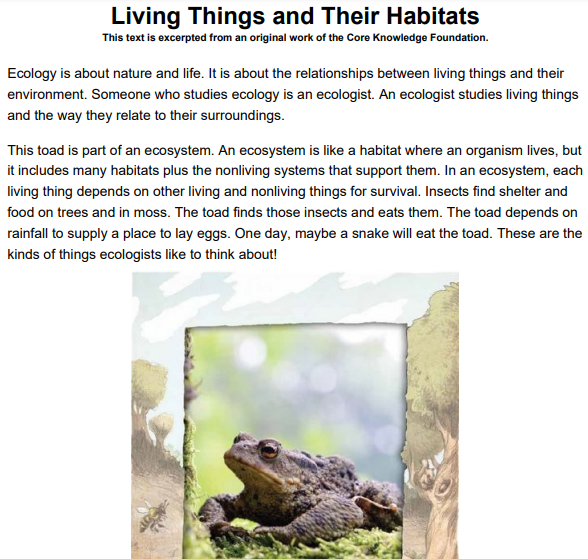
What does an ecologist study?
What does an ecologist study?
1
What is an ecosystem?
What is an ecosystem?
1
1
This Formative is OPTIONAL unless Ms. Brunett tells you that you must complete it because you have 4 or more absences. It has 4 assignments. Each assignment you complete will improve your grade on one missing or incomplete class assignment, or it will count as one assignment for a day when you were absent. If you have no missing or incomplete class assignments, and if you were not absent, each assignment will be worth 10% extra credit. This Formative is due Thursday, December 19th.
Este Formative es OPCIONAL a menos que la Sra. Brunett le indique que debe completarlo porque tiene 4 o más ausencias. Tiene 4 tareas. Cada tarea que complete mejorará su calificación en una tarea de clase faltante o incompleta, o contará como una tarea por un día en el que estuvo ausente. Si no tiene tareas de clase faltantes o incompletas, y si no estuvo ausente, cada tarea valdrá un 10% de crédito adicional. Este Formative debe entregarse el jueves 19 de diciembre.
Ntugomba kuzuza iyi Formative keretse Madamu Brunett akubwiye ko ugomba kuyuzuza kuko ufite 4 cyangwa byinshi udahari. Ifite inshingano 4. Buri mukoro urangije uzamura amanota yawe kumurongo umwe wabuze cyangwa utuzuye, cyangwa bizabarwa nkinshingano imwe kumunsi mugihe udahari. Niba udafite umukoro wabuze cyangwa utuzuye, kandi niba utari uhari, buri mukoro uzaba ufite agaciro ka 10% byinguzanyo. Iyi Formative riteganijwe kuwa kane, 19 Ukuboza.
هذا النموذج التكويني اختياري ما لم تخبرك السيدة برونيت بضرورة إكماله لأنك تغيبت 4 مرات أو أكثر. يحتوي النموذج على 4 واجبات. كل واجب تكمله سيحسن درجتك في واجب واحد مفقود أو غير مكتمل، أو سيحسب كواجب واحد ليوم كنت غائبًا فيه. إذا لم يكن لديك واجبات مفقودة أو غير مكتملة، وإذا لم تكن غائبًا، فستستحق كل مهمة 10% رصيدًا إضافيًا. موعد تسليم هذا النموذج التكويني هو الخميس 19 ديسمبر.
What does an ecologist study?
What is an ecosystem?
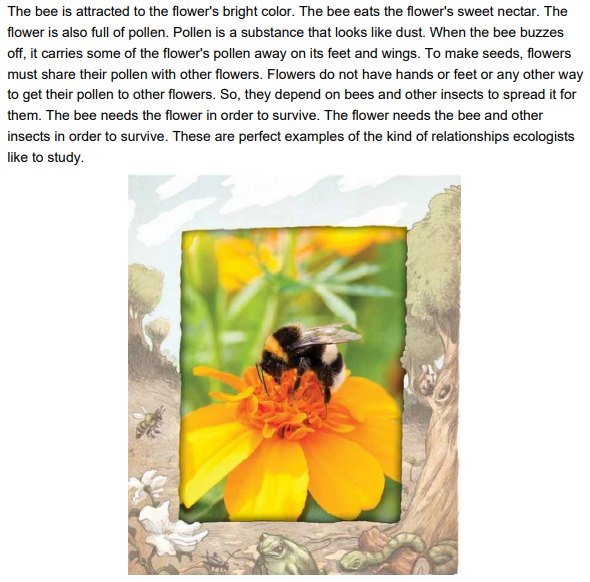
What do bees eat?
How do bees help flowers?
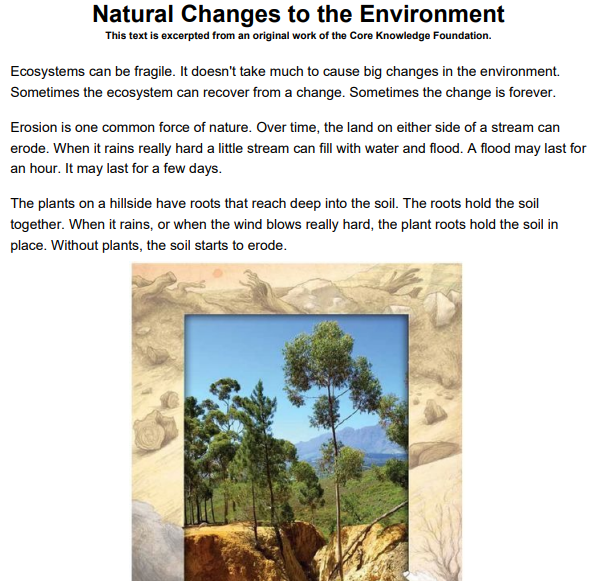
What does "fragile" mean?
What causes erosion?
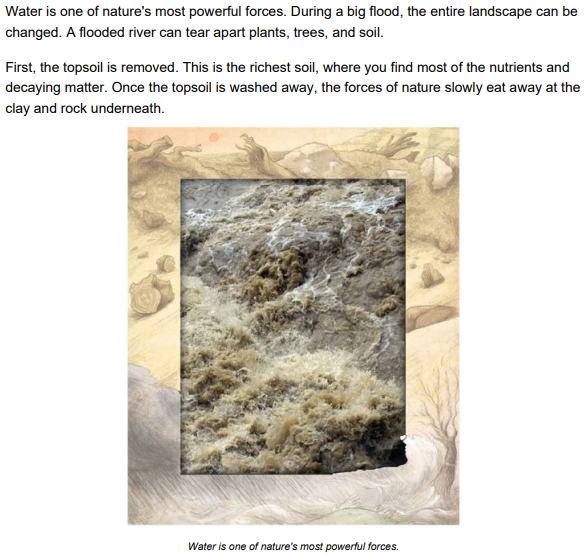
Are floods good or bad for ecosystems? Why?
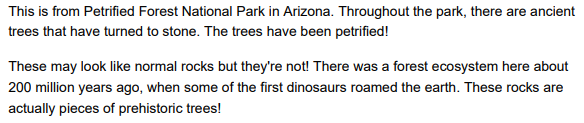
What happened to the trees in Petrified Forest National Park?
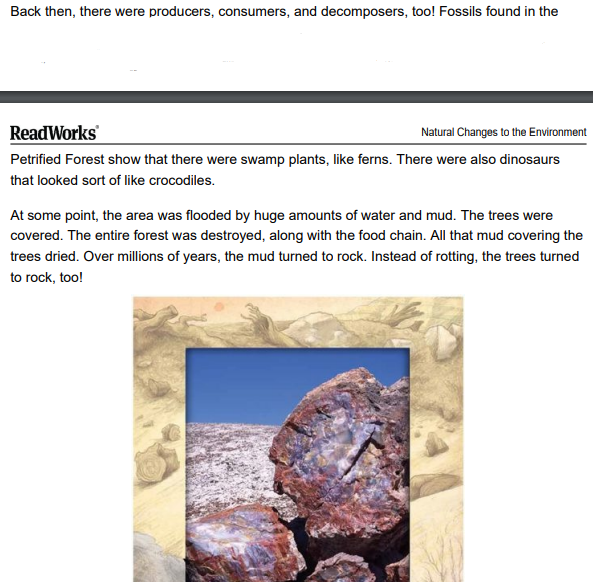
How did the trees in the Petrified Forest change?

How is the Petrified Forest similar now to how it was 200 million years ago?
Would you want to visit the Petrified Forest? Why?
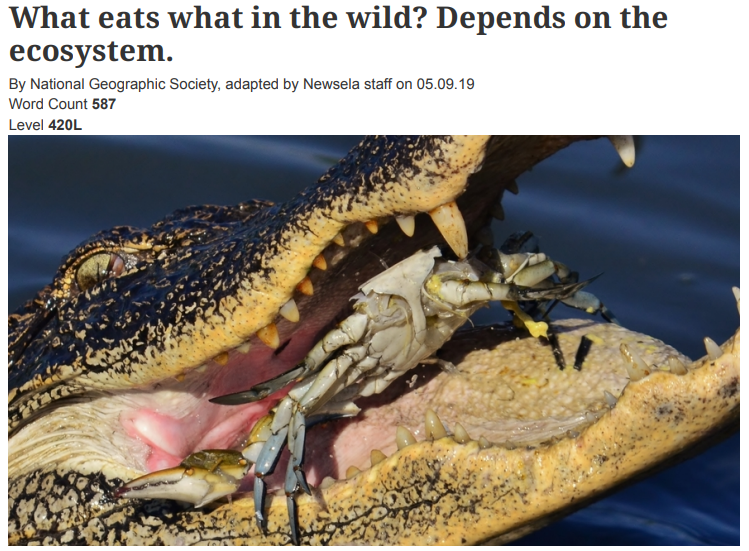
What do you see in the picture?
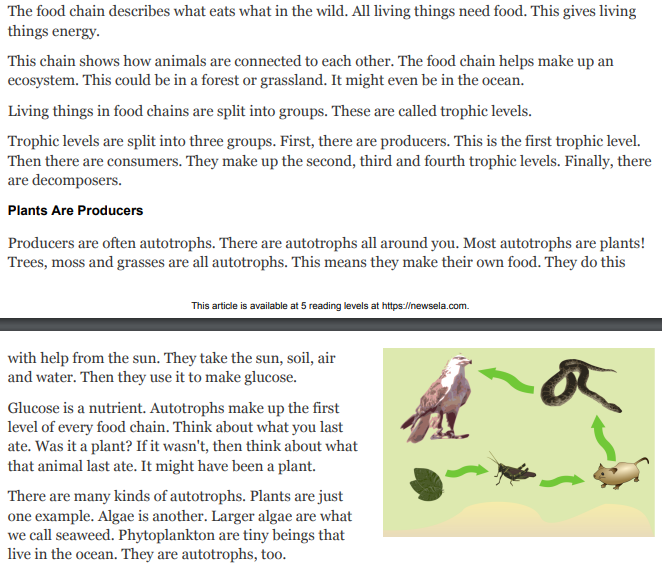
Why do all living things need food?
What does a food chain show?
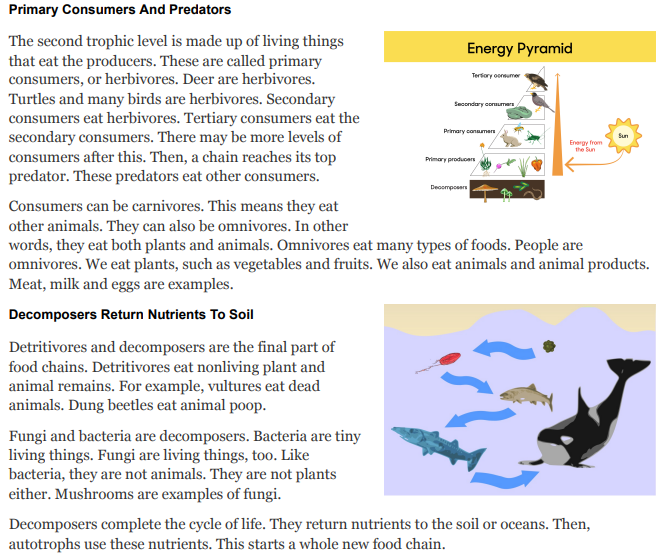
How are omnivores different from herbivores?
What do decomposers do?
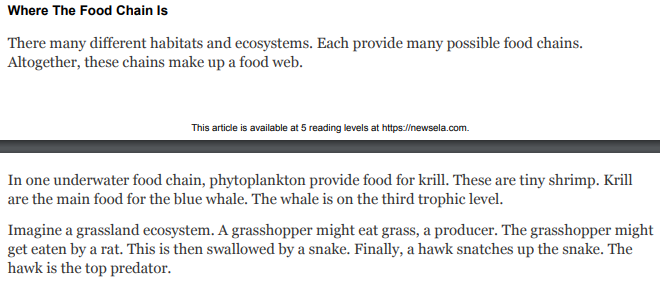
Describe one example of a food chain.
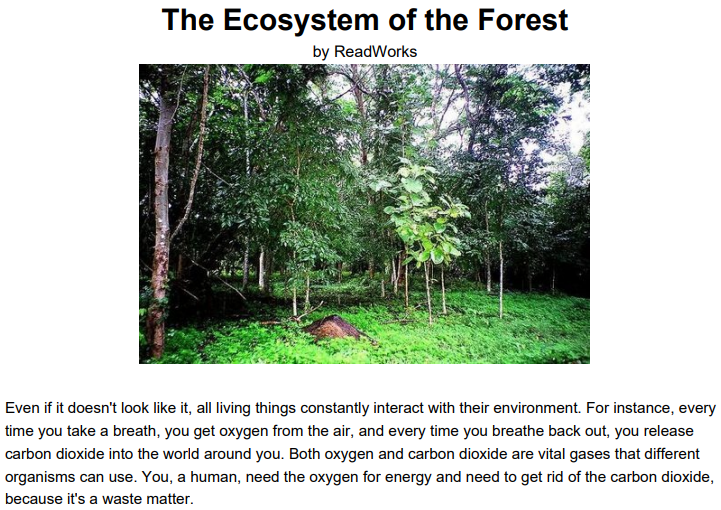
What biome do you see in this picture?
What is one way we interact with our environment?
What do all organisms do to their environment?
What happens in an ecosystem?
What are producers?
How are decomposers different from producers?
Why are humans heterotrophs?
The text says that insects eat moss, toads eat insects, and snakes eat toads. What is that called?
Is a toad a producer or consumer? Why?
What does a flower need in order to survive?
Why are plants on a hillside important for the soil?
What are autotrophs?
What are people?
Which of these do plants NOT use in photosynthesis?