This shows diversity?
This shows diversity?
https://sites.google.com/rgshw.com/year7chemistry/3-topic-2-particle-theory-brownian-motion-and-diffusion?authuser=0
https://sites.google.com/rgshw.com/year7chemistry/3-topic-2-particle-theory-brownian-motion-and-diffusion?authuser=0
This shows diversity?
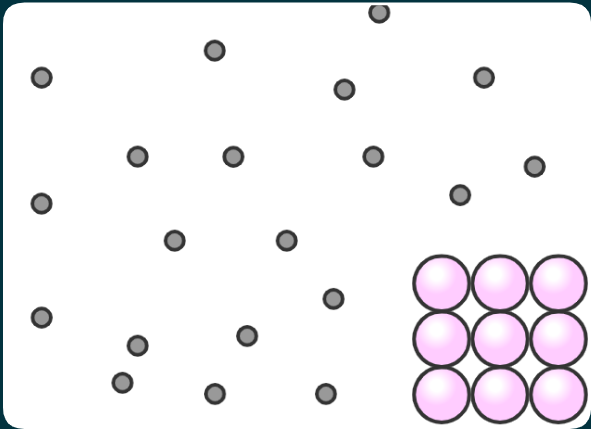
In diffusion a particles move from areas of concentration to areas of concentration.
This is due to the random collisions between the particles in the surroundings and the particles being diffused.
Diffusion happen in solids as the particles are fixed in position.
Diffusion occur in liquids or gases as the particles are free to move.
Diffusion is in gases as the particle in a gas are moving faster.
If the temperature of a gas or liquid is increased the rate of diffusion is also as there are more frequent and more forceful collisions.
Step 1.
Step 1.
Step 1.
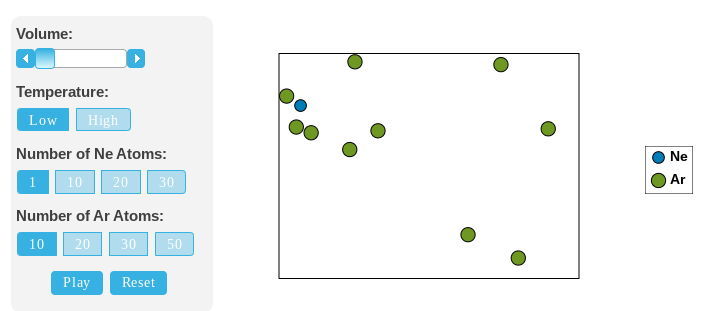
https://billvining.com/mmlib_sims/#gen_10_2
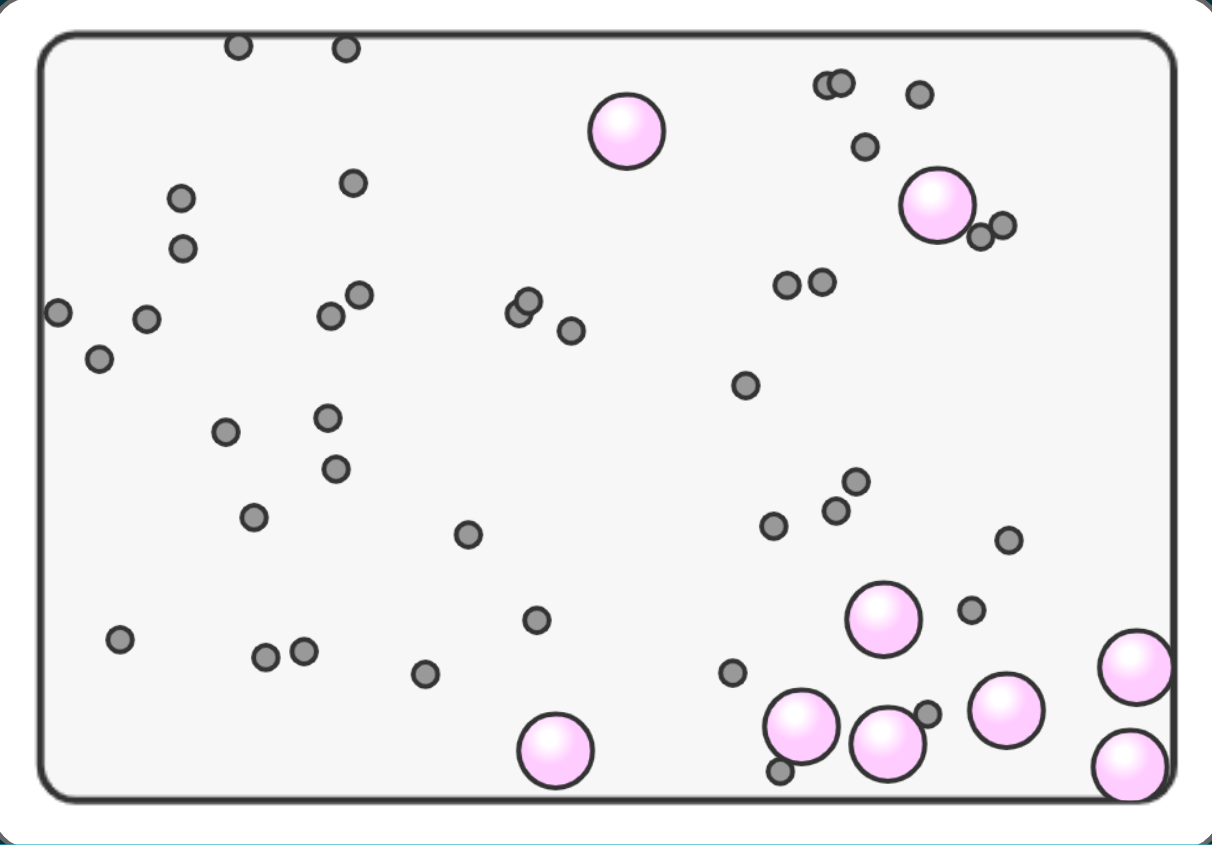
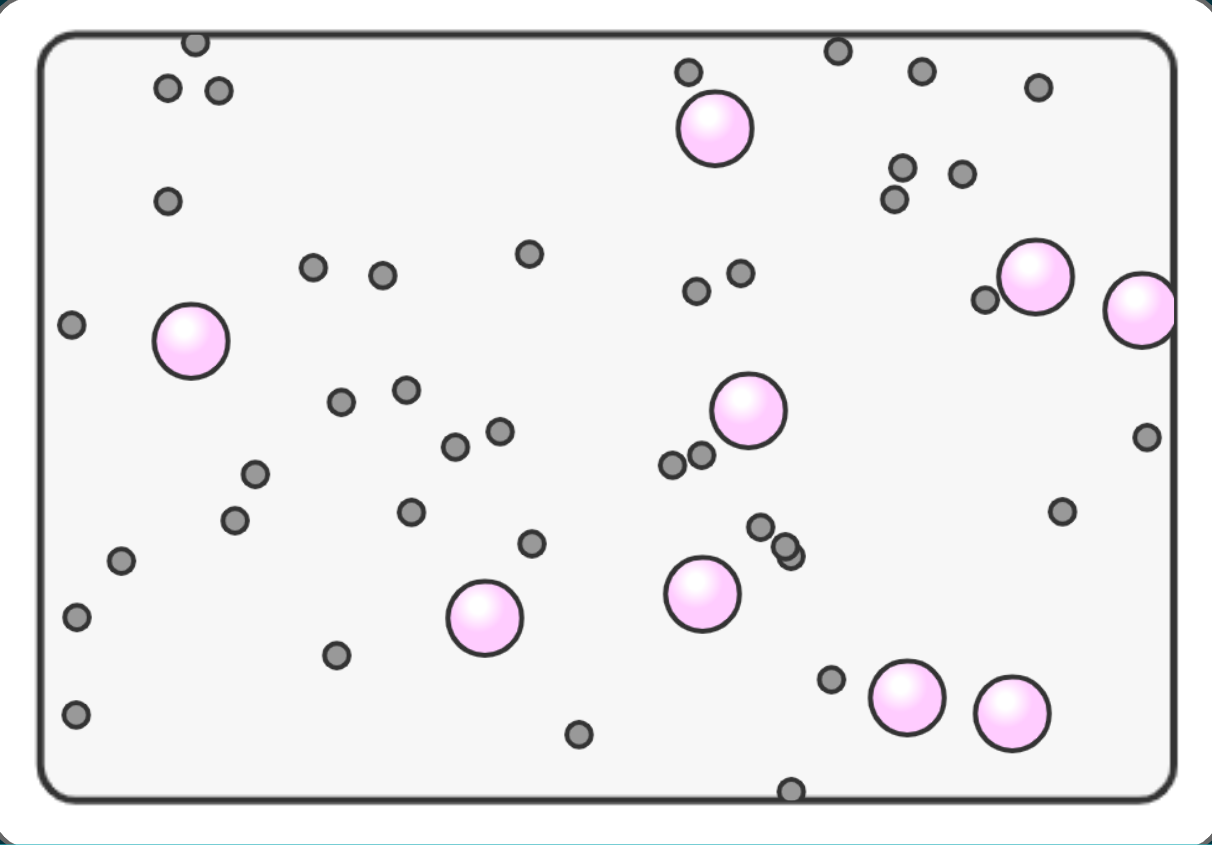
Select one Ne atom to represent the particle being diffused (this is the small blue dot).
Run the simulation with 10 Ar atoms and estimate/time how long it takes for the blue atom to make it to the other side of the container).
Repeat this for an increasing number of Ar atoms.
As the number of Ar atoms increases the time taken for the Ne atom to diffuse .
As the number of Ar atoms increases the frequency of direction changes for the Ne atom and the distance that the the Ne atom goes before changing direction .
In this experiment:
The number of Ar atoms is the variable.
The time taken for the Ne atom to "diffuse" is the variable.
The volume of the container is a variable.
The temperature is a variable.
https://issr.edu.kh/science/Textbooks_and_CDS/08_Cambridge_science_stage_8_self_marking_q/resources/camb_sci_l8_1032/camb_sci_l8_1032_launch.htm
Take a screen shot of your correct answers
Full marks