Log in
Sign up for FREE
arrow_back
Library

Biology Semester 1 (A) - Final Exam

star
star
star
star
star
Last updated 26 days ago
44 questions
Required
1
Required
1
Required
1
Required
1
Required
1
Required
1
Required
1
Required
2
Required
1
Required
1
Required
2
Required
1
Required
1
Required
2
Required
3
Required
3
Required
1
Required
1
Required
1
Required
1
Required
5
1
Required
1
Required
3
Required
1
Required
1
Required
1
Required
3
Required
2
Required
1
Required
1
Required
1
Required
1
Required
1
Required
1
Required
1
Required
1
Required
3
Required
1
Required
3
Required
4
Question 1
1.

As part of her studies, a scientist is researching the ways that cellular respiration and photosynthesis provide the energy for an ecosystem. The diagram illustrates how matter and energy move through an aquatic ecosystem.
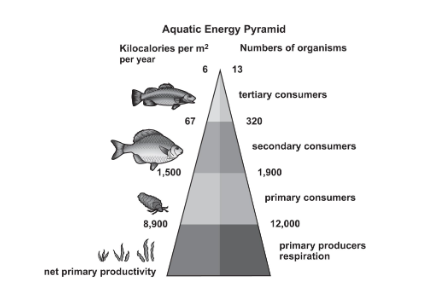
Which of the following statements are true in regards to the above pyramid?
Question 2
2.

Alicia is developing a model of photosynthesis and respiration. Part of her model includes the inputs and outputs of each process. Which of these describes inputs and outputs of Alicia’s model?

Question 3
3.

Brenda ran a 5 km race. During the race, she began to breathe heavily, and some of her muscles began to burn. Which of these explains why Brenda felt a burning in her muscles during the race?

Question 4
4.

What role does sunlight play in photosynthesis?

Question 5
5.

What is the equation for photosynthesis?

Question 6
6.

Which of the following statements is true about the relationship between cellular respiration and photosynthesis?

Question 7
7.

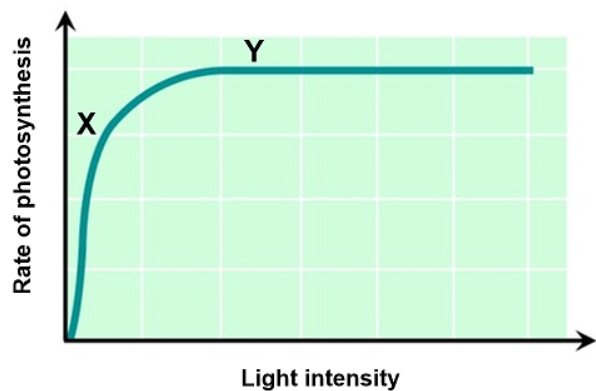
Which of the following statements is true about the relationship between light intensity and photosynthesis?

Question 8
8.

Match the component of the cell membrane with its function.

Draggable itemarrow_right_altCorresponding Item
Phospholipids
arrow_right_alt
Form the basic structure of the membrane
Protein
arrow_right_alt
Assists in transport and intercellular communication
Question 9
9.

Why do plants perform photosynthesis?

Question 10
10.

What is the equation for cellular respiration?

Question 11
11.

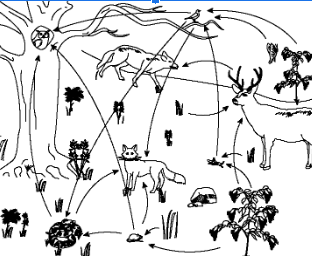
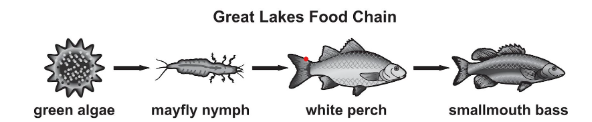
Lake Erie is a freshwater lake located in the Great Lakes region that borders Michigan, Ohio, Pennsylvania, and New York. The food chain shows an example of some of the relationships within this ecosystem.

Describe how carbon enters and exits this specific food chain. (Choose TWO)

Question 12
12.

Which organism depicted in the food web would you expect to have the fewest number of organisms in their population and why – coyote, deer, mouse or plant?

Question 13
13.

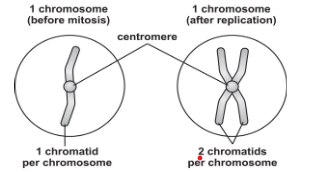
The model shows what happens to chromosomes during a certain part of the cell cycle.


Which of these is a reason that the chromosomes in the cell have two chromatids?

Question 14
14.
The scientist studies two cells from a multicellular organism. One cell is from the stomach of the organism, while the other cell is from the skin. Choose the best response for each blank to correctly complete the paragraph.

The cells’ nuclei would contain __________ genetic information (DNA). The cells would express (turn on) __________ genes. The cells would most likely have different structures and functions. The process by which the cells would divide would be same.
Question 15
15.

A student created the following models to show the chromosomes during the phases of mitosis. Drag the pictures next to the correct description.

  • Chromatids separate
  • Chromosomes begin to uncoil
  • Spindle fibers attach to centromeres
Question 16
16.

What are the THREE parts of the cell theory?

Question 17
17.

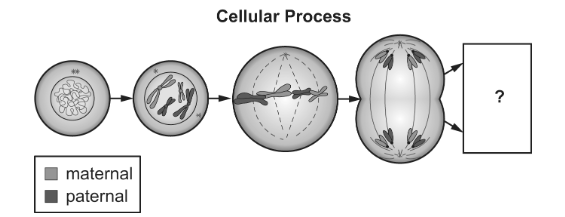
The model shows a cellular process.
What will be the end result of the process shown in the model?

Question 18
18.

After fertilization, a single cell divides successfully to form a multicellular structure. What happens next in order for this structure to develop tissues and organs to meet the needs of the organism?

Question 19
19.

What do cancer cells do differently than normal cells in the cell cycle?

Required
1
Required
1
Question 22
22.

Problems can take place at any point in the cell cycle.  The longer a cell spends in a given phase, the higher the chance something can go wrong.  Given this, which phase is most likely to have the most problems?

Required
1
Question 23
23.

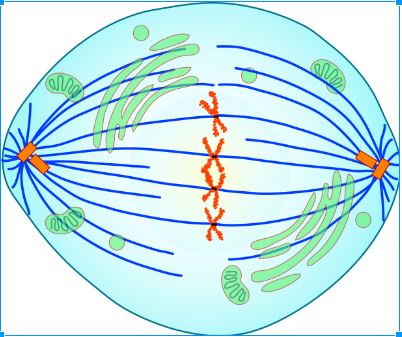
Identify the stage of mitosis shown in the image alongside

Question 24
24.

Match the phases with their characteristics-

Chromosomes align themselves in the middle
Sister chromatids move apart
DNA condenses and forms chromosomes
Two nuclei are formed and both of them have same number of chromosomes as parent cell.
Prophase
Metaphase
Anaphase
Telophase
Question 25
25.

Which statement best explains why a group of cells functions better than one large cell?

Question 26
26.

Which hypothesis about cells was later found to be wrong by scientists?

Question 27
27.

Match the following biomolecules to their primary functions.

Draggable itemarrow_right_altCorresponding Item
Carbohydrates
arrow_right_alt
Long-term Energy Storage
Proteins
arrow_right_alt
Provide Quick Energy
Lipids
arrow_right_alt
Enzymes and transport
Question 28
28.

What is the main difference between diffusion and facilitated diffusion?

Question 29
29.

In which process do molecules move from an area of high concentration to an area of low concentration?

Question 30
30.

Why are carrier/channel proteins used during facilitated diffusion?

Question 31
31.

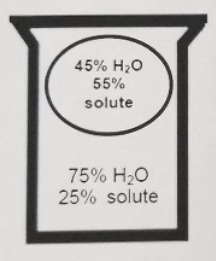
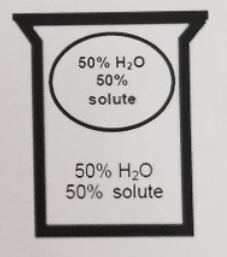
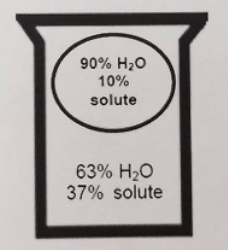
Determine if each of the following solutions is hypertonic, hypotonic or isotonic:

Hypertonic
Hypotonic
Isotonic
Question 32
32.

What is the key difference between active and passive transport?

Question 33
33.

What can be moved across a cell membrane via osmosis?

Question 34
34.

How does sweating help maintain homeostasis during exercise?

Question 35
35.

Which of the following characteristics of life explains why birds fly south for the winter?

Question 36
36.

Which situation best exemplifies homeostasis in action?

Question 37
37.

What is the primary purpose of homeostasis in a biological system?

Question 38
38.

What does a positive feedback loop do in a biological system?

Question 39
39.

What are the two types of feedback loops in biological systems?

Question 40
40.

What characterizes a negative feedback loop in a living system?

Question 41
41.

Put in order from largest to smallest (Largest on top, smallest on bottom)

  1. organ systems
  2. organism
  3. cells
  4. tissues
  5. organs
Question 42
42.

What is the basic structural and functional unit of living organisms?

Question 43
43.

Match the cell structure with its primary function.

Draggable itemarrow_right_altCorresponding Item
Ribosomes
arrow_right_alt
Energy production (ATP synthesis)
Mitochondria
arrow_right_alt
Control center of cell and genetics
Nucleus
arrow_right_alt
Protein synthesis
Question 44
44.

Associate these organelles with their respective cells.

Draggable itemarrow_right_altCorresponding Item
Nucleus
arrow_right_alt
Plant cells
Cell wall
arrow_right_alt
Plant cells
Chloroplasts
arrow_right_alt
Animal cells
Lysosomes
arrow_right_alt
Both plant and animal cells
Question 20
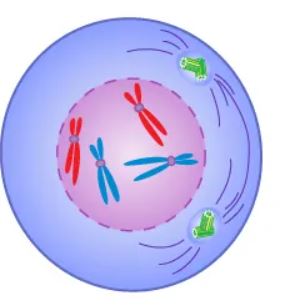
20.

Name the stage shown in the image alongside-

Question 21
21.

What made you choose your answer in the previous question?