1
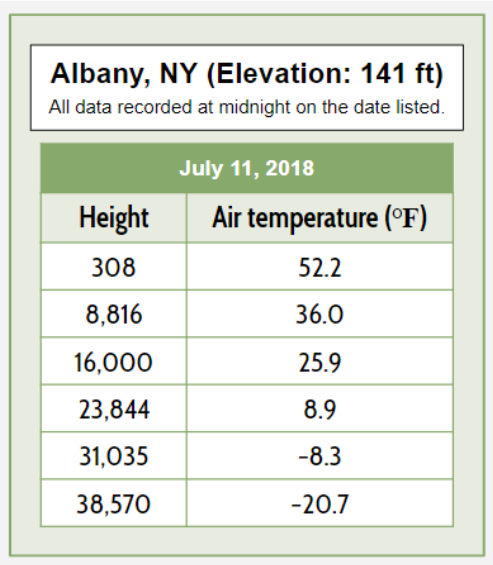
What patterns do you notice in this set of weather balloon data?
What patterns do you notice in this set of weather balloon data?
Hailstorms often happen during the warmer months. How is it possible for hail to form and fall from the sky when the temperature is not cold enough for water to freeze?
How could we find out if the air up high is colder than the air near the ground?
How high up in the atmosphere do you think we would need to go?
What are some ways we could put tools that record such measurements up in the air?
Predict: How does the temperature of the air higher up compare to the air near the ground?
What patterns do you notice in this set of weather balloon data?
Analyze the 4 sets of data for the site that is assigned to you and your partner. Document any patterns you notice in the data for January.
Document any patterns you notice in the data for April.
Document any patterns you notice in the data for July.
Document any patterns you notice in the data for October.
After comparing your data and observations with another pair, what claim can you now make about the relationship between the temperature of the air and the distance from the ground (altitude)?