This lesson explores TWO main causes of the War of 1812 and the arguments made in favor of and against a declaration of war.
Introduction to the War of 1812
Impressment: The Seizure of American Sailors
Required
1
Required
1
British Occupation in the Ohio Valley
Required
3
Required
3
Debating the War
Required
8
Required
7
Required
3
“Without a press, I have no idea how our Fleet can be manned.”
—British Admiral Lord Horatio Nelson
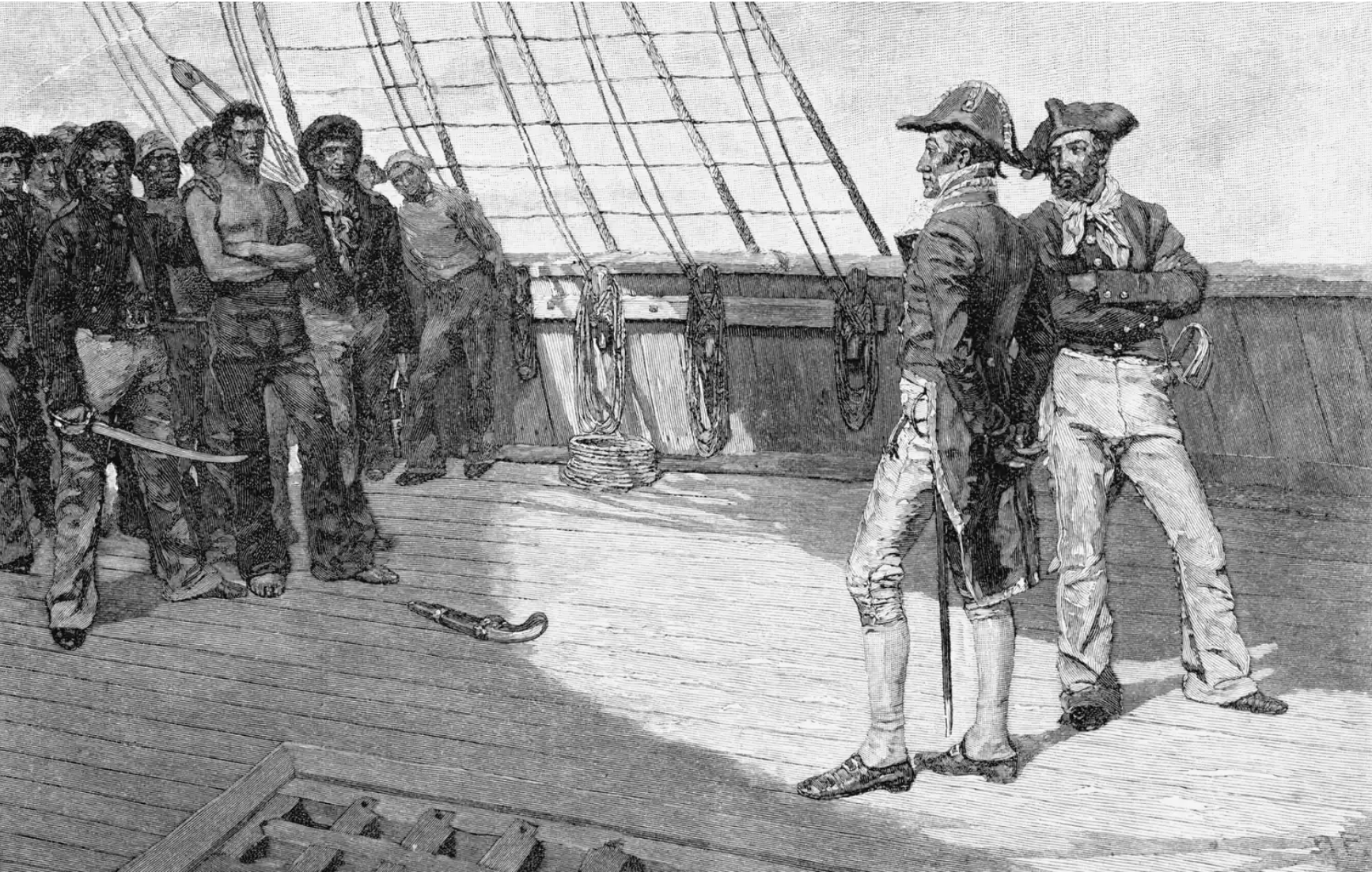
One major cause of the war was the British practice of impressment, which involved forcing American sailors into service in the British Royal Navy.
During the early 1800s, American merchant ships often faced harassment by British warships. British captains accused American crew members of being deserters from the Royal Navy and forced them into service. While it was true that some deserters from the harsh life of the Royal Navy found refuge on American ships, thousands of innocent American sailors were also taken. In total, more than 6,000 American sailors were pressed into the Royal Navy between 1790 and 1812.
(Above) British officers inspect a group of American sailors for impressment into the British navy, ca. 1810. Library of Congress.
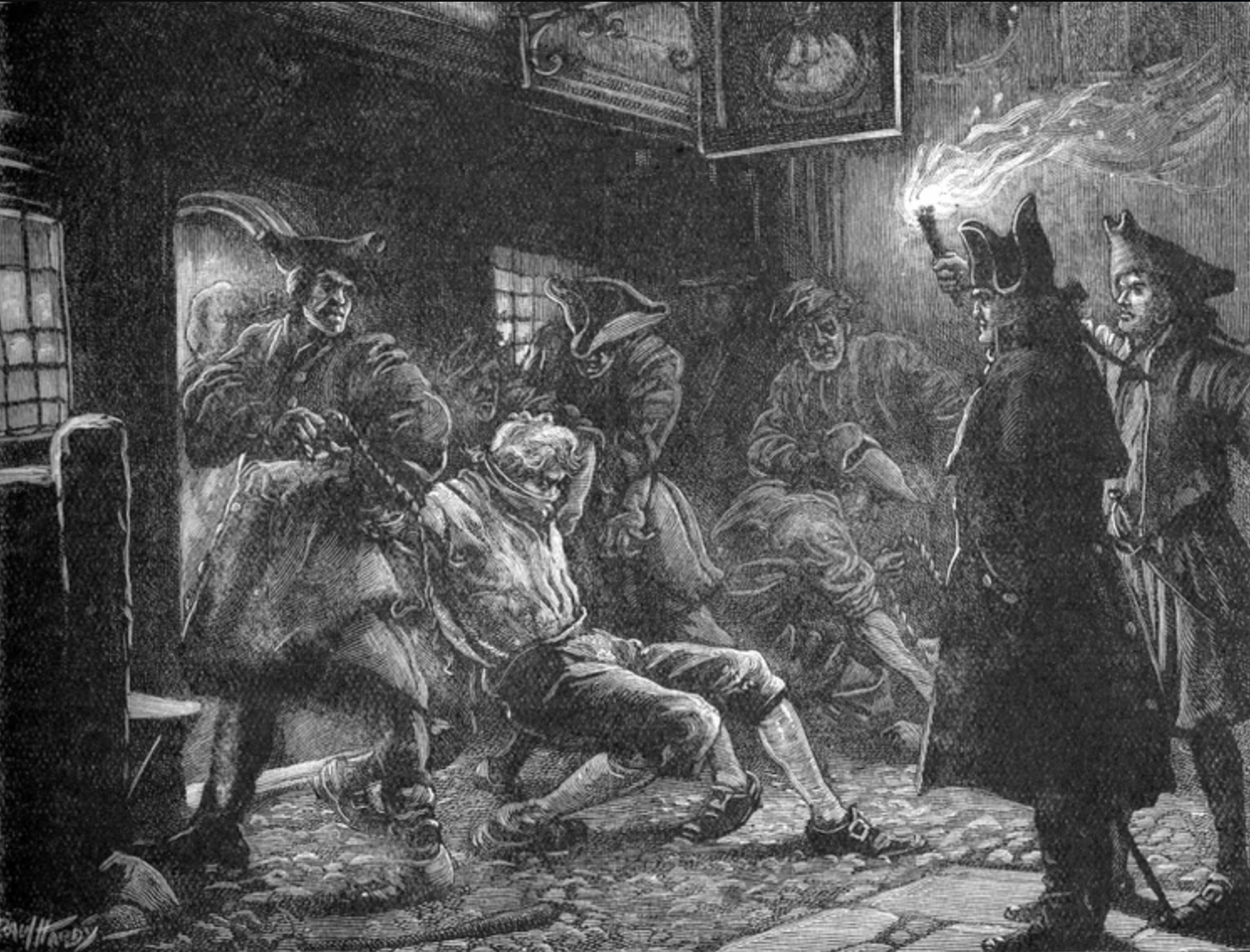
(Above) A British press-gang at work. Source unknown.
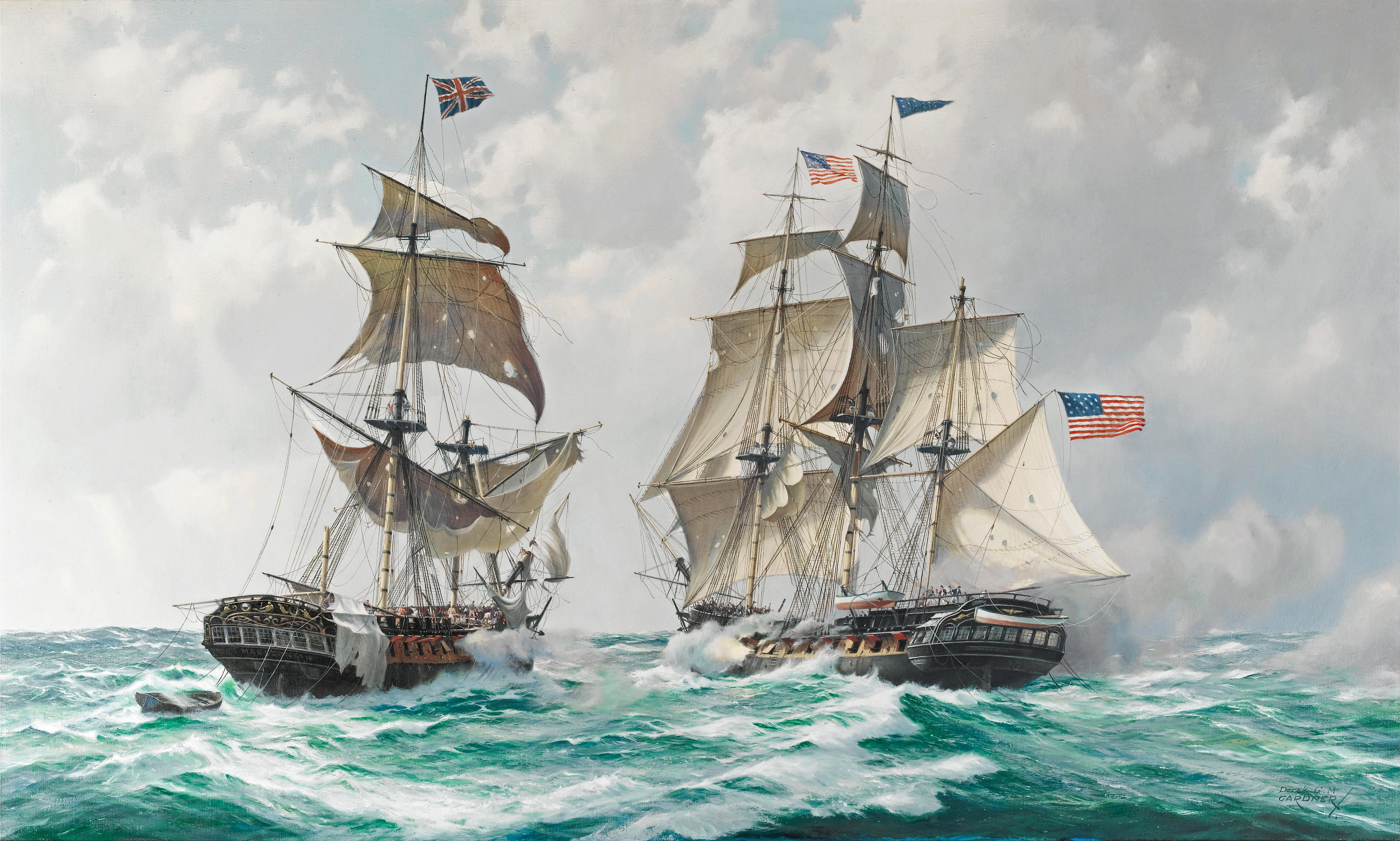
(Above) The capture of H.M.S. Macedonian by the American frigate United States off Madeira, 25th. October 1812. By 'Derek G.M. Gardner'
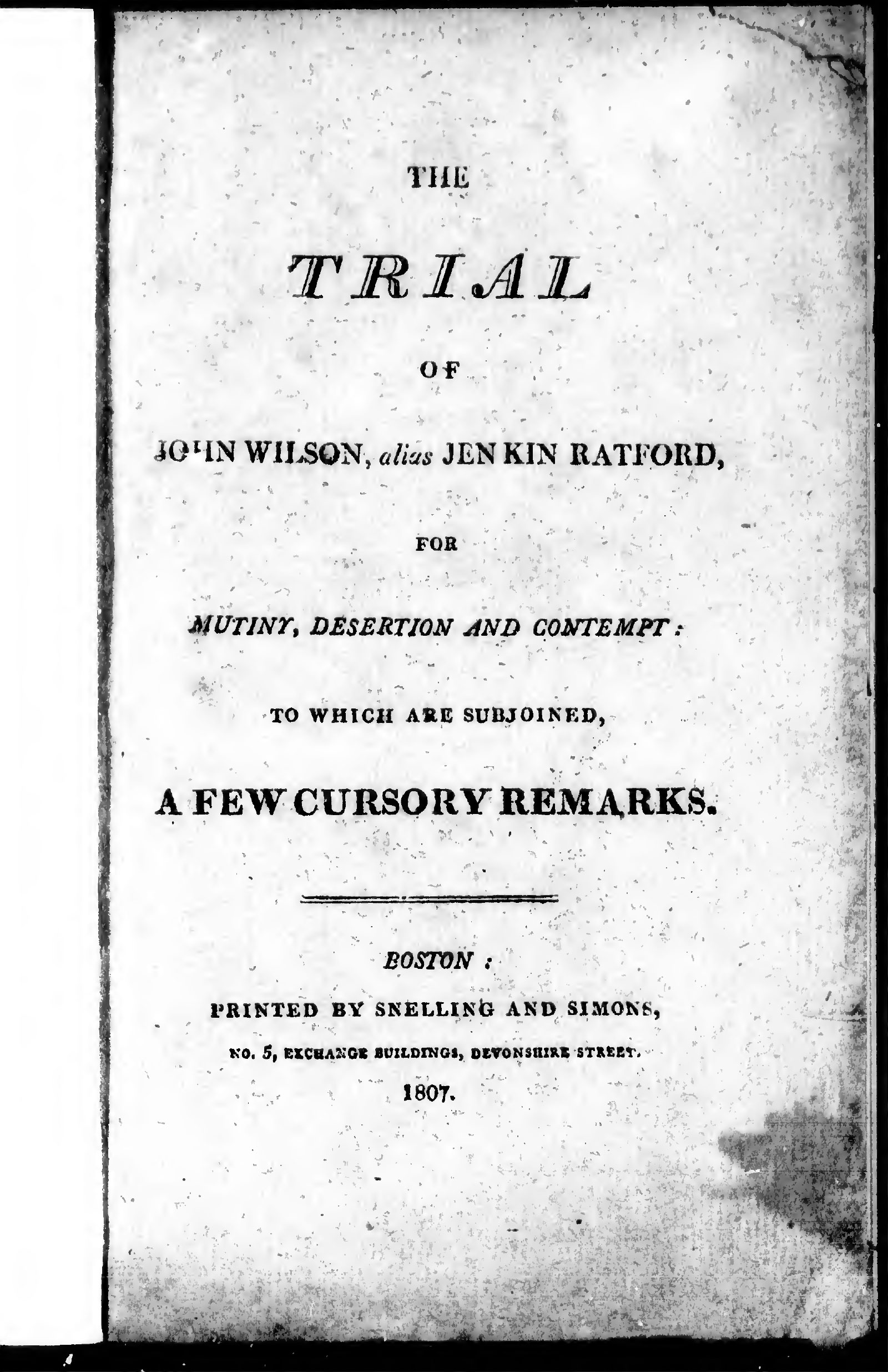
Jenkin Ratford
In the summer of 1807, the British Royal Navy vessel HMS Halifax patrolled the coast of Virginia as part of Britain’s efforts to maintain naval dominance. Onboard was a young Londoner named Jenkin Ratford, a sailor who had grown weary of the brutal conditions of life in the Royal Navy. Like many sailors, Ratford faced harsh discipline, low pay, and the constant risk of injury or death. Determined to escape, he hatched a bold plan.
One moonlit night, Ratford and four other crewmen stole a lifeboat and rowed to the shores of Norfolk, Virginia. For Ratford, America symbolized freedom and opportunity—a “land of liberty” where he hoped to leave the hardships of naval service behind. Once in Norfolk, Ratford couldn’t resist boasting about his daring escape. He walked the streets openly, bragging about his newfound freedom to anyone who would listen. However, his confidence would soon be his undoing.
Word of Ratford’s escape quickly reached the British officers stationed aboard the Halifax. Determined to make an example of the deserters, the Halifax’s captain vowed to track them down. Meanwhile, Ratford sought work in the only profession he knew - sailing. He signed on as a crewman aboard the USS Chesapeake, an American frigate bound for the Mediterranean.
The Chesapeake-Leopard Affair
In June 1807, the Chesapeake prepared to set sail from Norfolk. The ship, under the command of Commodore James Barron, was ill-prepared for conflict. Its decks were cluttered with cargo, and its guns were not ready for action. The Chesapeake's mission was to protect American shipping interests in the Mediterranean, and Barron did not anticipate any trouble close to home.
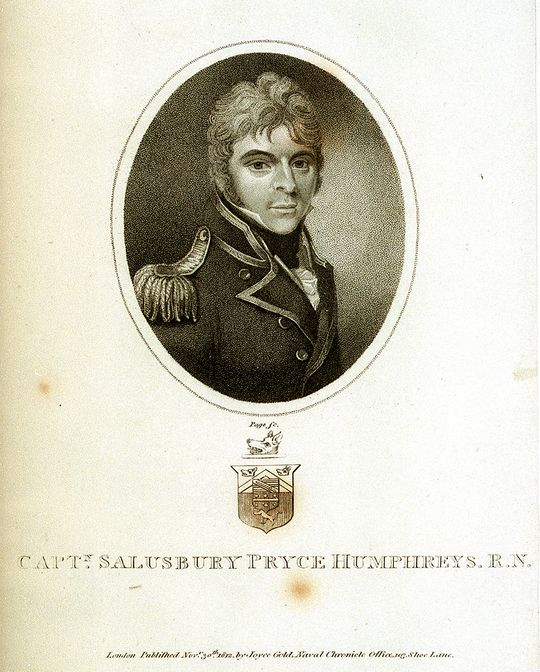
Unbeknownst to Barron, the British warship HMS Leopard had been dispatched to intercept the Chesapeake and reclaim the deserters. The Leopard’s captain, Salisbury Humphreys, was under orders to stop the Chesapeake and search for Ratford and his companions. When the Chesapeake left port, the Leopard followed.
Off the coast of Virginia, the Leopard closed in on the Chesapeake and signaled for it to stop. Humphreys sent a boarding party to demand the return of the deserters, including Ratford. Commodore Barron, aware that his ship was not ready for combat, refused the demand but declined to prepare his crew for defense. Tensions escalated quickly.
Without further warning, the Leopard opened fire. Its broadside ripped through the Chesapeake, killing three American sailors and wounding eighteen others. The Chesapeake was defenseless and quickly surrendered. British officers boarded the ship, arrested Ratford and the other deserters, and returned to the Leopard.
Aftermath
The Chesapeake-Leopard Affair shocked the American public. The unprovoked attack on an American warship, coupled with the seizure of its crew, was seen as a direct assault on the nation’s sovereignty. Ratford’s escape and subsequent recapture became a symbol of the broader issue of British impressment and disrespect for American neutrality.
For Ratford, the consequences were severe. He was returned to the Royal Navy and tried for desertion. Found guilty, he was executed—hanged from the yardarm as a warning to other would-be deserters.
Many Americans viewed the Chesapeake-Leopard Affair as proof of British disregard for American sovereignty. The Chesapeake-Leopard Affair in 1807 was a turning point in the practice of impressment. News of the event outraged the American public, uniting people across political lines in their demand for action and pushing the two nations closer to war.
Trim End | 03:52
Question 1 | 00:37
Question 2 | 01:27
Question 3 | 02:55
Question 4 | 03:49
00:00/00:00
Question 1
00:37
keyboard_arrow_down
1
Question 2
01:27
keyboard_arrow_down
1
Question 3
02:55
keyboard_arrow_down
1
Question 4
03:49
keyboard_arrow_down
3
Question 5
5.
Roughly how many Americans were pressed into the Royal Navy between 1790 and 1812?
Question 6
6.
Why might the Chesapeake - Leopard Affair be considered a turning point in the practice of impressment?
Conflict in the Ohio Valley
Changing U.S. Policy toward Native Americans
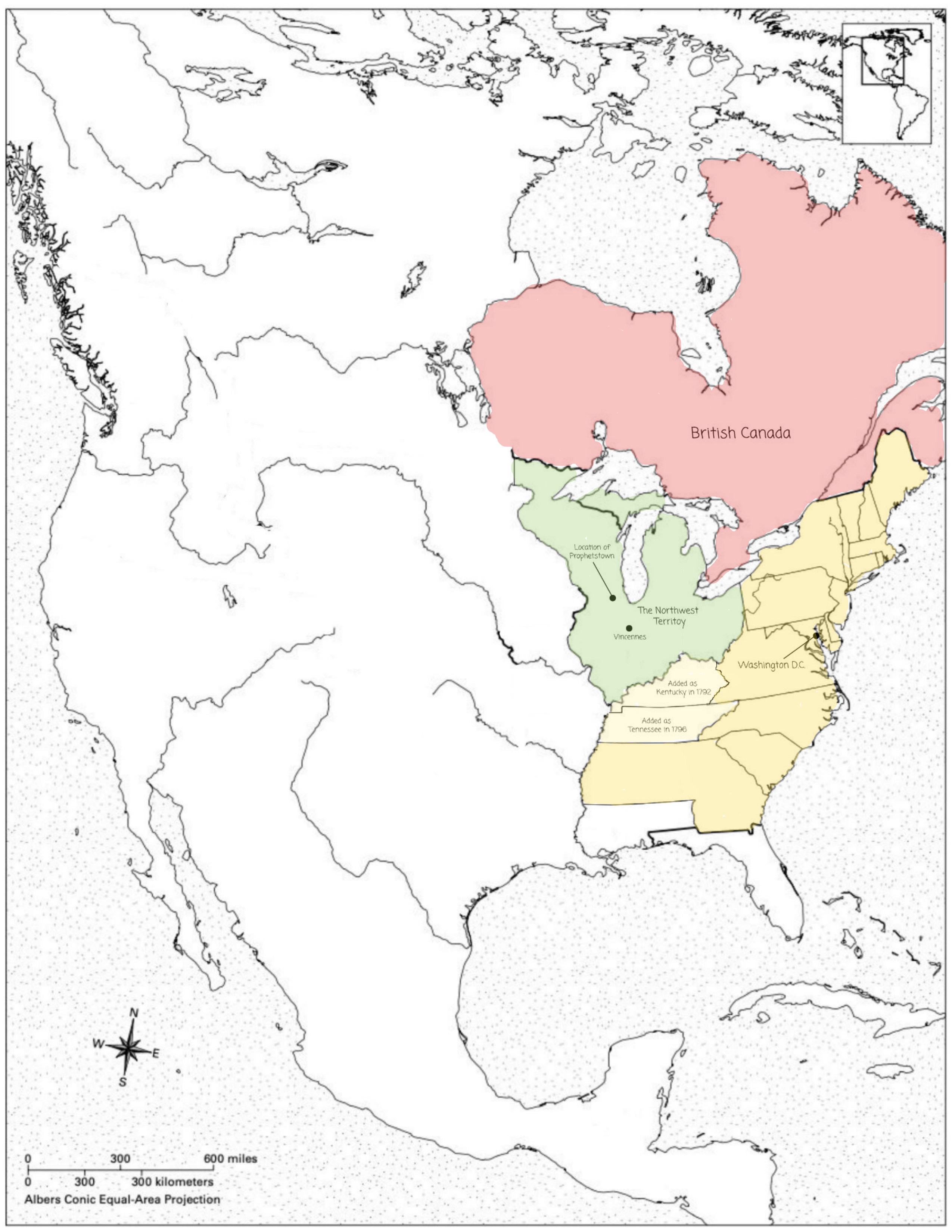
Like other presidents, Jefferson faced the challenge of establishing a foreign policy to guide his ambassadors in their negotiations with Native American tribes in the Northwest Territory. Jefferson's administration shifted U.S. policy in several important ways, taking a more aggressive approach to acquiring land and requiring cultural assimilation as a condition of their continued existence within U.S. territory.
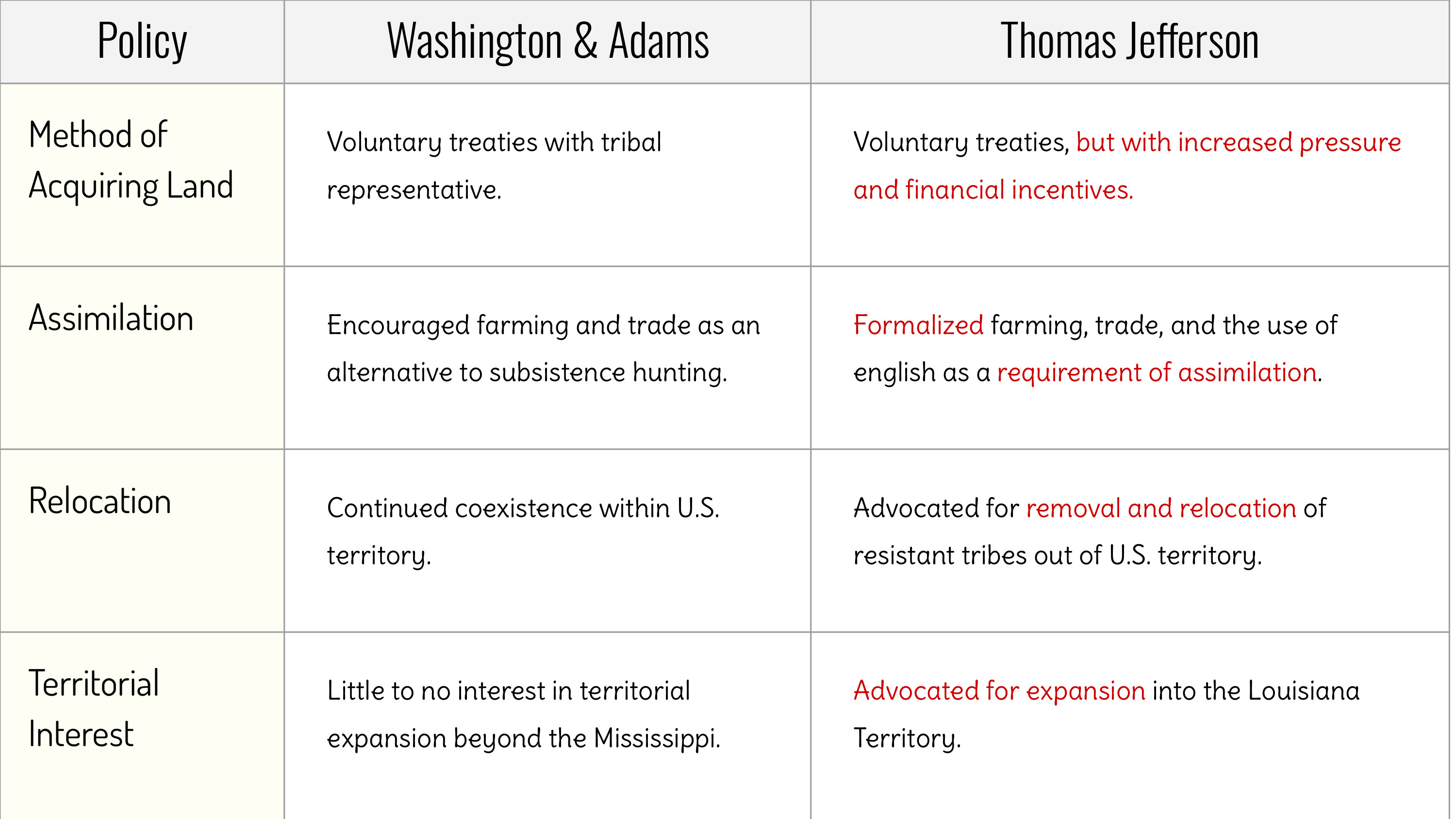
(Click to enlarge)
(Click to enlarge)
Tecumseh and Native American Resistance
The rapid westward expansion of American settlers into the Ohio Valley after the American Revolution brought conflict with Native American tribes living in the region. This tension was exacerbated by the U.S. government’s policies aimed at acquiring Native land. President Thomas Jefferson envisioned a plan to assimilate Native Americans into American society by encouraging them to adopt farming as a replacement for their traditional hunting lifestyle. In exchange, tribes would cede vast tracts of their ancestral lands. While this was framed as a peaceful solution, the treaties often exploited tribal divisions and were riddled with broken promises.
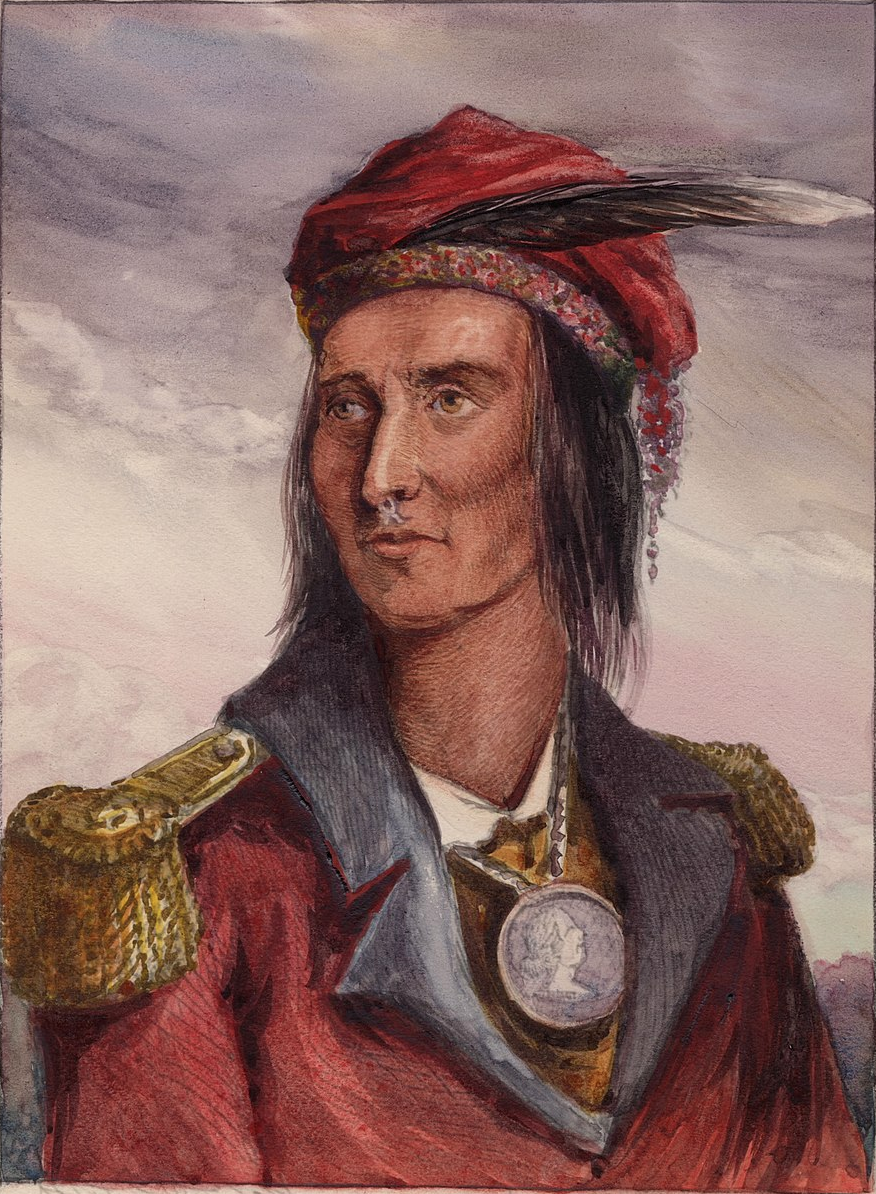
One of the most significant figures resisting this wave of expansion was Tecumseh, a charismatic and strategic leader of the Shawnee tribe. Tecumseh sought to unite various tribes into a confederation to oppose U.S. expansion. His vision was not merely about preserving land but also about maintaining Native American culture and sovereignty. Tecumseh argued that the land belonged to all tribes collectively, and no single tribe had the right to sell it without their consent.
The Treaty of Fort Wayne (1809)
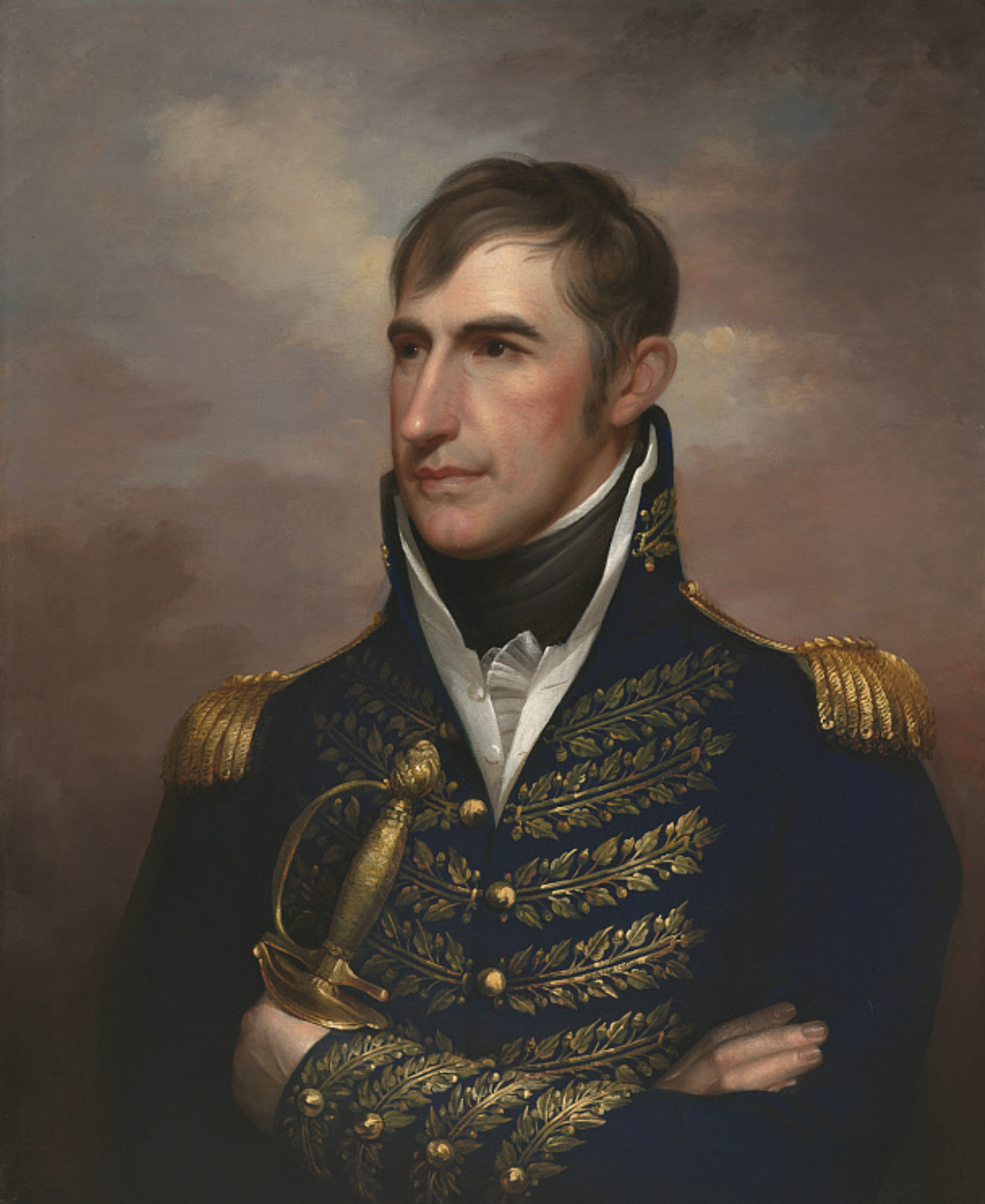
In 1809, Governor William Henry Harrison of the Indiana Territory negotiated the Treaty of Fort Wayne, acquiring over three million acres of Native land from leaders of the Delaware, Miami, and Potawatomi tribes. However, these leaders did not represent all Native groups in the region, and many tribes opposed the treaty. Tecumseh was outraged, claiming that the chiefs who signed the treaty had no authority to sell the land.
Tecumseh confronted Harrison directly at a council meeting in Vincennes in August 1810. During this dramatic encounter, Tecumseh laid out his position: he declared the treaty illegitimate and warned Harrison that if settlers continued to move onto the land, it would lead to conflict. Tecumseh's fiery speech and imposing presence left a strong impression on those in attendance. Harrison, however, dismissed Tecumseh's claims, arguing that the United States had legally obtained the land through treaties.
Tensions Escalate
Harrison and Tecumseh met again in 1811, but this time their interactions were more contentious. Tecumseh demanded that the U.S. government nullify the Treaty of Fort Wayne and return the land to Native tribes. Harrison refused, viewing Tecumseh’s confederation as a direct threat to American sovereignty. Tecumseh, in turn, warned Harrison that if settlers continued encroaching on Native lands, the tribes would retaliate.
While Tecumseh traveled south to rally additional tribes to his cause, he left his brother, Tenskwatawa, also known as "The Prophet," in charge of Prophetstown. Tenskwatawa, a spiritual leader, inspired warriors by promoting a vision of Native unity and cultural revival. However, he lacked Tecumseh’s strategic discipline.
The Battle of Tippecanoe (1811)
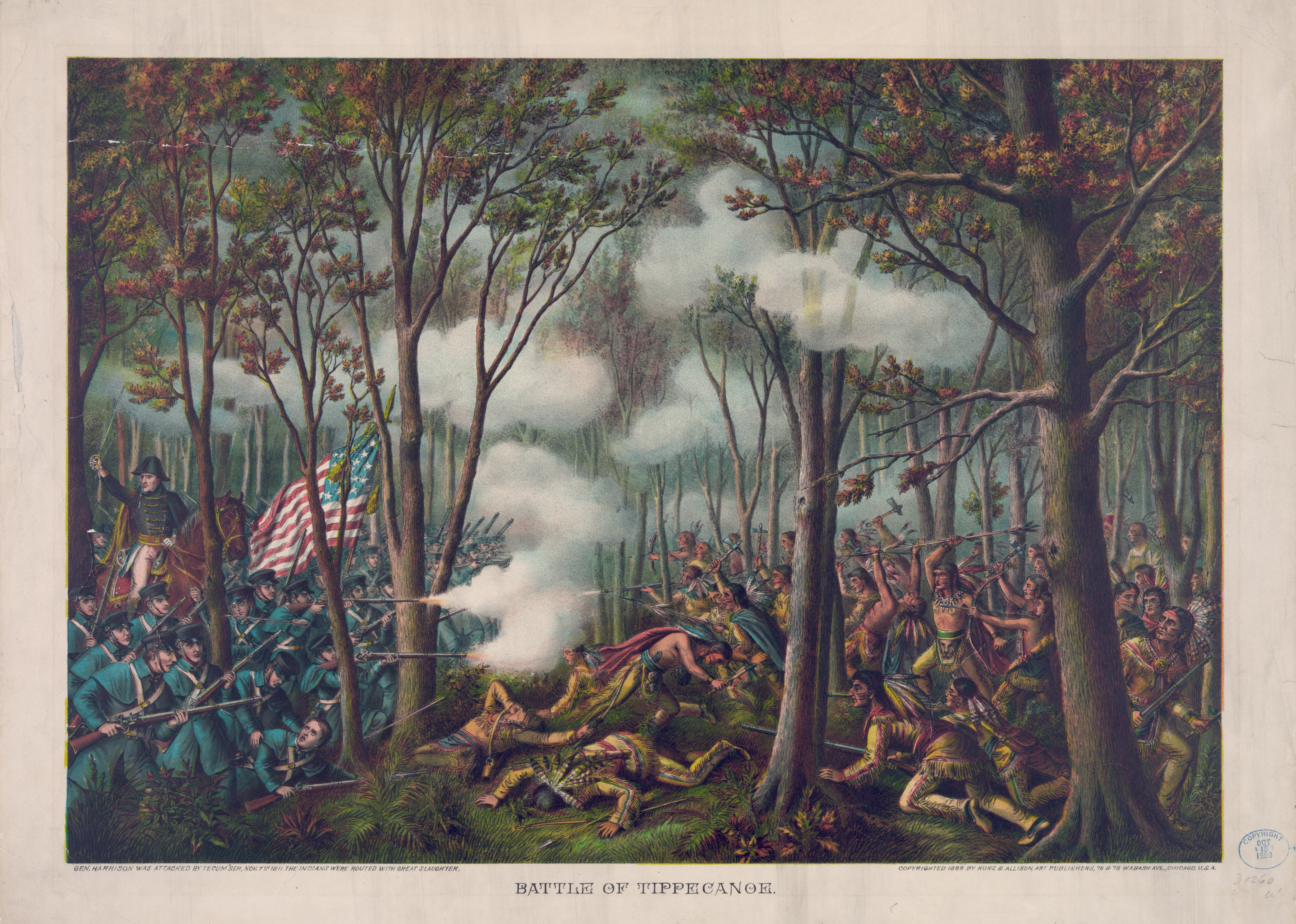
Harrison, seeking to break the growing resistance, marched with a force of about 1,000 men to Prophetstown in November 1811. Tecumseh was absent, and Tenskwatawa attempted to delay a confrontation, asking for a ceasefire. Harrison, skeptical of Tenskwatawa's intentions, ordered his men to camp in a defensive formation nearby.
On the night of November 6, Tenskwatawa, against Tecumseh’s orders, launched a preemptive attack on Harrison’s forces. The battle began at dawn, with Native warriors attacking Harrison’s encampment. Despite their initial success, the Shawnee and their allies were ultimately repelled by Harrison’s well-armed troops. The following day,
Harrison’s forces destroyed Prophetstown, finding British-supplied weapons among the Native forces—a discovery that confirmed American suspicions of British involvement and fueled calls for war.
The defeat at Tippecanoe was a significant blow to Tecumseh’s confederation. When Tecumseh returned to find Prophetstown in ruins, he was forced to abandon his plans for a united Native resistance in the Ohio Valley. However, he continued to resist, allying with the British during the War of 1812, where he played a critical role in military campaigns in Canada.
Tecumseh’s Legacy
Tecumseh’s efforts to unite Native tribes and resist U.S. expansion left a lasting legacy. Although his confederation ultimately failed, his vision of Native unity inspired later movements. Tecumseh’s death in 1813 during the Battle of the Thames marked the end of significant Native resistance in the Northwest Territory.
Required
1
Question 8
8.
What role did the British play in the conflict between Tecumseh and Harrison?
Question 9
9.
How did Tecumseh’s vision for a united Native American confederation challenge U.S. expansion?
Arguments by Opponents of the War
Key Figures Among the Opposition
Prominent figures and groups opposing the war included:
New England Federalists: This group, centered in commercial states like Massachusetts, Connecticut, and Rhode Island, was deeply opposed to the war, fearing its impact on trade and regional security.
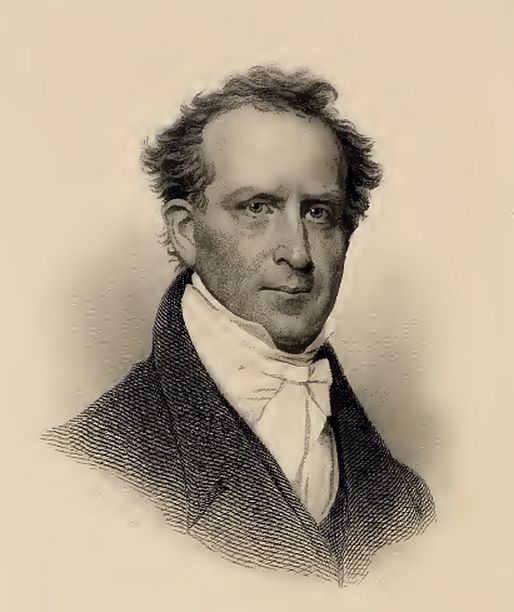
Josiah Quincy: A leading Federalist congressman, Quincy was one of the most vocal critics of the war, warning that it would harm American interests and create political instability.
The Hartford Convention: In 1814, this gathering of New England Federalists openly discussed their grievances against the war and even considered secession, highlighting the depth of opposition.
1. Economic Consequences
Opponents of the war, especially merchants and shipowners in New England, feared devastating economic losses. Their arguments centered on the following:
Trade dependence on Britain: New England’s economy relied heavily on maritime trade, much of which involved Britain or its colonies. A war with Britain would further disrupt commerce, which was already suffering under the Embargo Act (1807) and the Non-Intercourse Act (1809).
Risk of economic collapse: Many opponents argued that the U.S. economy, still in its infancy, was not strong enough to withstand the economic pressures of a war with one of the world’s most powerful nations. They feared blockades and the destruction of the nation’s fledgling navy.
2. Military Unpreparedness
Critics of the war highlighted the United States’ lack of readiness for a large-scale conflict:
Weak military: The U.S. Army and Navy were small, poorly funded, and ill-equipped compared to Britain’s seasoned forces. Opponents worried that the U.S. lacked the resources to sustain a prolonged war.
Risk of counter-invasion: With British forces stationed in Canada and along the Atlantic, some feared that the war would invite a counter-invasion of American territory, especially in the northern states.
3. Opposition to Expansionism
Some Americans, particularly Federalists, criticized the War Hawks’ ambitions to expand into Canada and other territories. They viewed the war as:
An unjust land grab: Critics accused the War Hawks of using maritime grievances as an excuse to pursue territorial expansion, particularly in Canada and Native lands. They argued that this aggression was unnecessary and immoral.
A sectional conflict: Federalists feared that the war, which seemed driven by the interests of southern and western states, would disproportionately benefit those regions while leaving New England to bear the brunt of British retaliation.
Opponents of the War of 1812 argued that it was unnecessary, risky, and driven by sectional and political interests rather than national ones. Although they failed to prevent the declaration of war, their concerns shaped public debate and revealed significant divisions within the young nation.
Arguments by Supporters of the War
Key Figures Among the War Hawks
The arguments for war were led by young, dynamic politicians in Congress, including:
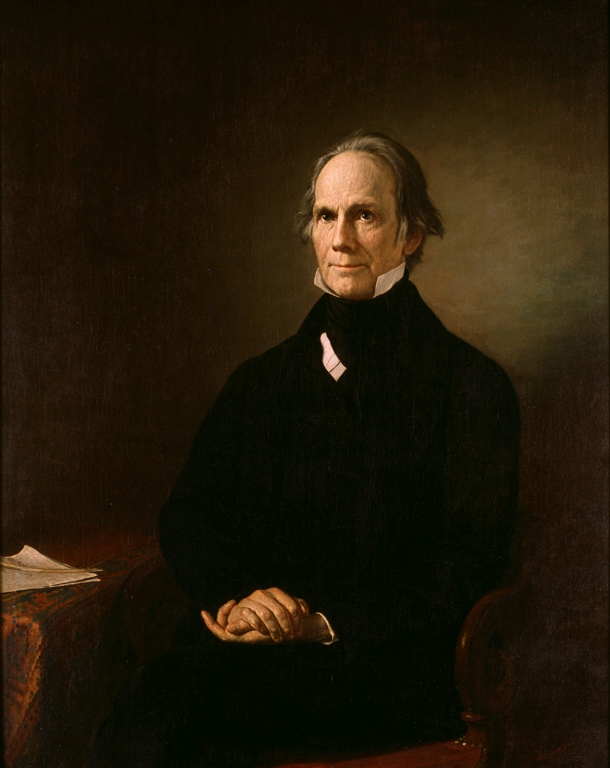
Henry Clay: Speaker of the House and a staunch advocate for war, Clay argued that it was essential to defend American sovereignty and honor.
John C. Calhoun: South Carolina Congressman Calhoun emphasized the need to protect American interests on the frontier.
Felix Grundy: A prominent voice for frontier settlers, Grundy highlighted British support for Native resistance as a key reason for war.
1. Defending American Sovereignty
One of the most compelling arguments for war was that British actions violated American sovereignty. Supporters argued that the United States could not be considered independent if it allowed British forces to continue harassing American commerce.
Impressment of American sailors: The British Royal Navy’s practice of forcibly taking American sailors from merchant ships and forcing them to serve in their navy was seen as a direct affront to U.S. sovereignty. War supporters argued that failing to respond would make the U.S. appear weak and incapable of protecting its citizens.
Blockade of American trade: The British Orders in Council restricted American trade with France, damaging the U.S. economy and infringing on its neutral rights. Proponents of war saw these restrictions as an insult to the United States’ independence and economic freedom.
2. National Honor and Reputation
War supporters believed that British actions had humiliated the United States. Incidents like the Chesapeake-Leopard Affair were viewed as unacceptable provocations. The War Hawks argued that the young nation needed to stand up to Britain to preserve its national honor.
Leaders like Henry Clay insisted that a strong response was essential to earning respect from other nations. They argued that tolerating British aggression would make the U.S. appear weak on the world stage, jeopardizing its future as a sovereign power.
3. Frontier Security and Native American Resistance
Many War Hawks came from the western frontier, where settlers faced frequent attacks from Native American tribes. These settlers and their representatives in Congress argued that:
The British were arming and inciting Native tribes: The discovery of British weapons at Prophetstown after the Battle of Tippecanoe in 1811 provided concrete evidence for these claims. War supporters believed that British interference encouraged violent resistance, putting American lives at risk.
Eliminating British influence in the Northwest Territory was essential: By defeating the British and their Native allies, the U.S. could secure its frontier and protect settlers.
4. Economic Opportunities and Expansion
For some, the war was also an opportunity for economic growth and territorial expansion. War supporters believed that:
Seizing Canada would benefit the U.S.: Many War Hawks, particularly from southern and western states, saw the war as a chance to expand U.S. territory into Canada, which was lightly defended by British forces. They argued that Canada’s agricultural and natural resources would strengthen the American economy.
A stronger maritime presence would boost trade: War supporters claimed that defeating the British navy would give the U.S. greater control over trade routes, reducing reliance on European powers and fostering economic independence.
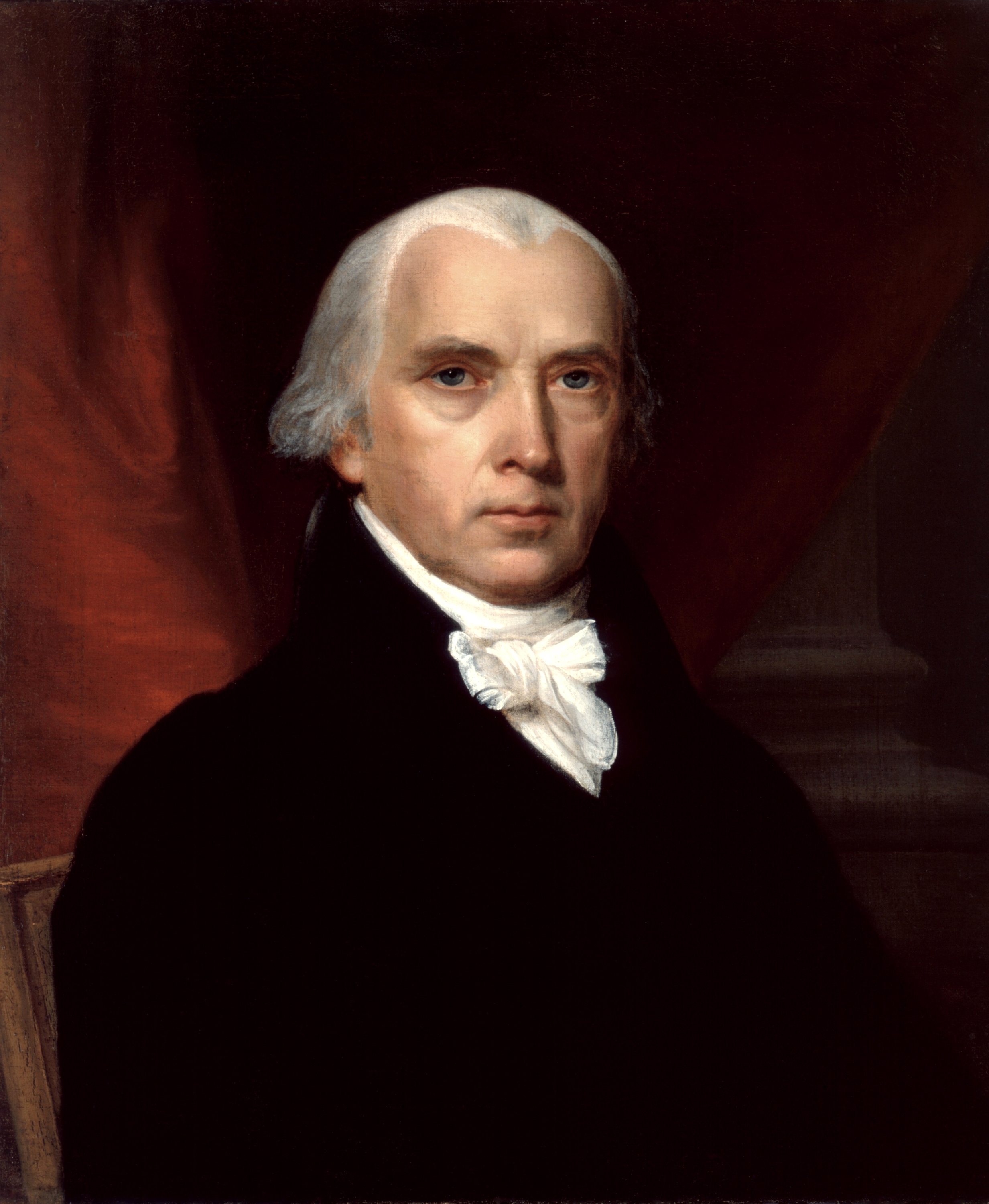
Supporters of war in 1812 framed their arguments around the themes of sovereignty, honor, security, economic opportunity, and patriotism. While their opponents feared the risks and costs of war, the War Hawks successfully persuaded Congress to take action, leading to President Madison’s declaration of war on June 18, 1812.
Question 10
10.
Select the side that the person or argument belongs to.
Pro-War with Britain
Anti-War with Britain
War Hawks
Josiah Quincy
The Harford Convention
Impressment of American sailors
A sectional conflict
National honor and reputation
An unjust land grab
Henry Clay
Question 11
11.
Place the events below in chronological order.
The British warship HMS Leopard attacks the American frigate USS Chesapeake off the coast of Virginia, forcibly impressing American sailors and causing public outrage.
Tecumseh meets with Harrison at Vincennes, declaring the Treaty of Fort Wayne invalid and warning of Native American resistance if land seizures continue.
The Treaty of Fort Wayne - Governor William Henry Harrison acquires over 3 million acres of Native American land in Indiana Territory, angering Native leaders like Tecumseh.
Congress declares war on Great Britain, marking the official start of the War of 1812.
Young congressmen like Henry Clay and John C. Calhoun advocate for war against Britain to defend national honor and pursue territorial expansion.
President James Madison addresses Congress, outlining grievances against Britain, including impressment and incitement of Native American attacks.
Harrison's forces defeat Tenskwatawa (The Prophet) at Prophetstown, destroying the settlement and finding British weapons among the Native forces.
Question 12
12.
Compare the arguments made by supporters and opponents of the war. Which side do you think made a stronger case? Why?
Question 1
1.
Who commanded the USS Chesapeake when it set sail for the Mediteranian?
Question 2
2.
Why did the HMS Leopard make contact with the USS Chesapeake?
Question 3
3.
How many crewman were detained from the Chesapeake?
Question 4
4.
There'd been many instances of impressment before this one. What made the Chasapeake Leopard affair different?
(Above) Portrait of Indiana Governor William Henry Harrison.
(Above) Portrait of Shawnee Chief Tecumseh.
(Above) Depiction of the Battle of Tippecanoe.
Question 7
7.
According to the chart, how did Jefferson's policy differ from Washington and Adams regarding cultural assimilation?
(Above) Portrait of Josiah Quincy
(Above) A gathering of New England Federalists at the Hartford Convention.
(Above) Portrait of Kentucky Congressman Henry Clay.