Log in
Sign up for FREE
arrow_back
Library

Unit 3 Assessment-Social Studies

star
star
star
star
star
Last updated over 1 year ago
17 questions
Note from the author:
Required
1
Required
1
Required
1
Required
1
Required
1
Required
1
Required
1
Required
1
Required
1
Required
1
Required
1
Required
1
Required
5
Unit assessment with letter response question.
Question 1
1.

Question 2
2.

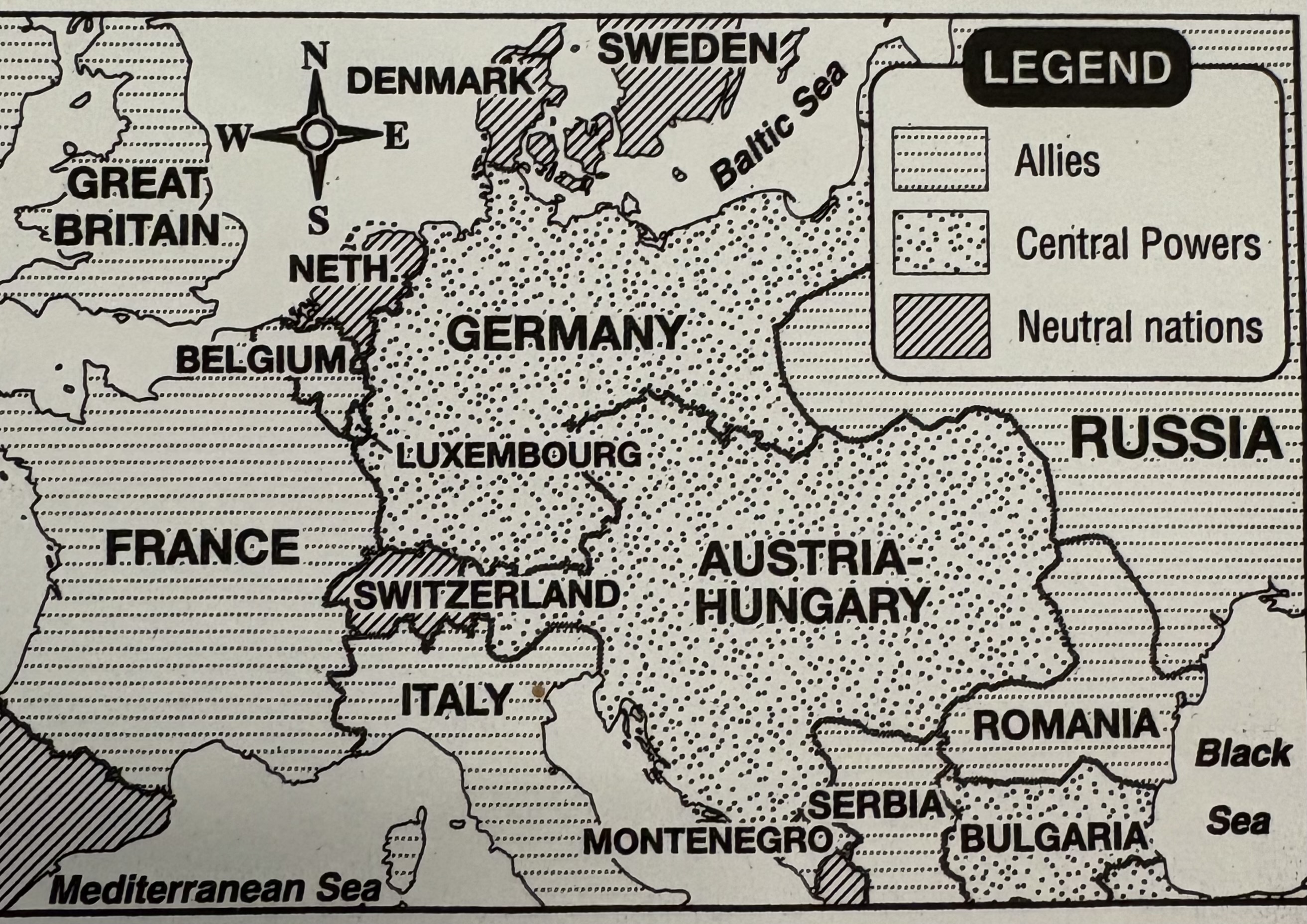
Use the map to answer questions 3 and 4.
Required
1
Required
1
Question 5
5.

Question 6
6.

Question 7
7.

Question 8
8.

Question 9
9.

Question 10
10.

Question 11
11.

Question 12
12.

Question 13
13.

Question 14
14.

Main idea and details: Read the passage below. Then answer the question.

Women were active in new ways in the 1920s. In 1920, women won the right to vote. Some began to drive cars, play sports, and go to college for the first time. Young women called flappers cut their hair short and wore knee-length skirts.
Required
1
Required
2
Question 17
17.

Use the space below to complete the following.
Extended response:
Write a letter to a friend from the point of view of someone on the Homefront during World War I, who has just begun to work in a factory to help the war effort and who has begun rationing food for their family. Explain how life has changed and how it feels to be helping on the Homefront. (Remember friendly letter format and an appropriate date)

What happened in 1914 that led to World War 1?
Austria-Hungary declared war on Serbia.
Serbia declared war on Belgium and France.
Serbia declared war on Russia.
The Allied Powers declared war on Serbia.
What made the United States enter the war?
Germany attacked ships with American passengers.
The United States was competing with Germany, Russia, and France for more power.
Germany invaded Belgium and France.
Austria-Hungary declared war on Serbia.
Question 3
3.

Question 4
4.

During the war, the U.S. government created more supplies for soldiers
by taking supplies from the people of Europe
by growing more crops
by setting limits, or rations, on goods civilians could have
by telling soldiers to use less
Who were the new workers in factories during World War 1?
women and children
American Indians
teachers and students
African Americans and women
Some Allied leaders used the Treaty of Versailles to
punish Germany by taking land and money
remind civilians to help with the war
create more supplies for soldiers
give the United States new colonies
The United States did not join the League of Nations because
the Senate worried it might cause the United States to be pulled into more wars.
they were not invited to join
President Wilson did not think it was a good idea
it started in France instead of the United States
What was the most important change for women in the 1920's, due to their efforts during the war?
they won the right to vote.
they went to college
they worked outside their home
they played sports
What was the Treaty of Versailles?
a French palace
a document that punished Germany for their actions during the war
a peace treaty between France and Britain
an agreement to stop fighting
In what way did trench warfare change the way war was fought?
soldiers lived in airplanes
soldiers used old weapons
soldiers fought and lived on the battlefield
soldiers were sheltered from the weather
Henry Ford's factories used assembly lines and division of labor
to build homes
to build cars
to produce more stocks for investors
to produce appliances like washing machines
What happened during the Harlem Renaissance?
Jazz musicians became less popular
The Charleston became a famous movie
Louis Armstrong hit a record number of homeruns
African American musicians, artists and writers wrote about and painted pictures of African Americans
Louis Armstrong, Langston Hughes, and Babe Ruth became famous during the Roaring 20's. What were they respectively?
All three were athletes during the 20s
A singer and trumpeter, an author and poet, and a baseball player
A writer, an artist, and a baseball player
A bike rider, an artist, and a baseball player
Question 15
15.

Write the main idea from the passage.

Question 16
16.

Provide two details to support the main idea you shared.

Which of the nations below were part of the Allied Powers (Allies)
the Netherlands and Switzerland
Russia, France, Great Britain, Italy and Serbia
Germany, Austria-Hungary, Italy and Serbia
Denmark and Sweden
Serbia is...
south of Austria-Hungary
to the west of Italy
larger than Russia
east of Germany