Log in
Sign up for FREE
arrow_back
Library

Bond energy calculations GCSE Chemistry

star
star
star
star
star
Last updated 7 months ago
27 questions
Bond energy calculations
2
Reaction of oxygen with nitrogen
9
11
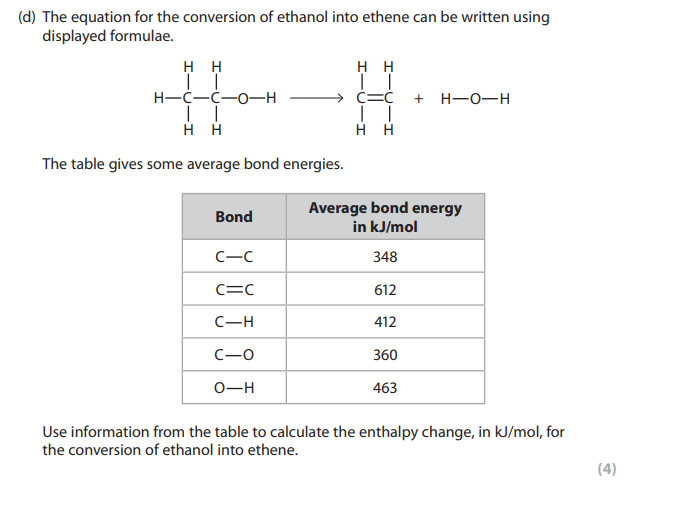
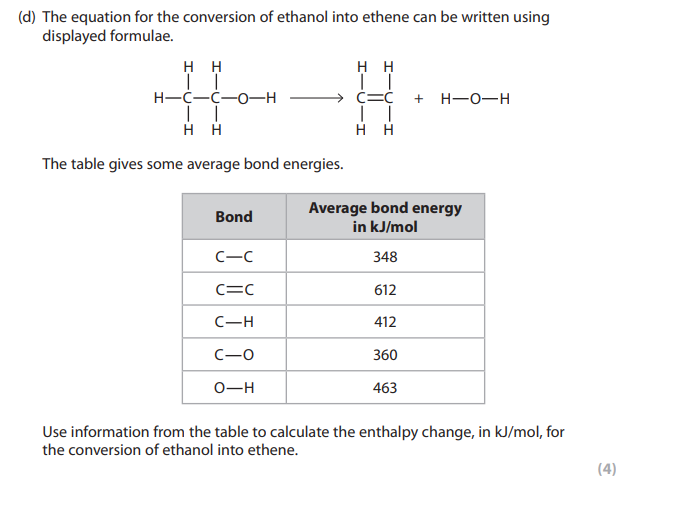
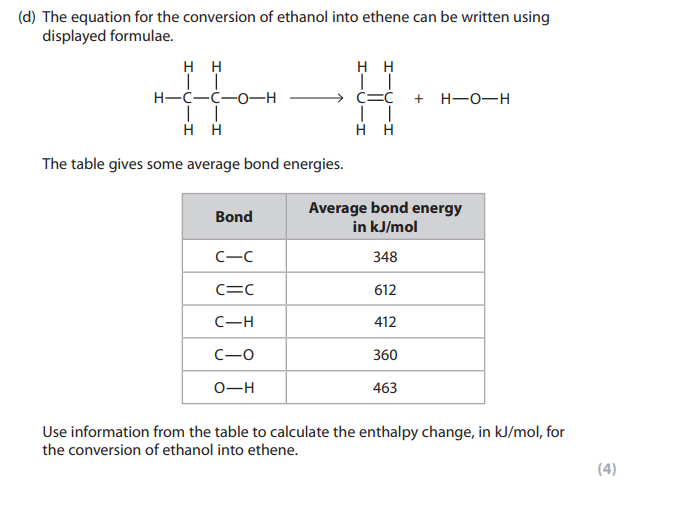
The dehydration reaction to form ethene from ethanol
1
1
1
4
1
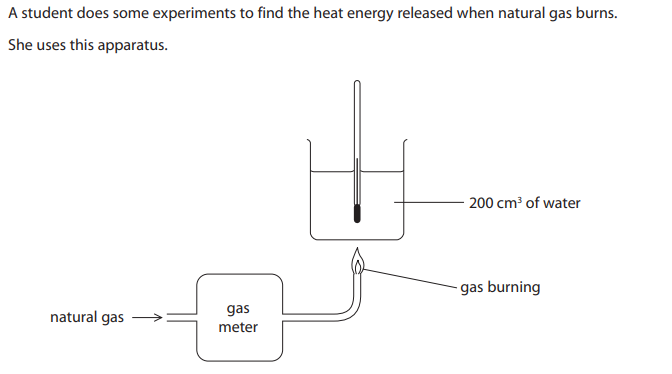
Combustion of ethanol
5
Electrolysis of water.
1
1
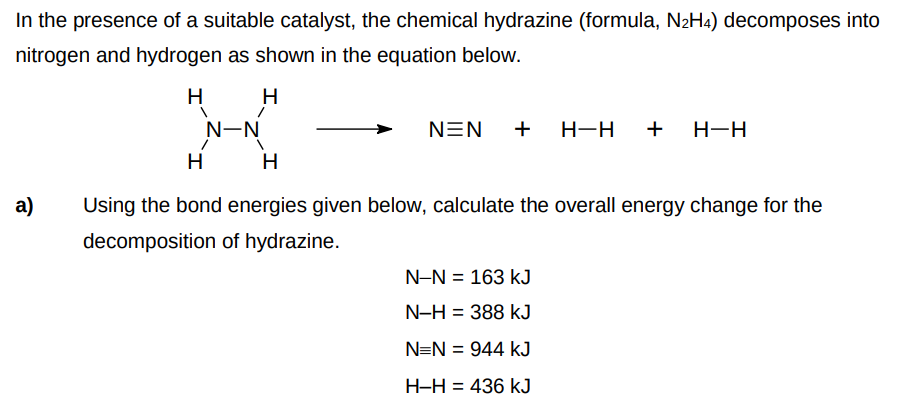
Decomposition of hydrazine
6
Combustion of methane
1
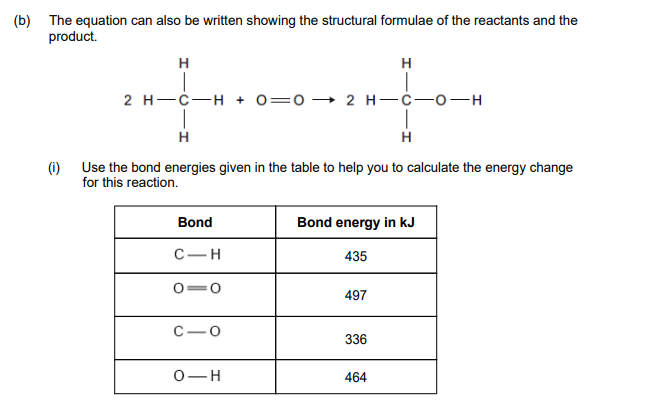
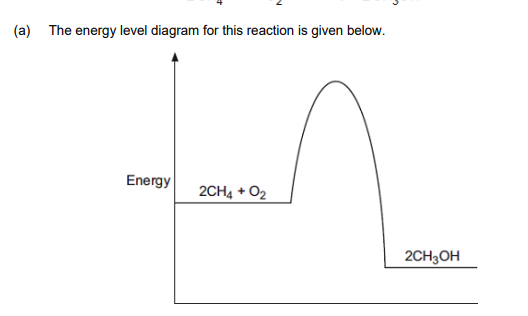
Oxidising methane to make methanol
10
2
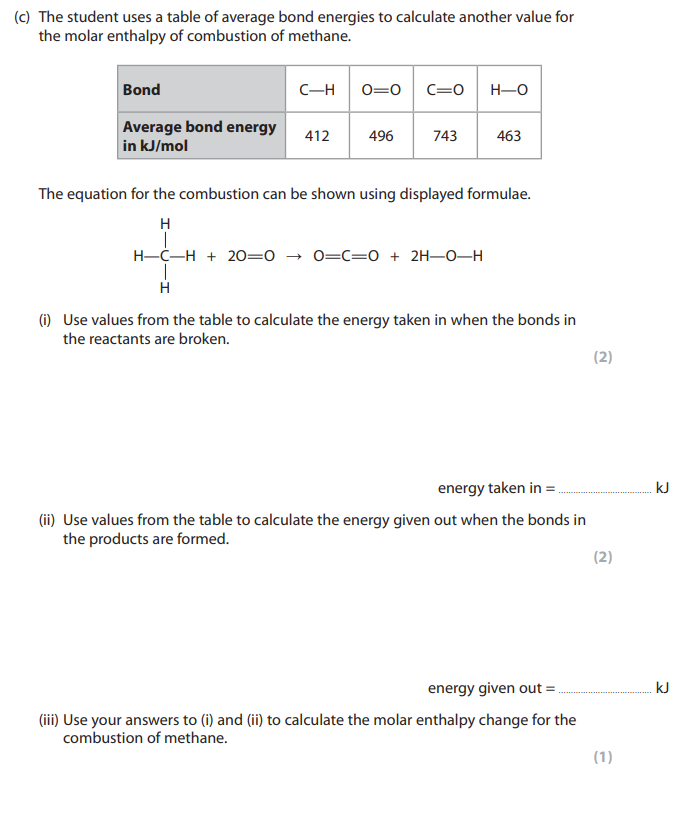
Combustion of methane
5
1
Synoptic questions
1
1
6
1
1
1
1
1
1
4
Question 1
1.
https://billvining.com/mmlib_sims/#gen_8_0

Use the simulation to visualise this.

Note 1. In the animation the bond strength is shown by the length and the thickness of the line.

Note 2. In the products two molecules are forming so the bond energy is for two bonds.

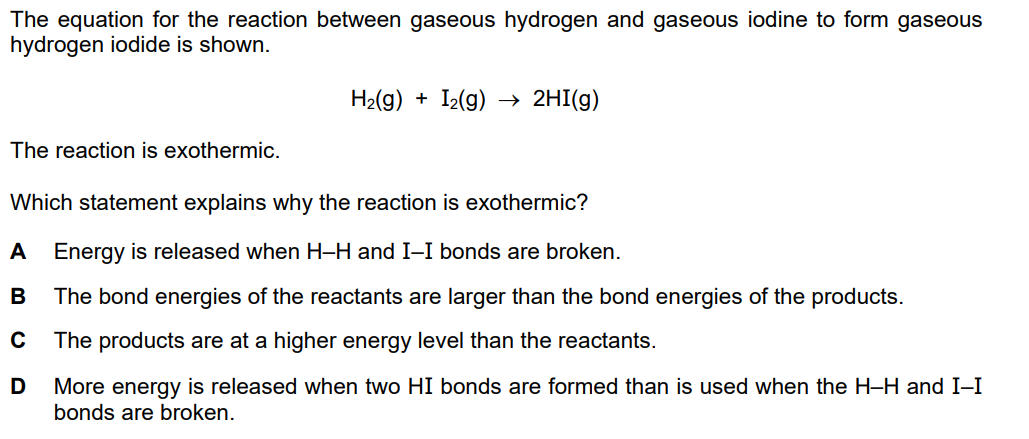
If the energy needed to break the bonds in reactants is less than the energy released when the bonds form in the products the reaction is __________
If the energy needed to break the bonds in reactants is more than the energy released when the bonds form in the products the reaction is __________
Question 2
2.
Reaction of nitrogen and oxygen in a car engine at high temperature and pressure to form the pollutant nitrogen oxide (this pollutant would be removed using a catalytic converter).
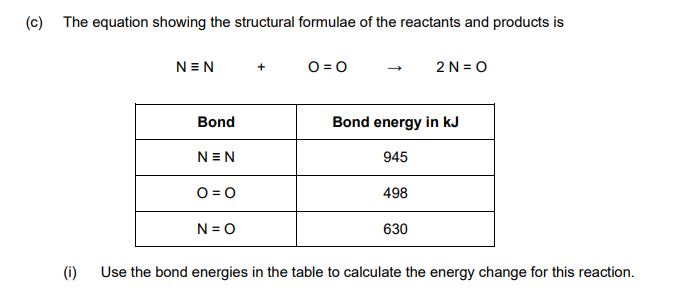
Bonds broken in reactants = _______ x N= + _______ x O=O
Bonds formed in products = _______ x N=O
Energy to break bonds in reactants = 1 x 945 + 1 x 498 = _______ kJ/mol
Energy to form bonds in products = 2 x 630 = _______ kJ/mol
Energy change = energy to break bonds - energy to make bonds

Energy change = 1443 - 1260 = (sign )_______ (value) _______
The reaction is _______ and the temperature will _______
Question 3
3.
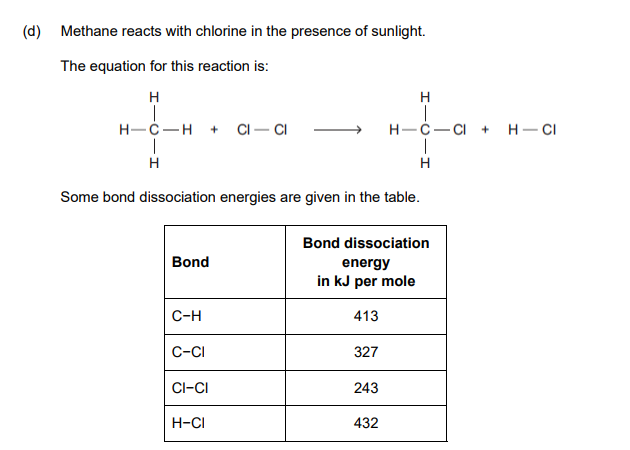
Number of C-H bonds broken = _______
Number of Cl-Cl bonds broken = _______
Energy to break bonds = 4x413 + 243 = _______ kJ/mol
Number of C-H bonds made = _______
Number of C-Cl bonds made = _______
Number of H-Cl bonds made = _______
Energy given out when bonds form = 3 x 413 + 327 + 432 = _______
Energy change = energy in to break bonds -energy out when bonds form
Energy change = 1895 - 1998 = (sign) _______ (value) _______ kJ/mol
The reaction is _______ so the temperature of the surroundings will _______
Question 4
4.
Identify the number and type of bonds broken in the reactants
Number of C-H bonds to be broken in reactants = _______
Number of C-C bonds to be broken in reactants = _______
Number of C-O bonds to be broken in reactants = _______
Number of O-H bonds to be broken in reactants = _______
Question 5
5.
Calculate the number and type of bonds formed in the products.
Number of C-H bonds to be formed in products = _______
Number of C=C bonds to be formed in products = _______
Number of O-H bonds to be formed in products = _______
Question 6
6.
Calculate the energy needed to break all of the bonds in the reactants.
Total energy to break bonds = sum of
5x C-H = 5 x 412 = _______
1 x C-C = 1 x 348 = _______
1 x C-O = 1 x 360 = _______
1 x O-H = 1 x 463 = _______
sum = _______ kJ/mol
Question 7
7.
Calculate the energy needed to form all of the bonds in the products.
Total energy to form bonds = sum of
4x C-H = 5 x 412 = _______
1 x C=C = 1 x 612 = _______
2 x O-H = 2 x 463 = _______
sum = _______ kJ/mol
Question 8
8.

Energy change = energy to break bonds in reactants- energy to form bonds in products
Energy change = _______ - _______
Energy change = sign _______ value _______
As the energy needed to break the bonds in the reactants is _______ than the energy released when the bonds form in the products the energy change is _______ and the reaction is _______
Question 9
9.
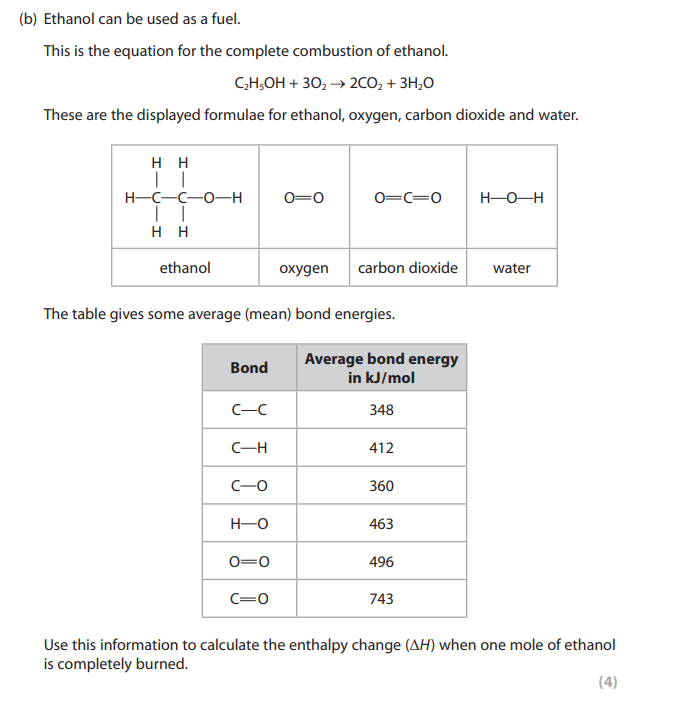
Energy needed to break bonds in reactants = _______
Energy released to form bonds in products = _______
Energy change = energy to break bonds - energy to make bonds = sign _______ value _______

This is a combustion reaction so the temperature of the surrounding will _______


Question 10
10.
Note that we often talk of temperature change of the surrounding but energy in other forms can be absorbed or released.
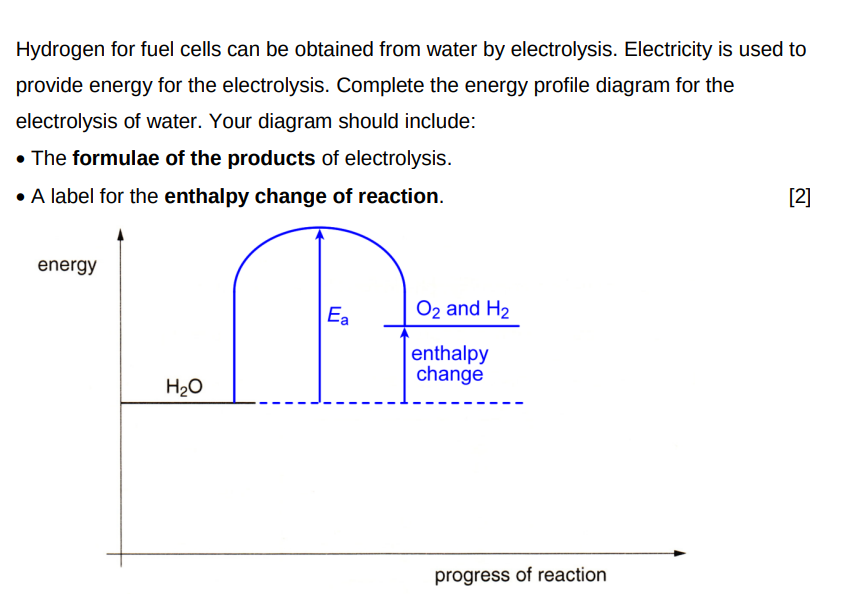
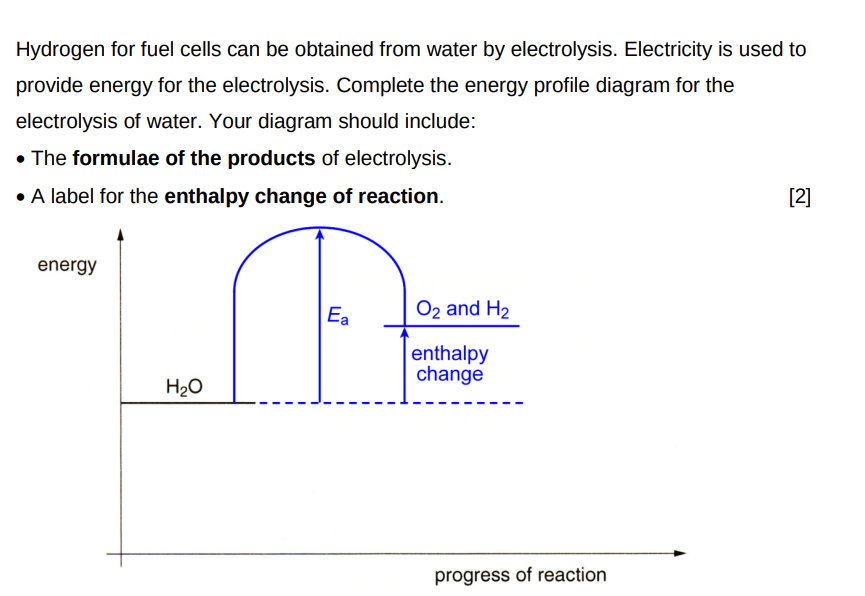
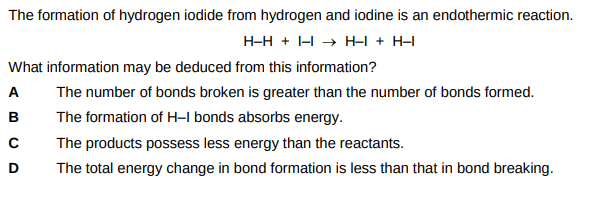
The electrolysis of water is ________________ .
The energy of the products must be ____________ than the energy of the reactants.
The formulae of the products of electrolysis are O2 and H2.
Note in an exam I would expect the reactants and products to be balanced.
Other Answer Choices:
endothermic
greater
Question 11
11.
Calculate the energy change when one mole of water is electrolysed.
H-H = 436 kJ / mol
O-H = 463 kJ/mol
O=O = 496 kJ/mol

H₂O →H₂ + ½ O₂
Bonds broken = _______ x O-H
Bonds formed = _______ x H-H + _______ x O=O
Energy in break bonds = 2 x 463 = _______
Energy out in bond forming = 0.5 x 496 + 436 = _______
Energy change = bonds broken - bonds formed = 926-684 = (sign) _______ (value) _______ kJ/mol

What would the energy change be if one mole of hydrogen was combusted?
(sign) _______ (value) _______ kJ/mol
Question 12
12.
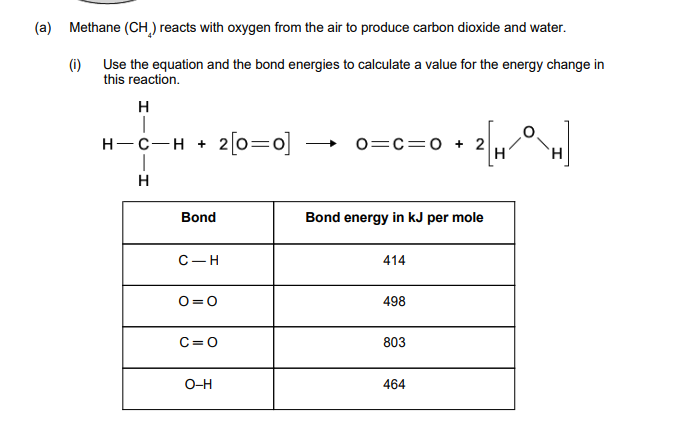
Energy to break bonds in reactant = _______
Energy to form bonds in products = _______
Energy change = energy to break bonds - energy to make bonds
Energy change = (sign) _______ (value) _______
This reaction is _______ as the temperature of the surroundings has _______
Question 13
13.
Energy to break bonds = _______ kJ/mol
Energy to make bonds = _______ kJ/mol
Energy change in the reaction = energy needed to break bonds - energy needed to make bonds
Energy change in the reaction = (sign) _______ (value) _______ kJ/mol
The energy change is _______ and the temperature of the surroundings will _______
Question 14
14.
C-H bonds broken = _______
O=O bonds broken = _______
Energy needed to break bonds in reactants = _______ kJ
C-H bonds formed = _______
C-O bonds formed = _______
O-H bonds formed = _______
Energy given out when bonds form in the products = _______ kJ/mol
Energy change for the reaction = (sign) _______ (value) _______ kJ/mol
The reaction is _______
The temperature of the surroundings will _______
Question 15
15.
Reaction to show oxidation of methane to form ethanol

The reaction is _______
The temperature of the surroundings will _______
Question 16
16.

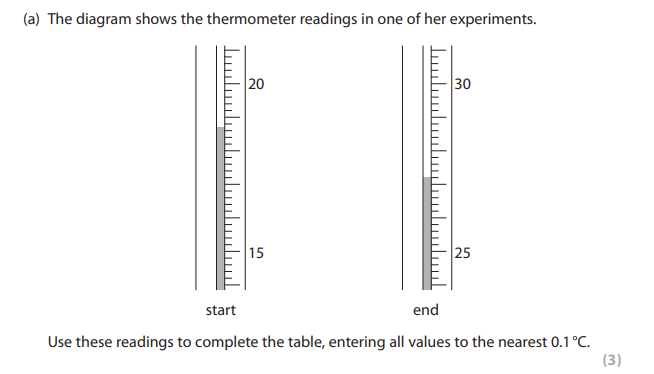
The starting temperature is _______ oC
The final temperature is _______ oC
The energy change is _______ oC
The temperature of the surroundings has _______ so the reaction is _______
Question 17
17.
Enthaly change of combustion of methane = (sign) _______ (value) _______ kJ/mol
Question 18
18.

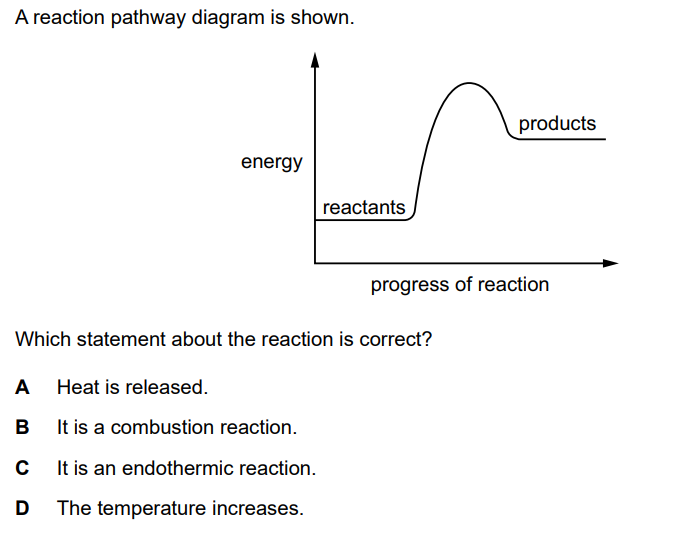
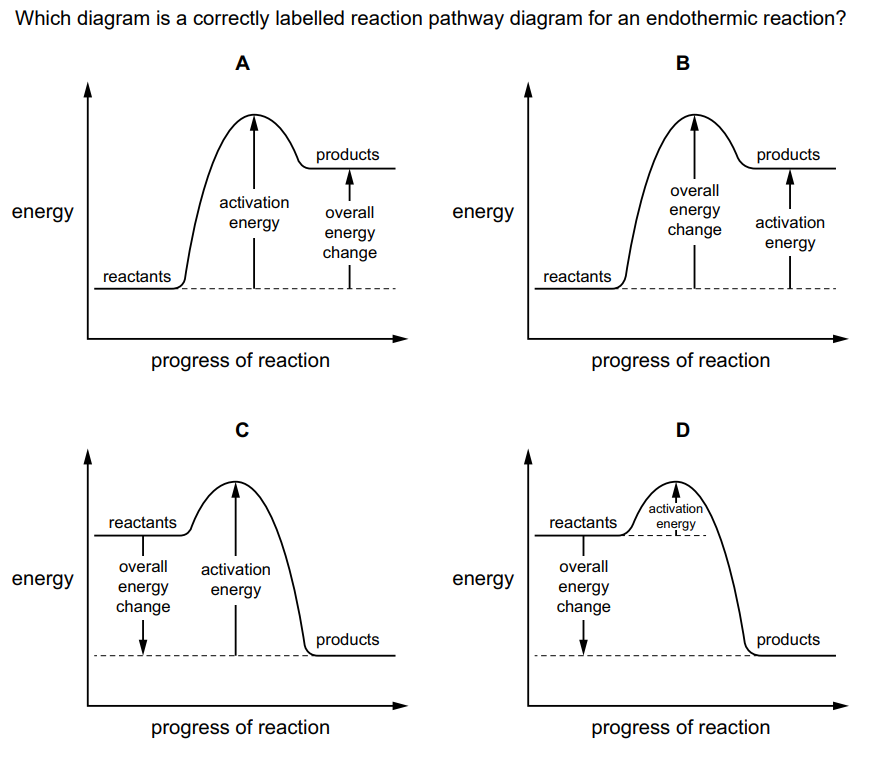
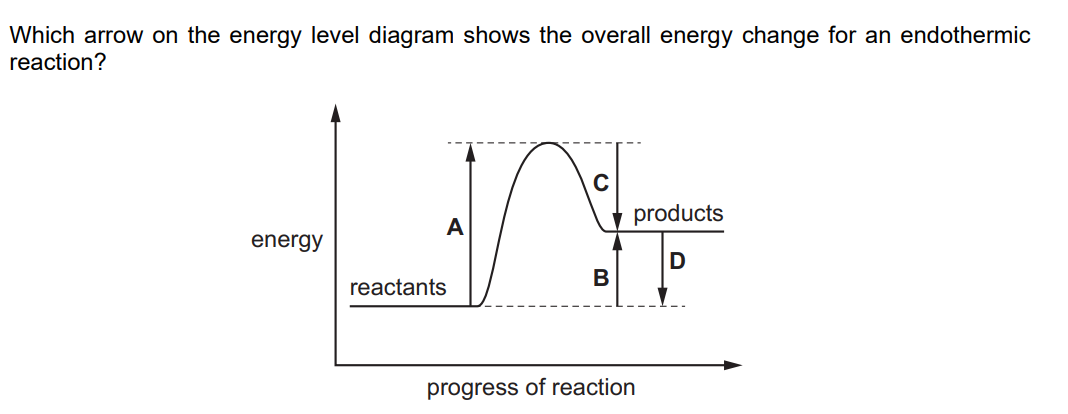
Energy profile diagram

Question 19
19.

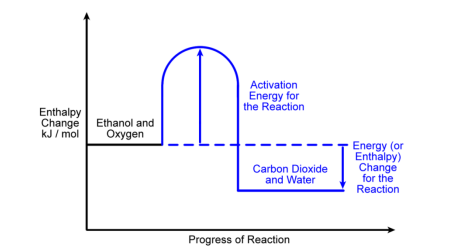
Energy profile diagram

Question 20
20.
Other Answer Choices:
exothermic
3
2
endothermic
solid
1
liquid
gas
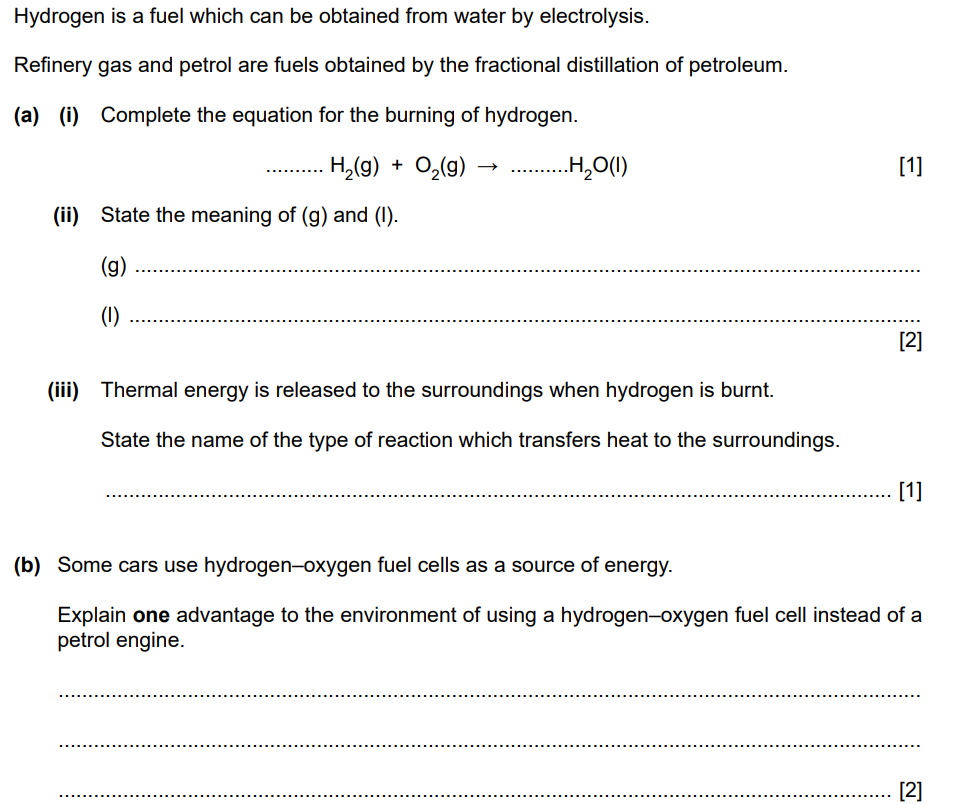
Only water is formed
aqueous
Question 21
21.

Question 22
22.

Question 23
23.

Energy profile diagram

Question 24
24.

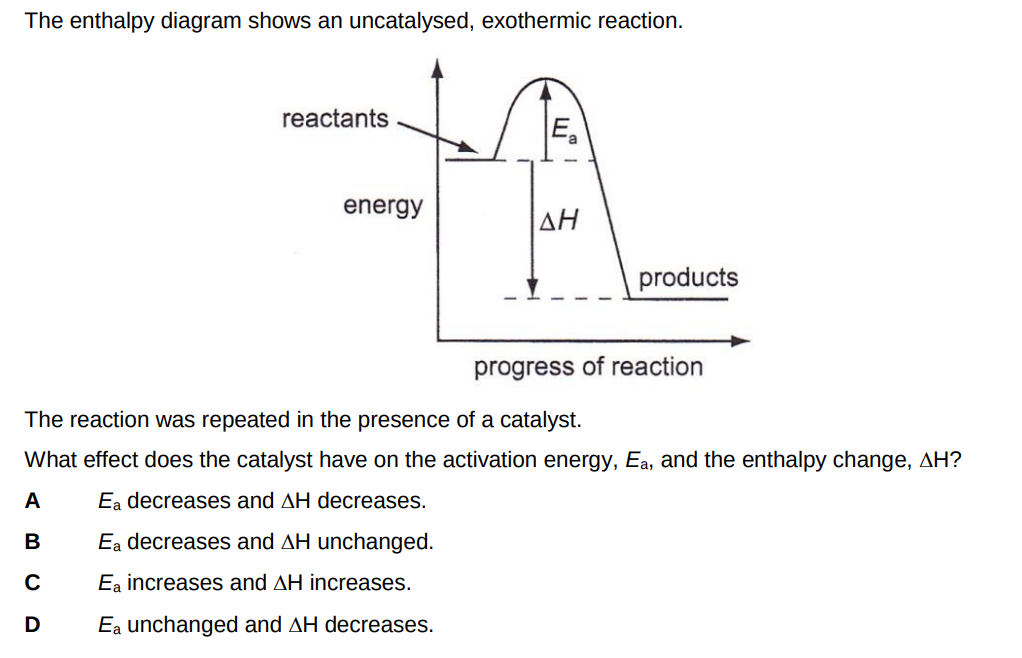
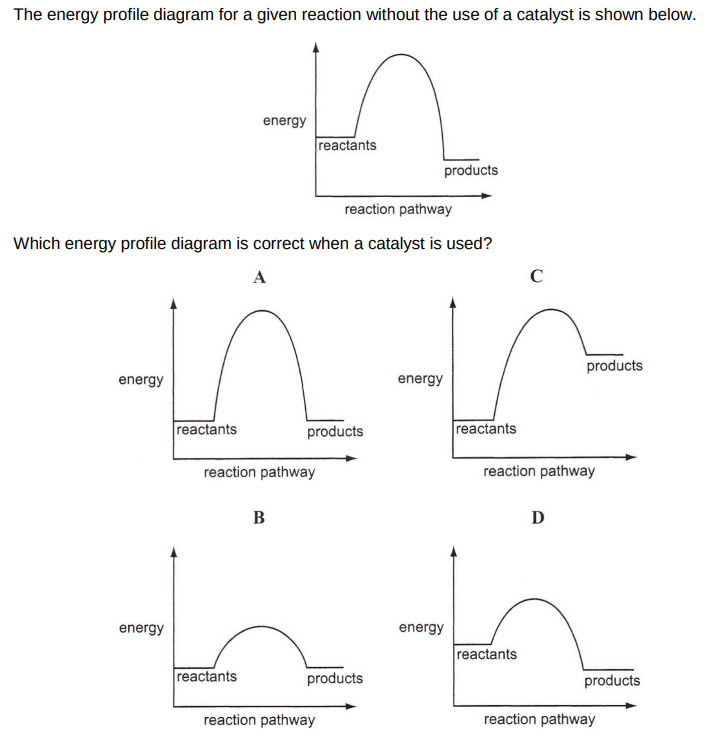
Energy change and catalysts

Question 25
25.

Question 26
26.

Energy change and catalysts

Question 27
27.
Using ideas about bond breaking and bond formation, explain why the combustion of petrol in the petrol engine is exothermic.
Energy absorbed to break the chemical bonds in petrol and oxygen is _________than the energy released when chemical bonds are formed in carbon dioxide and water.
Overall, energy is _____________ into the surroundings and the temperature of the surroundings ______________ so the reaction is _______________ .
Other Answer Choices:
released
increases
less
exothermic