1
1
1
1
1
1
1
1
1
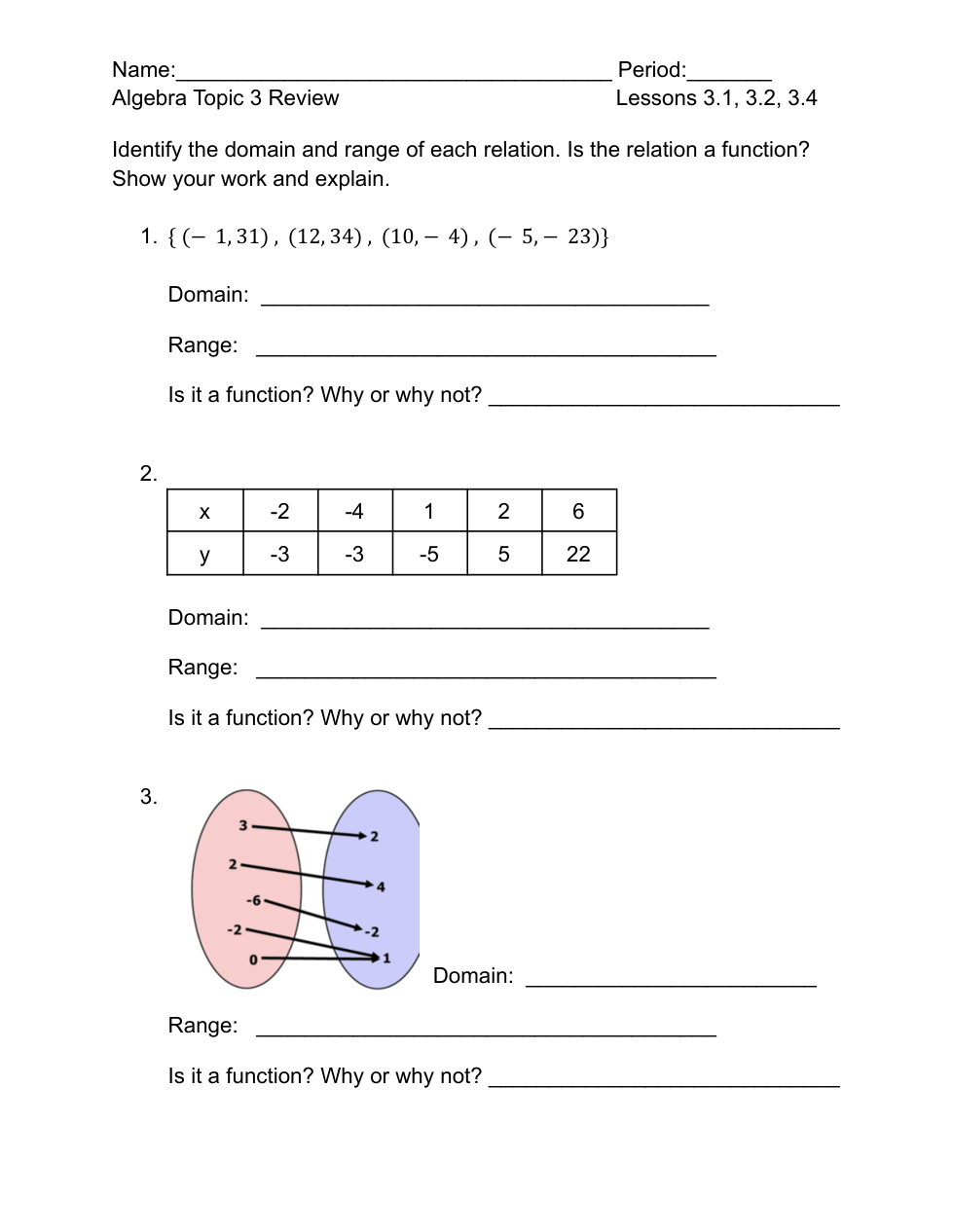
When listing the domain and range it must be listed least to greatest.
Identify the domain.
Use curly brackets and separate terms with a comma. No spaces.
Identify the range.
Use curly brackets and separate terms with a comma. No spaces.
Is the relation a function?
If yes, type yes.
If no, type no followed by a comma and the number that does not make it a function. example: no,4
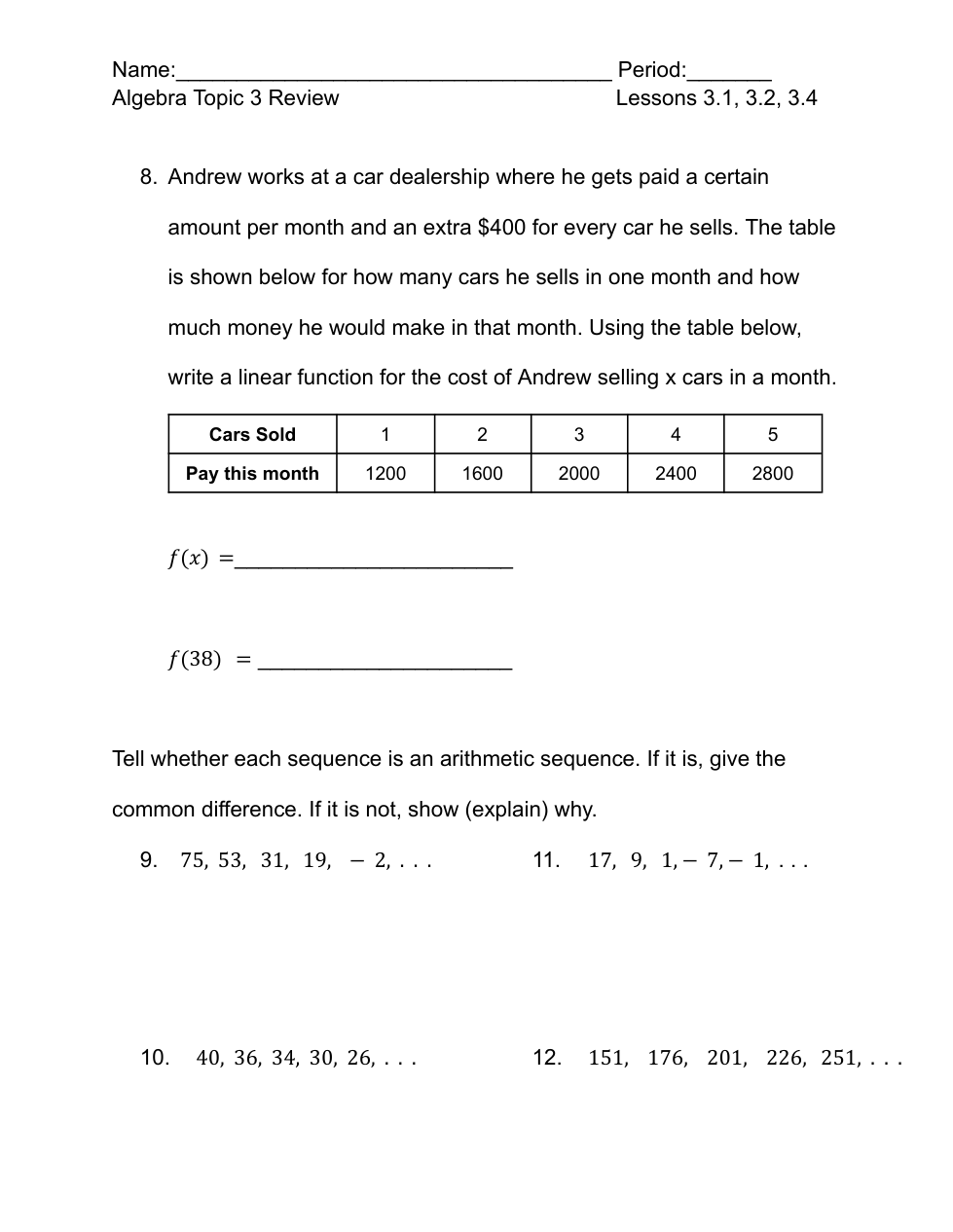
Write a linear function.
Evaluate the function
Tell whether the sequence is an arithmetic sequence. If yes, give the common difference. example: d=2
If it is not, type no for your answer.
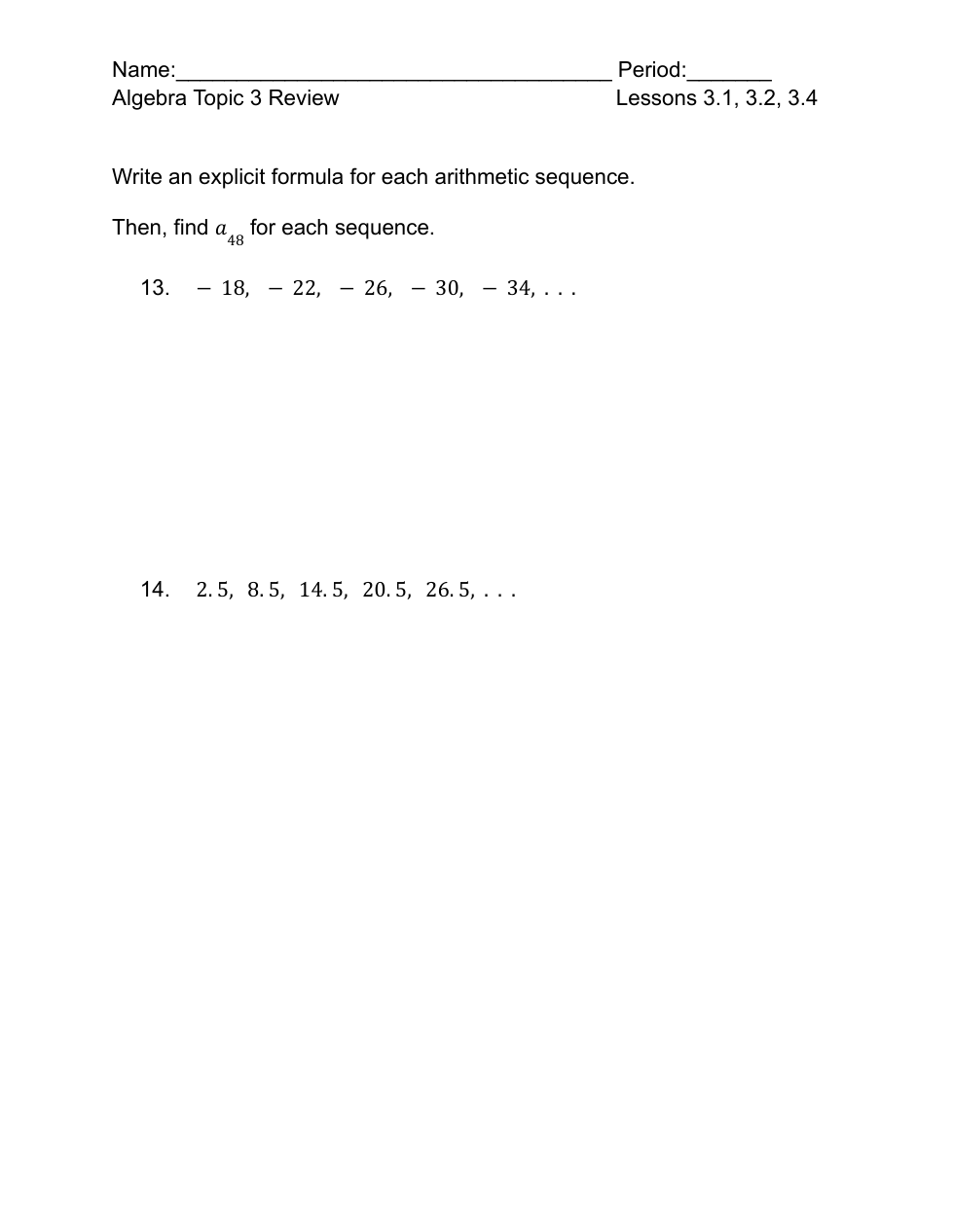
Write the explicit formula.
Write the explicit formula.
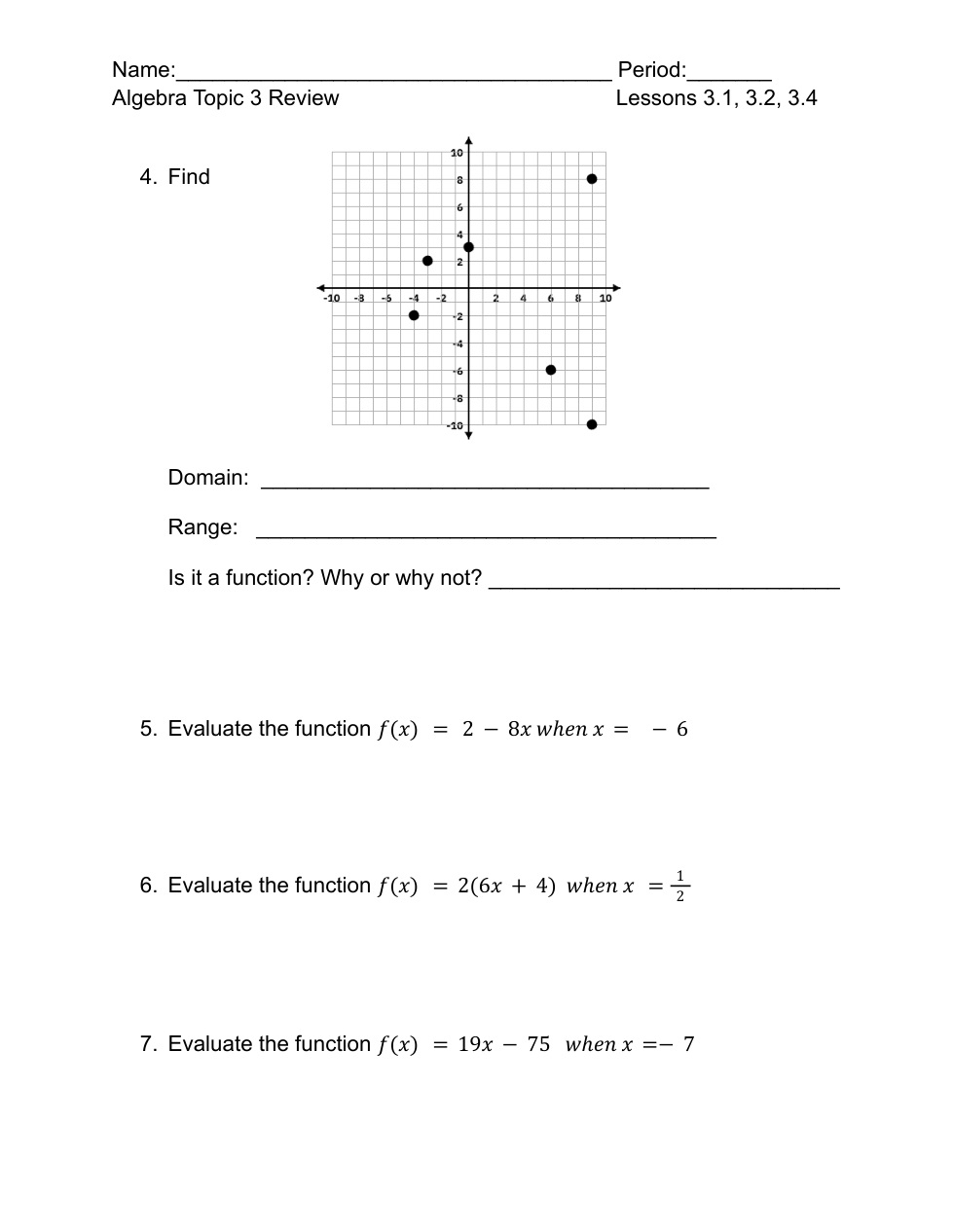
Identify the domain.
Use curly brackets and separate terms with a comma. No spaces.
Identify the range.
Use curly brackets and separate terms with a comma. No spaces.
Is the relation a function?
If yes, type yes.
If no, type no followed by a comma and the number that does not make it a function. example: no,4
Identify the domain.
Use curly brackets and separate terms with a comma. No spacces.
Identify the range.
Use curly brackets and separate terms with a comma. No spaces.
Is the relation a function?
If yes, type yes.
If no, type no followed by a comma and the number that does not make it a function. example: no,4
Identify the domain.
Use curly brackets and separate terms with a comma. No spaces.
Identify the range.
Use curly brackets and separate terms with a comma. No spaces.
Is the relation a function?
If yes, type yes.
If no, type no followed by a comma and the number that does not make it a function. example: no,4
Evaluate the function and write your answer in function notation.
Evaluate the function and write your answer in function notation.
Evaluate the function and write your answer in function notation.
Tell whether the sequence is an arithmetic sequence. If yes, give the common difference. example: d=2
If it is not, type no for your answer.
Tell whether the sequence is an arithmetic sequence. If yes, give the common difference. example: d=2
If it is not, type no for your answer.
Tell whether the sequence is an arithmetic sequence. If yes, give the common difference. example: d=2
If it is not, type no for your answer.