Log in
Sign up for FREE
arrow_back
Library

Final Review

star
star
star
star
star
Last updated about 1 year ago
10 questions
8
1
1
5
5
5
5
5
1
1
Review the questions on your Exam 1 and Exam 2, as well as all quizzes, in order to make sure you remember previous content that could be tested on this exam. Please answer the following questions to ensure you understand you understand the new content which will also be on this final.
Question 1
1.

List the levels of classification for domestic dogs from largest to smallest

  1. Domain (e.g. Eukaryota)
  2. Phylum (e.g. Chordata)
  3. Family (e.g. Canidae)
  4. Genus (e.g. Canis)
  5. Class (e.g. Mammalia)
  6. Kingdom (e.g. Animalia)
Question 2
2.

In the binomial name C. familiaris, C. stands for

Question 3
3.

What language is the Binomial classification name in?

Question 4
4.

A fossilized bone is found. Match the % of C-14 remaining with the estimated length of time since it died.
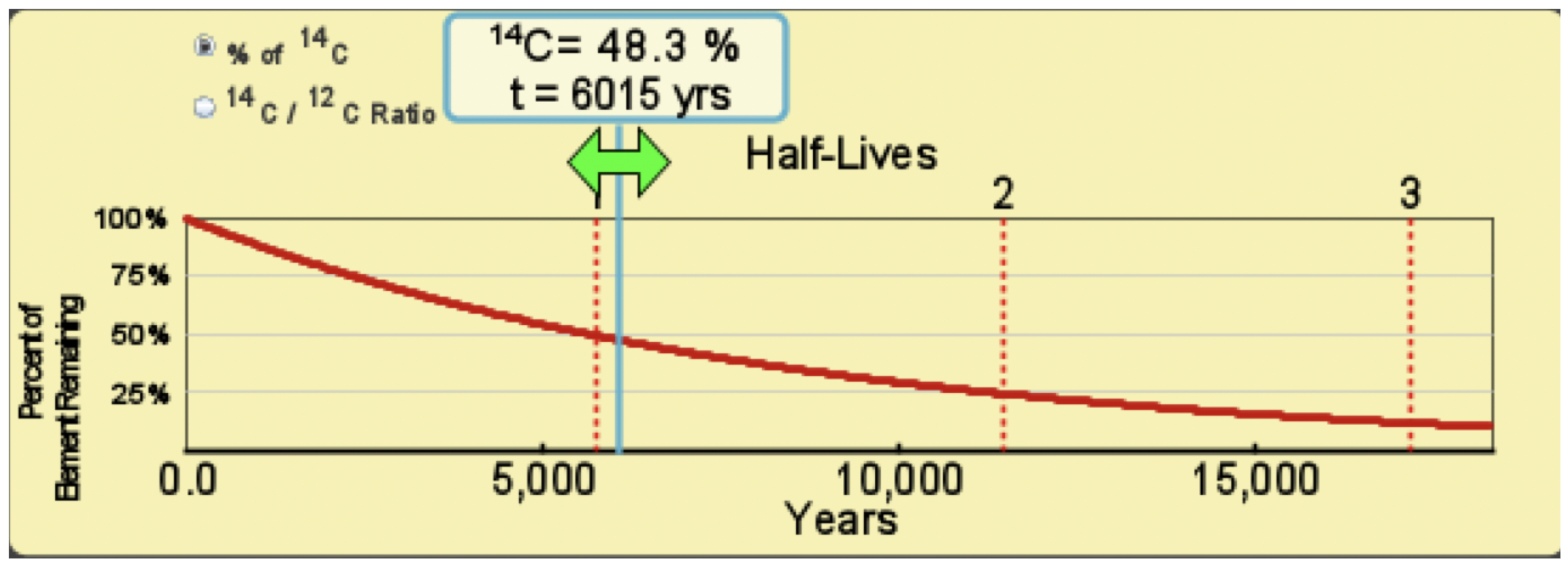
Draggable itemarrow_right_altCorresponding Item
62.5%
arrow_right_alt
none of the above
arrow_right_alt
arrow_right_alt
arrow_right_alt
arrow_right_alt
Question 5
5.

In Carbon -14 dating, which of the following are true?

Question 6
6.

Which of the following statements are true?

Question 7
7.

Which of the following statements are true?

Question 8
8.

Question 9
9.

Which of the following are true?

Question 10
10.

Order (e.g. Carnivora)
Species (e.g. C. familiaris)
Spanish
Swedish
38.5%
5730 years
17.3%
2010 years
50%
7890 years
78.5%
14,500 years
When anything living dies, the percentage of its Carbon that is Carbon-14 will be about the same as the percentage of Carbon in the atmosphere that is Carbon-14
After anything living dies, the percentage of Carbon-14 that remains in it will decrease by 10% every half-life
Two C-14 half-lives, after an organism dies, only 25% of the Carbon-14 that was in it when it died will remain.
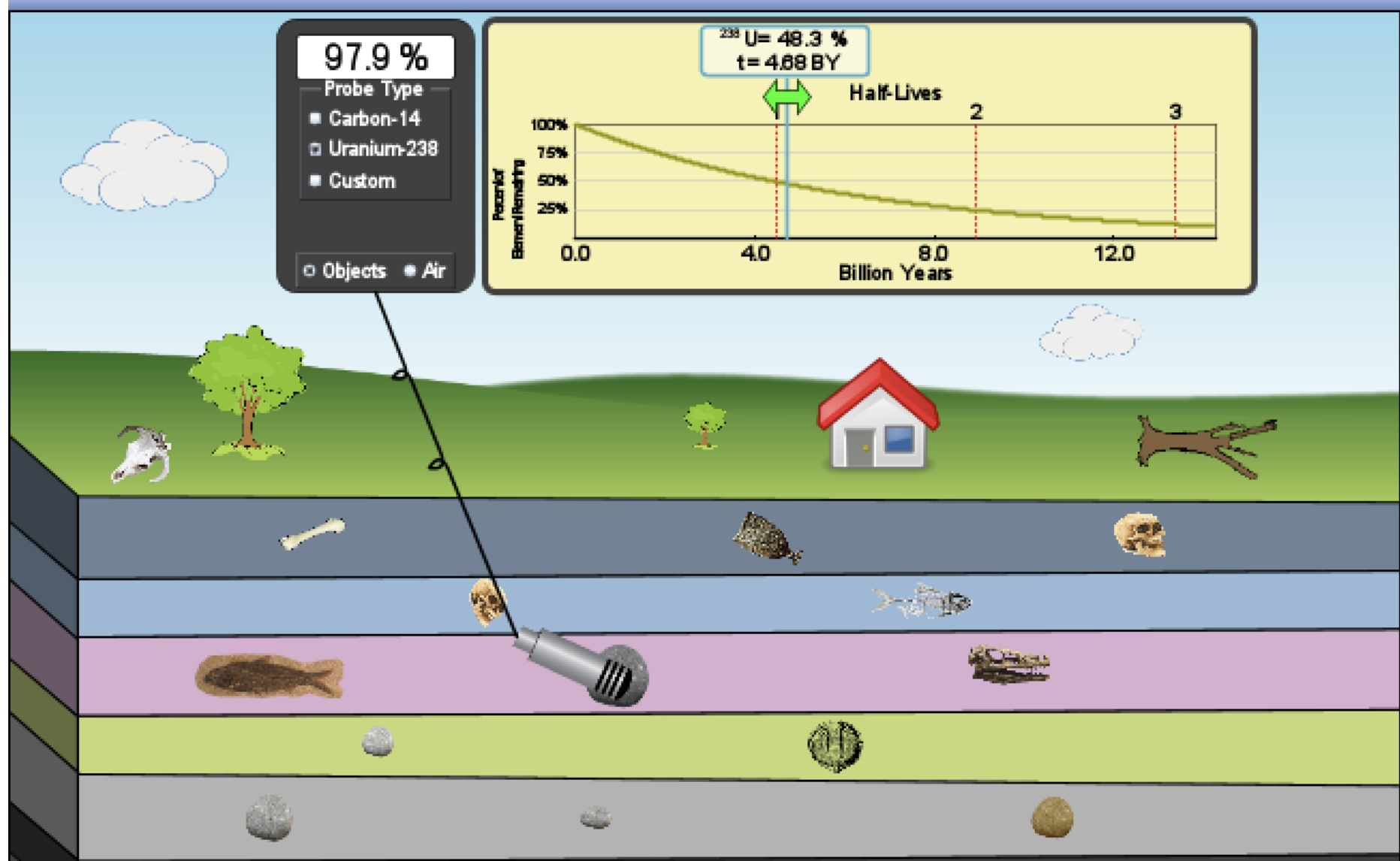
In order to confirm the age of the rock being tested scientists would also use Carbon 14 dating on it
The fossils in the blue layer would be presumed by scientists to be younger than the rock tested in the pink layer
U-238 dating could be used to date the fish skeleton in the pink layer
While U-238 dating could not be used to date the fish skeleton in the pink layer, the age of the rocks in the pink layer could help scientists estimate the date of the fish skeleton buried nearby.
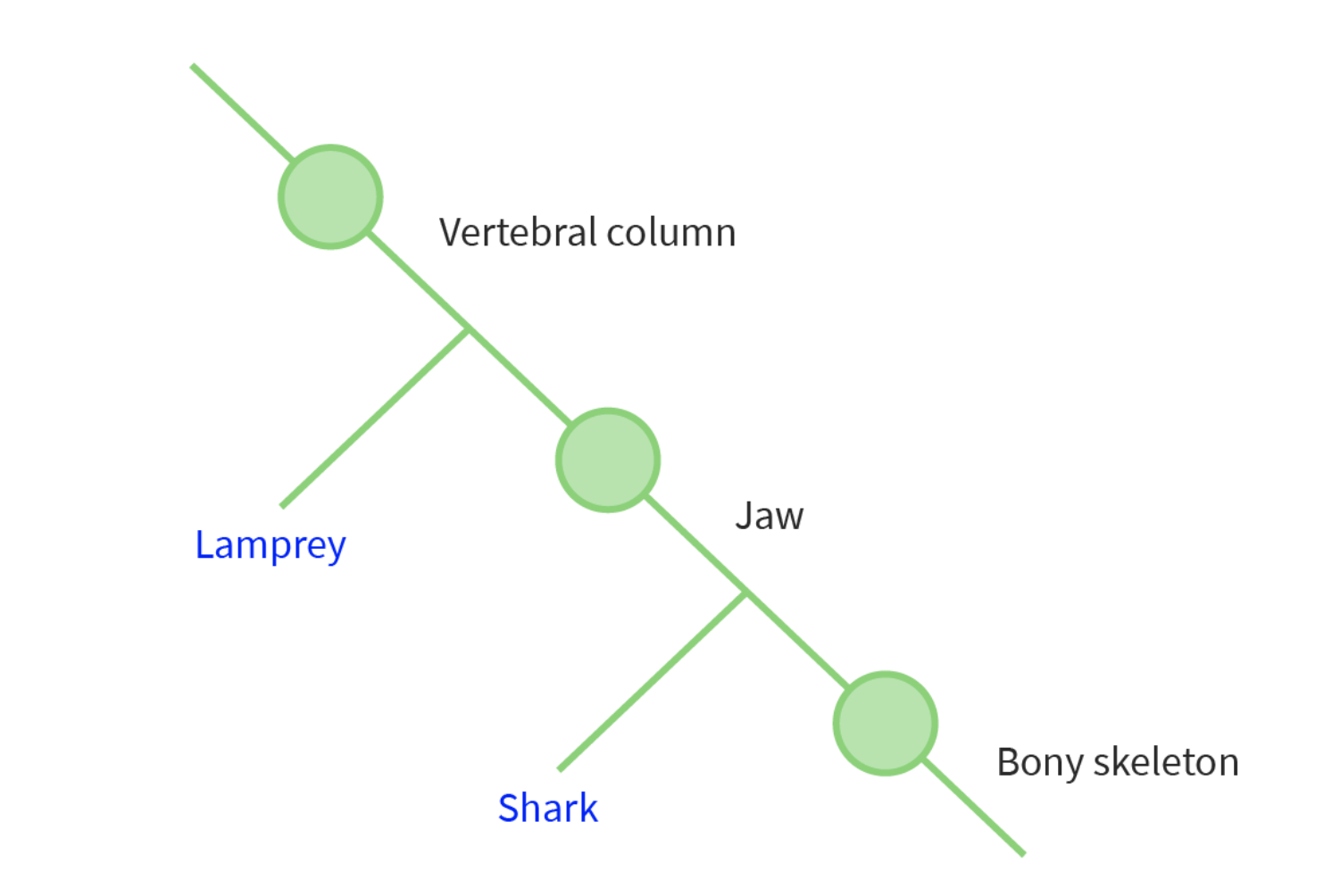
According to the diagram above, sharks have bony skeletons
Many scientists believe bony fish are more closely related to sharks than lampreys
One purpose of the diagram above is to propose how different species may have been related to common ancestors
Scientists rearrange the diagram above when new evidence shows two species have more important similarities than previously known
Which of the following are true?
Mutation is caused by a random change in a DNA base in a gene
Mutation creates a new allele in the gene that was mutated
After a mutation both the old allele and the mutated allele will both exist in the population
If a mutation in a mouse causes a protein not to make a dark color pigment, it may change a mouse from a RD to RL genotype, which might make it a lighter colored phenotype.
If a population of mice all have the same genotype, natural selection can help the species adapt and change to new threats in the environment
If a new allele changes a mouse's appearance so that it can hide better from predators, that allele is likely to become more common in the population
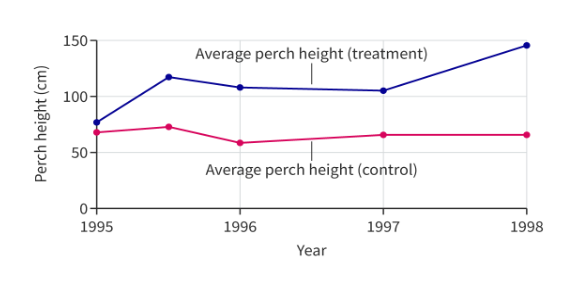
Both lines above represent the perch height of green anoles
The top line represents the perch height of green anoles after brown anoles are brought to their island
The bottom line represents the perch height of green anoles on islands brown anoles are never introduced to
The process scientists hypothesize caused the green anoles to climb higher in the bushes is competition with brown anoles
Which of the following are true?
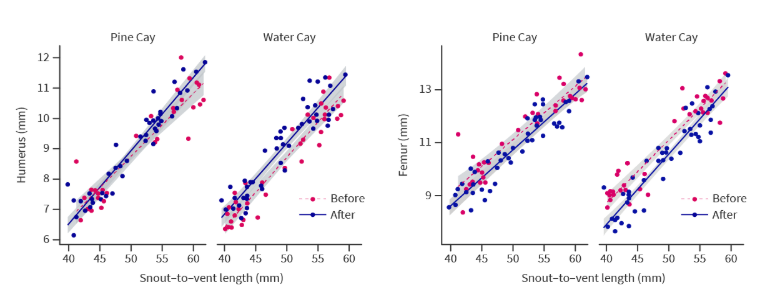
Pine Cay and Water Cay are islands in the Atlantic Ocean
The graphs above show scientists measurements of brown anoles
Scientists took measurements before and after Hurricanes Irma and Maria hit the islands
According to the left graph, the scientists found that on average, scientists found the anoles they measured after the hurricanes had longer front legs than anoles with the same length measured before the hurricanes
The data from Pine Cay would support the hypothesis that longer front legs helped anoles survive the hurricanes better than the data from Water Cay
According to the right graph, the scientists found that on average, scientists found the anoles they measured after the hurricanes had shorter hind legs than anoles with the same length measured before the hurricanes