This map highlights the German failure to...
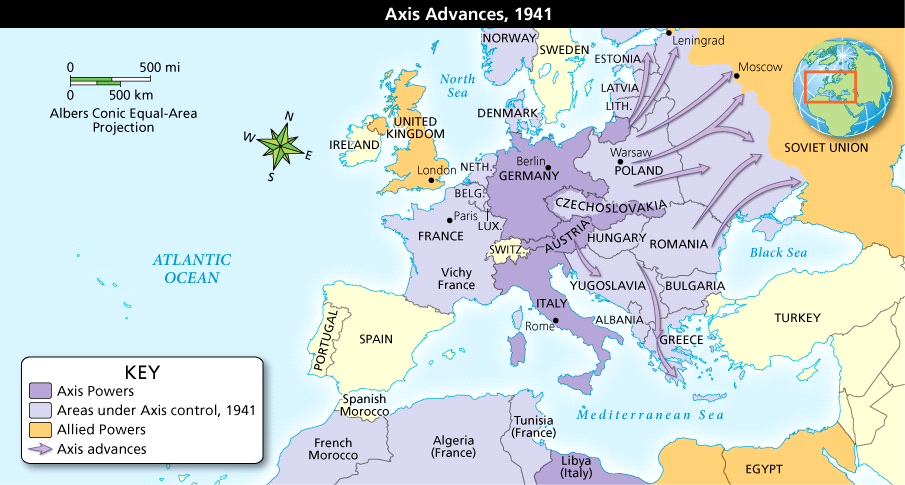
This map highlights the German failure to...
| Draggable item | arrow_right_alt | Corresponding Item |
|---|---|---|
Appeasement | arrow_right_alt | "Night of Broken Glass" - two days of anti-Jewish mob violence encouraged by the Nazis |
island hopping | arrow_right_alt | Hawaiian US military base bombed by Japan in Dec. 1941 |
Cuban Missile Crisis | arrow_right_alt | American effort to build the first atomic bomb |
blitzkrieg | arrow_right_alt | Nazi plan for the genocide of all Jewish peoples under their control |
United Nations | arrow_right_alt | Policy of making concessions to an aggressive power to avoid conflict |
Manhattan Project | arrow_right_alt | Global peacekeeping organization founded after World War II to prevent a third war |
Cold War | arrow_right_alt | International standoff between the US and USSR over weapons shipments to the Castro regime |
"Final Solution" | arrow_right_alt | Turning point of World War II in Europe |
Battle of Stalingrad | arrow_right_alt | American capture of specific Pacific islands to get Japan in bombing range |
Kristallnacht | arrow_right_alt | "Lightning war" - military tactic where you use tanks, planes, and artillery in an overwhelming surprise assault |
Great Depression | arrow_right_alt | Intense ideological rivalry between the US and USSR lasting 1947-1991 |
Pearl Harbor | arrow_right_alt | Severe global economic downturn 1929-1939 |
“Two days later, Britain and France declared war on Germany. World War II had begun. History had again arrived at one of its great turning points.”
Which event had occurred two days previously?
"Today, should total war ever break out again — no matter how — our two countries would become the primary targets. It is an ironic but accurate fact that the two strongest powers are the two in the most danger of devastation. All we have built, all we have worked for, would be destroyed in the first 24 hours."
— President John F. Kennedy, 1963
Which Cold War-era concept is most closely related to the point made by Kennedy in the quote above?
This map highlights the German failure to...
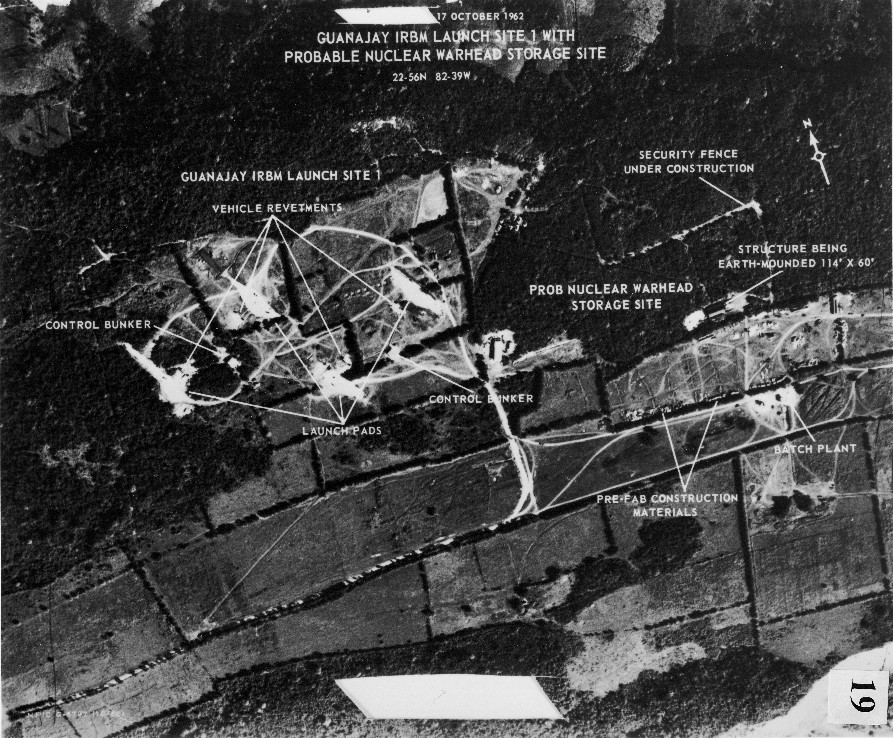
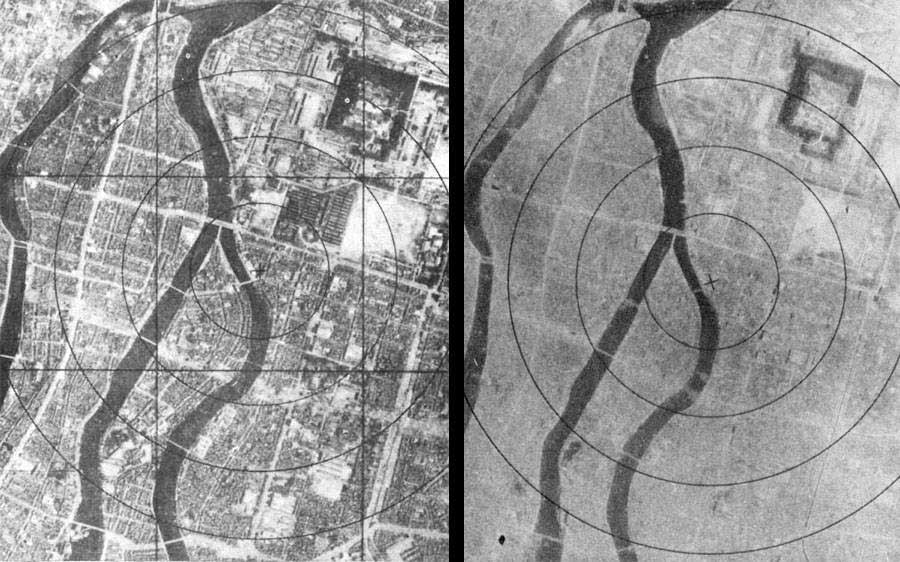
Which event is a direct result of the photograph seen below?
Following World War II, what did the Allies form to keep the peace and prevent a third global conflict?
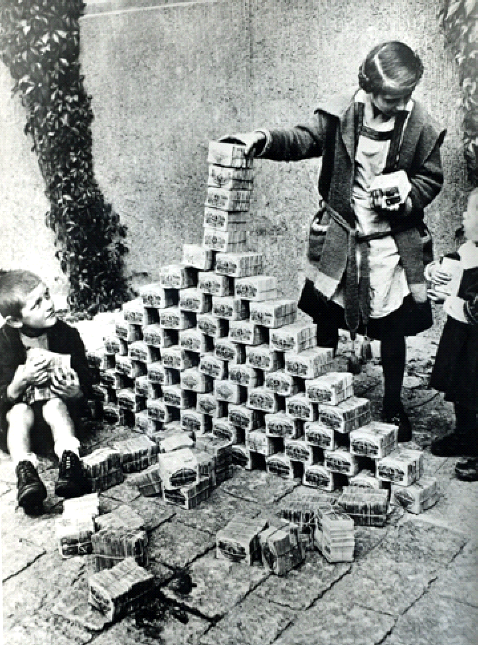
The picture below was taken in 1920s Germany. Which factor accounts for the scene in the image?
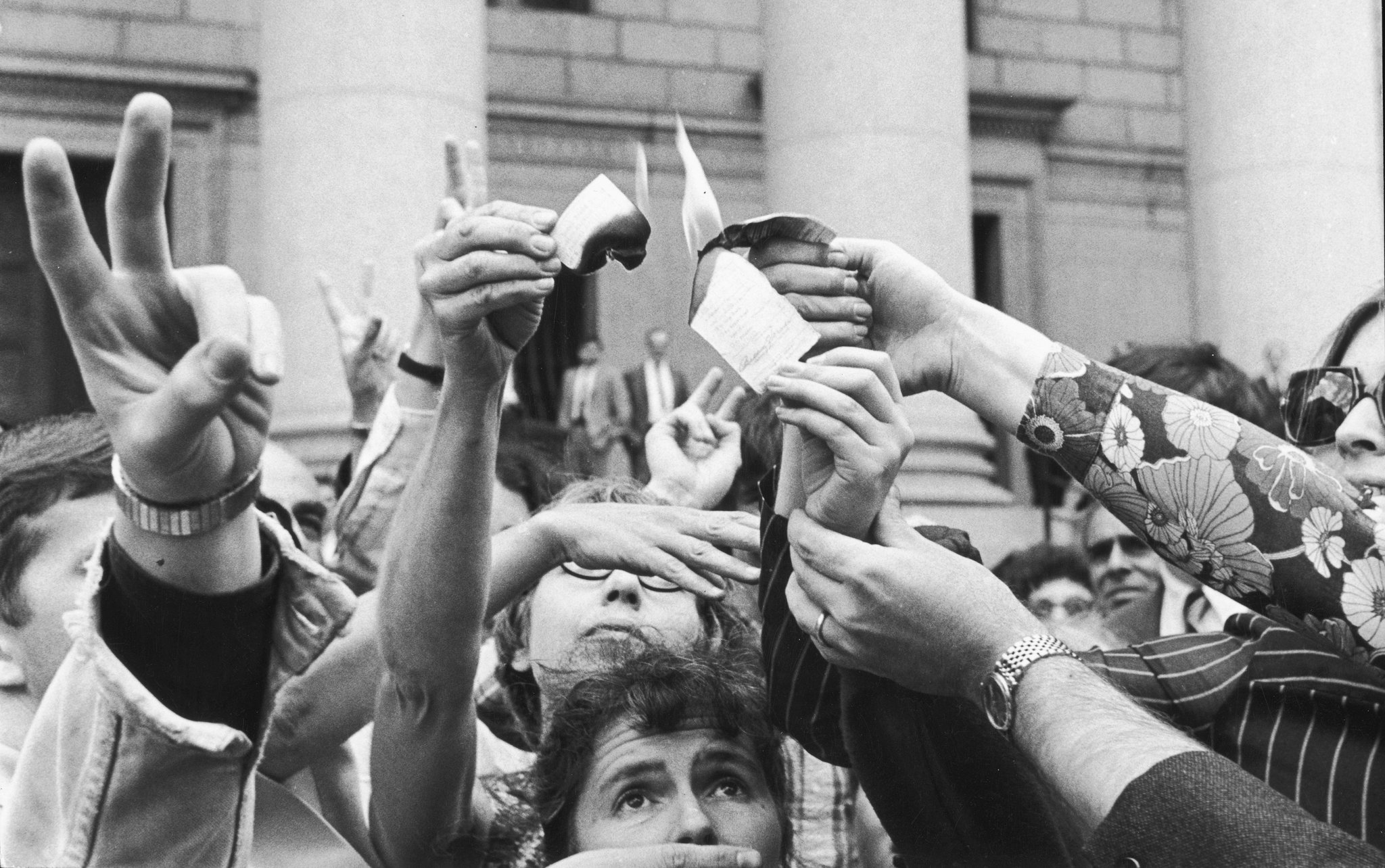
Which of the following developments during the Vietnam War MOST contributed to the form of protest seen in the image below?
Which is NOT a reason for the disintegration of the US-Soviet alliance immediately after World War II?
"We knew the world would not be the same. A few people laughed, a few people cried. Most people were silent. I remembered the line from the Hindu scripture, the Bhagavad Gita; Vishnu is trying to persuade the Prince that he should do his duty and, to impress him, takes on his multi-armed form and says, 'Now I am become Death, the destroyer of worlds.' I suppose we all thought that, one way or another."
— J. Robert Oppenheimer, 1965 television interview
This quote describes the reaction to what milestone during World War II?
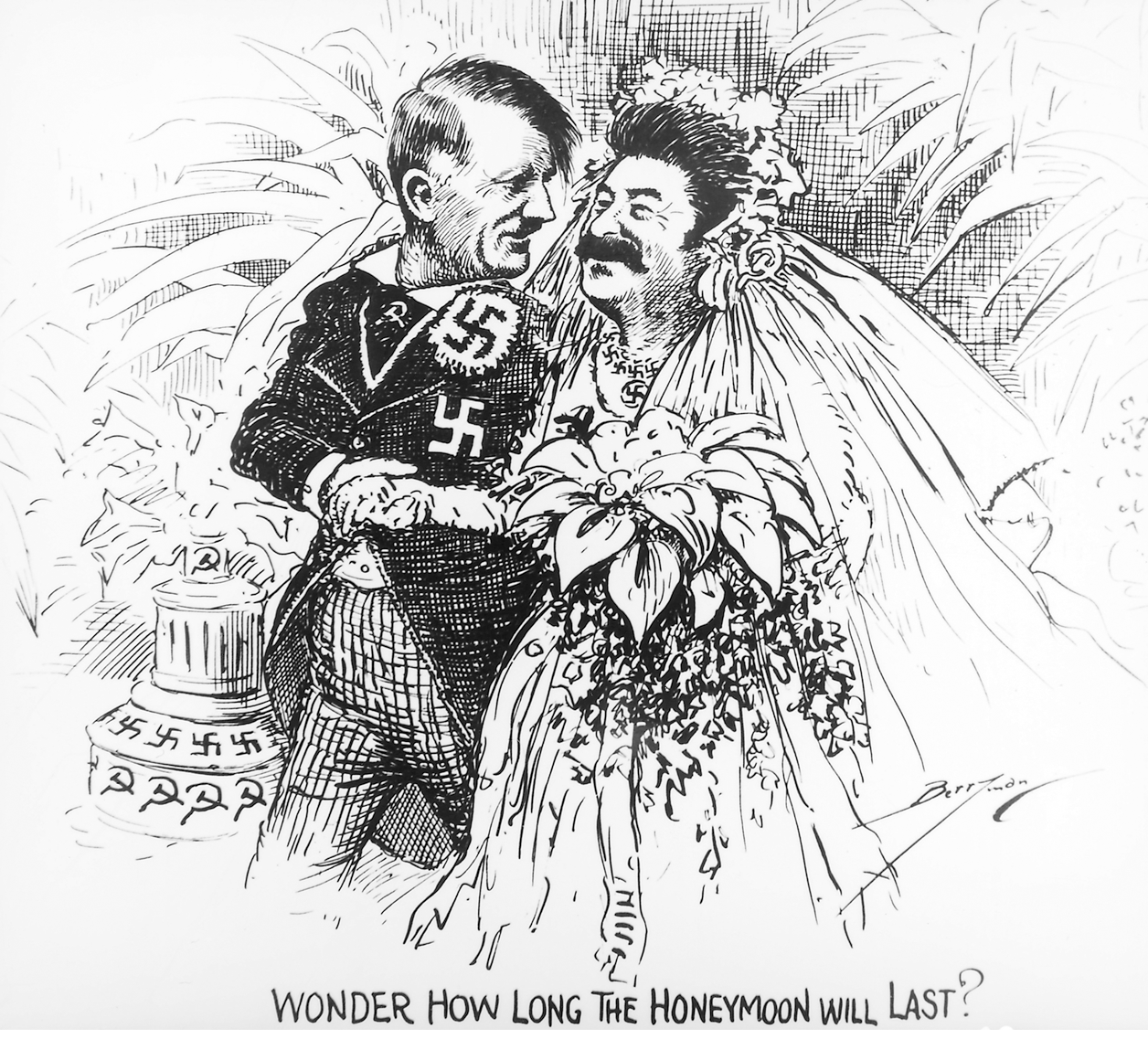
What message did the artist of the cartoon want to portray?
“They broke our windowpanes, and the house became very cold. . . . We were standing there, outside in the cold, still in our night clothes, with only a coat thrown over. . . . Then they made everyone lie face down on the ground. . . . ‘Now, they will shoot us,’ we thought. We were very afraid.”
— Sophie Nussbaum, 48 Hours of Kristallnacht: Night of Destruction/Dawn of the Holocaust by Michael Goeffrey
Which of Hitler’s objectives resulted in the event described in the quote?
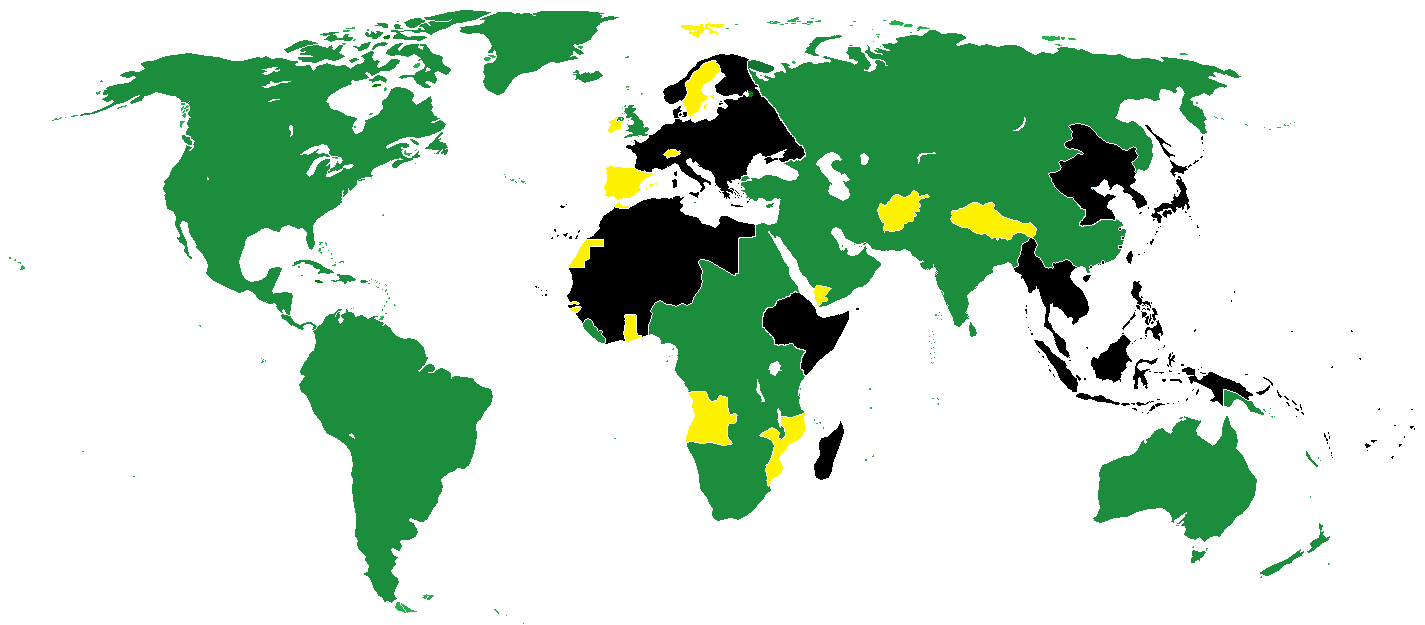
The map, dated to 1941, depicts in black the ________________ at their greatest extent.
Which factor best explains why the US could not easily achieve victory in the Vietnam War?
Which of these is NOT a way the US and USSR fought the Cold War?
What factor most directly impacted the success of Germany's 1941 invasion into the Soviet Union?
“In 1940, with Europeans distracted by war, Japan advanced into French Indochina and the Dutch East Indies. In response, the United States banned the sale of war materials, such as iron, steel, and oil, to Japan. Japanese leaders saw this move as a threat to Japan’s economy and its Asian sphere of influence.”
What did Japan do in response to the U.S. actions described in the text?
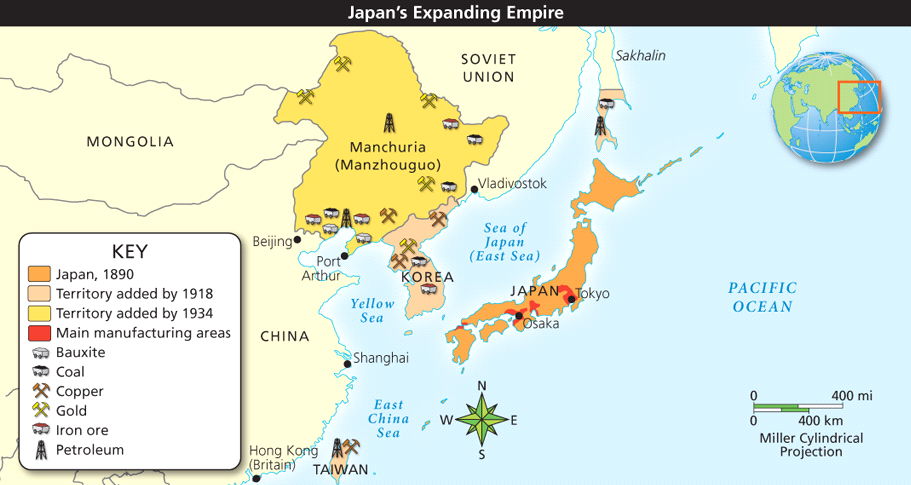
What statement is best supported by the information on the map?
Which of these was a consequence of the event called "The Blitz?"
Which of these was an immediate consequence of the Nuremberg Laws?
Which of the following was a core part of the Allied campaign to defeat Japan?
Which of these was a postwar economic effect of World War II?
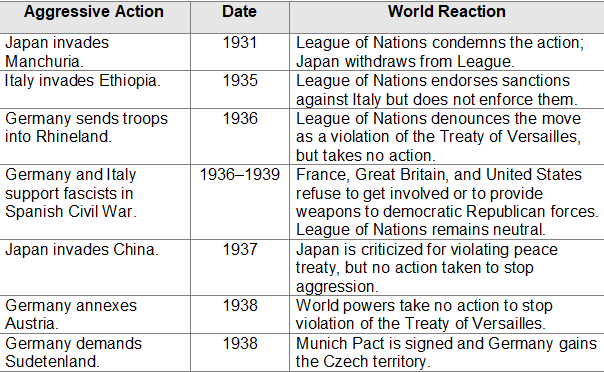
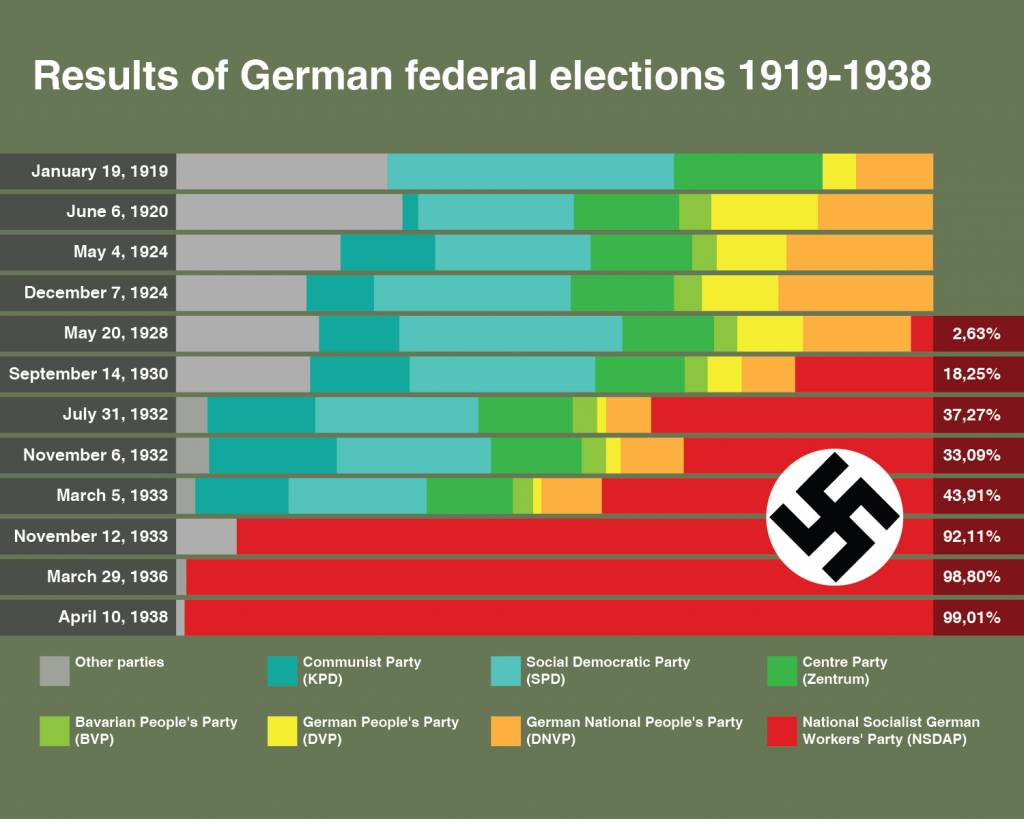
Which conclusion is best supported by the chart?
The battles of Iwo Jima and Okinawa were some of the costliest in the Pacific theater of World War II. Which reason best explains why these small islands saw such significant casualties?
What does the phrase “final solution” refer to?
What was the result of the destruction shown in this photograph?
Which event is often considered the "start" of the Great Depression?
“Truman warned the Japanese that if they did not surrender, they could expect ‘a rain of ruin from the air, the like of which has never been seen on this Earth.’”
Which endeavor allowed the United States to make this threat?
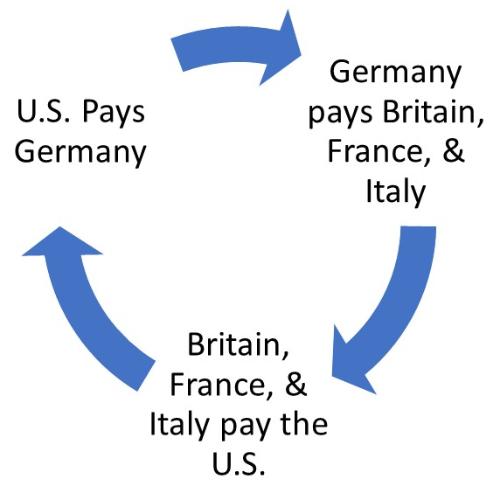
Which choice best reflects how the process below affected the start of the Great Depression?
What historical event is MOST responsible for the trend seen in the graph below?
Choose TWO prompts to answer. Please use complete sentences and coherent thoughts.
Describe the causes of the Great Depression.
Trace the development and use of the first atomic bomb in warfare.
Compare and contrast Hitler’s invasion of the Soviet Union and Napoleon’s invasion of Russia.
Explain why the nuclear arsenal of the United States increased from two weapons in 1945 to nearly 30,000 weapons in 1965.