TEXT: HOW CLOUDS FORM
Water in your dog’s bowl can become a cloud.
Ok, it would take a lot of dog bowls of water to make a cloud. However, all the surface water – oceans, lakes, rivers, pools, and, yes, even water in your dog’s bowl – can evaporate and become a cloud.
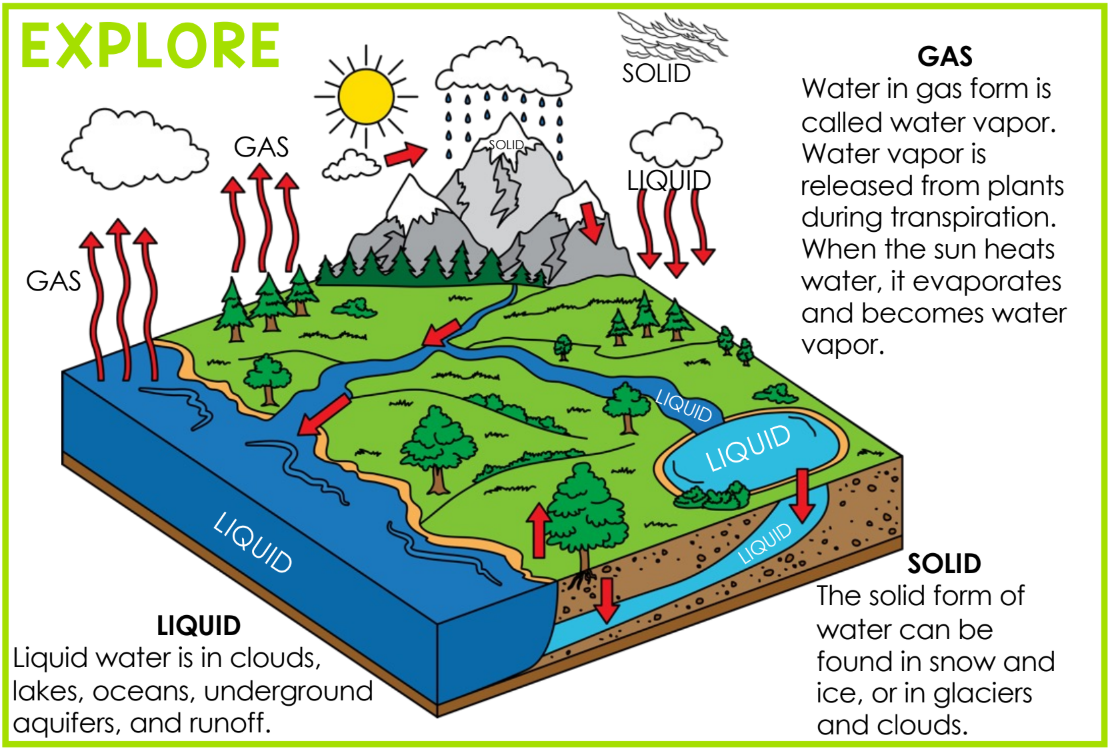
This is how it works: There is a lot of available water in liquid form on the Earth, mainly in the
oceans. Solar energy heats that water from the Sun. The heated water turns into gas form (water vapor) during evaporation. Water vapor rises into the atmosphere, which is cooler than at the surface.
Cool air cannot hold as much water as warm air, so water vapor condenses (turns back into liquid form). The liquid droplets collect around bits of dust and cling together, which forms clouds. You can see clouds up close when the air at the surface cools and fog is formed the same way clouds form.
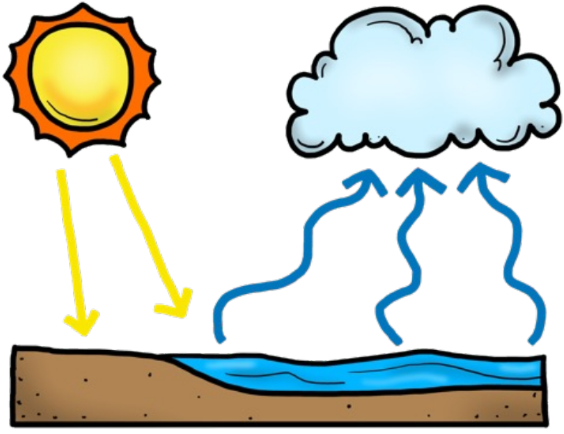
Drag and drop to sequence the processes that form clouds.
Drag and drop to sequence the processes that form clouds.
The Sun’s heat warms water on the ocean's surface.
Liquid droplets collect around dust to form a cloud.
Liquid water becomes water vapor as it evaporates.
Water vapor cools and changes back into liquid water droplets.