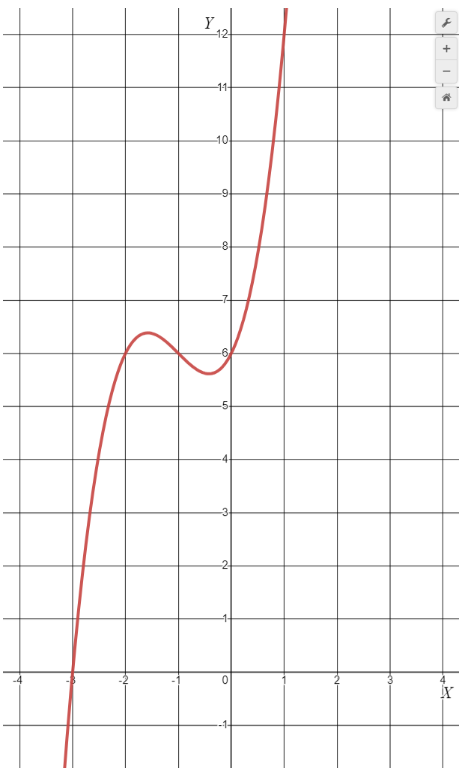
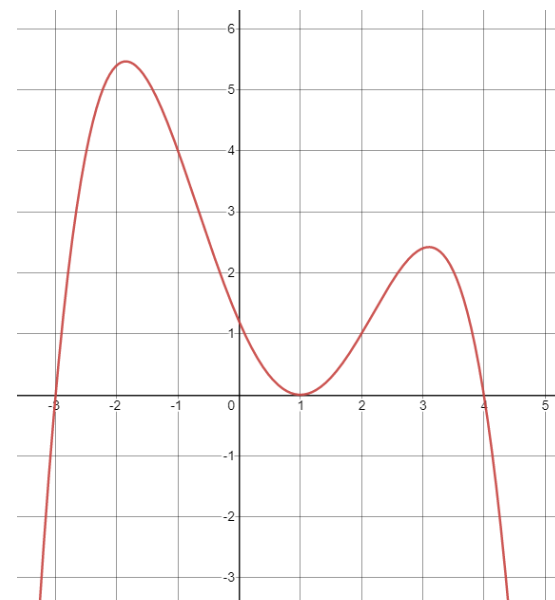
The graph of a function g(x) is shown to the right. Use the graph to answer the questions below:
Ɛhia
1
How many turning points does the function have?
How many turning points does the function have?
Ɛhia
1
Ɛhia
1
Ɛhia
1
Ɛhia
1
Ɛhia
1
A cubic function has x-intercepts at
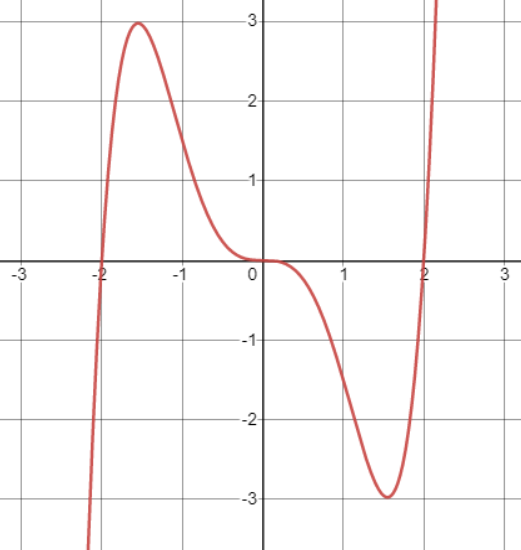
The graph of a function g(x) is shown to the right. Use the graph to answer the questions below:
How many turning points does the function have?
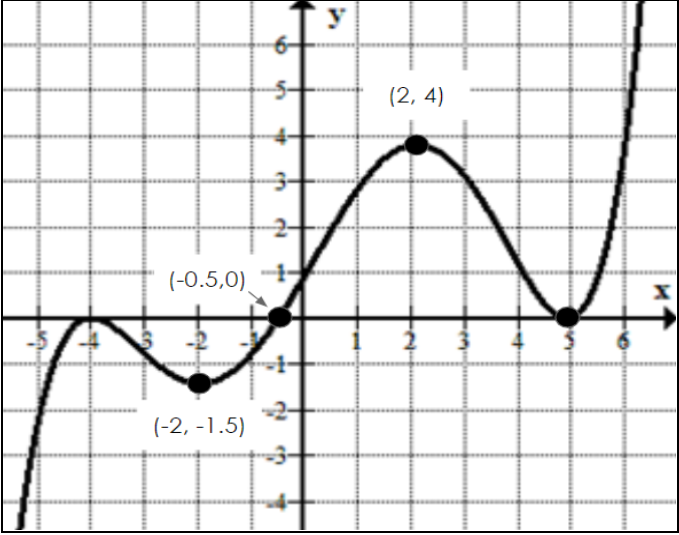
The graph of a function g(x) is shown to the right. Use the graph to answer the questions below:
How many turning points does the function have?
What is the degree of the function?
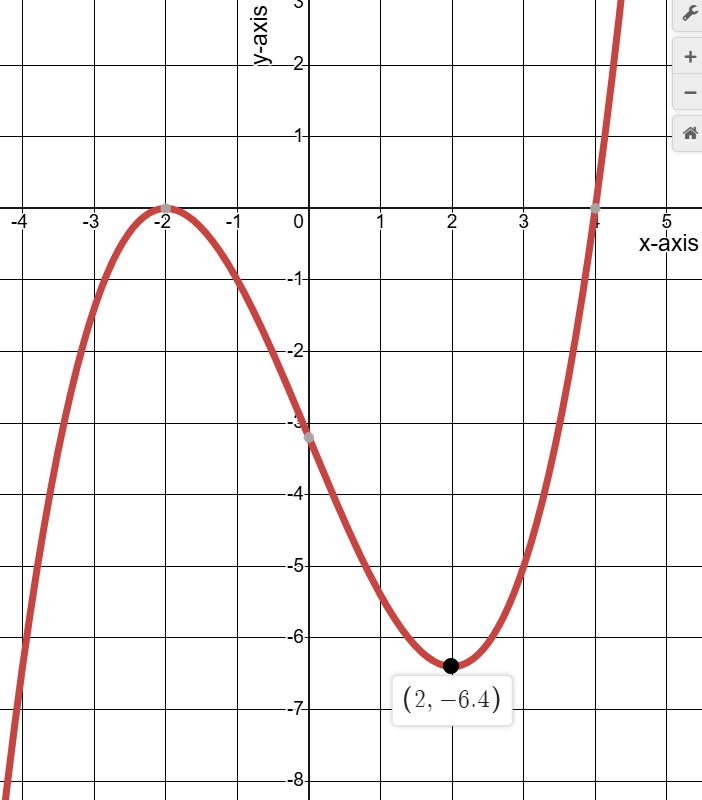
The graph of a function g(x) is shown to the right. Use the graph to answer the questions below:
How many turning points does the function have?
Given the roots of a quartic function are
What is the degree of the function?
Does the graph have a positive or negative leading coefficient?
What are the real root(s), including their multiplicity?
Left to right
Type it in (x,0) multiplicity of #, (x,0)
How many imaginary roots:
What are the factors?
Type them in from left to right
Does the graph have a positive or negative leading coefficient?
What are the real root(s), including their multiplicity?
Left to right
Type it in (x,0) multiplicity of #, (x,0)
How many imaginary roots:
What is the degree of the function?
Does the graph have a positive or negative leading coefficient?
What are the real root(s), including their multiplicity?
Left to right
Type it in (x,0) multiplicity of #, (x,0)
How many imaginary roots:
What are the factors?
Type them in from left to right
Domain
Range
Increasing Interval
Decreasing Interval
Relative Minimum(s)
Absolute Minimum(s)
Relative Maximum(s):
Absolute Maximum(s):
Real Root(s):
Type it in (x,y),(x,y)
No Spaces
Y-intercept:
Type it in (x,y)
End Behavior:
Domain
Range
Increasing Interval
Decreasing Interval
Relative Minimum(s)
Absolute Minimum(s)
Relative Maximum(s):
Absolute Maximum(s):
Real Root(s):
Type it in (x,y),(x,y)
No Spaces
Y-intercept:
Type it in (x,y)
End Behavior: