1
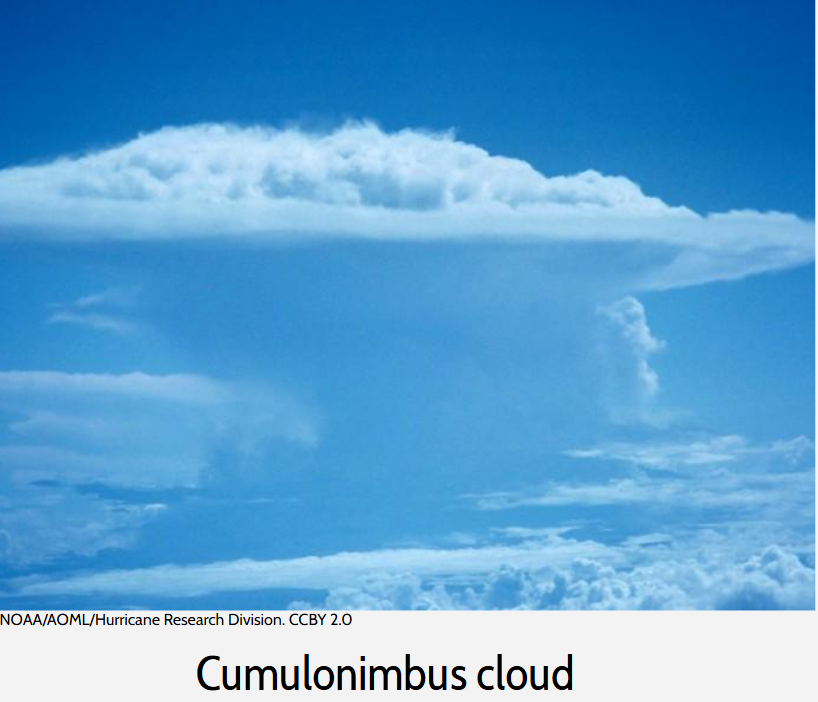
This Cumulonimbus cloud tends to produce hail. What do you notice about this cloud?
This Cumulonimbus cloud tends to produce hail. What do you notice about this cloud?
Do you think larger parcels of air outside, over the course of a day, also end up doing what the balloon did in our classroom? Why?
If you could observe the motion of the air in the clouds on a day when it hails, what do you predict you might see happening?
This Cumulonimbus cloud tends to produce hail. What do you notice about this cloud?
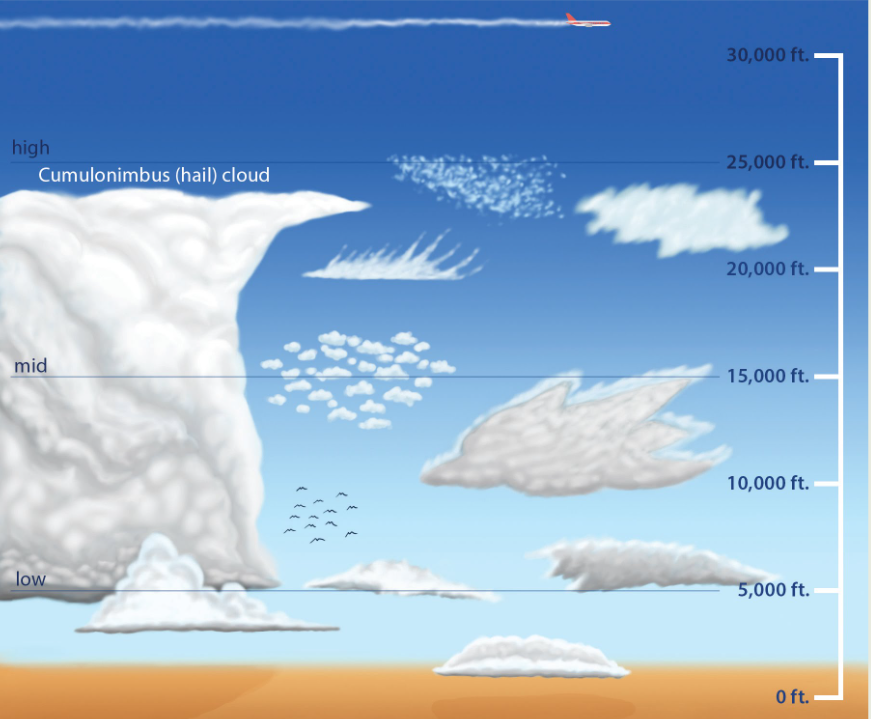
How does a hail cloud compare to the other clouds?
What do we know about the temperature of the air at different heights of a cloud?
How might this be related to the formation of hail?
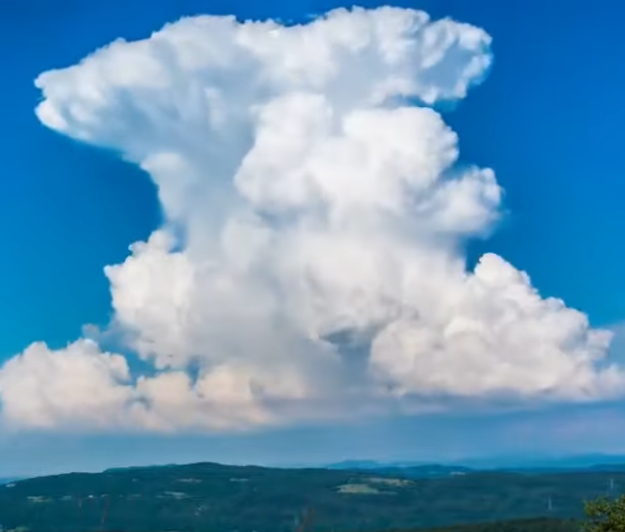
What caused this upward movement of air in the cloud?
Why does this type of cloud motion tend to happen more on sunny days?
Why did the rising air in the cloud eventually stop rising (or start falling)?