
Ɛhia
1
This map illustrates "sectionalism" in the United States.
What do you think "sectionalism" means?
This map illustrates "sectionalism" in the United States.
What do you think "sectionalism" means?
This map illustrates "sectionalism" in the United States.
What do you think "sectionalism" means?

Which region of the country has a more developed infrastructure?
What does this map tell you about how the Northern economy and Southern economy were different?
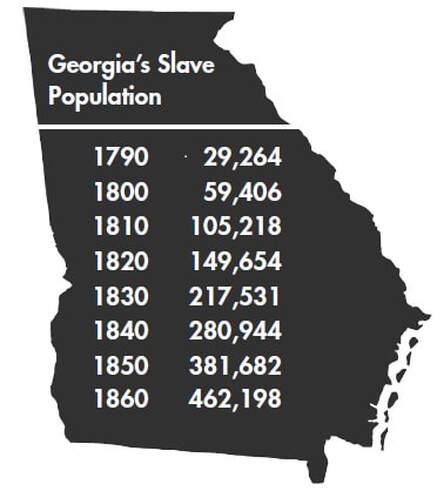
The success of cash crops like cotton entrenched (fixed in place) the use of enslaved labor in Georgia and across the South. Planters did not have enough workers to plant and pick cotton fast enough. The demand for cotton had created a demand for farm labor. To keep their costs down and their profits up, planters used the unpaid labor of enslaved Africans. They saw this as key to maximizing their profits. As the cotton fields expanded, so did the enslaved population. By 1860, enslaved Africans comprised 44 percent of Georgia’s population. The total number that year was more than any other state in the lower South.
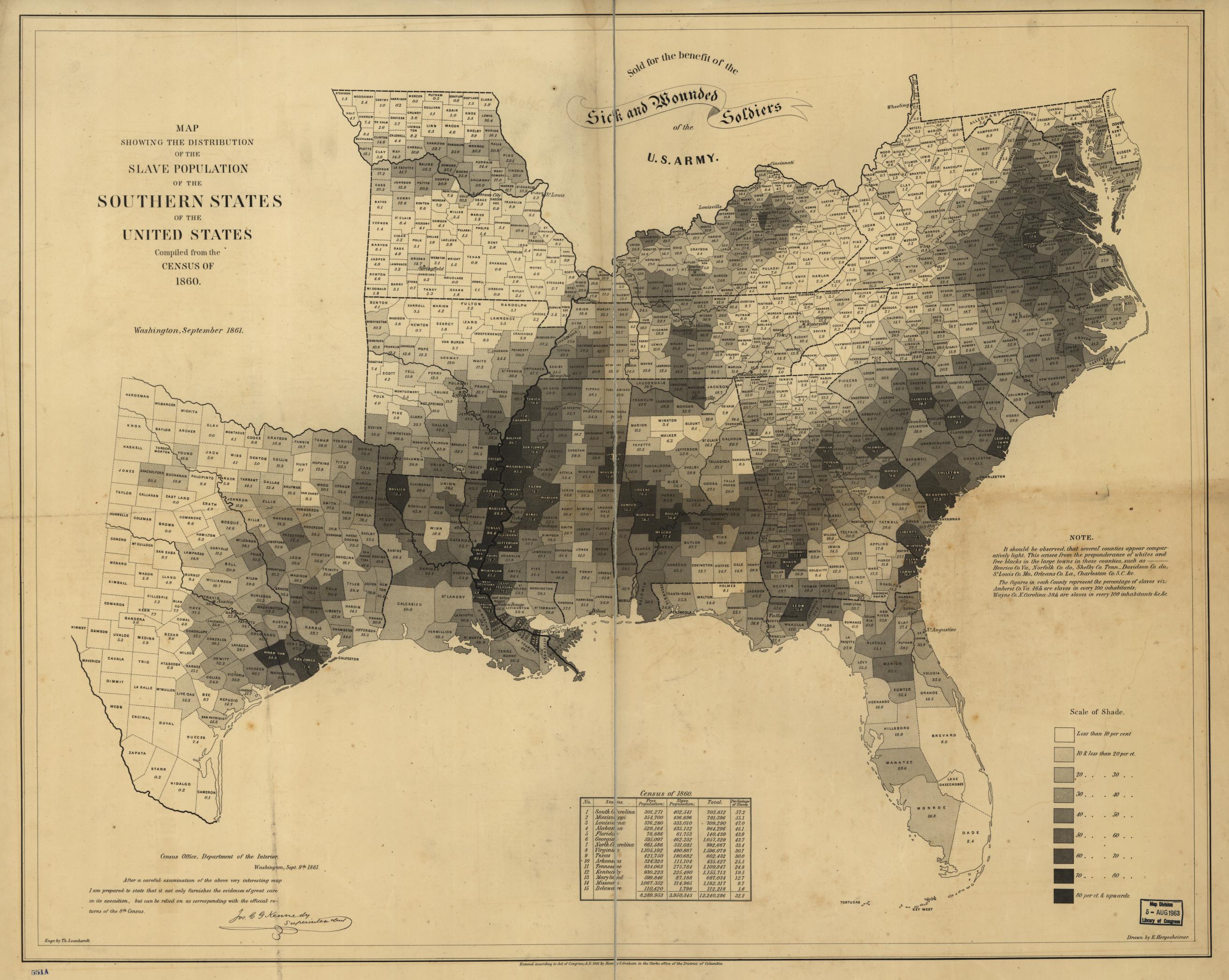
All of this planting exhausted the soil. When the land was no longer fertile, some planters moved west, taking their slaves with them. As a result, slavery expanded across the South. The demand for enslaved Africans and the spread of wealth brought upcountry and low country whites closer together on matters of politics. Soon, most of the men who held seats in the state legislature were slaveholders. Slaveholding translated into not only wealth, but status and power.
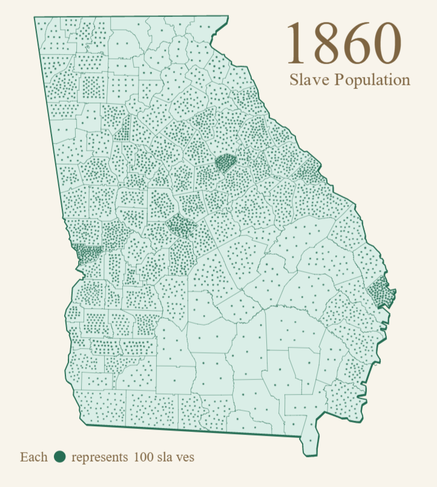
As cotton became the center of Georgia’s economy, planters became dependent on enslaved labor. The system only worked if enslaved blacks were part of it, so it became more important for planters to make sure slavery was here to stay. They passed stricter laws to keep the system in place, and they began to defend the enslavement of humans in new ways. For the enslaved, life just got harder.
Northern textile mills also depended on slavery. How could they keep producing without a steady supply of cotton from the South? Manufacturers were able to buy cotton at a low cost because planters did not have to pay for labor.

What do you think is going on in this scene?

What is the range in ages of the people who are being sold in the advertisement?
The debate over slavery also had important economic implications, or consequences for the nation. Land, slaves, and cash crops drove the South’s development. Cotton, tobacco, rice, and indigo grew well in the fertile soil, and the region’s mild climate provided a long growing season. Slow-moving rivers helped planters transport goods to markets and port towns. Planters invested many of their profits in new land and in enslaved African Americans to work the land. Because cotton was so profitable, there was little incentive, or motivation, to invest in other businesses. As a result, there was a growing fear that an economic system built on human enslavement might not be sustainable.
The Northern economy was based on trade and manufacturing. The soil was rocky, and the colder climate resulted in a short growing season. Fast-moving rivers powered mills and factories but made navigation more difficult. Most of the wealth was in the hands of manufacturers and merchants, who made money in trade and shipping. They invested in canals, railroads, and new factories. When these industries needed more labor, the North attracted immigrants. As a result, the North and South were also divided by population size. These differences meant that Northern and Southern leaders had very different economic interests and voted for those sectional interests in Congress.
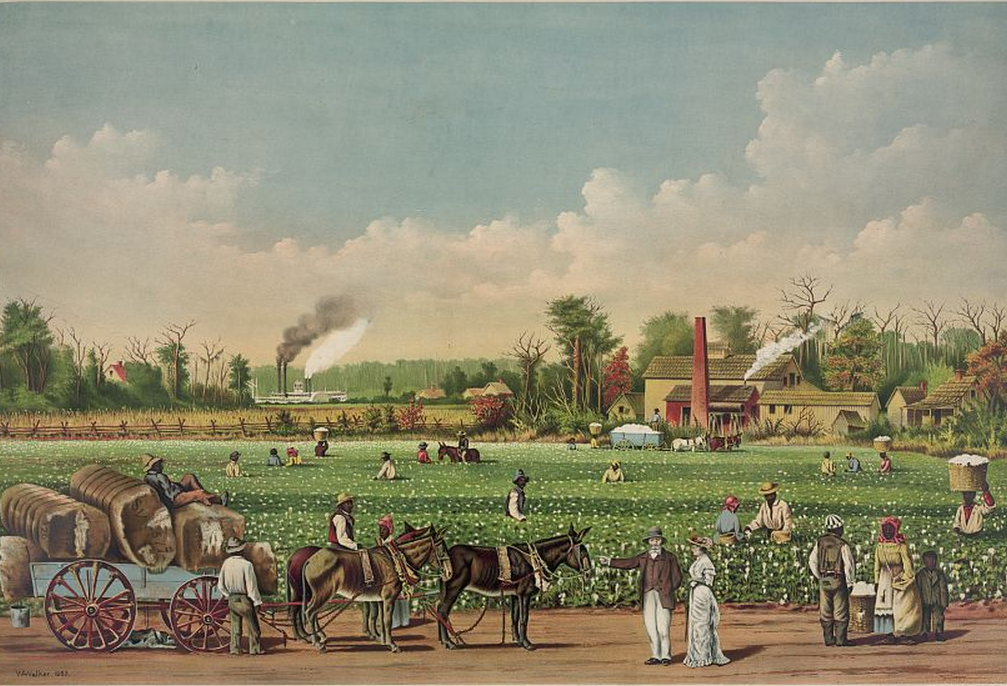
During the 1800s,the plantation system became more deeply rooted in Southern life, society, and culture. Large plantations developed into self-sufficient communities, where most of the goods and services needed to keep the system running smoothly were provided on site. In addition to the “big house,” overseer’s house, and slave quarters, there were acres of cotton fields, stables for livestock, and vegetable gardens. Enslaved blacks also tended smaller fields of corn and tobacco. There might be an icehouse, laundry building, woodhouse, storehouse, and smokehouse (top reserve meat) on the property. Some plantations had workshops for cobblers, blacksmiths, and weavers. The largest estates contained their own mills and hospitals. Planters' families had lively social lives, hosting balls and picnics.
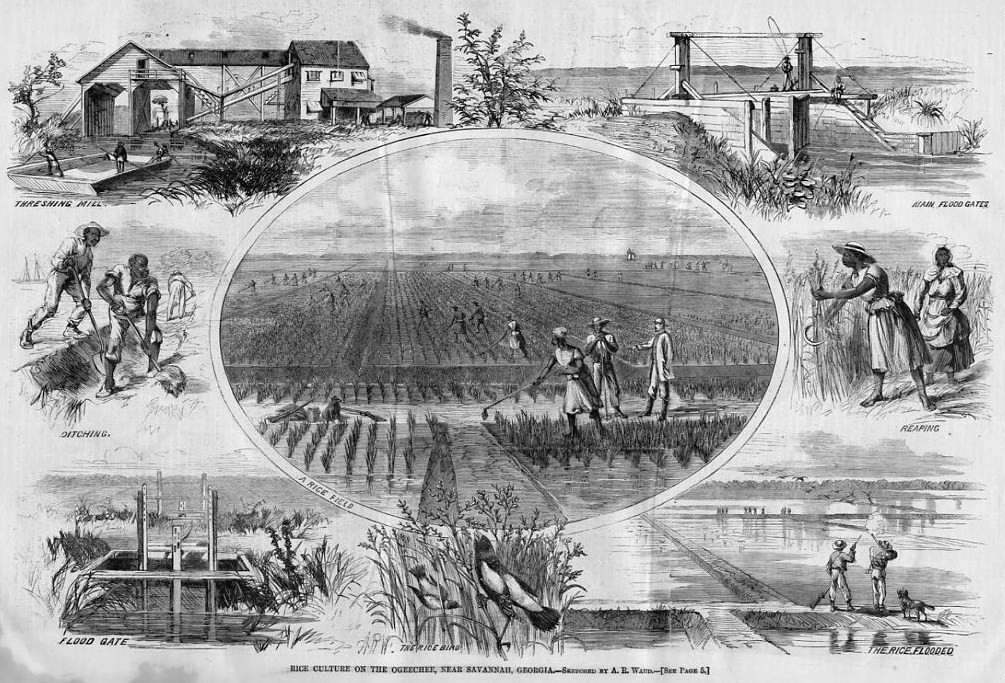
Enslaved people lived under the constant vigilant eye of the overseer, driver, or "master". These men disciplined them for being late to work, not working fast enough, running away, and a range of other actions. If a slave defied their authority, he or she was often punished. The cruelty of the punishment depended on the "master," and sometimes on his whim. Punishments included whipping, maiming, mutilation, and what some enslaved blacks considered worse— being sold away from the plantation and loved ones.
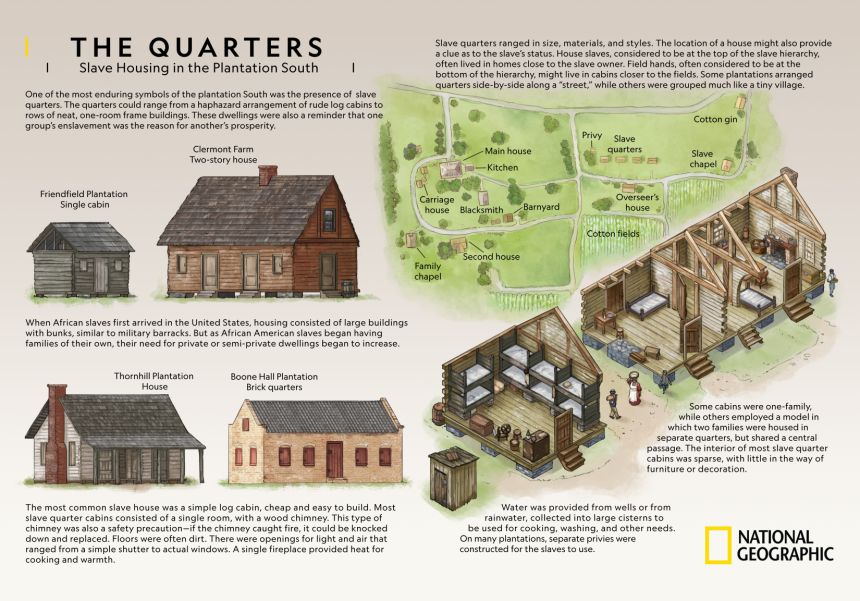
Plantation culture and the laws that supported it worked to institutionalize slavery. This meant that slavery became a structured and formal system within the culture. Outside the plantation, laws known as “slave codes” restricted the movements and activities of slaves. The codes varied from state to state, but they often forbade slaves to leave plantations without a pass, testify against whites in court, possess antislavery publications, or learn to read and write. Patrols and militias were on the lookout to enforce such codes.
Although some slaveholders believed they were being kind by keeping enslaved families together or nursing the sick, they considered their slaves property and viewed them as incapable of making decisions for themselves. They believed it was their responsibility to provide for their slaves. This fatherly attitude, which denied enslaved people their human dignity, is known as paternalism.
Over time, enslaved people won small privileges in return for good work. Some made money in their spare time by selling fish they caught or vegetables they grew. Others took on extra jobs, though most had to give their owners part of the wages they earned. A fortunate few earned enough to buy their own freedom.
Many enslaved African Americans looked for ways to avoid despair. They did what they could to improve their lives. In the slave quarters, African Americans created communities. To restore peace after a long day’s work or to ease their sadness, they sang and played music on African instruments similar to the banjo. They taught their children how to avoid punishment. They told stories of Africa and created new stories about their lives in the South. Couples held their own wedding ceremonies, even though the laws did not recognize these marriages.
At church, white preachers instructed slaves to be at peace with their situation in life. They said that the Bible justified slavery. But enslaved blacks, in their own secret meetings, sang and prayed about freedom. They added Christian elements to their African forms of worship. Many believed that God would free them. They sang spirituals that focused on the message of justice and the story of Moses leading his people out of slavery in Egypt.
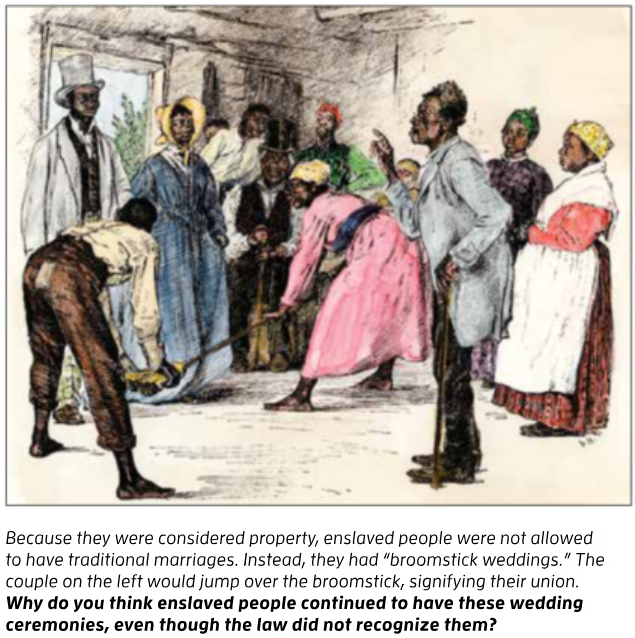
What did enslaved African Americans create in their quarters to improve their lives?
Enslaved African Americans found ways to resist or rebel against this treatment. They sang songs that contained codes and double meanings about running away or finding freedom. They might deliberately work slowly, burn the dinner, pretend to be sick, or damage tools used for harvesting. Efforts at dignity and community in the face of enslavement were also forms of resistance.
Many enslaved people risked their lives seeking to emancipate (free) themselves. They escaped and secretly made their way to freedom. A few tried to organize others and lead armed rebellions.
An End to the International Slave Trade
In1808, the US Congress banned the international slave trade. This did not end slavery in America, however; it meant that people purchased enslaved Africans and African Americans from other states instead of from other countries. By that time, the domestic (existing within the United States) slave population had begun to increase naturally. When investors started plantations in places like Alabama and Mississippi, they were able to buy American-born slaves from established plantations in places like North Carolina. As the domestic slave trade expanded, more families suffered the pain of having loved ones “sold South." Some Americans continued to participate in the international slave trade illegally.
Free African Americans
Georgia had a small but significant number of free black people, most of whom lived in the towns and cities. Some had been free for generations, while others had been freed by their "masters" or earned enough money to purchase their freedom. A few slaveholders were inspired to free an enslaved person for religious reasons, or because denying freedom to a fellow human being conflicted with the ideals of the American Revolution. Others promised freedom for loyal service upon their death, as part of their wills. Slaveholders who fathered children with enslaved females sometimes freed the woman and her children.
Many free black people remained in the South, working as bricklayers, carpenters, and wagon drivers. Free black women often worked as housemaids or seamstresses. The number of free blacks in the South by 1860 was 250,000. This was small compared to the number of enslaved blacks on plantations across the South, which was four million.
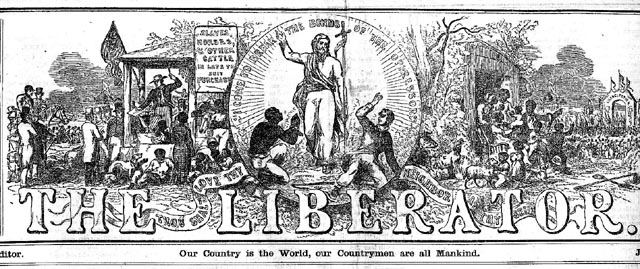
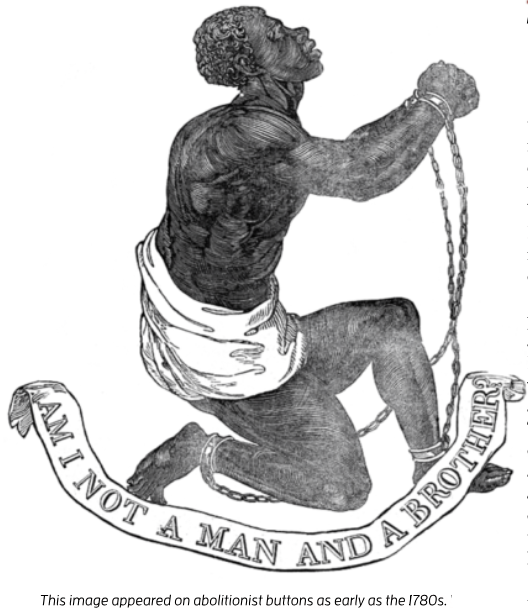
People in every state questioned the morality—whether something is right or wrong—of slavery. Moral concerns led some slaveholders to free their slaves. Many white preachers began to denounce slavery as well. By the early 1800s, an abolitionist movement had emerged, with the express purpose of abolishing slavery. The movement grew with the publication of antislavery pamphlets and newspapers, such as William Lloyd Garrison’s The Liberator, and with talented orators and writers such as Frederick Douglass and Sojourner Truth, who were both formerly enslaved. Douglass also printed an abolitionist paper called The North Star. Abolitionists helped hundreds of enslaved African Americans escape to freedom through a secret network known as the Underground Railroad. William Lloyd Garrison formed the American Anti-Slavery Society to fight for the immediate end to slavery, and voters elected abolitionist candidates to Congress. Southern leaders were so worried that Congressional abolitionists would outlaw slavery that they passed a law called the “Gag Rule,” which forbade any discussion of abolition. Passed in 1836, the law remained in effect until it was repealed in 1844.
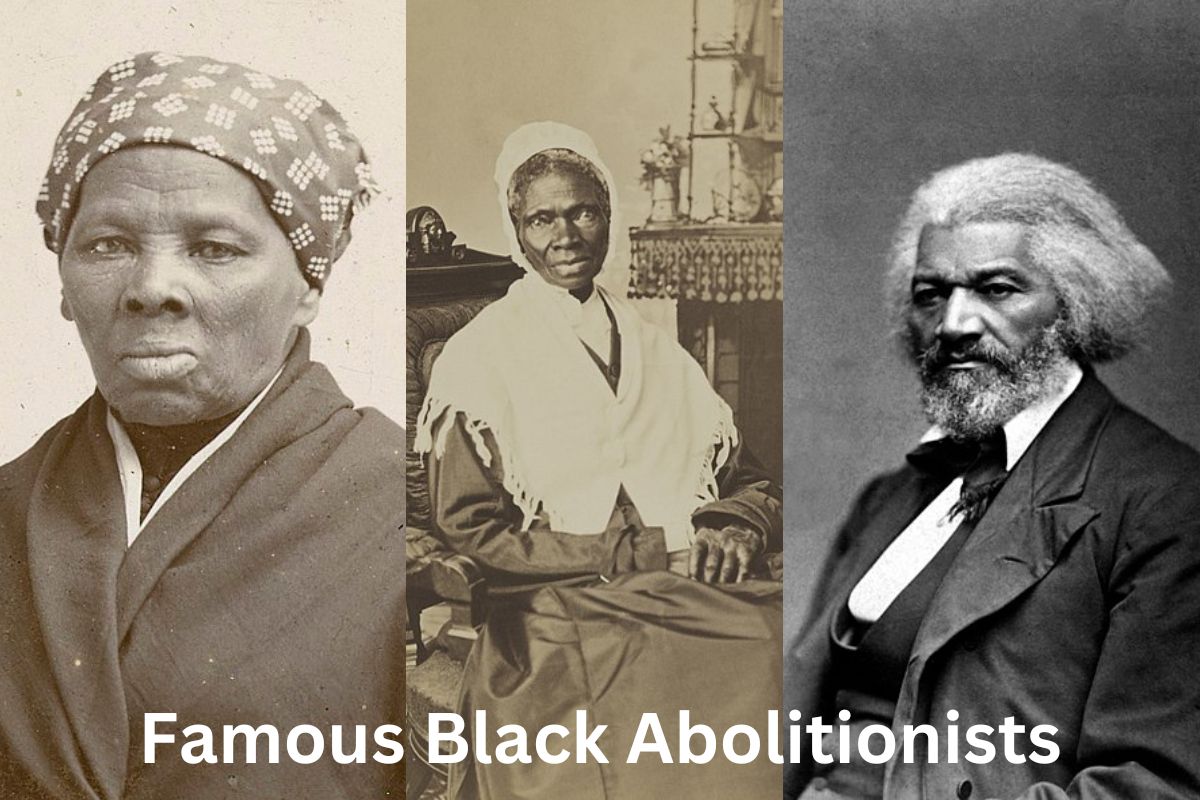
Although abolition was mainly a Northern cause, there were Southern abolitionists, such as Sarah and Angelina Grimké of South Carolina. By 1830, postmasters across their home state had removed from the mail what they considered inflammatory materials. These included antislavery newspapers and other writings that would arouse angry feelings.
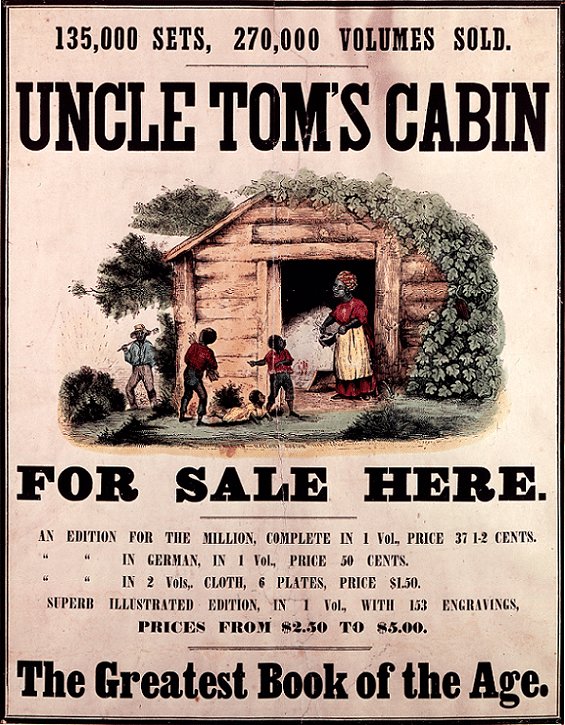
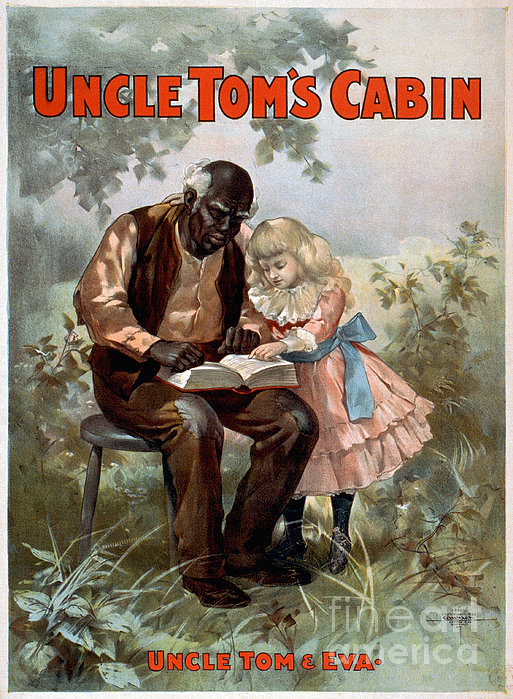
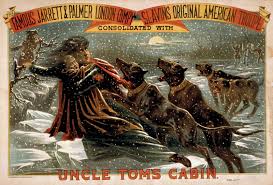
In the midst of the national debate over slavery, New England abolitionist Harriet Beecher Stowe began publishing installments of Uncle Tom’s Cabin. The story, which presented a sympathetic portrait of an enslaved family, opened the eyes of many people to the evils of slavery. It became so popular that Stowe had it published as a complete novel in 1852. The novel became an instant success, selling millions of copies in the United States and around the world. It also fueled the growing division between people defending slavery and those who wanted it abolished.
Uncle Tom’s Cabin did not just point the finger at Southern slaveholders. Stowe wanted Northerners to understand that they, too, played a part in this great national tragedy. She reminded them that merchants in Northern cities had brought innocent people from Africa, enslaved them, and sold them in the United States. She also believed that Northern politicians were responsible for allowing slavery to enter the western territories because they were willing to compromise on the issue. She believed both the North and the South were “guilty before God.”
What was a major reason for the expansion of slavery in the Antebellum South?
Why did planters see the use of enslaved Africans as key to maximizing their profits?
How did slavery impact the soil in the South?
How were Northern textile mills related to Southern slavery?
What major crops drove the South's economic development in the Antebellum period?
Why was there little motivation for Southern planters to invest in businesses other than cotton?
What factors made the northern states economy based on trade and manufacturing?
How did the North and South's economic differences affect political interests?
What were some goods and services provided on the plantation?
What facilities did large estates have?
What types of social lives did plantation owners' families lead?
Who tended the smaller fields of corn and tobacco on a plantation?
What was the role of the 'master' on a plantation?
What does 'institutionalize' slavery mean in this context?
Which restriction was NOT typically part of the 'slave codes'?
What is 'paternalism' as referred to in this context?
Which Biblical figure's story inspired spirituals about freedom and justice?
What were some forms of resistance by enslaved African Americans?
What was the effect of the U.S Congress banning the international slave trade in 1808?
What were some of the jobs done by free African Americans in the South?
In what ways did some enslaved people obtain freedom?
What was the main purpose of the Abolitionist Movement?
Who printed an abolitionist paper called The North Star?
What was the purpose of the Gag Rule passed in 1836?
Who formed the American Anti-Slavery Society?
Who wrote the novel Uncle Tom’s Cabin?
In Uncle Tom’s Cabin, who did Harriet Beecher Stowe hold responsible for the national tragedy of slavery?
What did Harriet Beecher Stowe imply Northern businessmen were guilty of?
Why did the novel Uncle Tom’s Cabin increase divisions in the United States?
Where did the author of the mystery document escape to, in order to escape slavery?
Slaves never organized armed rebellions.
Virginia's response to slave rebellions such as Nat Turner's rebellion was to: