The Cell Cycle

Last updated 7 months ago
12 questions
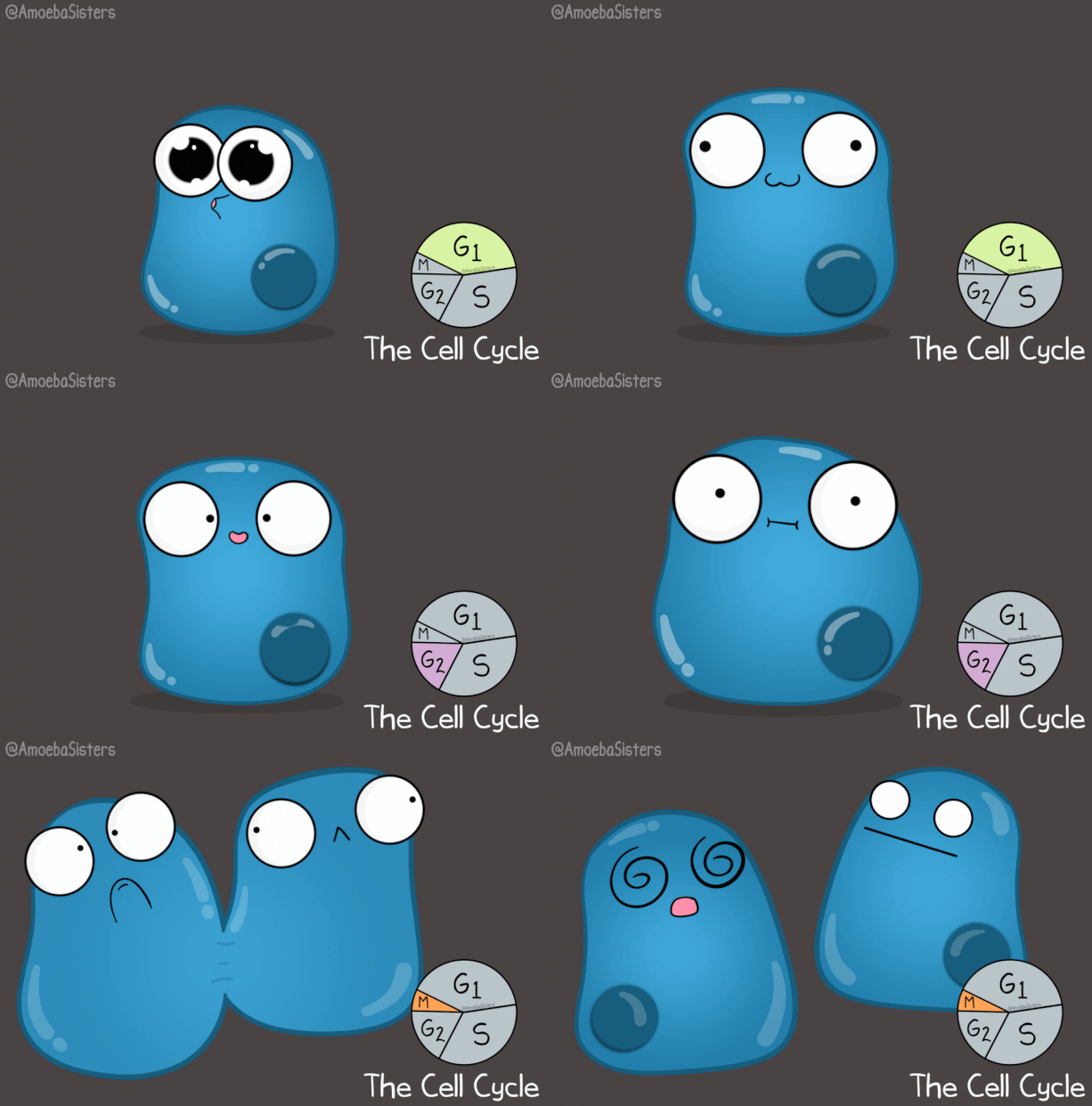
Cells reproduce by a cycle of growing and dividing called the cell cycle. Cellular reproduction allows you to grow and to heal some kinds of injuries.
Each time a cell goes through one complete cycle, it becomes 2 cells. There are 2 main stages of the cell cycle.
Interphase

Interphase is the stage when the cell grows, develops into a functioning cell, duplicates the DNA in its nucleus, and prepares for division.
Interphase is divided into 3 stages: Gap 1, synthesis, and Gap 2.

------------------------------------------------------------------------------------->

When these activities are completed, the cell begins the next stage of the cell cycle-mitosis.
Gap 1

The first stage of interphase. It's the period immediately after a cell divides. During Gap 1, a cell is growing, carrying out normal cell functions, and preparing to replicate DNA. Some cells, such as muscle and nerve cells, exit the cell cycle at this point and do not divide again.
Synthesis

The second stage of interphase, synthesis, is the period when a cell copies its DNA in preparation for cell division. Chromosomes are the structures that contain the genetic material that is passed from generation to generation of cells. Chromatin is the relaxed form of DNA in the cell's nucleus.
Gap 2

The Gap 2 stage follows Synthesis and is the period when the cell prepares for the division of its nucleus. A protein that makes microtubules for cell division is synthesized at this time. During Gap 2, the cell also takes inventory and ensures it is ready to continue with mitosis.
Mitosis

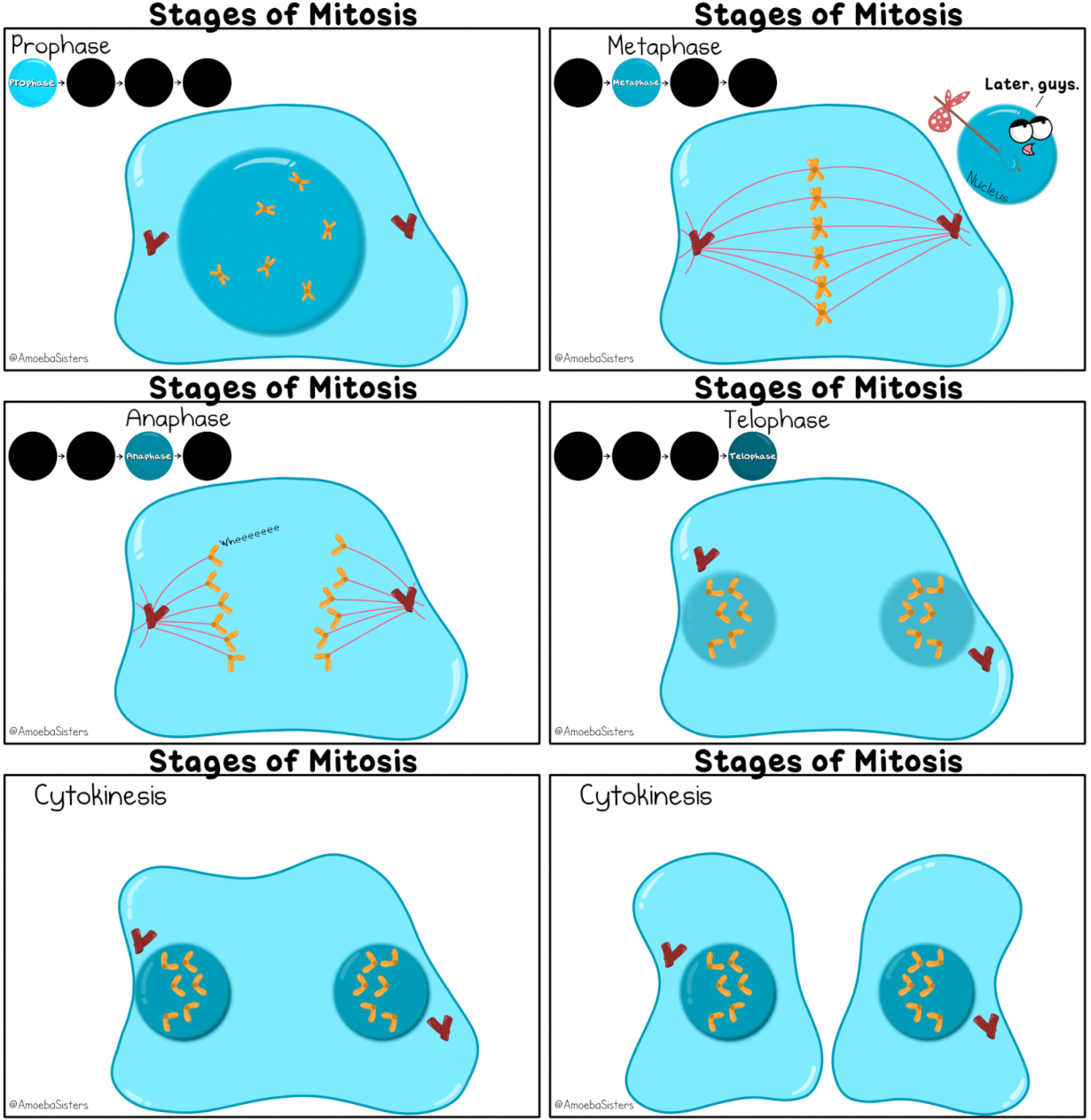
Mitosis is the stage of the cell cycle during which the cell's nucleus and nuclear material divide. In multicellular organisms, the process of mitosis increases the number of cells as a young organism grows to its adult size. Organisms also use mitosis to replace damaged cells.
Prophase

The first and longest stage of mitosis. In this stage, the cell's chromatin condenses into chromosomes. Each chromosome is a single structure that contains the genetic material that was replicated in interphase.
As prophase continues, the nucleolus starts to disappear. Microtubule structures called spindle fibers from in the cytoplasm.
In animal cells centrioles migrate to the ends of the cell. These centrioles have aster fibers, which have a starlike appearance. The whole structure is called the spindle apparatus. The spindle apparatus is important in moving and organizing the chromosomes before cell division.
Near the end of prophase, the nuclear envelope disappears and spindle fibers attach to sister chromatids of each chromosome on both sides of the centromere. Then, they attach to opposite poles of the cell. This arrangement ensures that each new cell receives one complete copy of DNA.
Metaphase
During the second stage of mitosis, the sister chromatids are pulled by motor proteins along the spindle apparatus toward the center of the cell, and they line up in the middle of the cell. Metaphase is one of the shortest stages of mitosis, but when it is completed successfully, the new cells have accurate copies of the chromosomes.
Anaphase
The chromatids are pulled apart during this stage. This results in the separation of the replicated DNA. In anaphase, the microtubules of the spindle apparatus begin to shorten. This shortening pulls at the centromere of each sister chromatid, causing the sister chromatids to separate into two identical chromosomes. At the end of anaphase, the microtubules, with the help of motor proteins, move the chromosomes toward the ends of the cell.
Telophase
This is the last stage of mitosis. This is the stage of mitosis during which the chromosomes arrive at the poles of the cell and begin to relax, or decondense. Two new nuclei form, each with a complete set of DNA. Two new nuclear membranes also begin to form, and the nucleoli reappear.
Structures used for mitosis, such as the spindle apparatus and microtubules, are recycled by the cell to build various parts of the cytoskeleton.
1

What is the correct order of the cell cycle phases?
1

What is the purpose of the S phase?

4

Put the stages of Mitosis into the correct order.

  1. prophase
  2. anaphase
  3. telophase
  4. metaphase
1

During which phase do the sister chromatids separate and move to opposite poles?

1

What is the end result of mitosis?

1

Mitosis occurs in both plant and animal cells.

1

What is the longest phase of the cell cycle?

1

Identify the stage of Mitosis that a cell spends the most time in.

3

Place the following steps of the Cell Cycle into the correct order.

  1. Metaphase
  2. Cytokinesis
  3. Interphase
  4. Prophase
  5. Anaphase
  6. Telophase
1

During which of the following stages of the cell cycle does the cell divide into 2 identical daughter cells?

1

Which of the following stages of Interphase shows the cell growing, carrying out normal functions, and preparing to replicate DNA?

6

Match the description with the correct stage of the Cell Cycle.

Draggable itemCorresponding Item
The stage in which the cell grows, develops in a mature, functioning cell, duplicates the DNA in its nucleus, and prepares for division.
Anaphase
The stage in which chromosomes reach the poles of the cells and decondense, nuclear envelope reforms at each pole, and spindle apparatus disintegrates.
Prophase
The stage in which the nuclear envelope disintegrates, chromatin condenses into chromosomes, and spindle fibers appear.
Telophase
The stage in which the cytoplasm divides and results in two cells with identical nuclei.
Interphase
The stage in which chromosomes attach to spindle apparatus and align along the equator of the cell.
Cytokinesis
The stage in which microtubules move chromosomes to opposite poles and cause sister chromatids to separate.
Metaphase