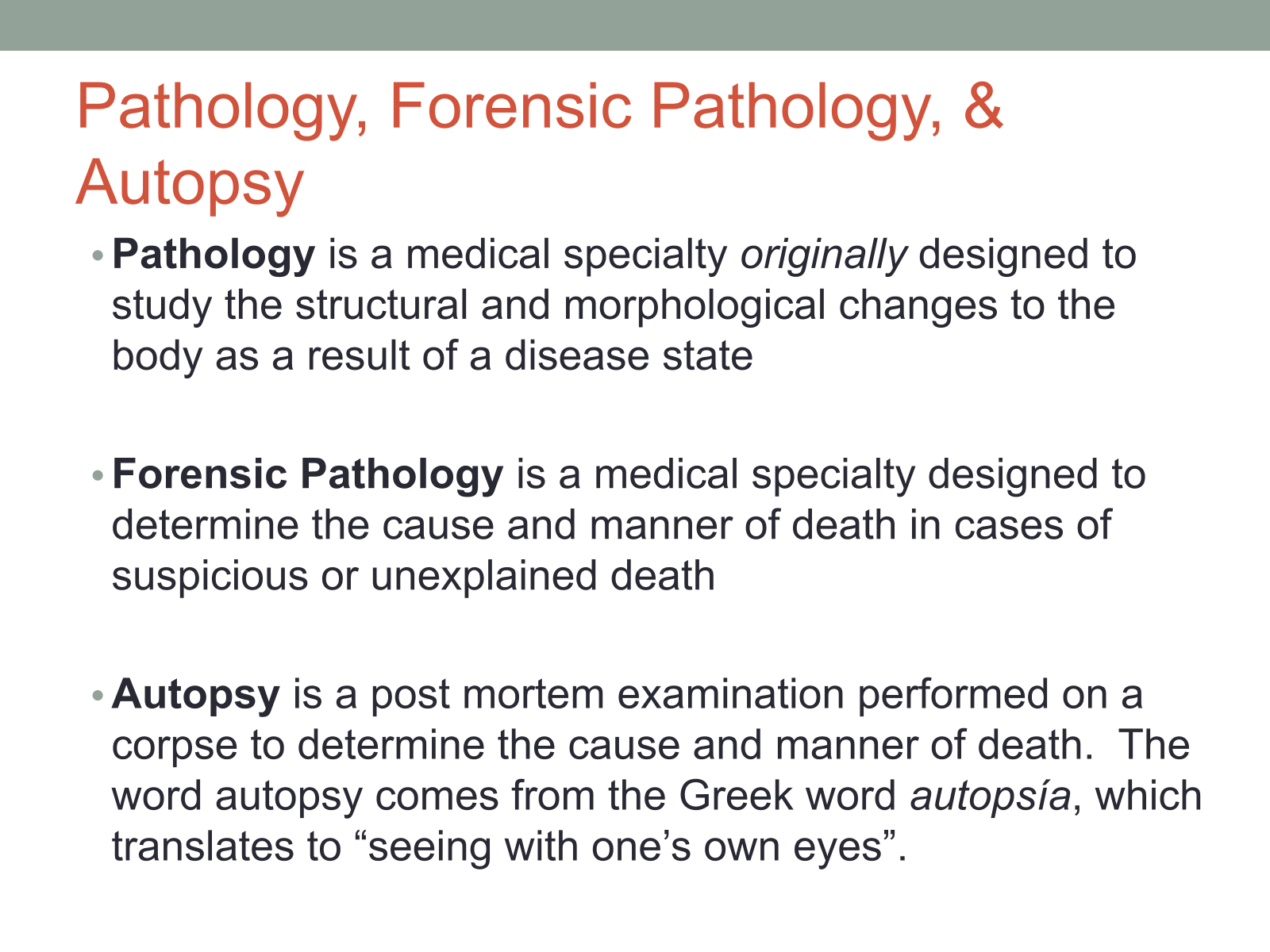
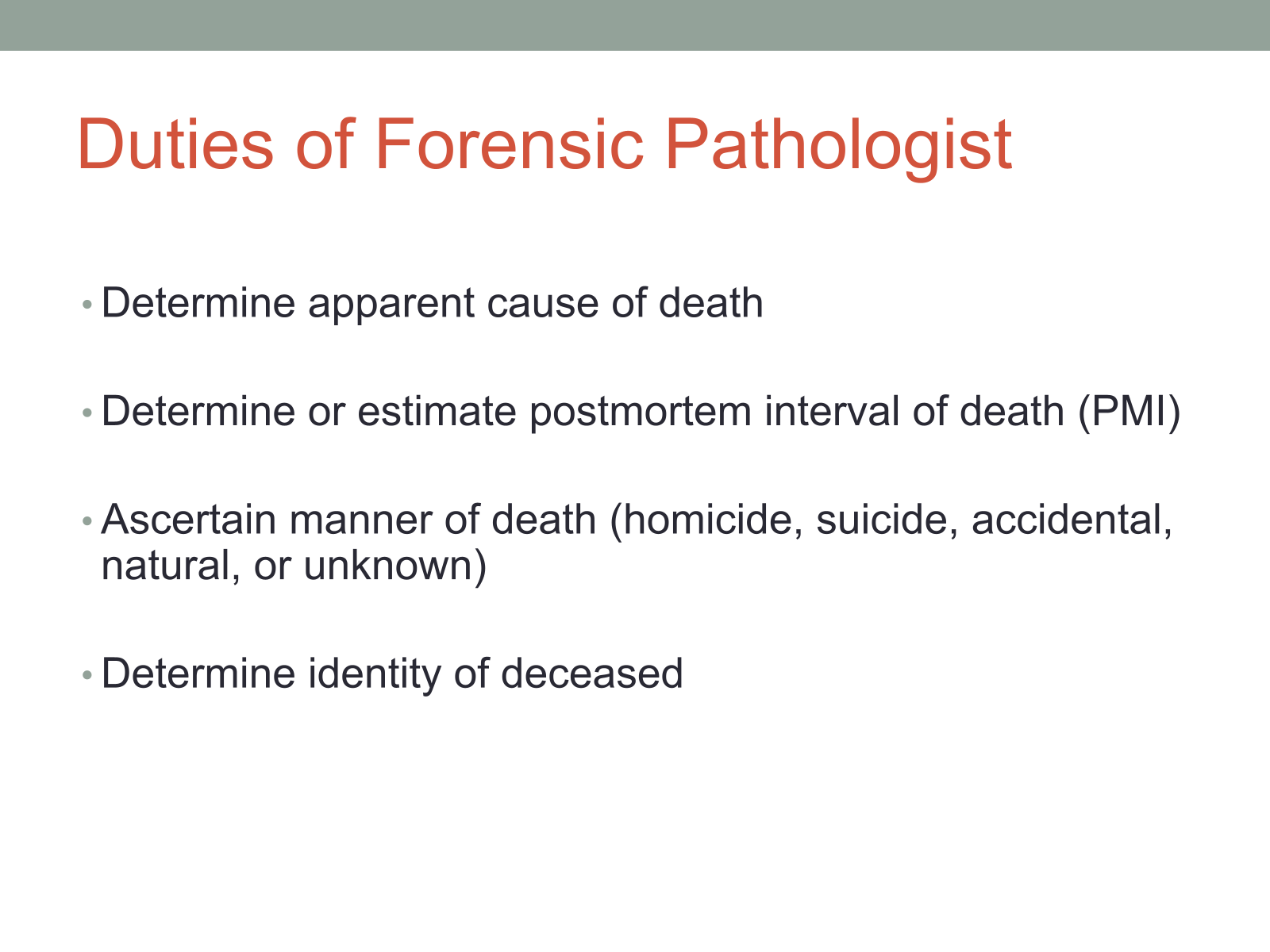
Select all of the following that are duties of a forensic pathologist:
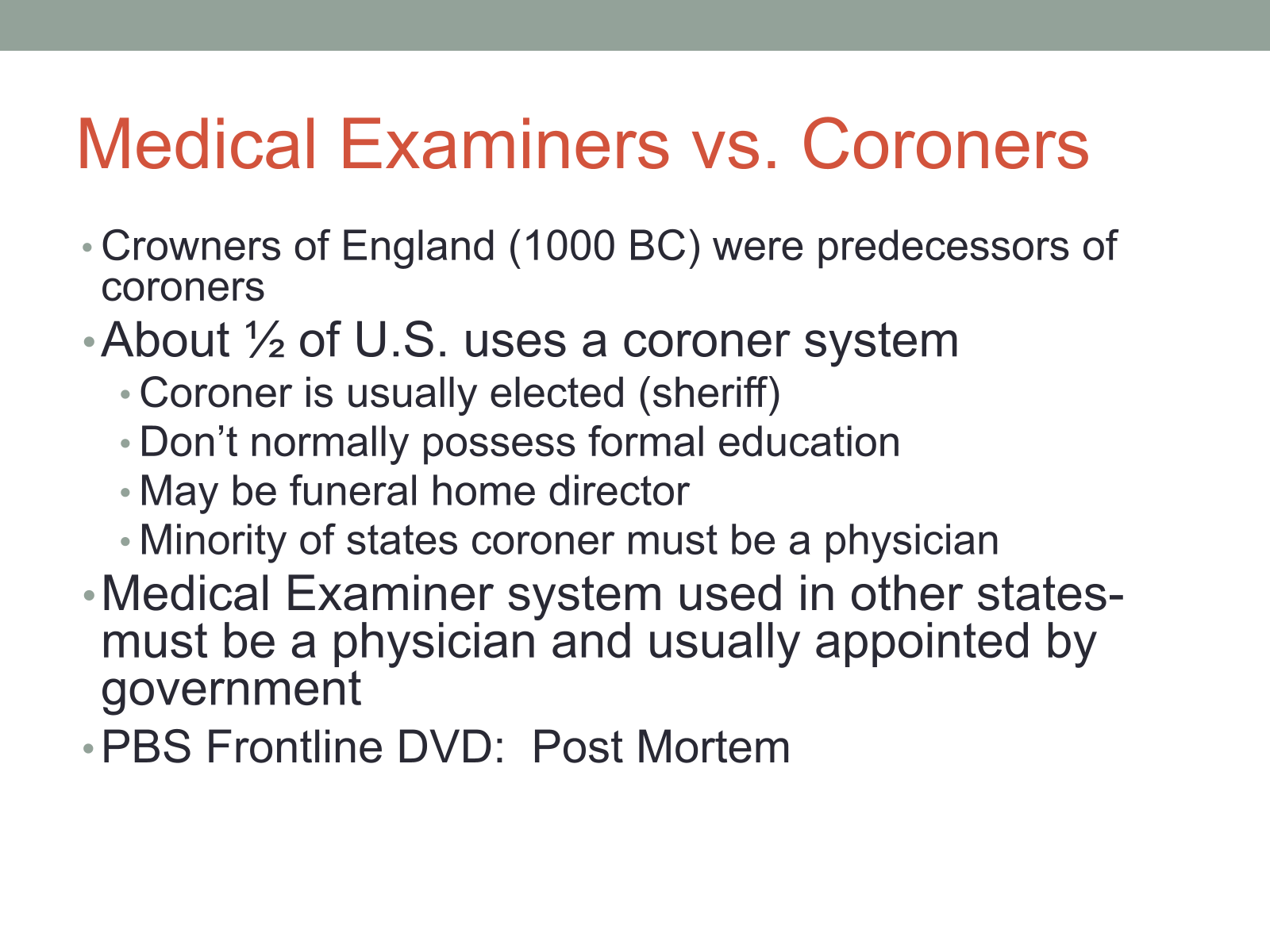
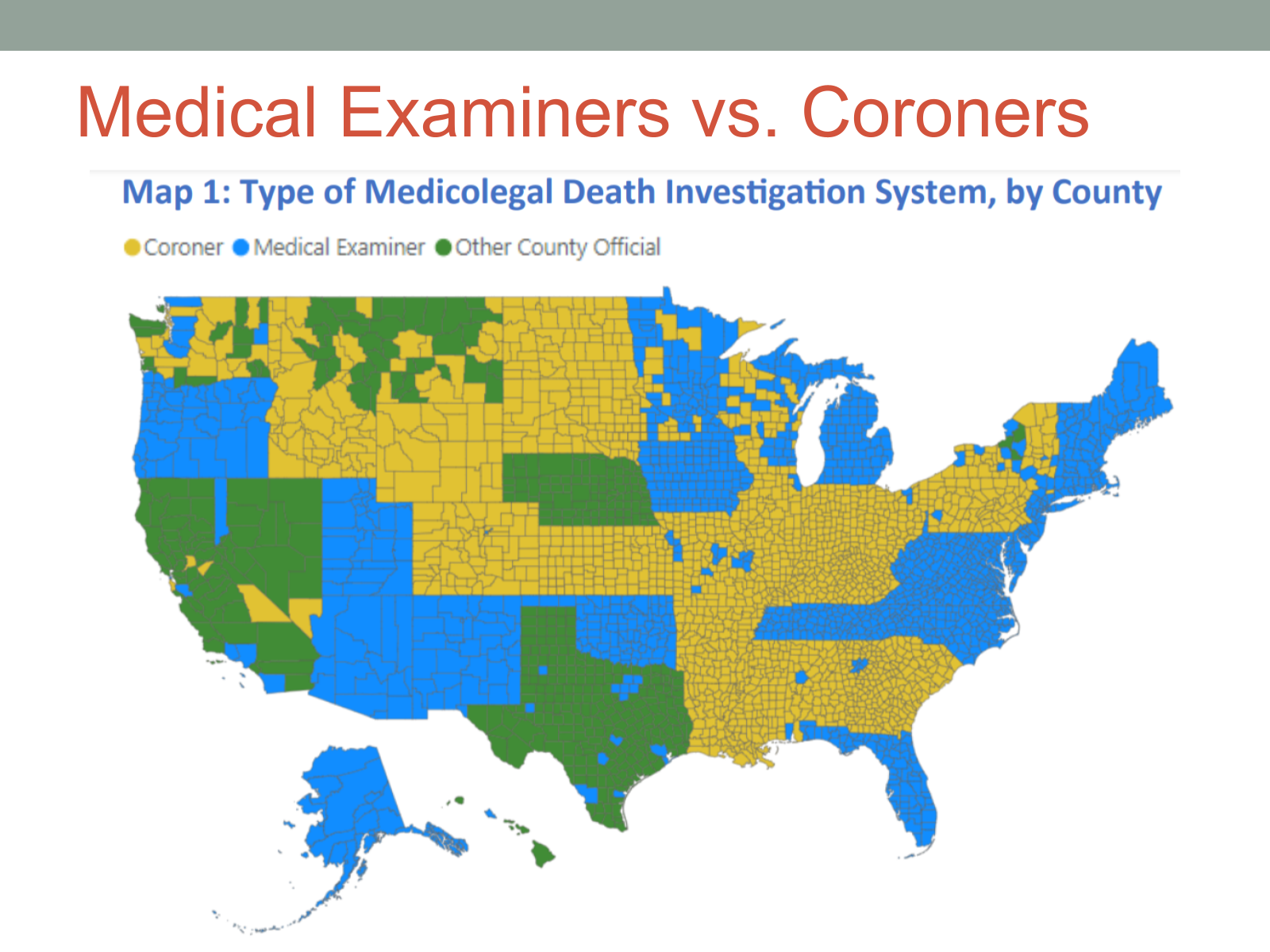
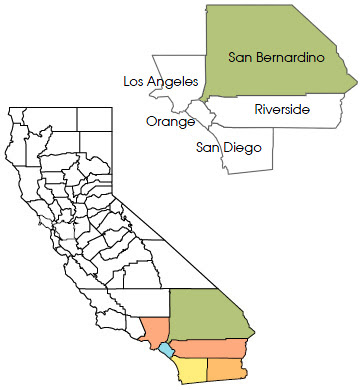
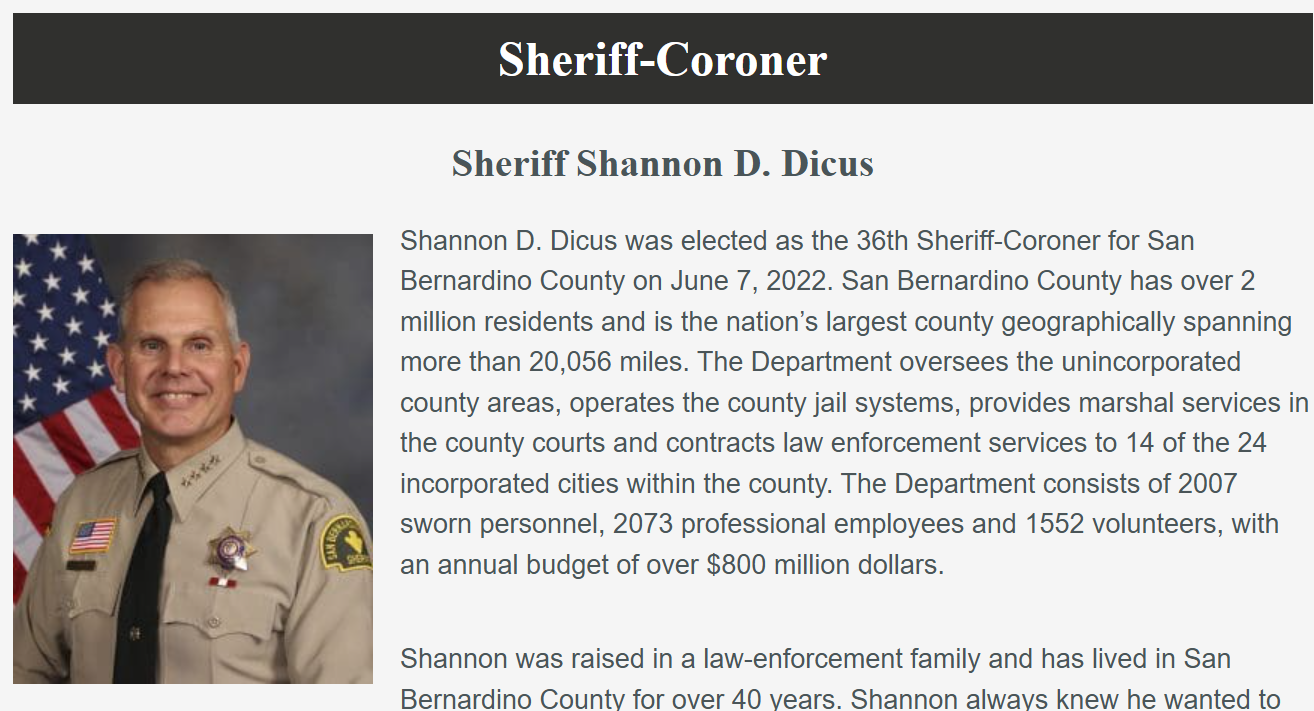
We live in San Bernardino County. What type of official would oversee a death investigation?
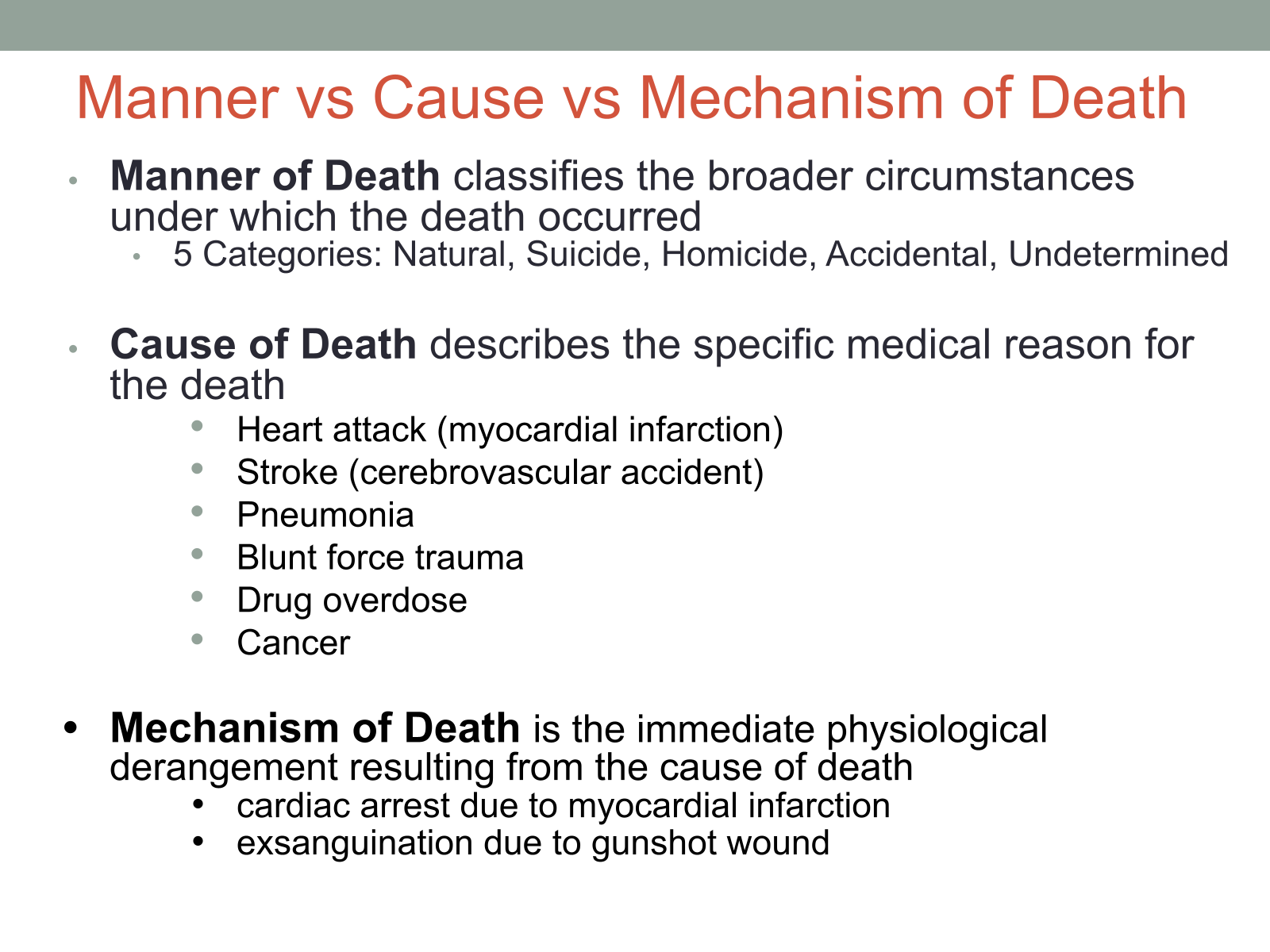
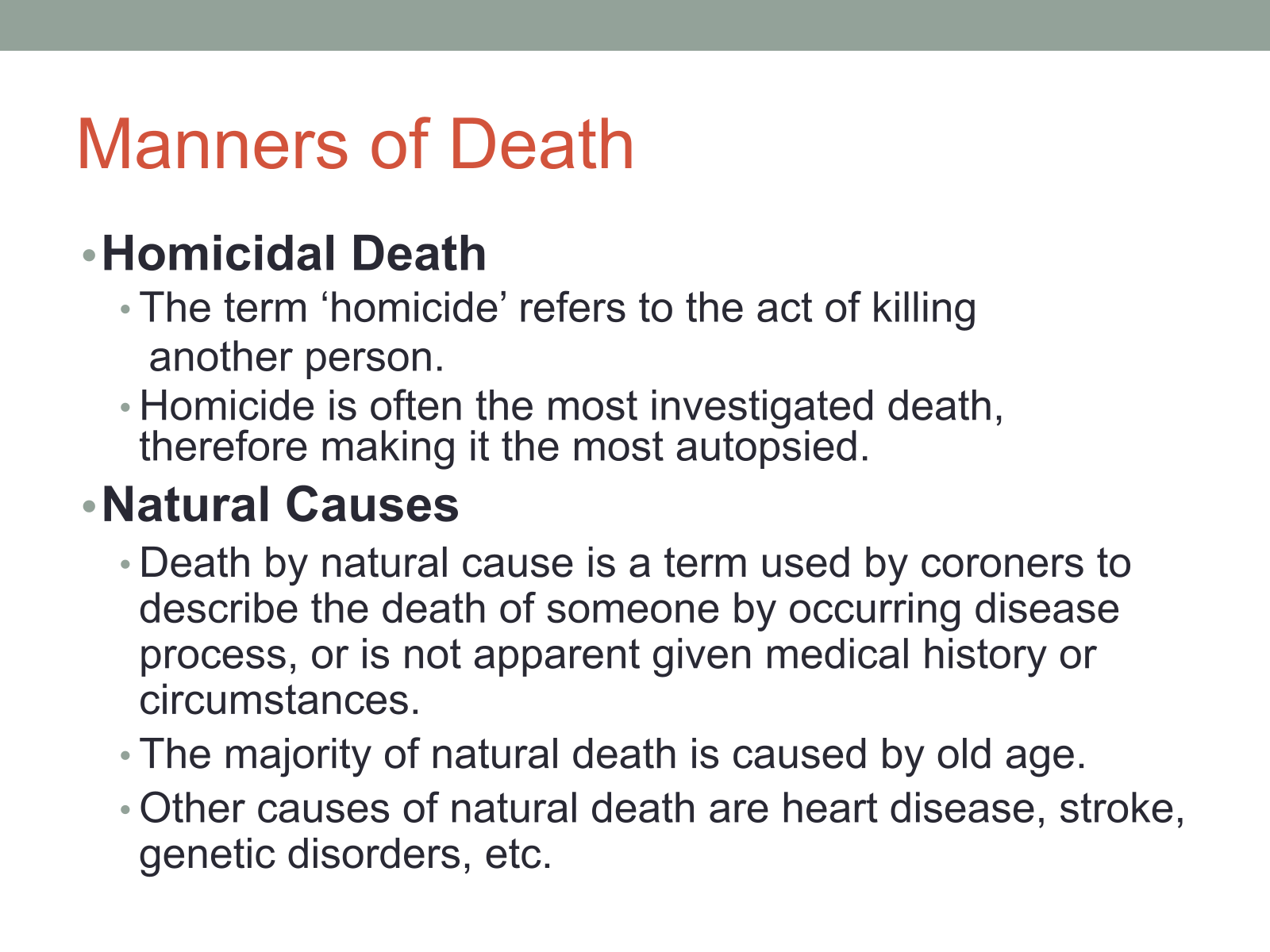
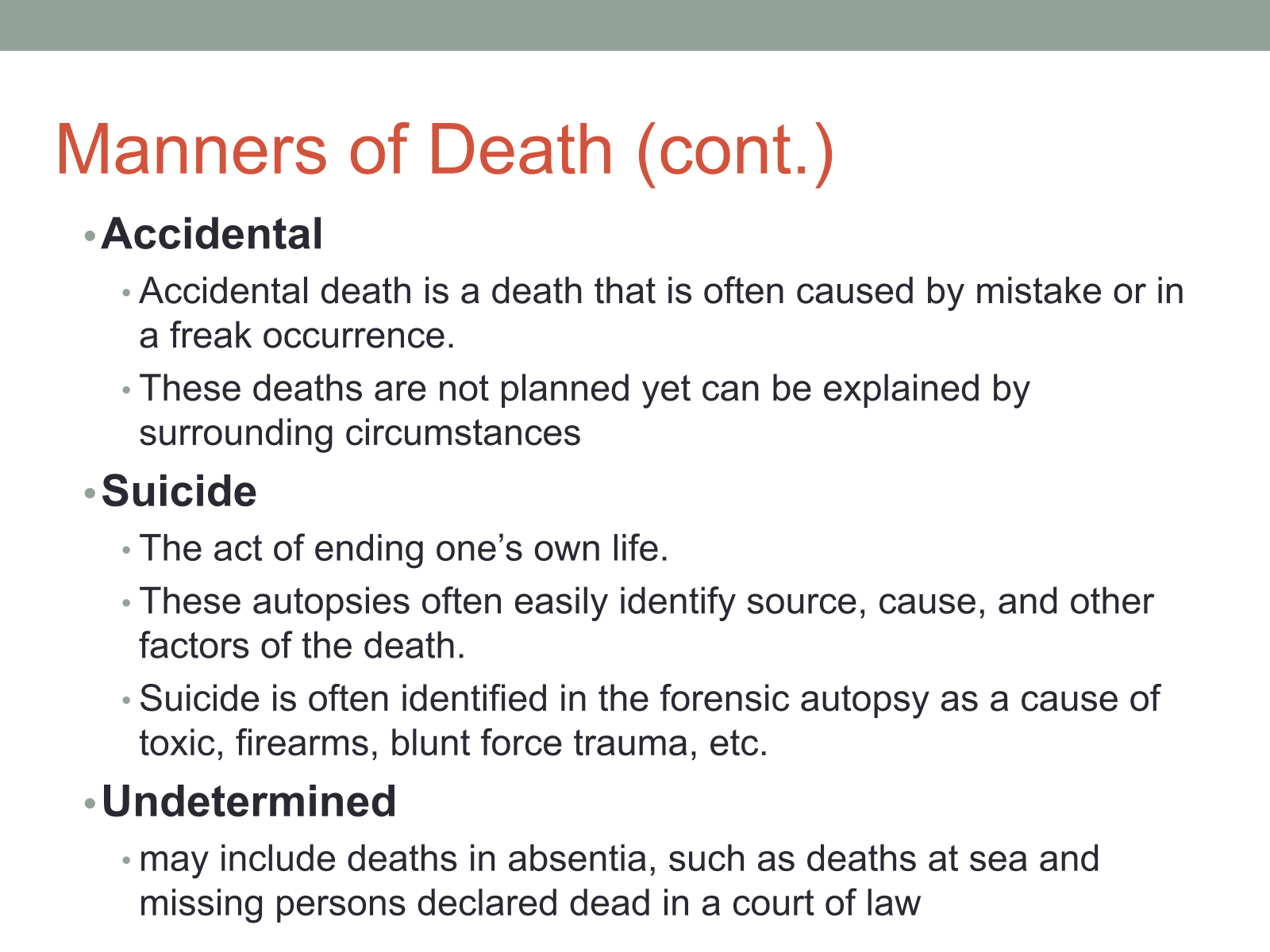
List the 5 manners of death in any order:
Read the scenario below and choose the mechanism of death.
A completely fictitious person named Bob was
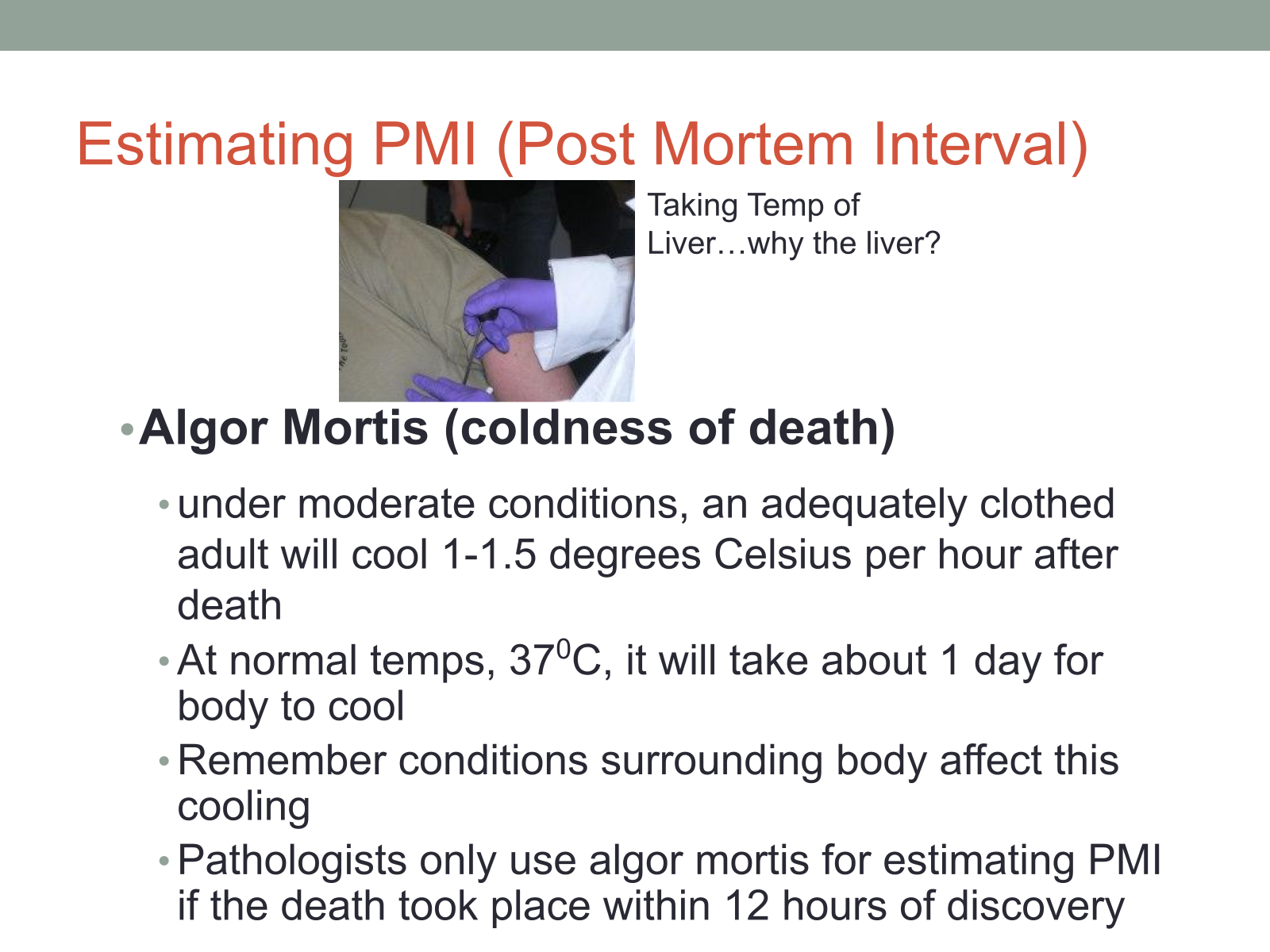
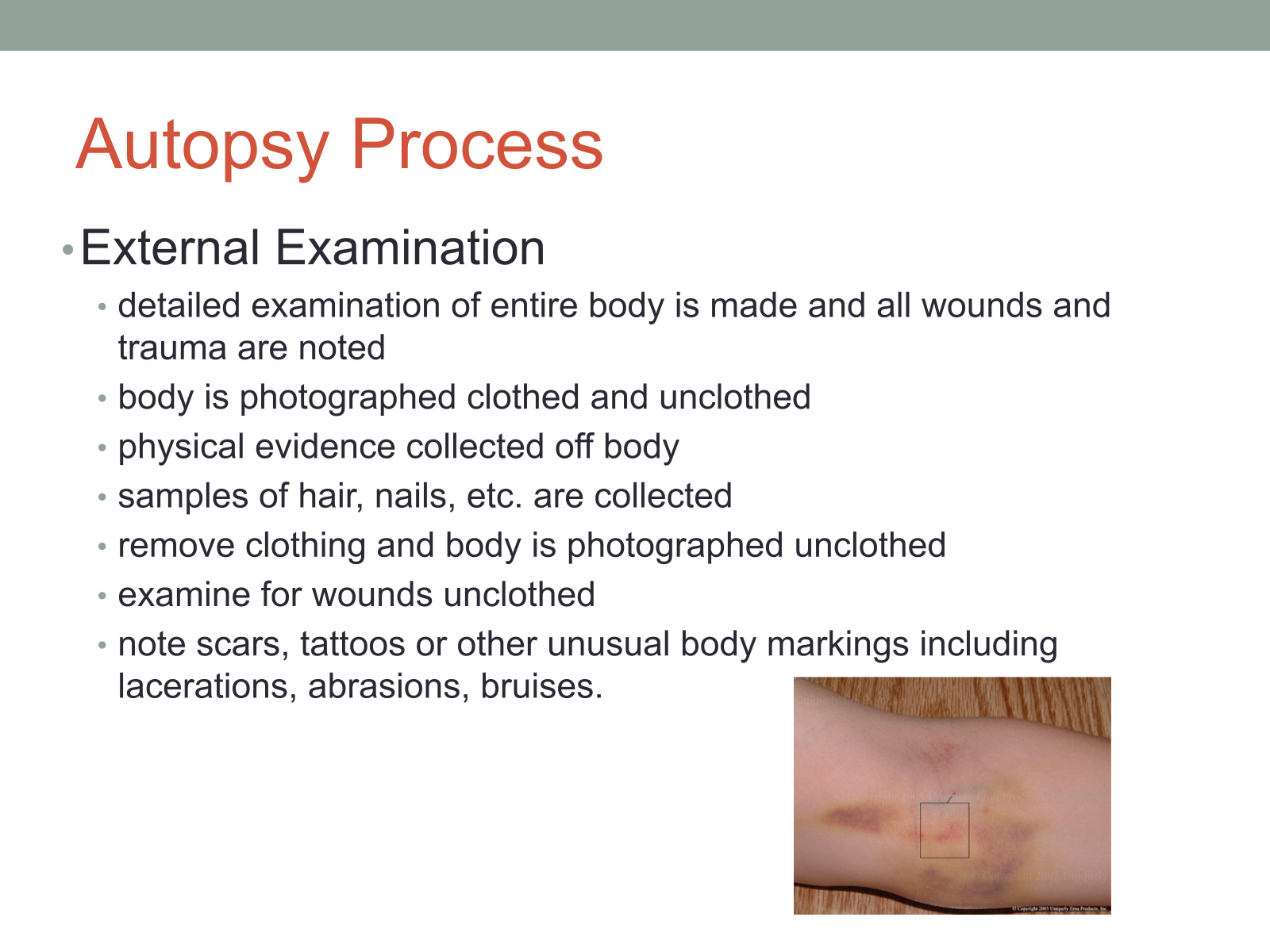
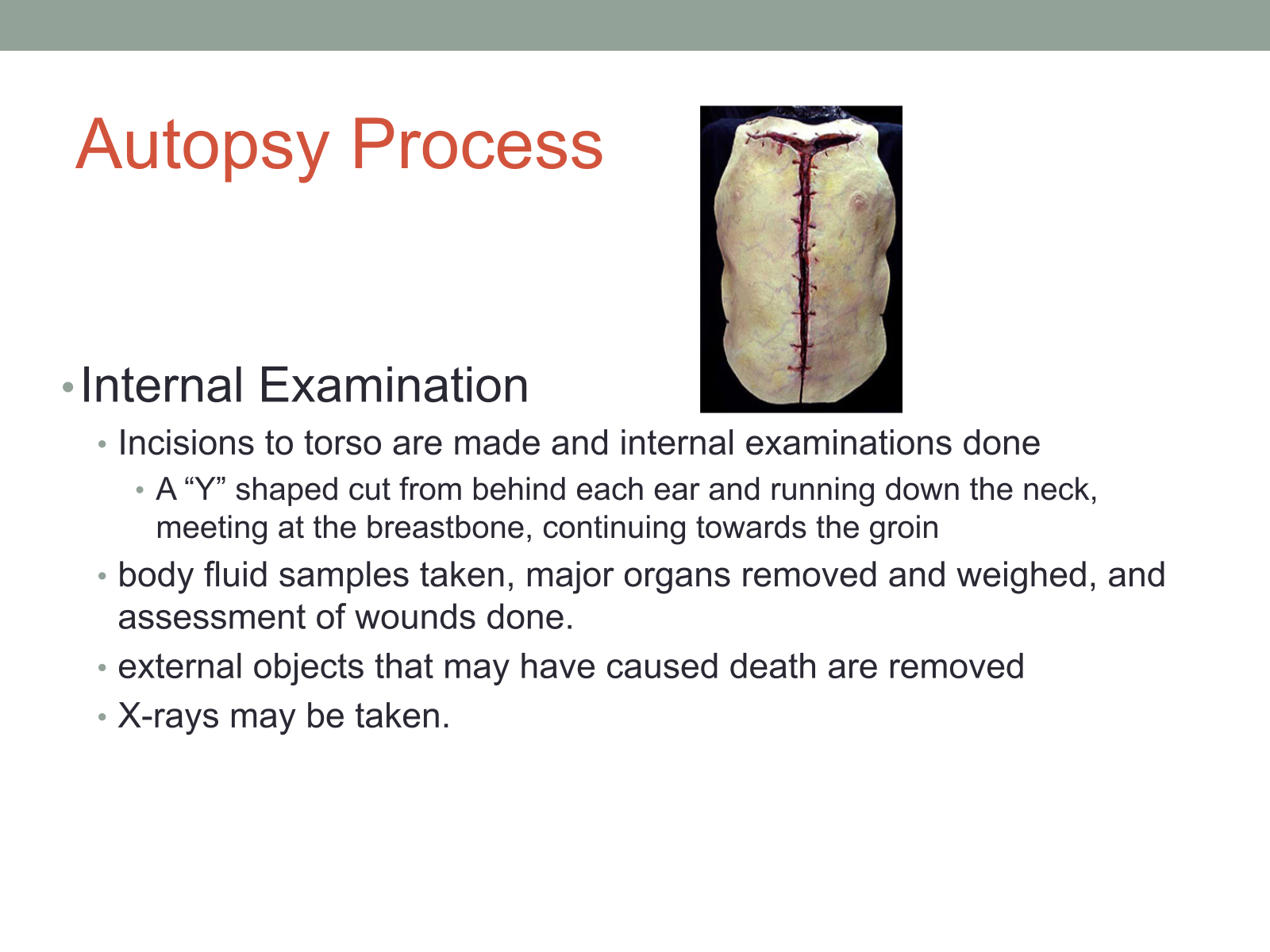
Both the coroner and medical examiner are qualified to perform autopsies.
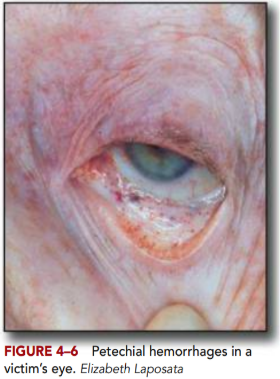
The ultimate cause of death from hanging is typically the cessation of blood flow to or from the brain. Victims of hangings may show signs of petechiae on the eyelids, along with a swollen and a blue/purplish appearance of the face. Petechiae are very small and are caused by blood having escaped into the tissues as a result of capillaries bursting (see Figure 4–6). Although petechiae are witnessed in hanging cases, they are more common in strangulation deaths. Typically the hyoid bone (the bone on which the tongue rests) and thyroid cartilage (located below the hyoid) are not fractured in cases of hanging. A break of the thyroid cartilage is common, however, in manual strangulation.
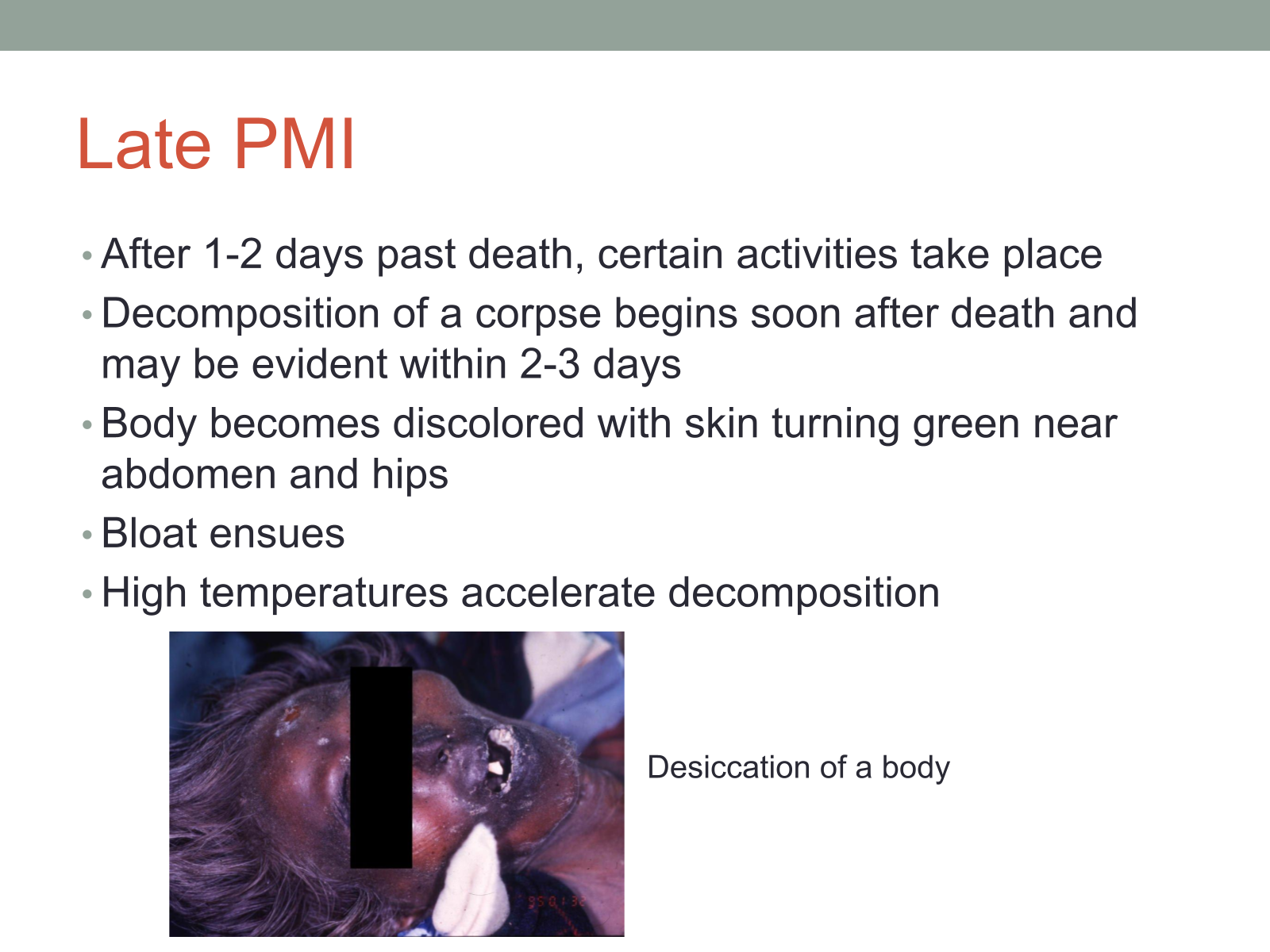
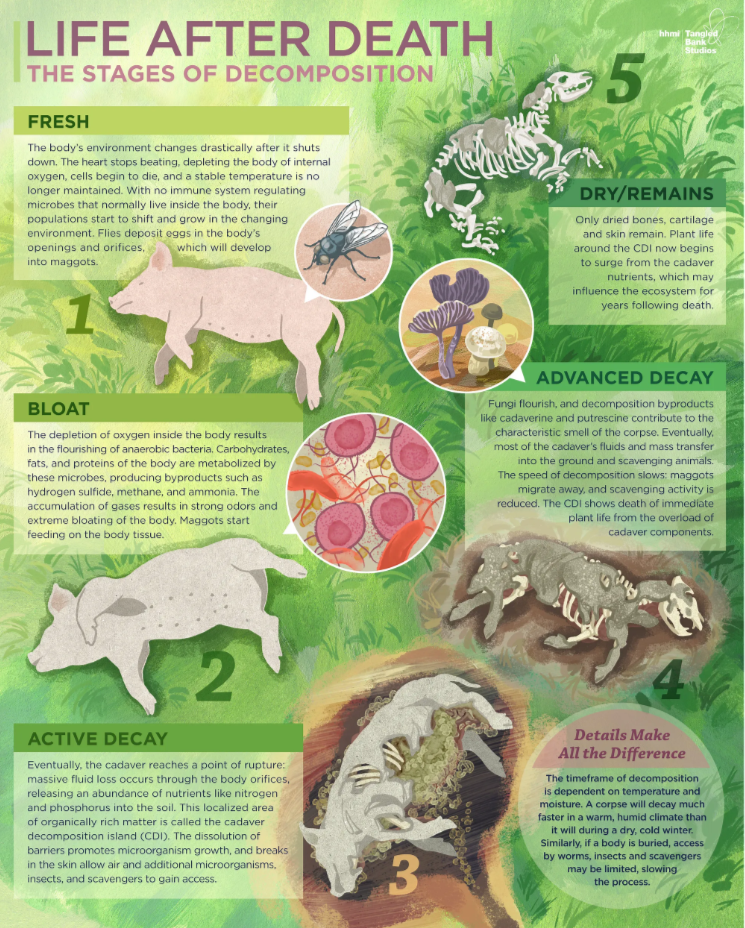
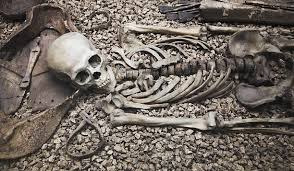
Which stage of decomposition is shown?
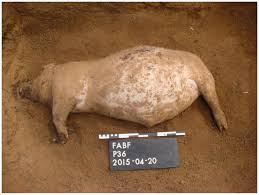
Which stage of decomposition is shown?
What about Los Angeles County? What type of official would oversee a death investigation there?