
This is a picture of a(an) __________, the building block of matter.
This is a picture of a(an) __________, the building block of matter.
This is a pre test - it helps me know what you know, rather than testing your retention of something you have already been taught. Don't worry if you don't know something, This is all stuff we will be covering (but not everything we will be covering) this session)
This is a pre test - it helps me know what you know, rather than testing your retention of something you have already been taught. Don't worry if you don't know something, This is all stuff we will be covering (but not everything we will be covering) this session)
Water is a polar molecule, which gives it unique abilities and properties. What does it mean to be a polar molecule?
The substance that dissolves other substances (does the dissolving) is known as the -
The substance that is dissolved is known as the -
The substance created when you mix a solute and solvent is known as a -
Polar substances dissolve other polar substances.
Non-polar substances can dissolve polar substances.
What is the boiling point of water?
This is a picture of a(an) __________, the building block of matter.

In the picture above, water is an example of

Silver is found on the periodic chart. Therefore, it must be a (an)
This is a picture of an insulin molecule. Its formula is C257H383N65O77S6
Is it an element, a compund, or a mixture?


The picture above best represents which of the following?
Two or more atoms joined together is called a Molecule.
Idenitfy which of the following describe a compound. Choose ALL that apply.
How many TOTAL ATOMS are in this compound?
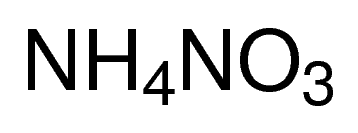
Select all examples of chemical changes.
Which of the following groups contains only examples of physical changes?
A chemical change can best be defined as...
Look at each situation and determine whether it is an example of a physical change or a chemical change:
Physical Change | Chemical Change | No change takes place | |
|---|---|---|---|
Cake batter to cake | |||
Dissolving drink powder into water | |||
Rubbing alcohol evaporates | |||
Fireworks exploding |
A chemical bond formed when two atoms share one or more pairs of valence electrons.
What is the charge on an electron?
What is the charge on a proton??
What is the charge on a neutron???
Where are the protons positioned?
Where are the neutrons positioned?
Where are the electrons positioned?