Source A: Newspaper Article on Mass Incarceration
"If Prisons Don’t Work, What Will? The Democratic presidential candidates should look at what a growing number of prosecutors are doing to end mass incarceration.:
By Emily Bazelon, staff writer for The New York Times Magazine
April 5, 2019
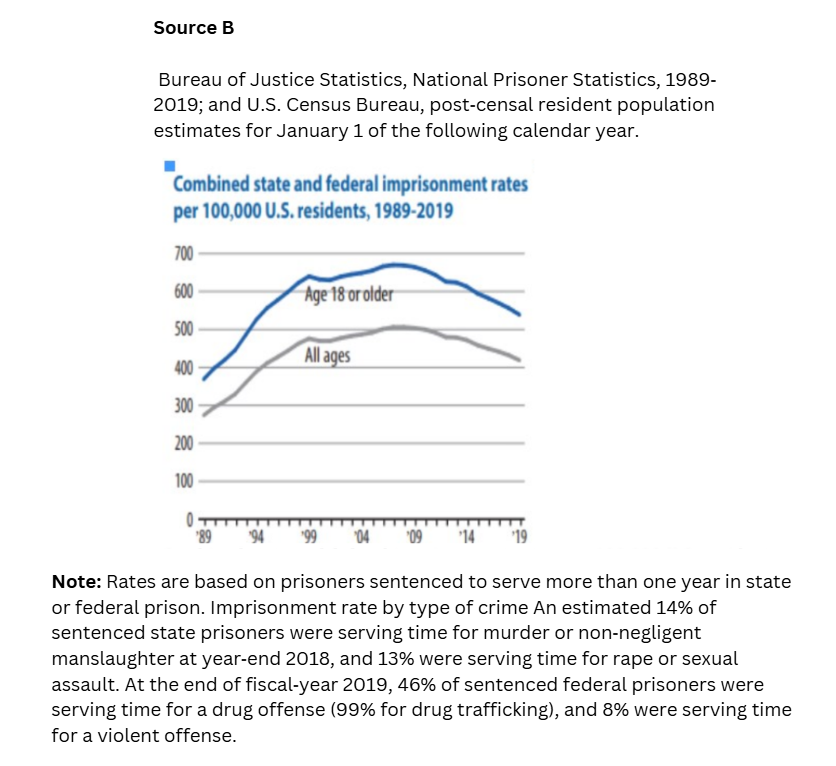
"The United States spends far too much money locking up far too many people for far too long. A few years ago, a politician had to be brave to say anything like that out loud. Now it’s a mainstream and bipartisan view. In a 2018 survey conducted for the American Civil Liberties Union, 59 percent of respondents said they would be more likely to support than oppose a candidate who supports reducing the prison population. Achieving that goal is now an accomplishment that politicians showcase.
In December, Congress by wide margins passed the First Step Act to reduce some drug sentences and improve conditions in federal prisons. President Trump, despite painting a frightening picture of crime-ridden “American carnage” at his inauguration, invited the first drug offender released as a result to the State of the Union address. It’s all pretty head-spinning after decades of elected officials competing to lock more people up and spotlight the scariest crimes. Now, with public opinion shifting far and fast and politicians hurrying to catch up, you could even argue that criminal justice reform has become the new marriage equality in terms of the turnaround in public attitudes....
To end mass incarceration, however, exempting nonviolent offenses from jail time isn’t enough. People convicted of violent crimes make up more than half of the country’s state prison population. But the image of prisons overflowing with murderers and rapists is wrong. In many states, “violent felonies” include offenses like breaking into an empty house or snatching a purse or iPhone on the street. Reducing sentences for these offenses — and changing what counts as a violent felony to begin with — can lower this share of the prison population."