LR257.3.3: Formative Levels of Organization

Last updated 11 months ago
26 questions
It is lunchtime at school. Juliana walks to the cafeteria, buys her lunch, sits down with her friends, and eats her lunch. These tasks may seem simple, but in fact, Juliana's body is working very hard. Each part of the human body performs a specific job, and the parts all work together to allow the body to function.

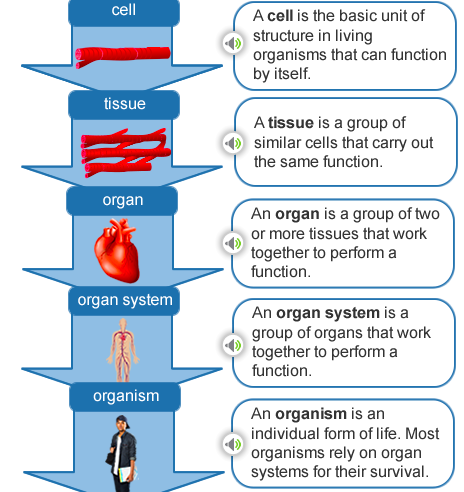
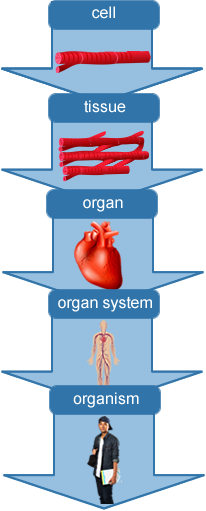
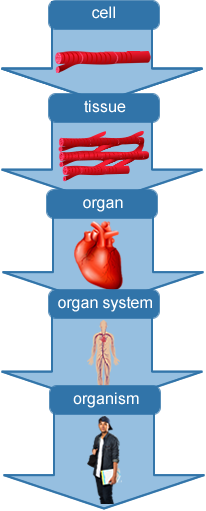
The smooth functioning of the human body is due in part to how it is organized. Below are the levels of organization in the human body.


Required
1

Rearrange the words below to show the level of organization in the human body from least complex (on the top) to most complex (on the bottom)

  1. cell
  2. organ system
  3. tissue
  4. organ
  5. organism
Required
1
An __________ is an individual form of life.
A __________is the basic unit of structure in living organisms that can function by itself.
A __________is a group of similar cells that perform a specific function.
An __________is a group of organs that work together to perform a function.
An__________is a group of two or more tissues that work together to perform a function.
Required
1
Drag the images to match the levels of organization.
Other Answer Choices:
Required
1

Compare the levels of organization in a human body to those in a country. Match the terms to show which levels of organization in the human body represent the different parts of a country.

Draggable itemCorresponding Item
cells
state
organism
country
tissues
house
organs
city
organ system
neighborhood
Check for Understanding:

1. Each part of the human body performs a specific job. The smooth functioning of the body is due partially to how it is organized.

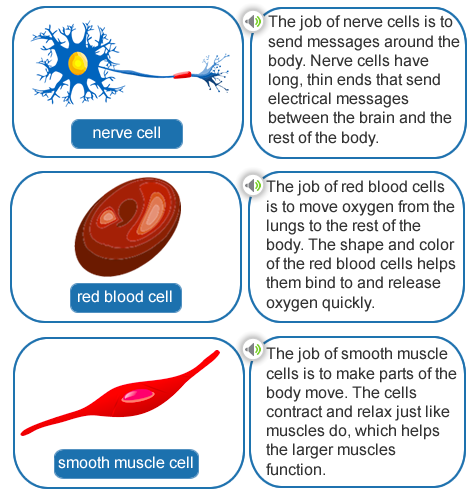
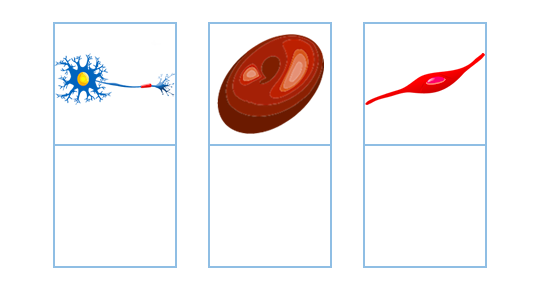
The cells, tissues, and organs in the human body each have a structure that is created for a specific function. The pictures below show how their structures relate to their functions.

Required
1
Match each type of cell with its function.
Other Answer Choices:
transports oxygen
sends messages around the body
makes the body move
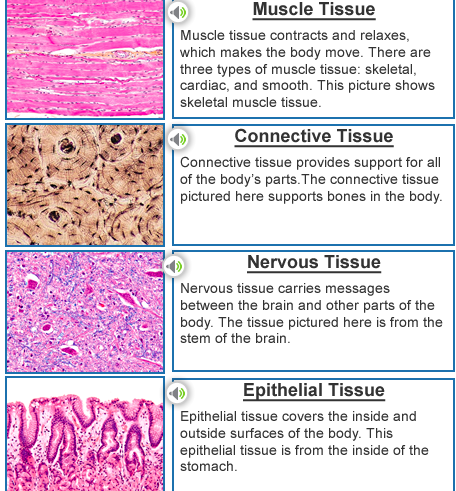
Tissue is made up of a group of similar cells that have the same function. The body contains several types of tissue. The images below teach us about four of the main types of tissues and their functions.

Required
1
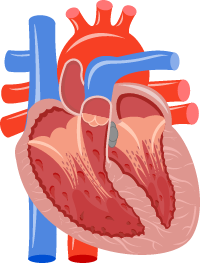
Label the jobs of the different tissues in the human heart.


__________tissue contracts, which squeezes the heart so blood can move.__________tissue carries messages from the brain to heart.
__________tissue lines and protects the inside of the heart.
__________tissue provides strength and support for the heart. It helps hold other tissues in the heart together.
Required
1

The job of blood is to carry food and oxygen to, and waste from, all of the body's parts. Which type of tissue is blood tissue?

Required
1

The stomach is made up of all four types of tissue: connective, nervous, epithelial, and muscle. How might the stomach be affected if the muscle tissue no longer worked correctly?

Required
1

Rearrange

Draggable itemCorresponding Item
epithelial
carries messages between the brain and the other parts of the body
muscle
provides the support for all the body's parts
connective
covers the surfaces of the body
nervous
makes the body move
Check for Understanding:

1. The cells, tissues, and organs in the human body each have structures that are created for a specific function.

2. The four main types of tissue in the human body are epithelial, connective, muscle, and nervous.

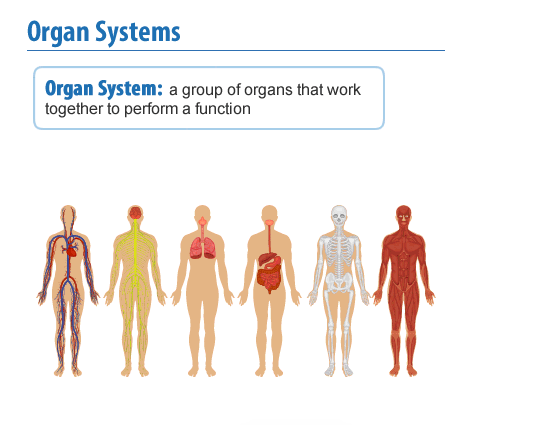
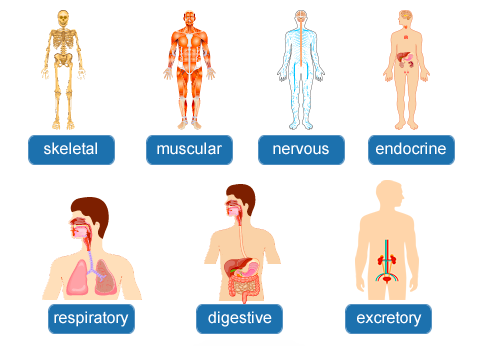
Organ Systems:

1. Digestive System: Breaks down food small enough to give to the cells and provides energy.

2. Circulatory System: Carries the food, water, and oxygen to the cells throughout the body and removes waste.

3. Respiratory System: Transports oxygen into and carbon dioxide out of the blood.

4. Nervous System: Sends messages throughout your body.

5. Excretory System: Removes waste from your body.

6. Muscular System: Helps your body move.

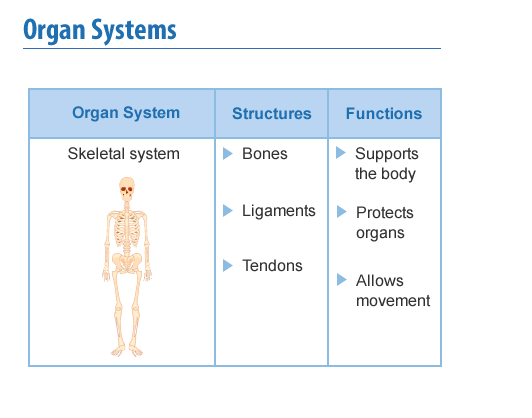
7. Skeletal System: Protects the soft tissue and organs in your body.

8. Endocrine System: Uses hormones to regulate growth and development.
Required
1
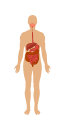
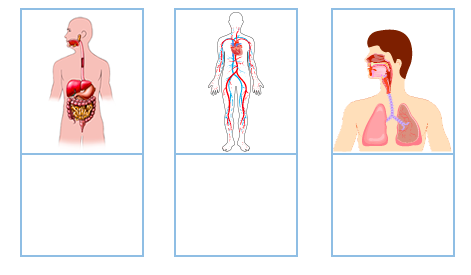
Drag the names of the organ systems to the correct locations below.
Other Answer Choices:
digestive
circulatory
respiratory
Required
1
Draggable itemCorresponding Item
Muscular System
Sends messages throughout your body.
Skeletal System
Removes waste from your body.
Endocrine System
Uses hormones to regulate growth and development.
Excretory System
Protects the soft tissue and organs in your body.
Nervous System
Helps the body to move.
Required
1

Which of the following are organ systems in the human body? (choose 3)

Required
1

Which body systems are most responsible for the movement it takes for this athlete to catch the ball?

Required
1

Which organ system is sending the signals that tell this athlete how to move?

Required
1
When this woman eats a sandwich her body uses the __________
system to break down the food into nutrients. Then it will use the
__________system to remove wastes from her blood.
Required
1
Drag the words from below to correctly complete the statements.

The body uses the __________ system to breathe in oxygen.

The body uses the __________system to transport oxygen to cells.
Required
1

True or False: An organ can be part of more than one organ system.

Check for Understanding:

1. The human body contains several organ systems that all work together in order for the body to function.

Required
1

What is a cell?

Required
1

What is a tissue?

Required
1

What is an organ?

Required
1

What is an organ system?

Required
1

What is an organism?

1. Each part of the human body performs a specific job. The smooth functioning of the body is partially due to how it is organized.

2. The cells, tissues, and organs in the human body each have a structure that is created for a specific function.

3. The human body contains several organ systems that all work together in order for the body to function.
Required
4
1. __________ Breaks down food small enough to give to the cells and provides energy.
2. __________ Carries the food, water, and oxygen to the cells throughout the body and removes waste.
3. __________ Transports oxygen into and carbon dioxide out of the blood.
4. __________ Sends messages throughout your body.
5. __________ Removes waste from your body.
6. __________ Helps your body move.
7. __________ Protects the soft tissue and organs in your body.
8. __________ Uses hormones to regulate growth and development.
Required
1

Which body system was mostly responsible for controlling the growth and development of this child into a man?

Required
1

Which of the following lists show the levels of organization in the human body from least complex to most complex?

Required
1

Signals from the __________ system make the skeletal and muscular systems move.