1
What is the primary reason tungsten is used in light bulb filaments?
What is the primary reason tungsten is used in light bulb filaments?
We concentrated on the visible spectrum in the lab, but most substances can absorb electromagnetic energy from many different parts of the spectrum. Some examples are greenhouse gases like carbon dioxide which absorb infrared and metals which strongly absorb microwaves. The article below explains how Niels Bohr used observations of emission and absorption of light to develop a model of how electrons are arranged in atoms.
What is the primary reason tungsten is used in light bulb filaments?
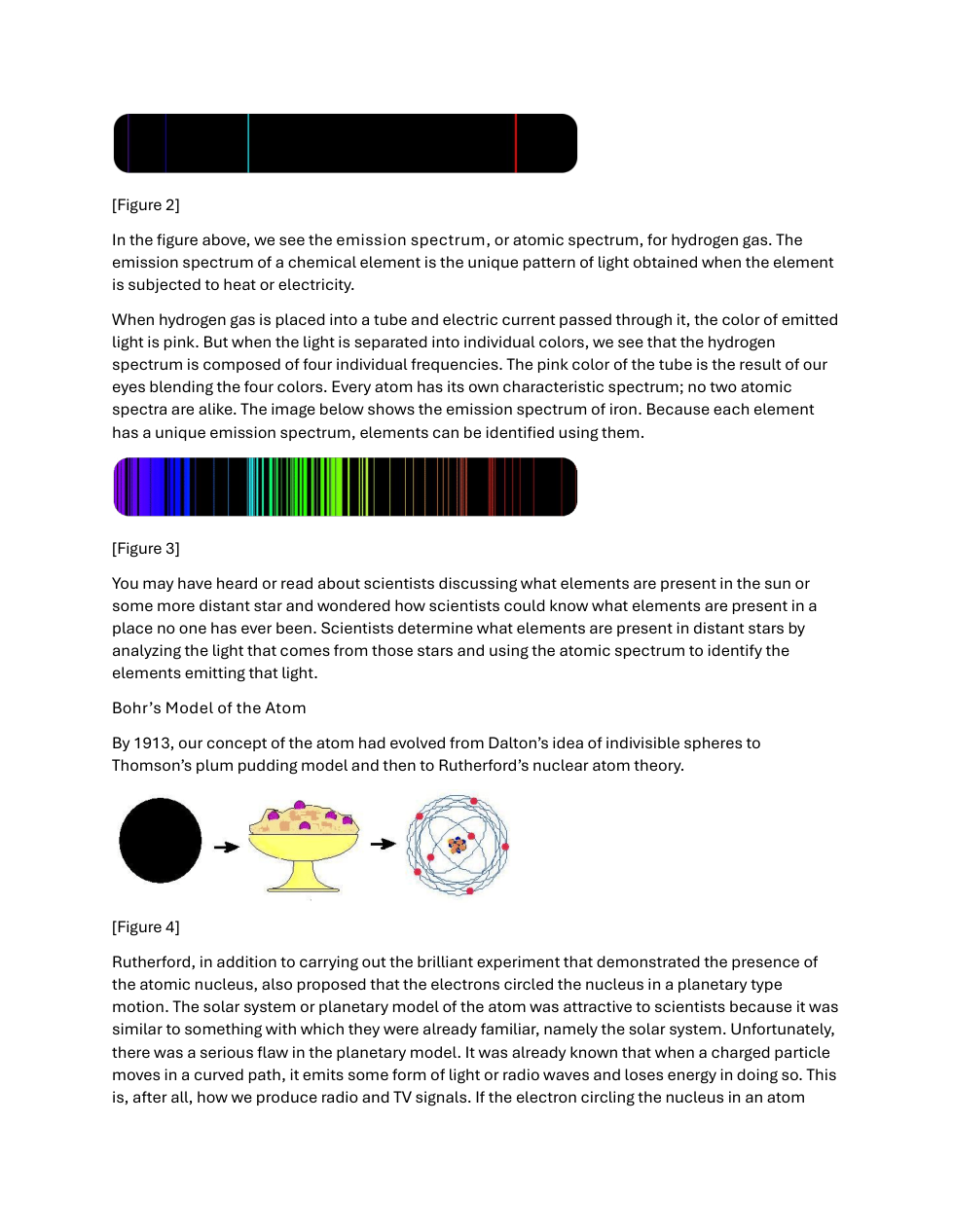
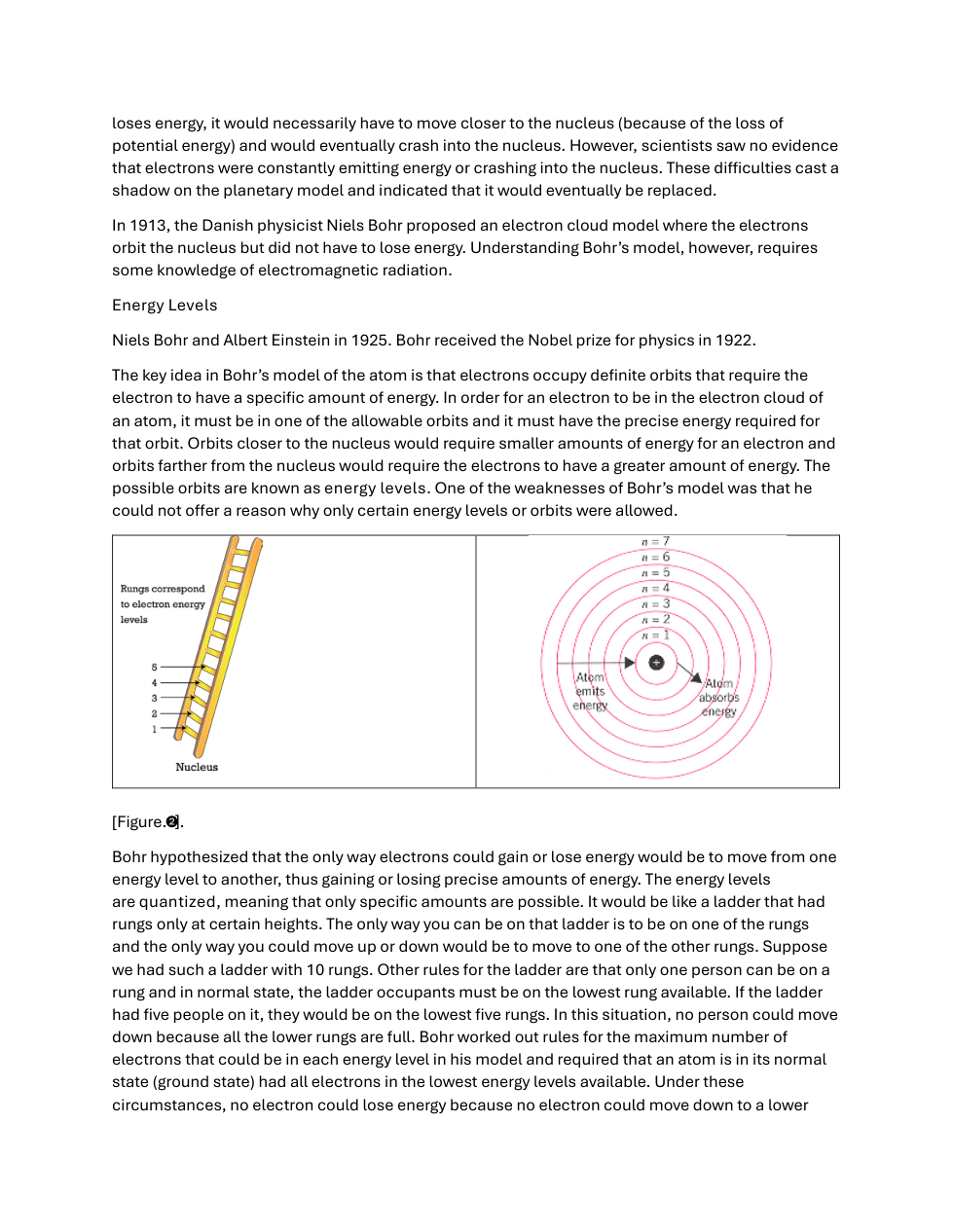
An electron closer to nucleus has more energy than an electron far away from the nucleus.
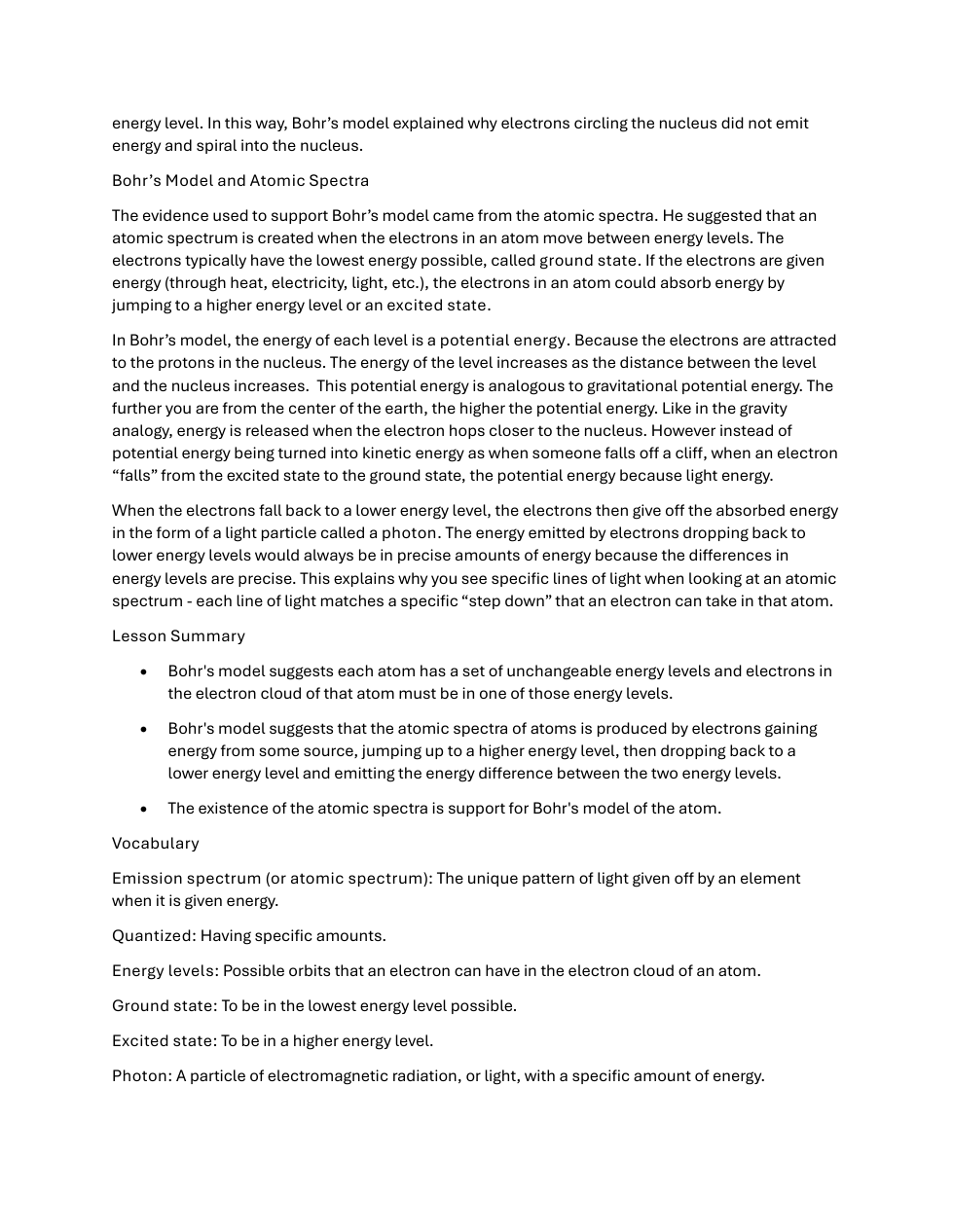
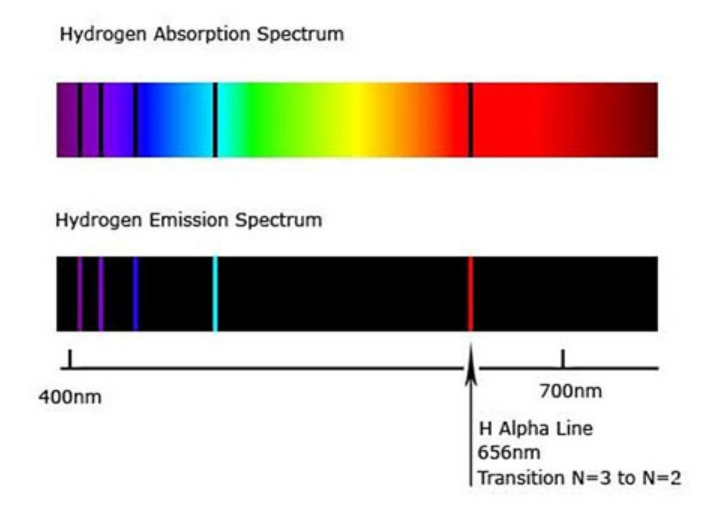
One of the key features of the Bohr Model is that it predicts that the absorption spectrum and the emission spectrum of an element should have features at the same wavelengths. Because electrons can only make certain jumps between energy levels, each element has a unique pattern of possible jumps. Electrons are allowed to jump in either direction. Electrons jump away from the nucleus when they absorb photons and electrons release photons when they jump back.
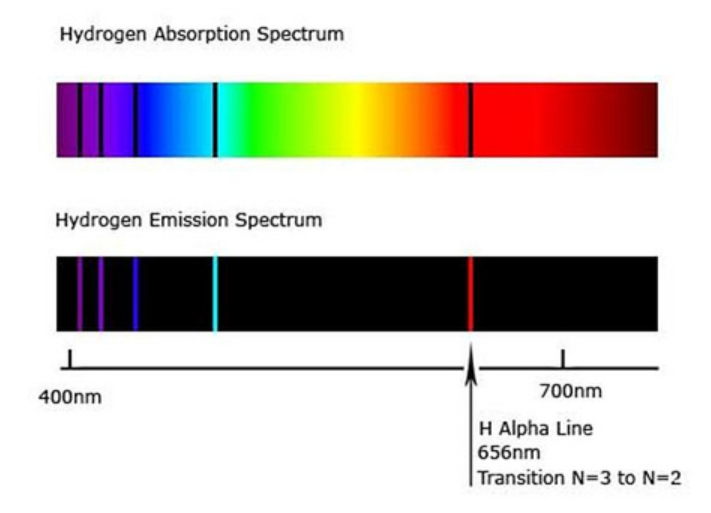
For each element, the absorption spectrum matches the emission spectrum. If a wavelength is missing in the absorption spectrum, it is present in the emission spectrum.
Scientists, designers and artists are all interested in developing the blackest possible paint. A truly black paint would be able to convert all visible light to heat energy because it can absorb every wavelength of photons in the visible range. An object covered in truly black paint does not reflect light which creates some interesting visual effects. If you are curious, watch the video below.
The emission spectra of individual carbon atoms looks like this.

When atoms bond to make solids like carbon nanotubes, the pattern of the energy levels in the individual atoms changes which is why solid carbon like coal or carbon nanotubes looks black.
When we burn coal or other carbon-rich substances, the energy levels of the carbon atoms are the same as the energy levels of the element. Looking at the emission spectrum, what color would you expect to see from the hot carbon. Be sure to explain your thinking.
Carbon atoms bonded together into a solid look black. What does that mean in terms of the pairs of energy levels that are available to an electron in the substance to jump between. Be sure to explain your thinking.
What is electromagnetic radiation?
How do electromagnetic (EM) waves differ from ocean waves?
Electromagnetic waves can affect things with an electrical charge.
Which of the following best describes the relationship between frequency and wavelength?
The energy transmitted by an electromagnetic wave is related to ...
The chlorophyll molecules in the leaf absorb
Only some substances have a spectral signature.
What are some uses of spectral signatures of molecules? Spectral signature is another name for emission spectrum, so the question is asking what can we find out if we know what wavelengths from the electromagnetic spectrum are absorbed or emitted by different substances?
What causes gaseous elements to emit light?
What is an emission spectrum?
What major flaw existed in the planetary model of the atom?
What does it mean for an electron’s energy levels to be quantized?
What happens when an electron moves to a lower energy level?
According to Bohr's Model, what causes the distinct lines in an atomic spectrum?
The energy of an electron in an energy level is
The energy of photons emitted by an element is determined by the