Log in
Sign up for FREE
arrow_back
Library

Think Up Unit 7

star
star
star
star
star
Last updated about 1 year ago
32 questions
1
Question 1
1.

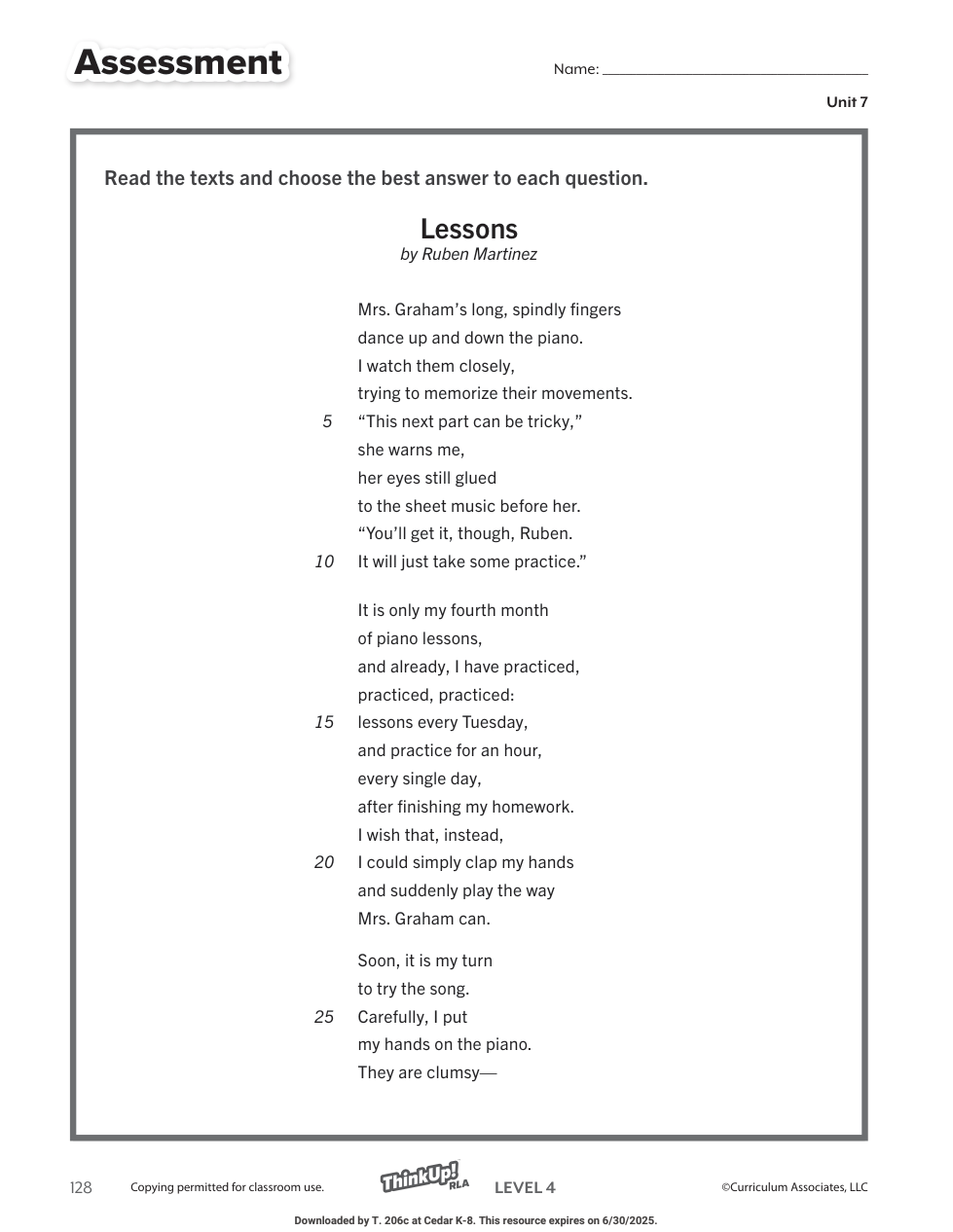
What instrument is being played in the story?

1
Question 2
2.

How long has the narrator been taking piano lessons?

1
Question 3
3.

How often does the narrator practice playing the piano?
1
Question 4
4.

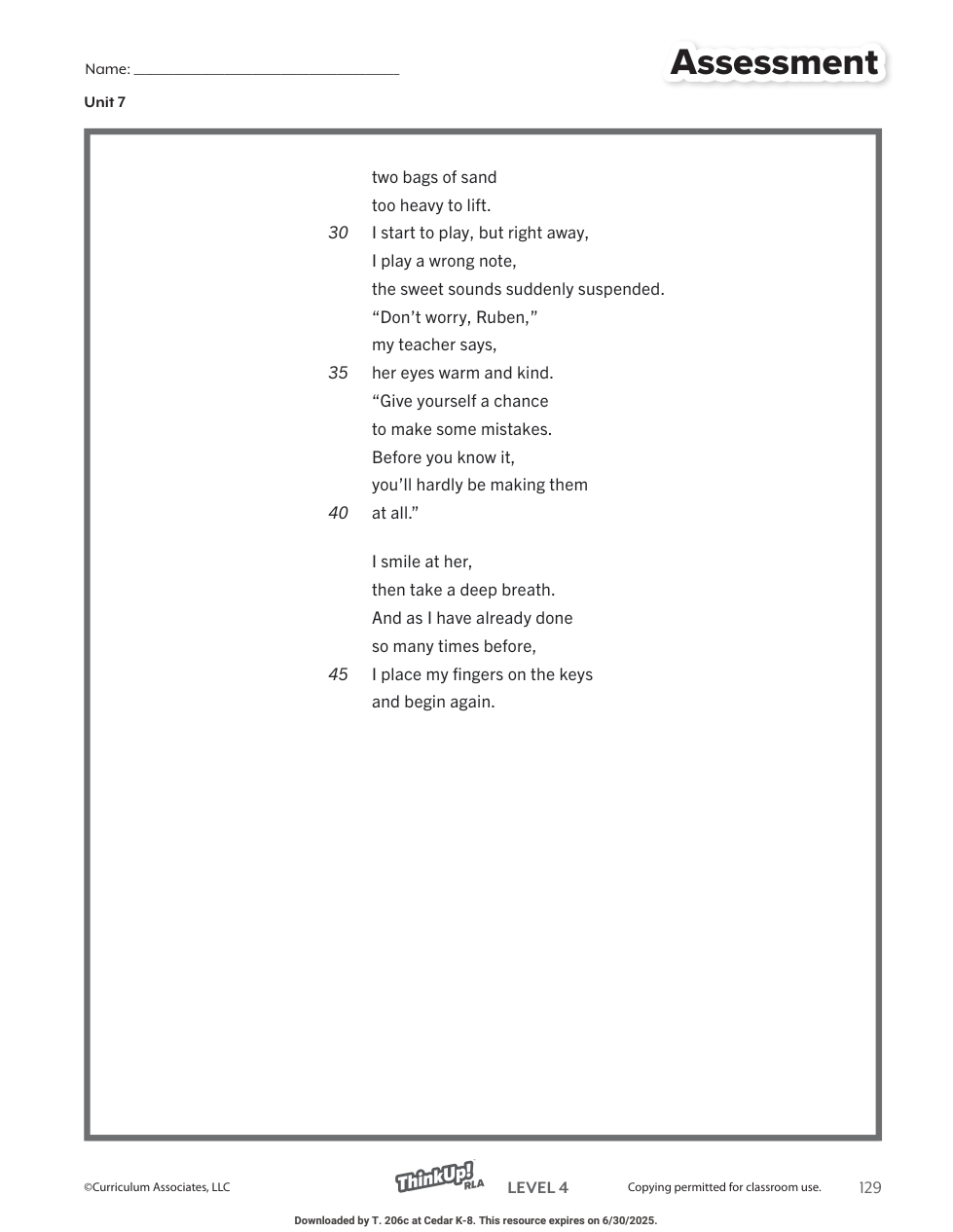
What does Ruben initially struggle with during his practice?

1
Question 5
5.

How does Ruben's teacher respond to his mistakes?

1
Question 6
6.

What advice does Ruben's teacher offer him?

1
1
Question 8
8.

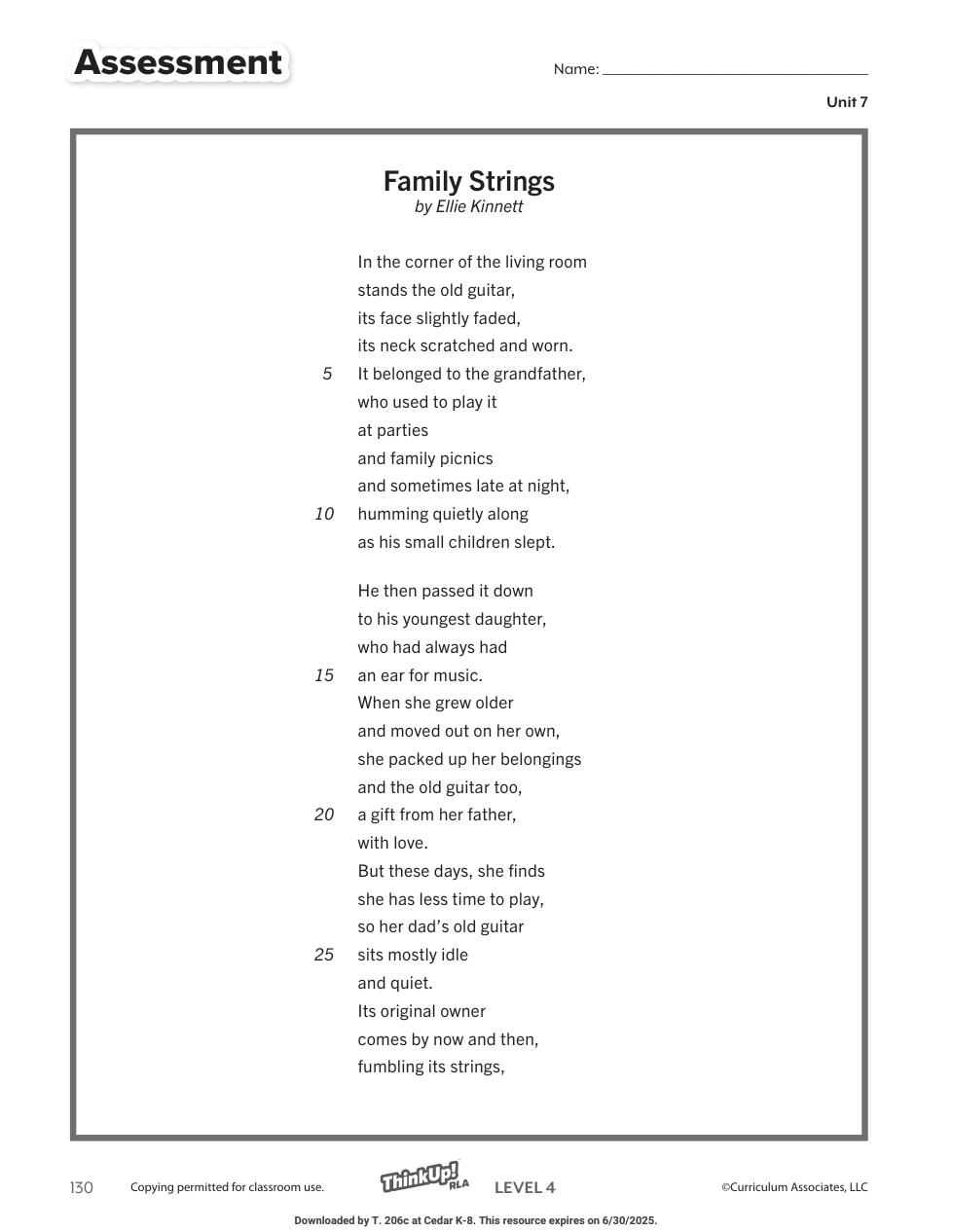
What is the family heirloom described in the text?

1
Question 9
9.

Describe the history of the guitar as presented in the text.

1
1
1
Question 12
12.

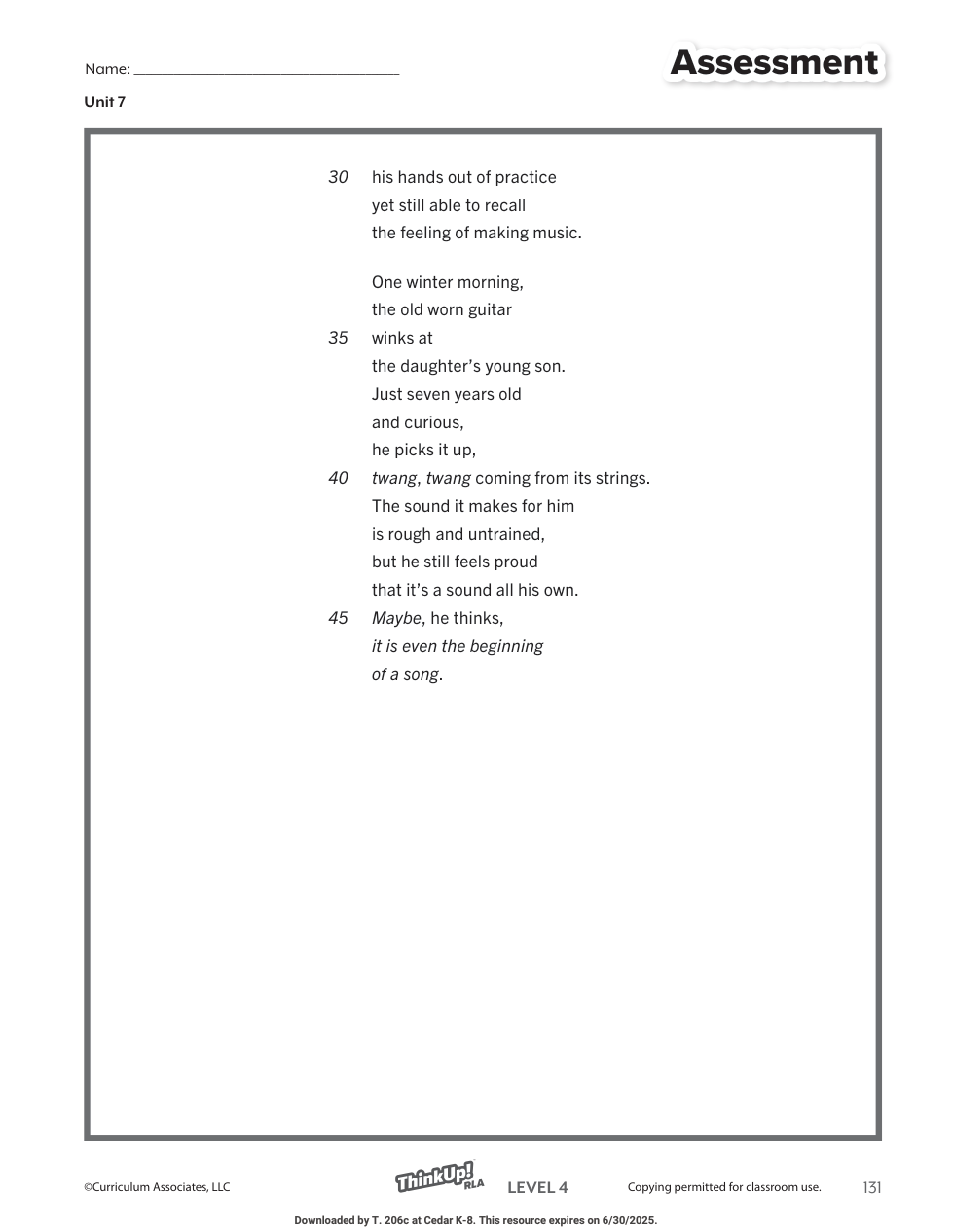
What instrument does the daughter's young son pick up one winter morning?

1
1
Question 14
14.

How old is the daughter's young son?

1
1
1
1
1
Question 19
19.

1
1
1
Question 22
22.

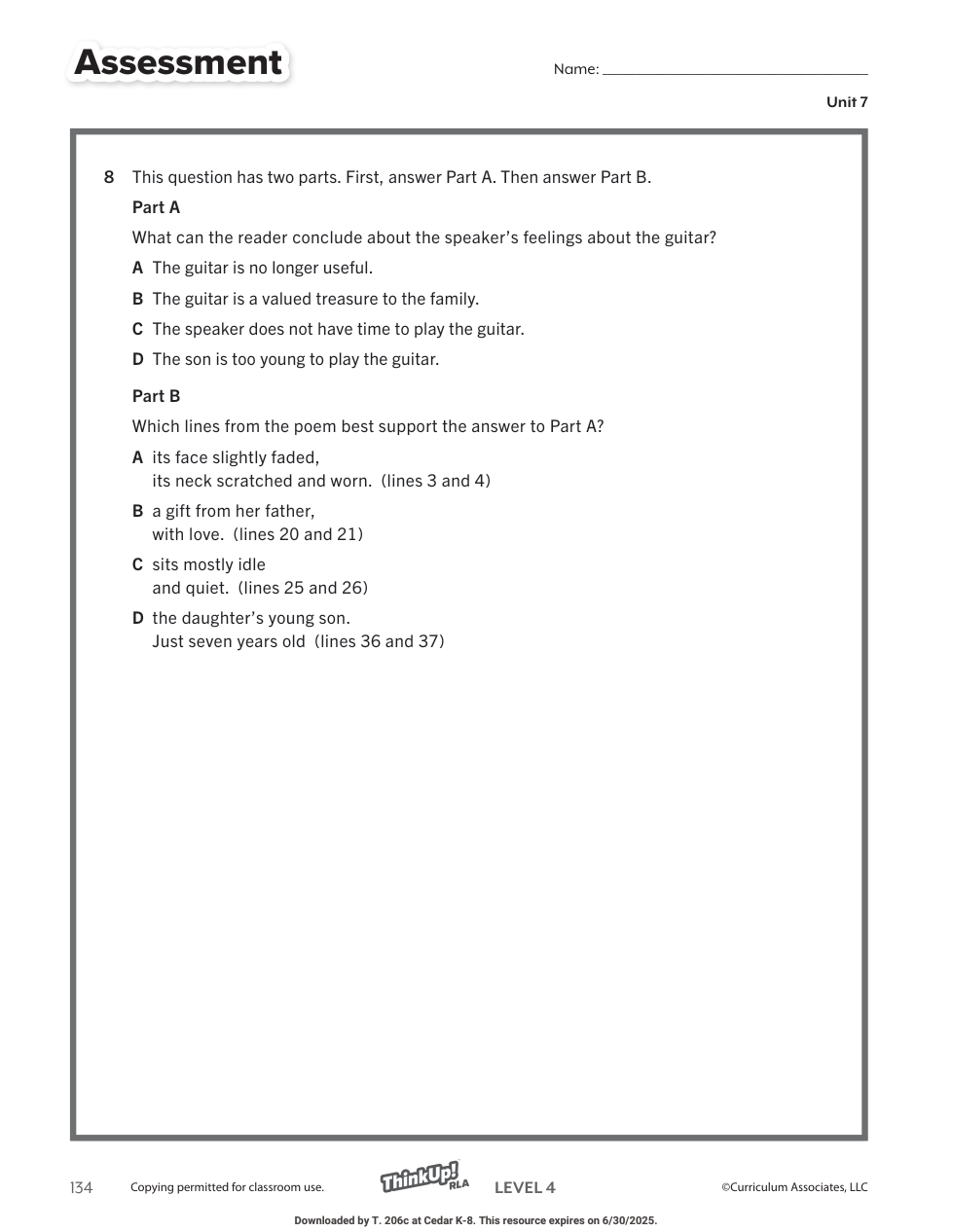
What can the reader conclude about the speaker’s feelings about the guitar?

1
1
1
1
1
1
Question 28
28.

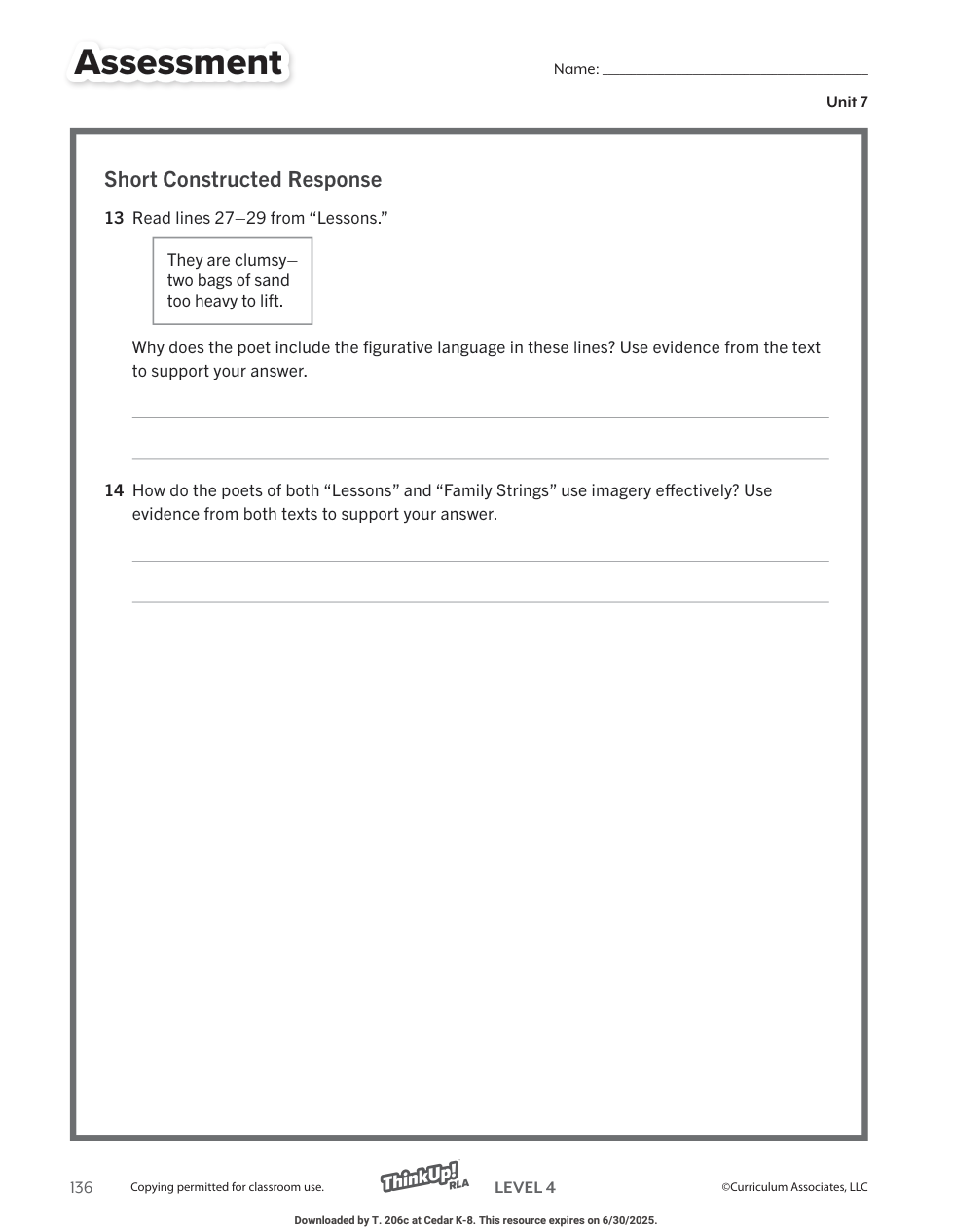
Why does the poet include the figurative language in lines 27–29 from "Lessons": "They are clumsy– two bags of sand too heavy to lift"? Use evidence from the text to support your answer.

1
Question 29
29.

How do the poets of both "Lessons" and "Family Strings" use imagery effectively? Use evidence from both texts to support your answer.

1
Question 30
30.

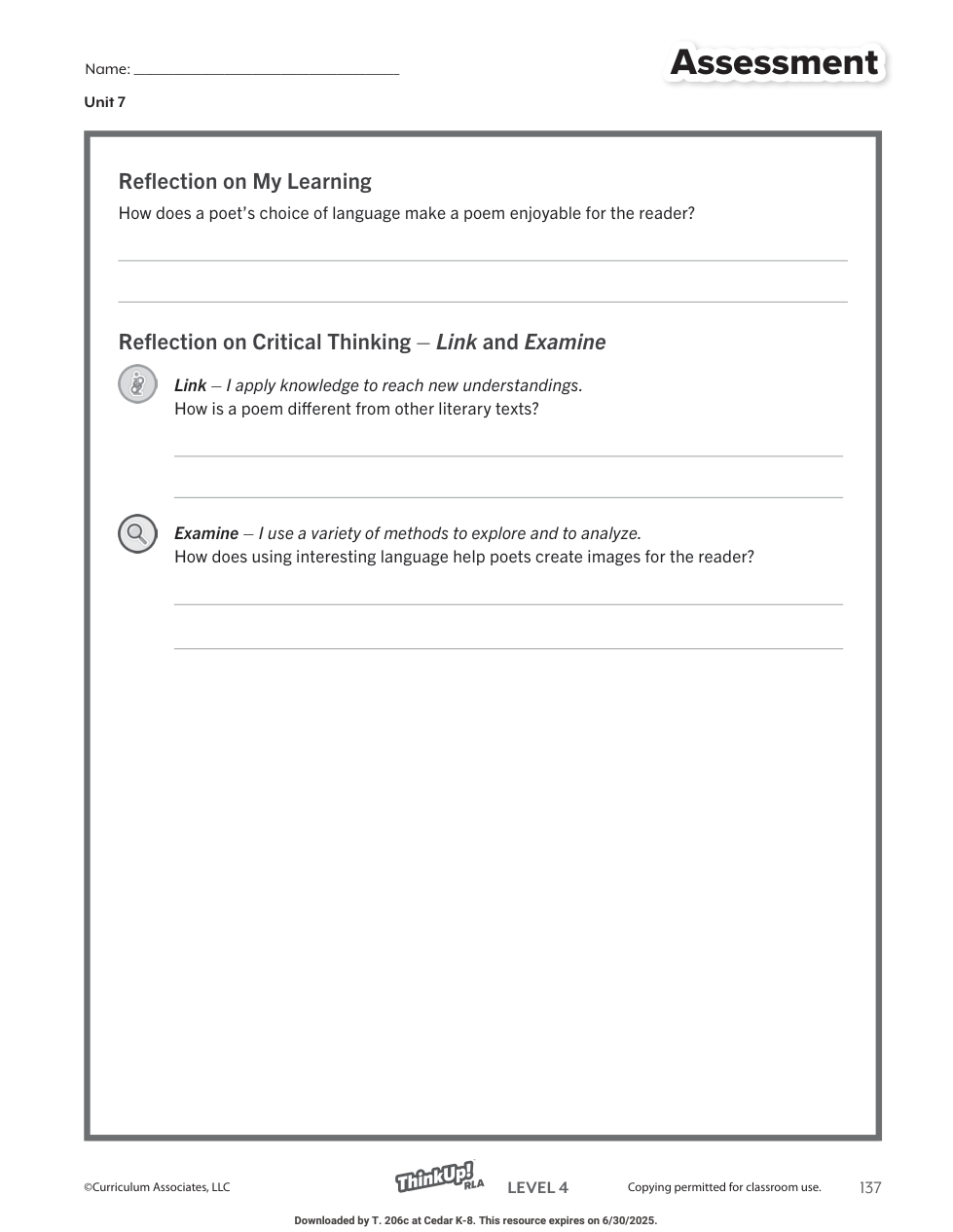
How does a poet’s choice of language make a poem enjoyable for the reader?

1
Question 31
31.

How is a poem different from other literary texts?

1
Question 32
32.

How does using interesting language help poets create images for the reader?

Question 7
7.

What action does Ruben take after receiving encouragement from his teacher?

Question 10
10.

Who was the original owner of the guitar?

Question 11
11.

The granddaughter plays the guitar every day.

Question 13
13.

How does the son feel about the sound the guitar makes?

Question 15
15.

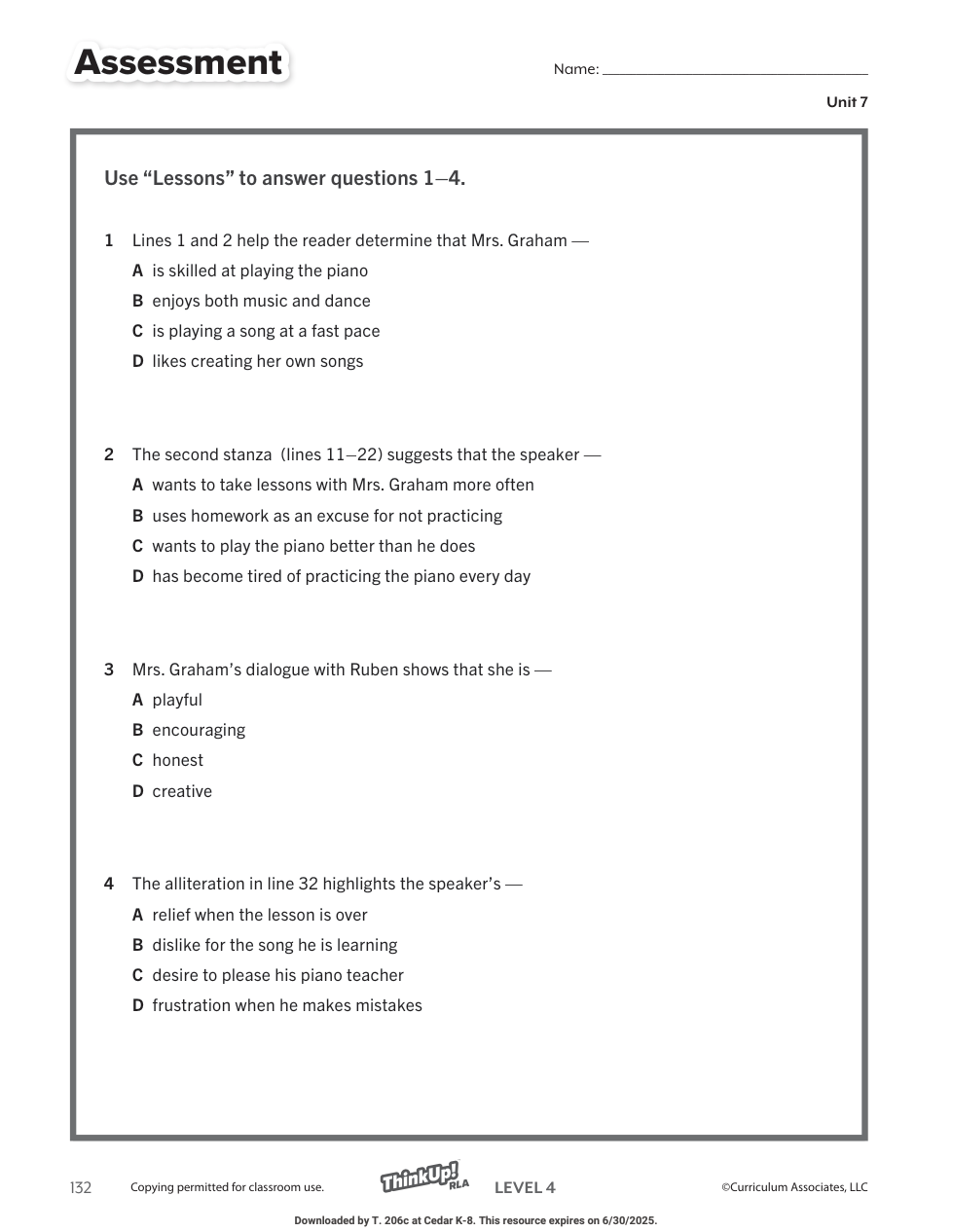
Lines 1 and 2 help the reader determine that Mrs. Graham —

Question 16
16.

The second stanza (lines 11–22) suggests that the speaker —

Question 17
17.

Mrs. Graham’s dialogue with Ruben shows that she is —

Question 18
18.

The alliteration in line 32 highlights the speaker’s —

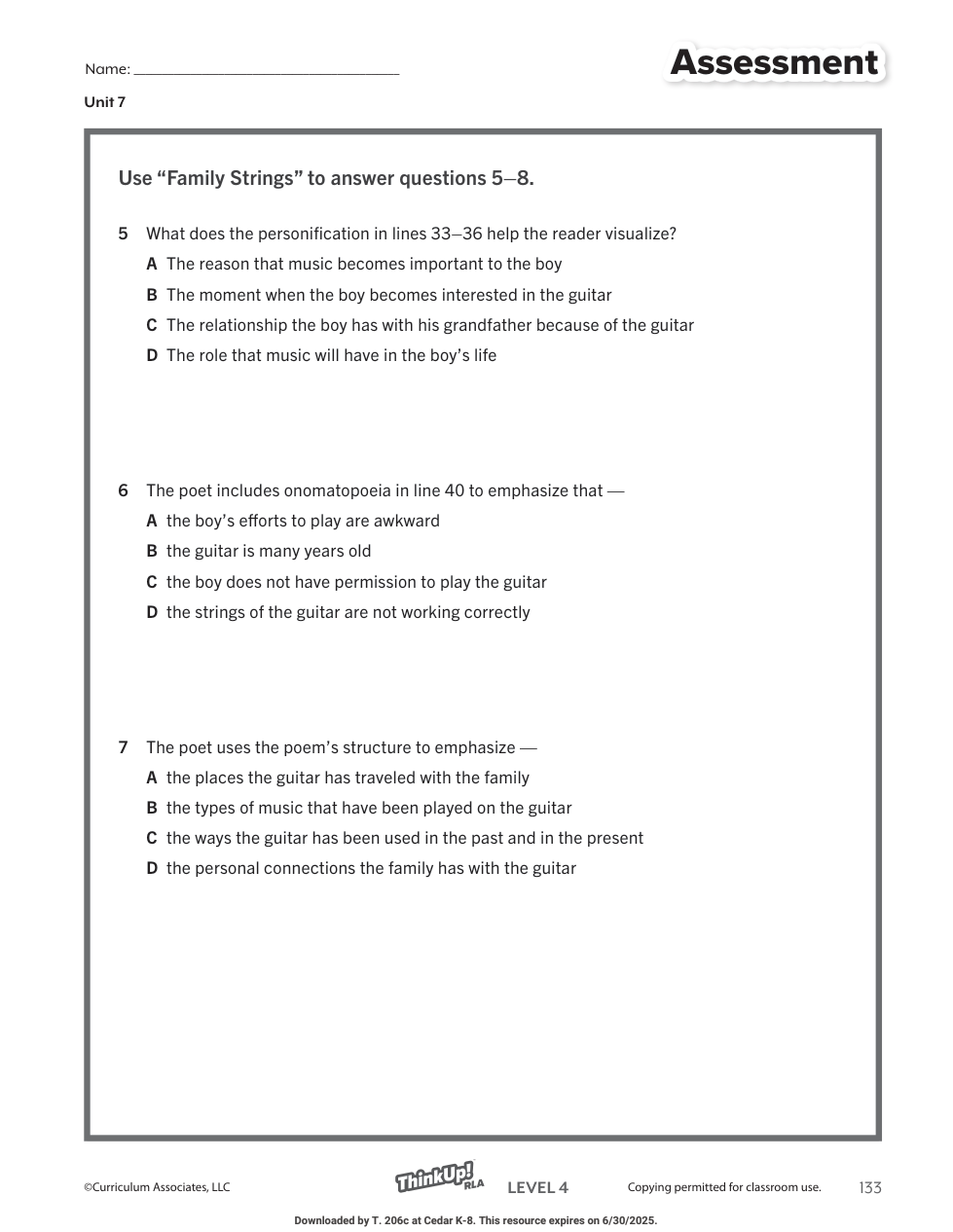
What does the personification in lines 33–36 help the reader visualize?
A. The reason that music becomes important to the boy
B. The moment when the boy becomes interested in the guitar
C. The relationship the boy has with his grandfather because of the guitar
D. The role that music will have in the boy’s life
Question 20
20.

The poet includes onomatopoeia in line 40 to emphasize that —

Question 21
21.

The poet uses the poem’s structure to emphasize —

A. The guitar is no longer useful.
B. The guitar is a valued treasure to the family.
C. The speaker does not have time to play the guitar.
D. The son is too young to play the guitar.
Question 23
23.

Which lines from the poem best support the answer to Part A?

Question 24
24.

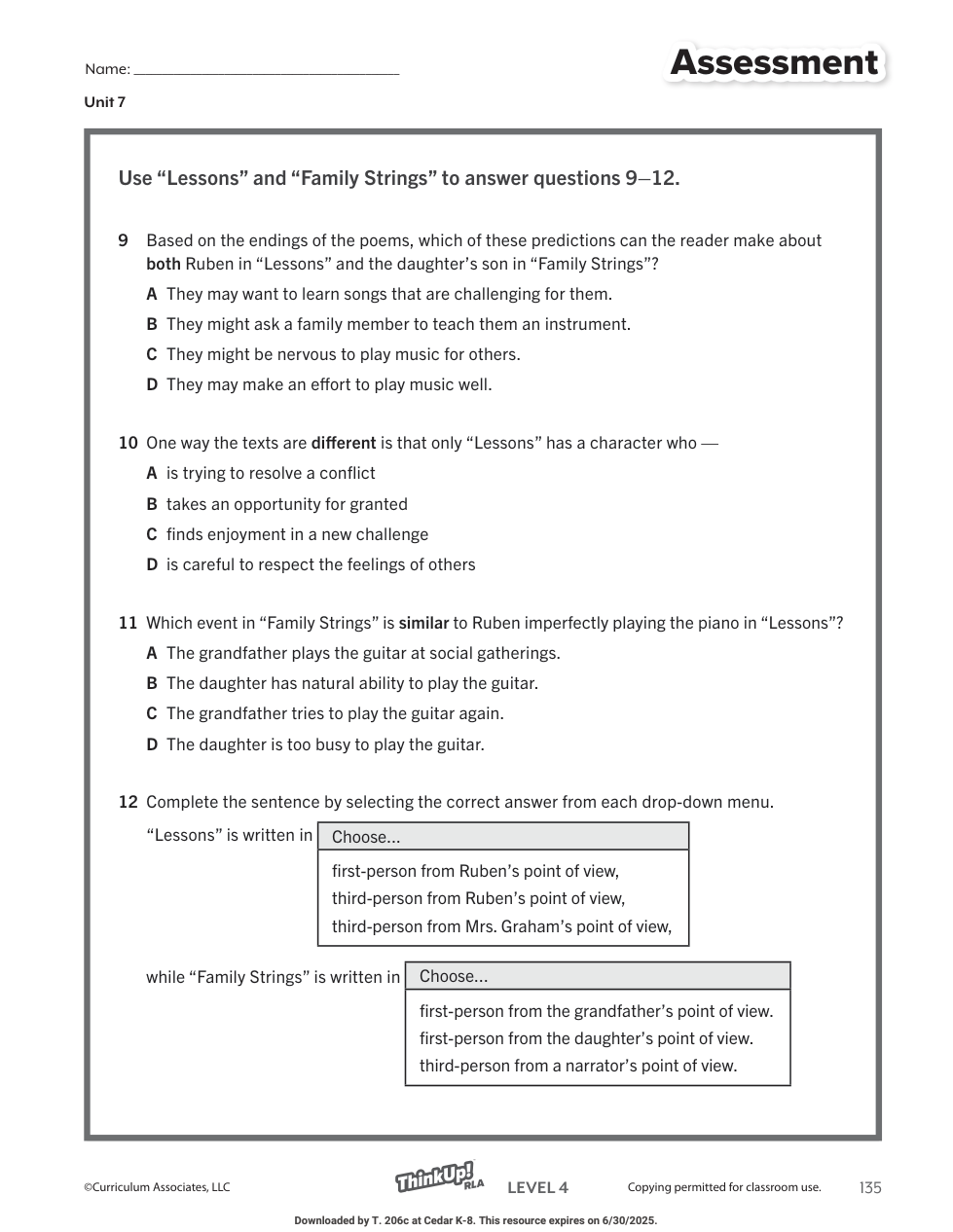
Based on the endings of the poems, which of these predictions can the reader make about both Ruben in "Lessons" and the daughter’s son in "Family Strings"?

Question 25
25.

One way the texts are different is that only "Lessons" has a character who —

Question 26
26.

Which event in "Family Strings" is similar to Ruben imperfectly playing the piano in "Lessons"?

Question 27
27.

Complete the sentence by selecting the correct answer from each drop-down menu. "Lessons" is written in _____ while "Family Strings" is written in _____

first-person from Ruben’s point of view
third-person from Ruben’s point of view
third-person from Mrs. Graham’s point of view
first-person from the grandfather’s point of view
first-person from the daughter’s point of view
third-person from a narrator’s point of view