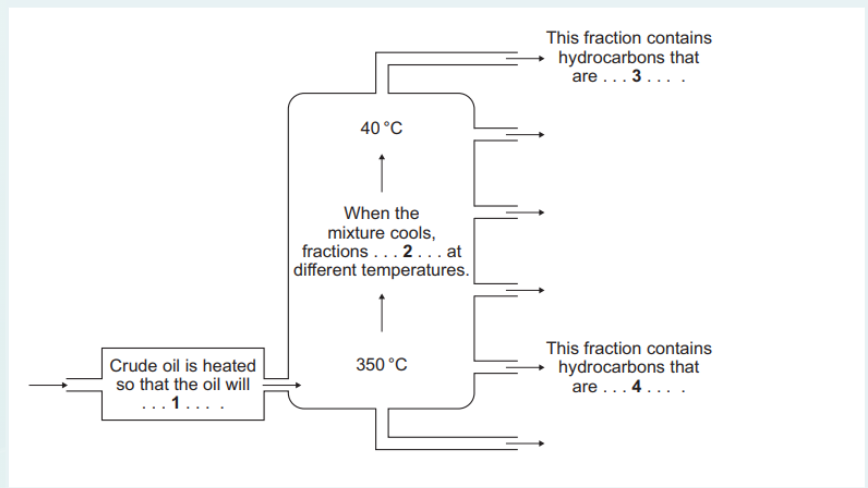
Fractional distillation and hydrocarbon properties
1 =
2 =
3 =
4 =
Mmuae Afoforo a Wobɛpaw:
the shortest
condense
the longest
vaporise
Use the following to make a set of notes on this topic
8.1 Recall that hydrocarbons are
Make notes
8.2 Describe crude oil as:
a) a complex
b) containing
c) an important source of useful substances (
d) a
What is crude oil described as?
How is crude oil separated into simpler mixtures?
Fractional distillation and hydrocarbon properties
1 =
2 =
3 =
4 =
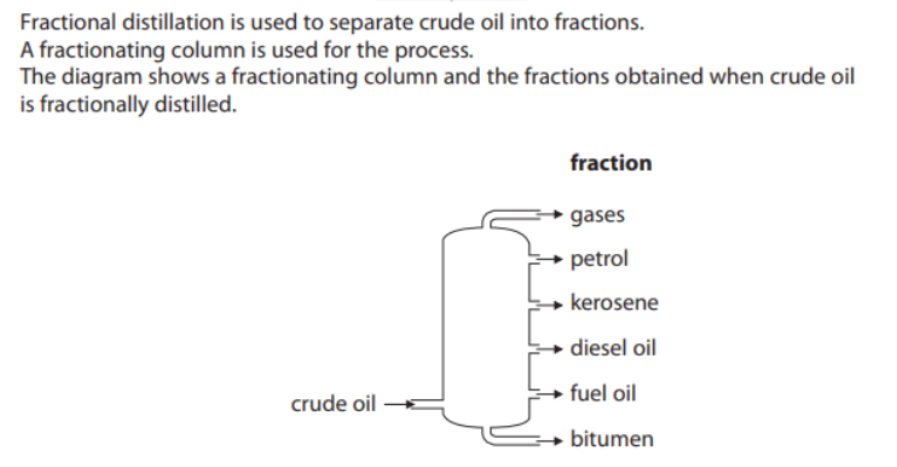
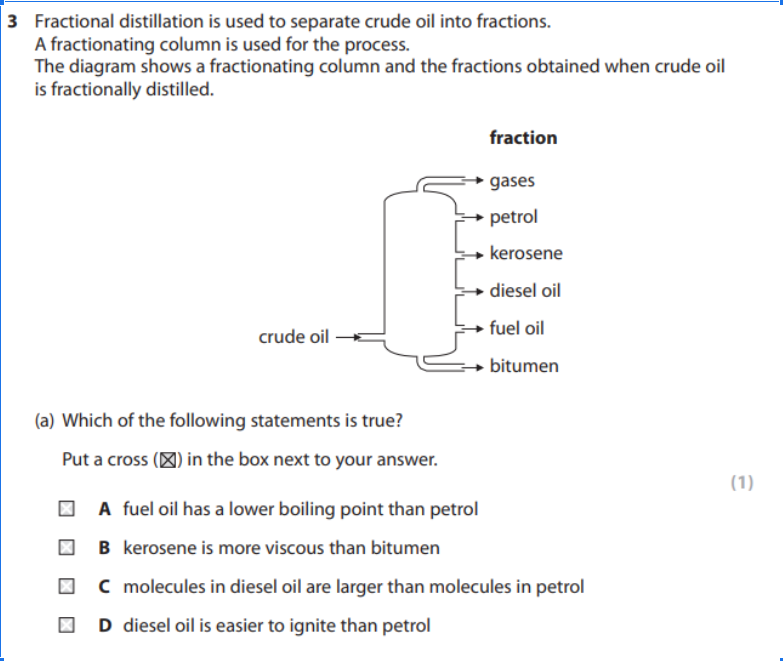
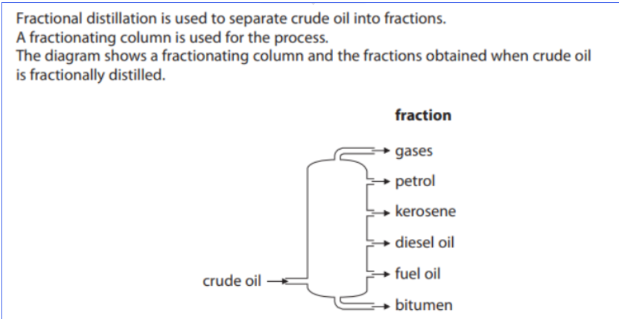
Copy this diagram into your notes and add the comments below.
From the bottom to the top the temperature
From the bottom to the top the number of carbon and hydrogen atoms in the hydrocarbon
From the bottom to the top the chain length
From the bottom to the top the viscosity
From the bottom to the top the volatility
From the bottom to the top the flammability (ease of ignition)
Make a table of the fractions and their typical uses
| Draggable item | arrow_right_alt | Corresponding Item |
|---|---|---|
petrol | arrow_right_alt | used in domestic heating and cooking |
fuel oil, | arrow_right_alt | used as fuel for cars |
bitumen | arrow_right_alt | used as fuel for aircraft |
gases, | arrow_right_alt | used as fuel for some cars and trains |
kerosene | arrow_right_alt | used as fuel for large ships and in some power stations |
diesel oil | arrow_right_alt | used to surface roads and roofs . |
What is petrol used as?
How do hydrocarbons in different fractions differ?
Complete and copy into your notes
8.6 Explain an homologous series as a series of which:
a) have the same general ((e.g. CnH2n+2 for alkanes)
b) differ by in molecular formulae from neighbouring compounds. (The alkanes methane, ethane, propane and butane have the formulae CH4, C2H6, C3H8 and C4H10)
c) show a gradual variation in physical properties, as exemplified by their points which increases as the chain length
d) have similar chemical properties for example alkanes can undergo
CH2
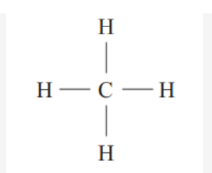
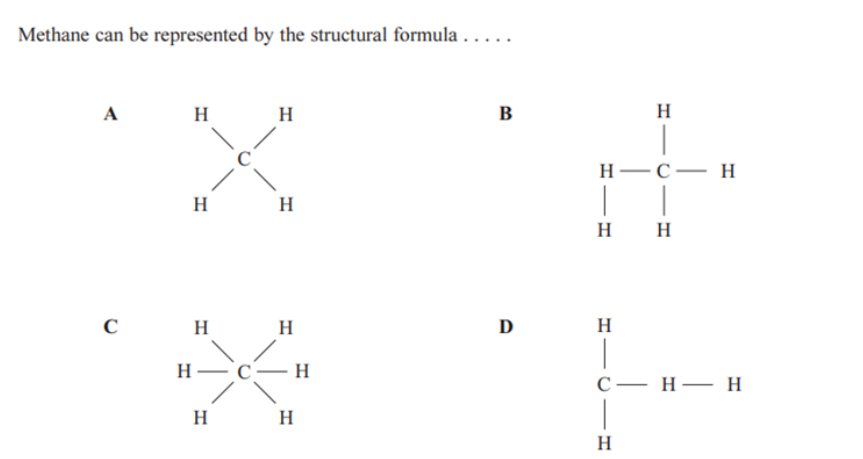
Displayed formula of methane
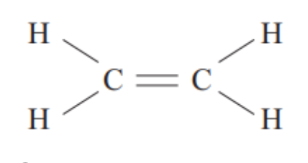
Displayed formula of ethene
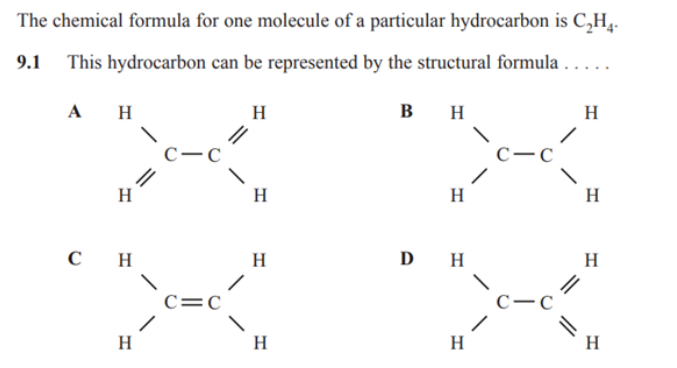
Displayed formula of ethene
Homologous series (family) and general formula
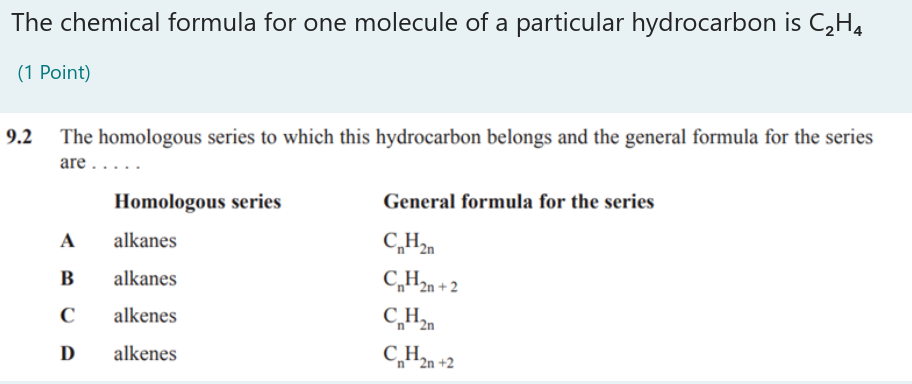
Homologous series (family) and general formula
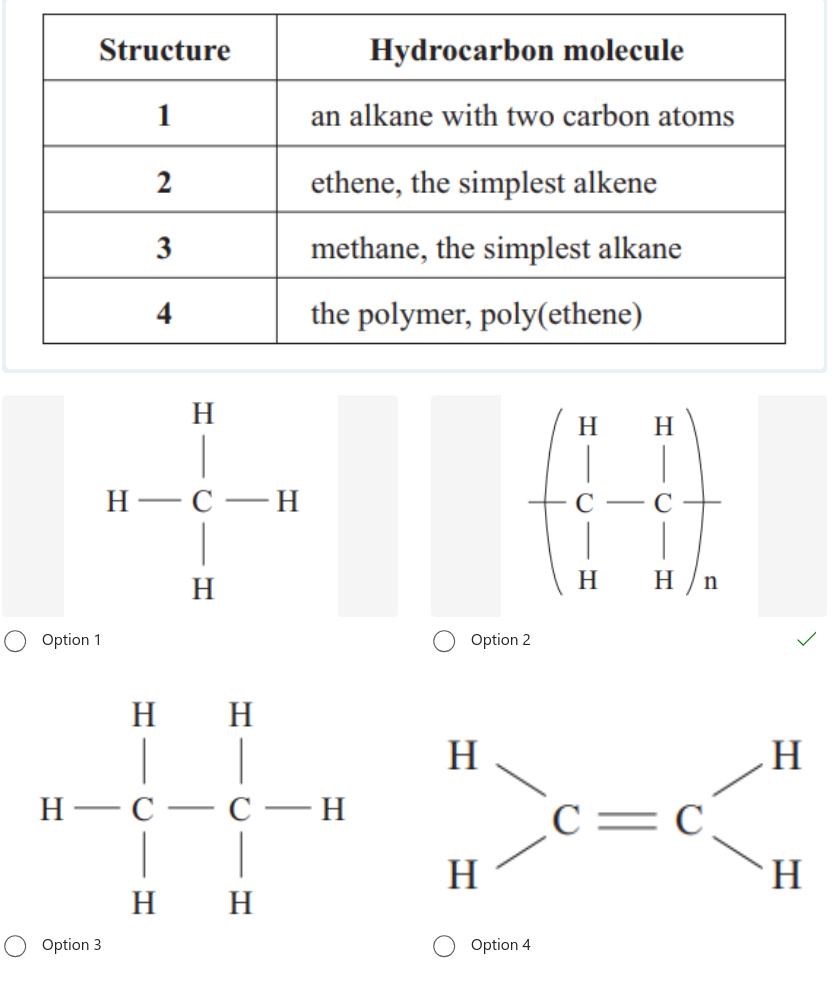
option 1 | option 2 | option 3 | option 4 | |
|---|---|---|---|---|
Structure 1 | ||||
Structure 2 | ||||
Structure 3 | ||||
Structure 4 |
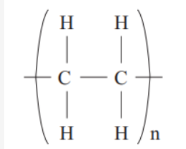
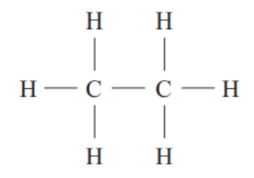
Match the diagram to the category�
Alkane
Polymer
alkene
Crude oil molecule
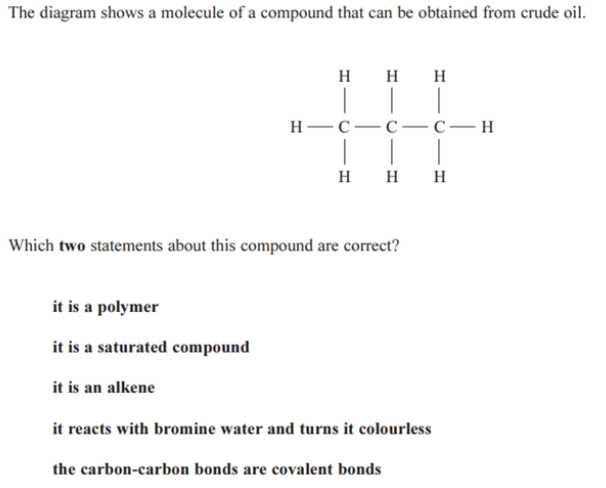
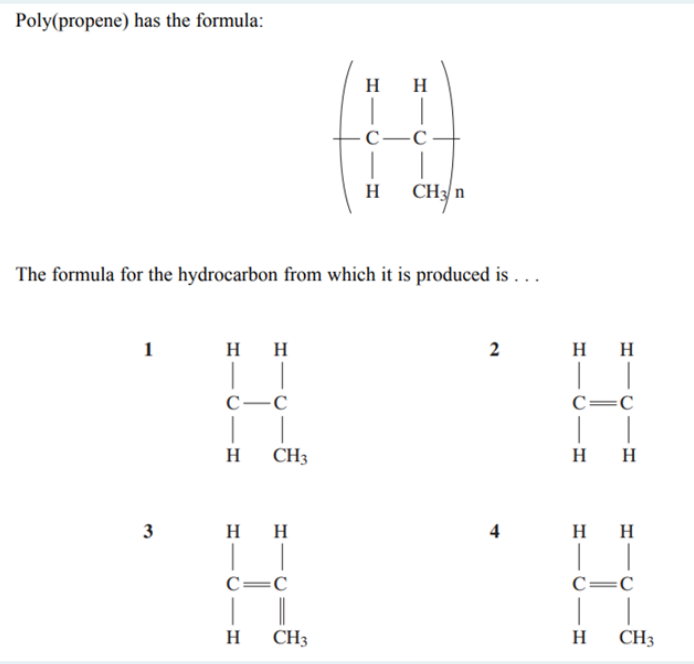
Propene structure
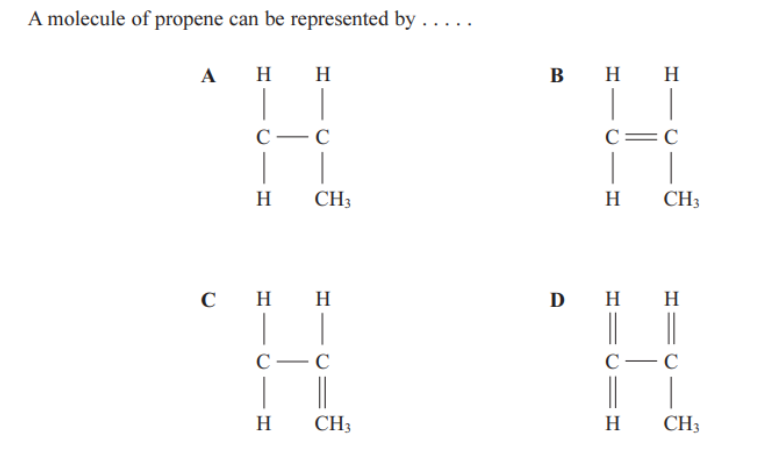
Propene formula
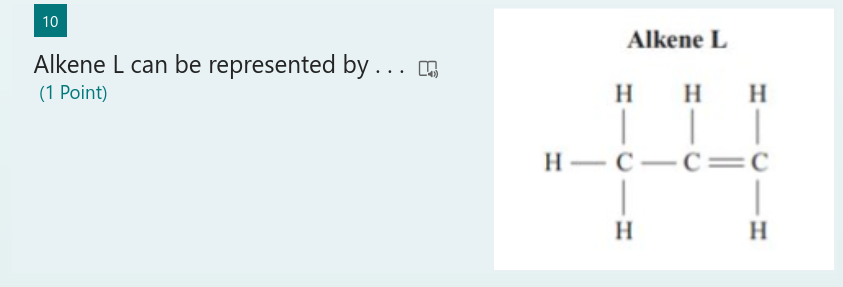
The main difference between alkenes and alkanes is that alkenes have . . .
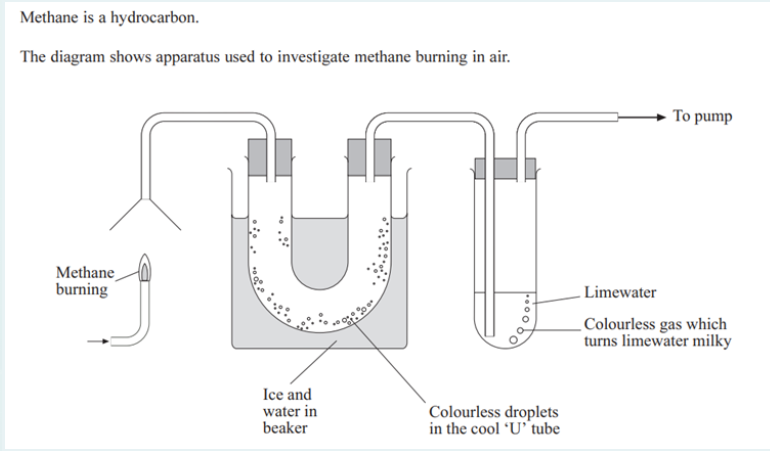
Soot (carbon) | Water (0% in dry air) | Oxygen (21%) | Carbon dioxide (0.03%) | |
|---|---|---|---|---|
Which gas in the air reacts with the hydrocarbon? | ||||
The gas that condenses and collects in the U tube is | ||||
The gas that makes the limewater go cloudy is | ||||
Deposits of ________________ would form on the funnel |
Combustion and reversible reactions
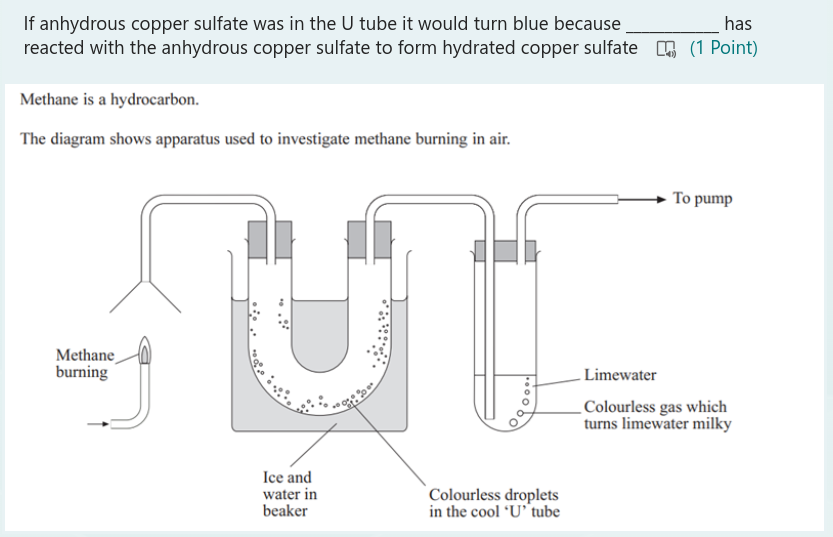
Complete combustion of methane
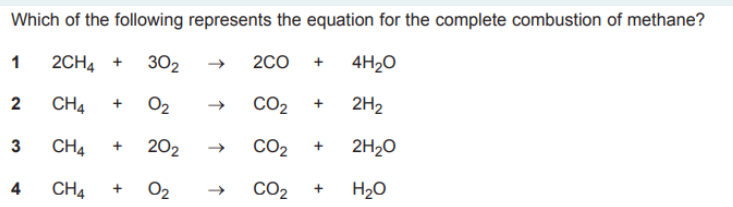
Polymers
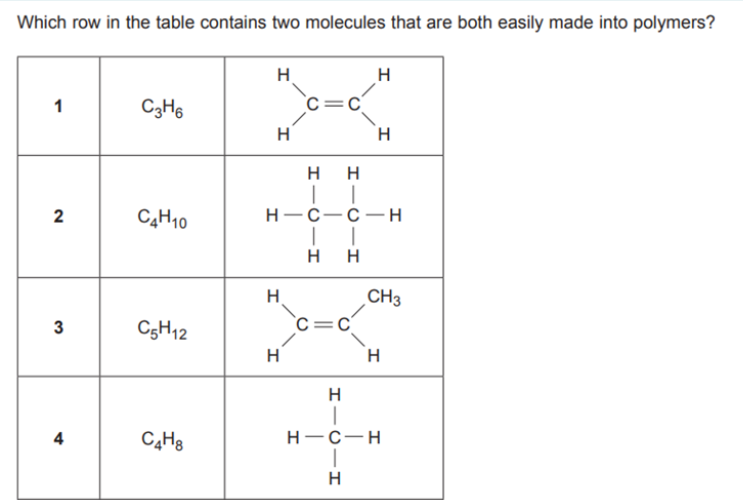
Polymers
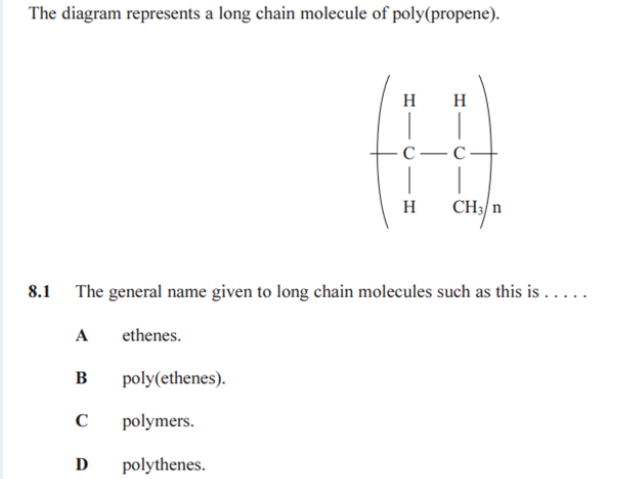
Cracking and polymers
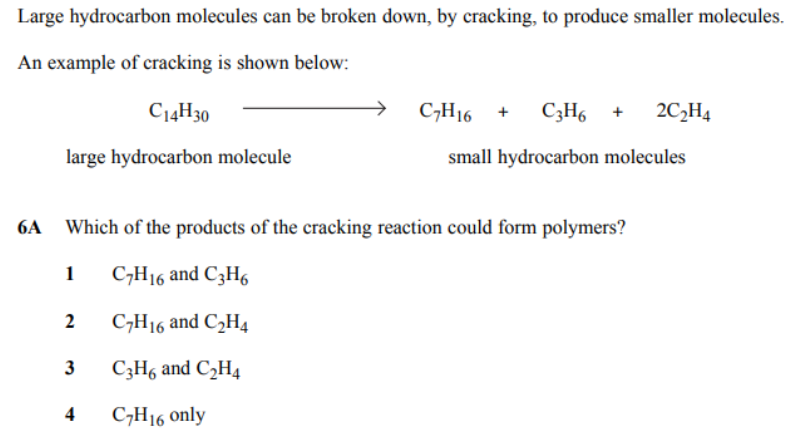
Displayed formulae
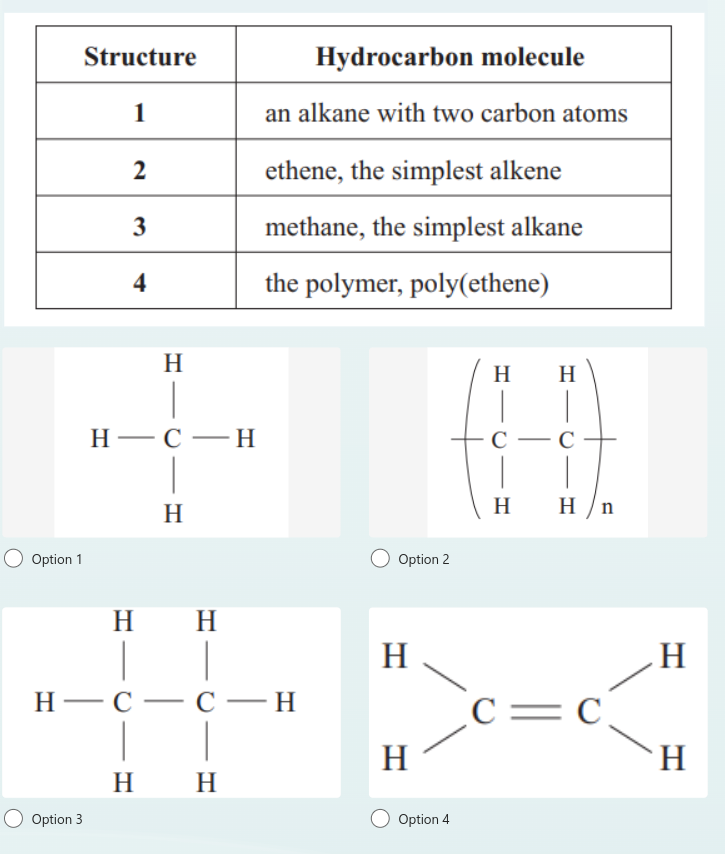
Option 1 | Option 2 | Option 3 | Option 4 | |
|---|---|---|---|---|
1 | ||||
2 | ||||
3 | ||||
4 |
Compete the grid
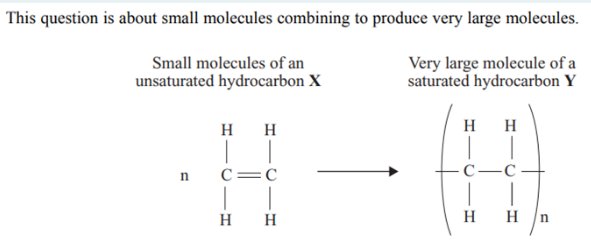
alkene | alkane | unsaturated | monomer | polymer | |
|---|---|---|---|---|---|
X | |||||
Y |
poly(propene)