Log in
Sign up for FREE
arrow_back
Library

AKS 35a - The Dred Scott Decision

star
star
star
star
star
Last updated about 1 year ago
29 questions
1
1
Question 1
1.

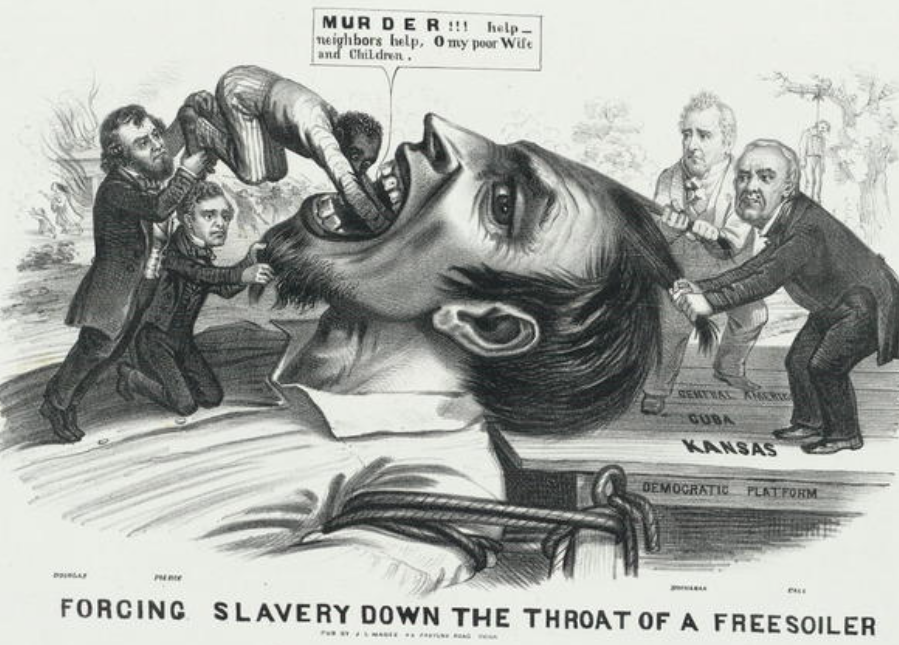
What does the cartoon show?

Things to consider:
- What do you think a "Freesoiler" is?
- Who do you think the men holding down the Freesoiler are?
- What is going on in the background?

Crisis of the 1850s

By the 1850s, tensions over slavery deeply divided the nation. Outbreaks of violence became more frequent, and the nation's wounds seemed beyond repair.

The Kansas-Nebraska Act

The next issue to buildup sectional tensions involved Senator Stephen Douglas of Illinois. Douglas wanted a Northern transcontinental railroad to go from the Midwest to San Francisco. The ambitious Douglas hoped one day to be elected president, so he needed his plan to appeal to Southerners. He proposed organizing the remaining Louisiana Territory into two territories: Kansas and Nebraska. Since this land was north of the Missouri Compromise boundary, slavery was illegal there. Southerners feared opening it up to settlement would allow the North more power in Congress. To get Southern support and discourage proposals for a Southern route, Douglas suggested that the Missouri Compromise be repealed and that the slavery issue in the territories be settled by popular sovereignty.
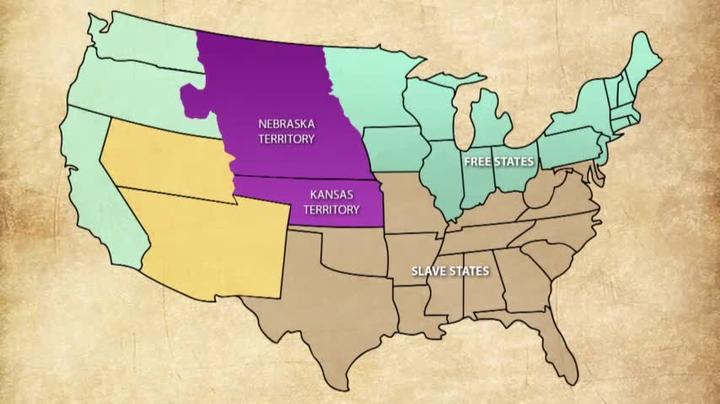

With the support of Southern Democrats, especially Congressman Alexander Stephens of Georgia, the Kansas-Nebraska Act became law in 1854. It infuriated abolitionists and other Northerners. While most people accepted that Nebraska would be free, Kansas was another matter. The slave state of Missouri was right next door. Both Free Soilers and supporters of slavery moved to Kansas, determined to make sure it entered the Union on their side.
"Bleeding Kansas"

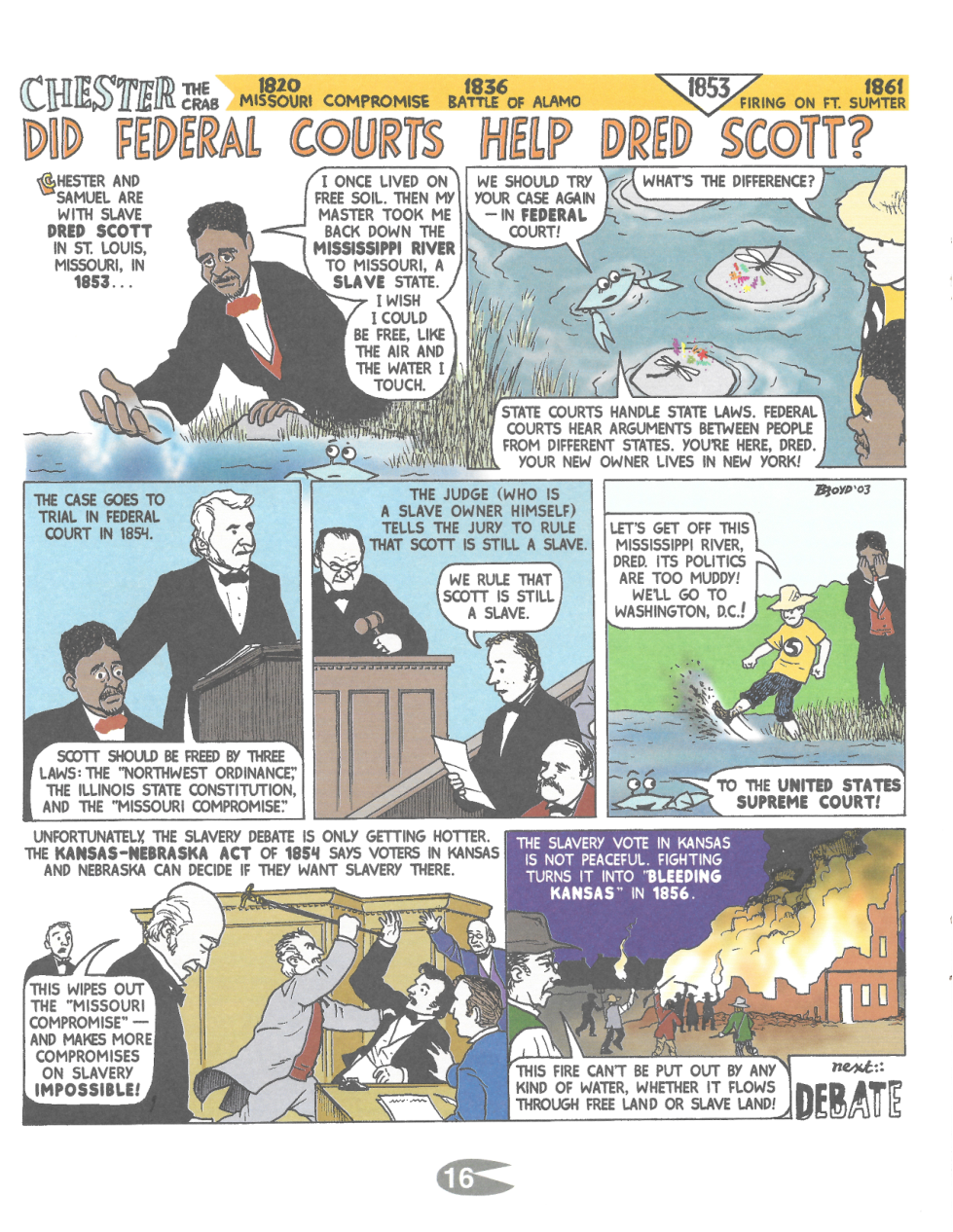
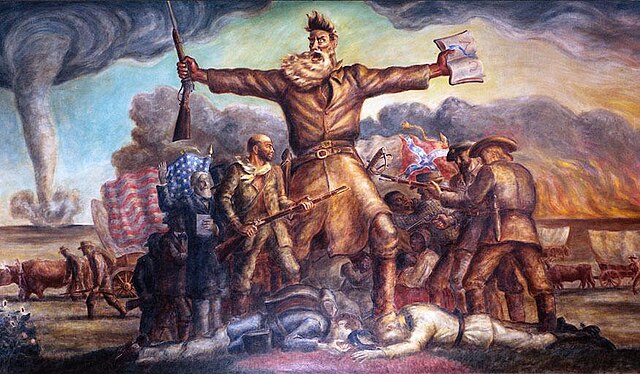
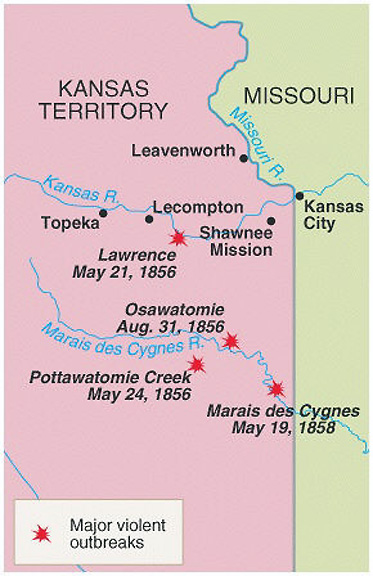
In the 1855 election for the territorial legislature, proslavery men from Missouri crossed into Kansas in order to vote and to intimidate Free Soilers voting there. They created a proslavery legislature, but the Free Soilers rejected it and created their own legislature. Four different legislatures were formed in all. Violence broke out in Lawrence when proslavery leaders ordered the owners of the newspaper to be arrested for refusing to stop publishing antislavery articles, and the local sheriff burned the town. John Brown, a deeply religious abolitionist, struck back. He organized a group of men including five of his sons and headed for Pottawatomie Creek, a proslavery town near Lawrence. Brown and his party murdered five men. Kansas had become a battleground, earning it the name “Bleeding Kansas.”


Bloody Congress
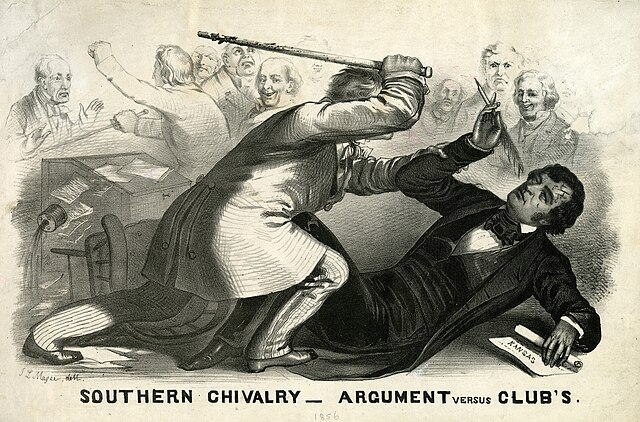
Brown’s actions were also a response to a bloody event in Congress just days before the Pottawatomie Creek attack. Massachusetts Senator Charles Sumner had delivered a fiery speech against slavery that included insults to South Carolina Senator Andrew Butler. A few days later, Butler’s distant cousin, Congressman Preston Brooks, attacked Sumner on the Senate floor. He beat Sumner with a steel-tipped cane until the cane broke. Sumner fell to the floor, bleeding and unconscious. While many Northerners agreed that Sumner’s speech had been out of line, they were horrified by the beating. They were further outraged when Southerners hailed Brooks as a hero and sent him canes to replace the one he had broken. One cane was even engraved with the words “Hit him again.”
Required
1
Required
1
Required
1
Required
1
Required
1
Required
1
Required
1
Required
1
Question 10
10.

Required
1
Question 11
11.

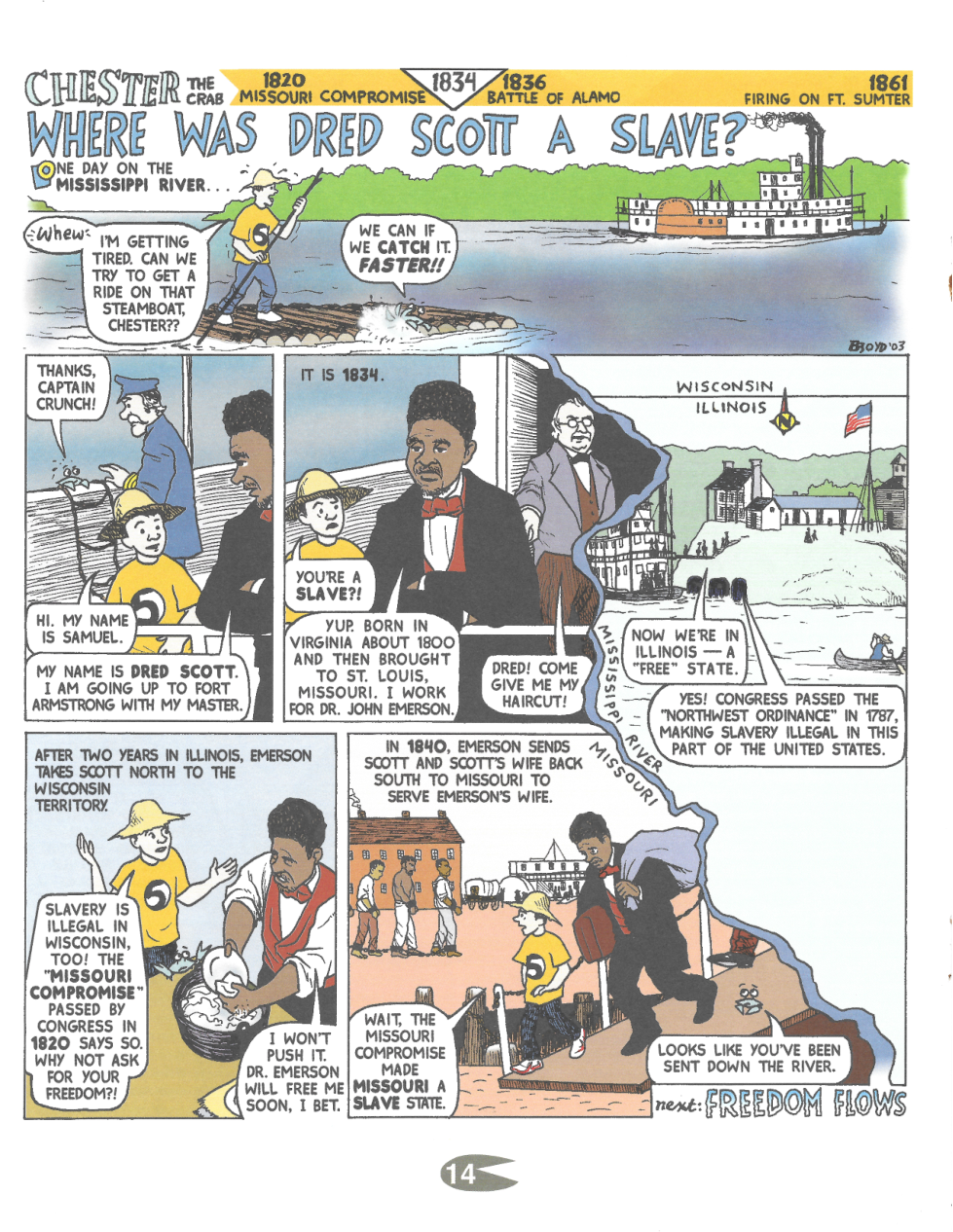
Where was Dred Scott born?

Required
1
Question 12
12.

What "free" states or territories did Dred Scott live in?

Required
1
Question 13
13.

Why did Dred Scott and his wife go back to Missouri in 1840?

Required
1
Question 14
14.

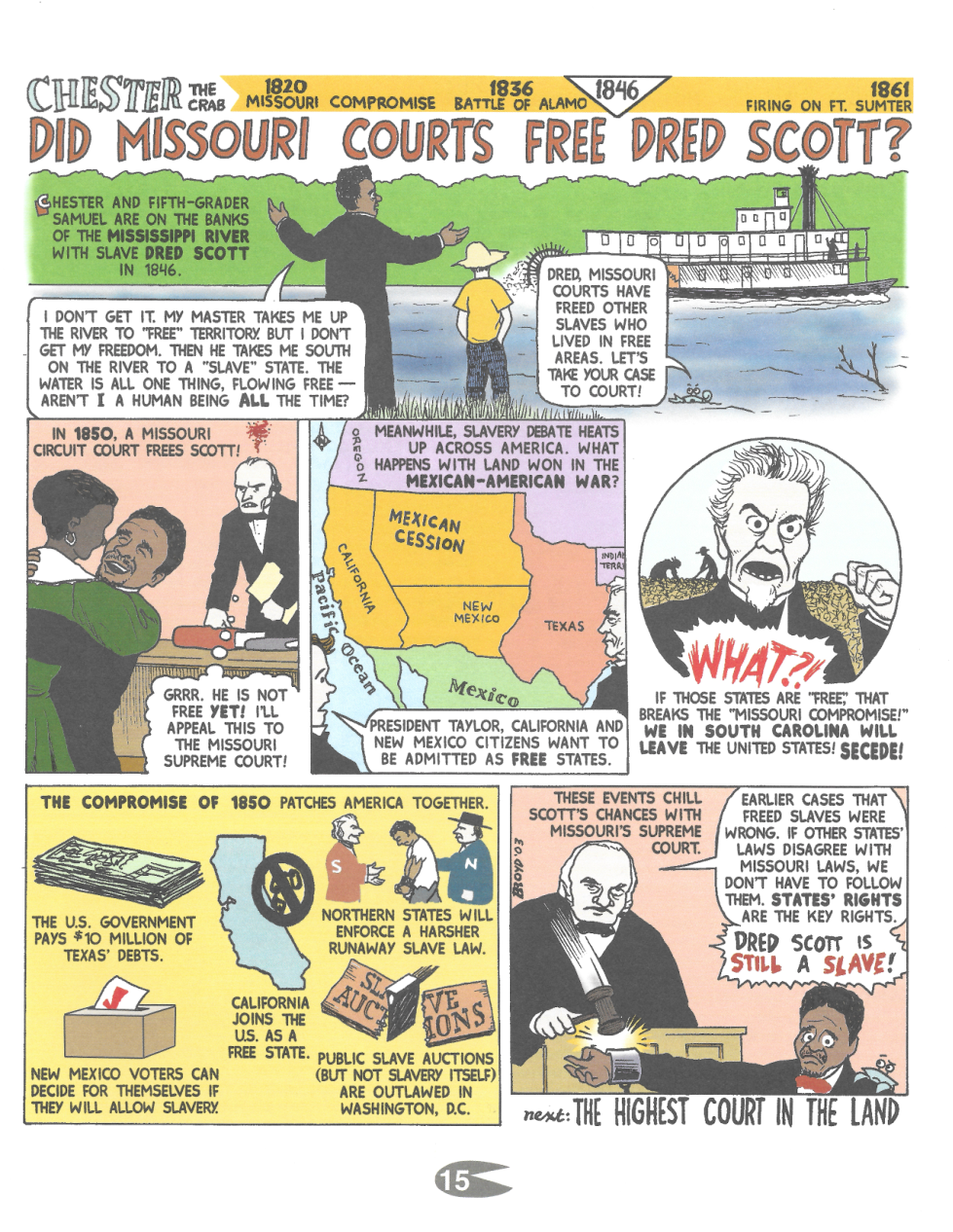
In what year was Dred Scott first given his freedom by the courts?

Required
1
Question 15
15.

Which two states wanted to be admitted to the US after the Mexican-American War? Why did this anger the South?

Required
1
Question 16
16.

What happened to Dred Scott as a result of the Compromise of 1850?

Required
1
Question 17
17.

What did the Kansas-Nebraska Act say about slavery in those territories and how it would be decided? What law did it "wipe" out?

The Dred Scott Decision

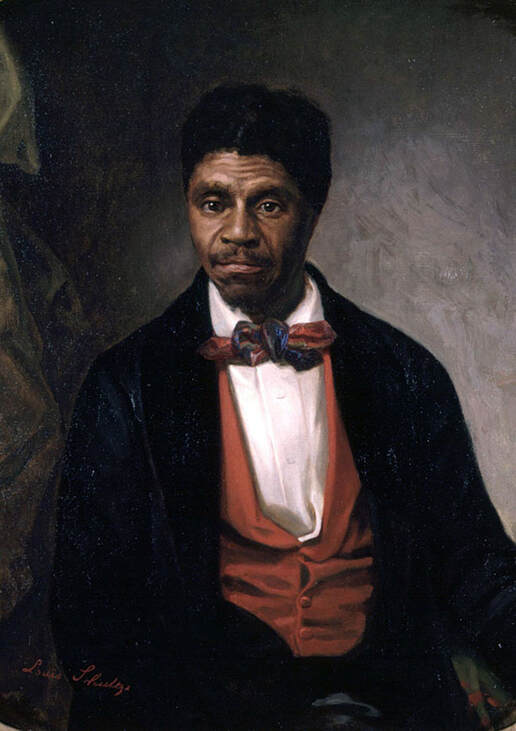
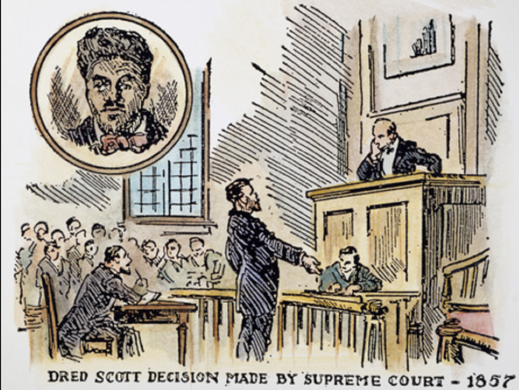
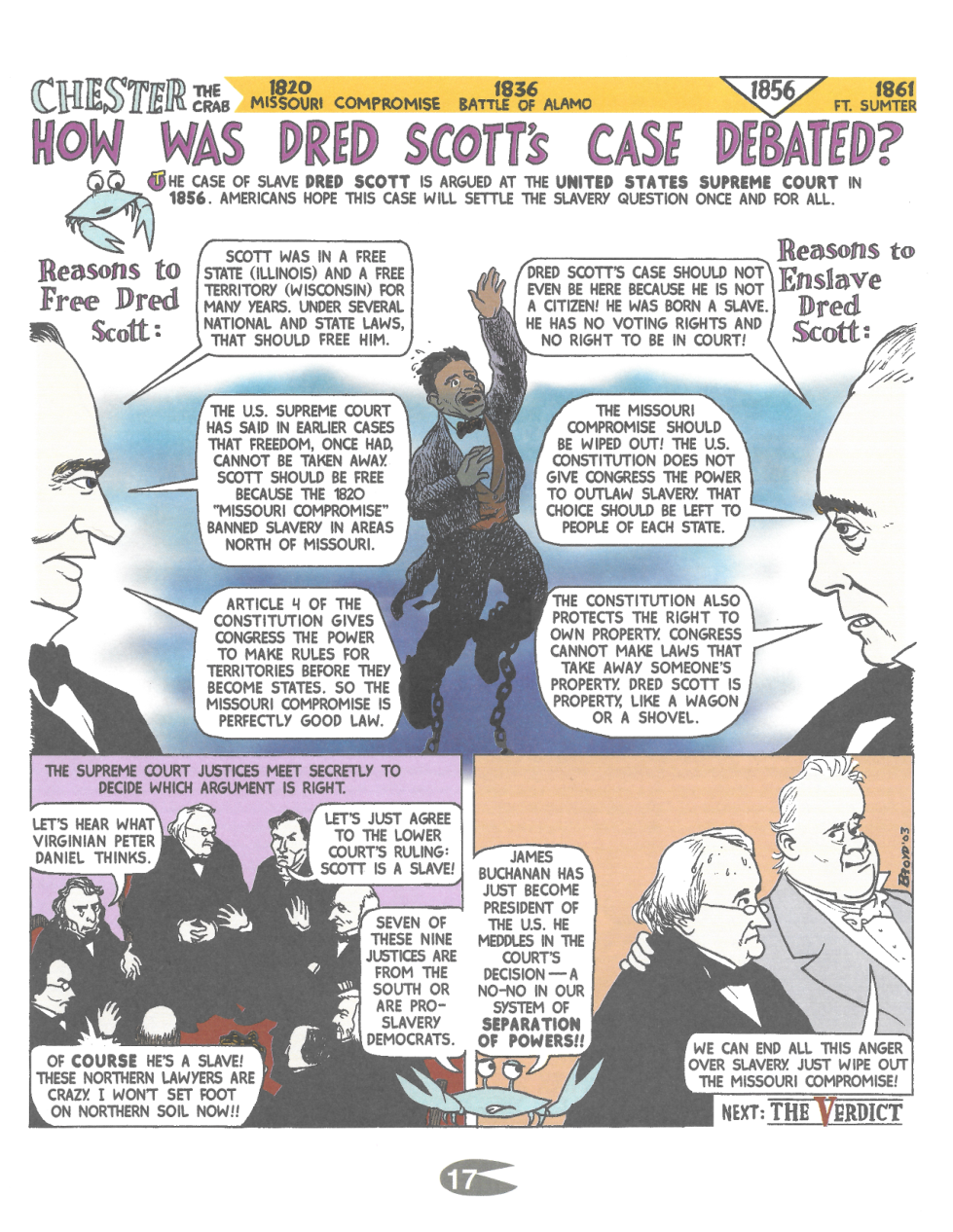
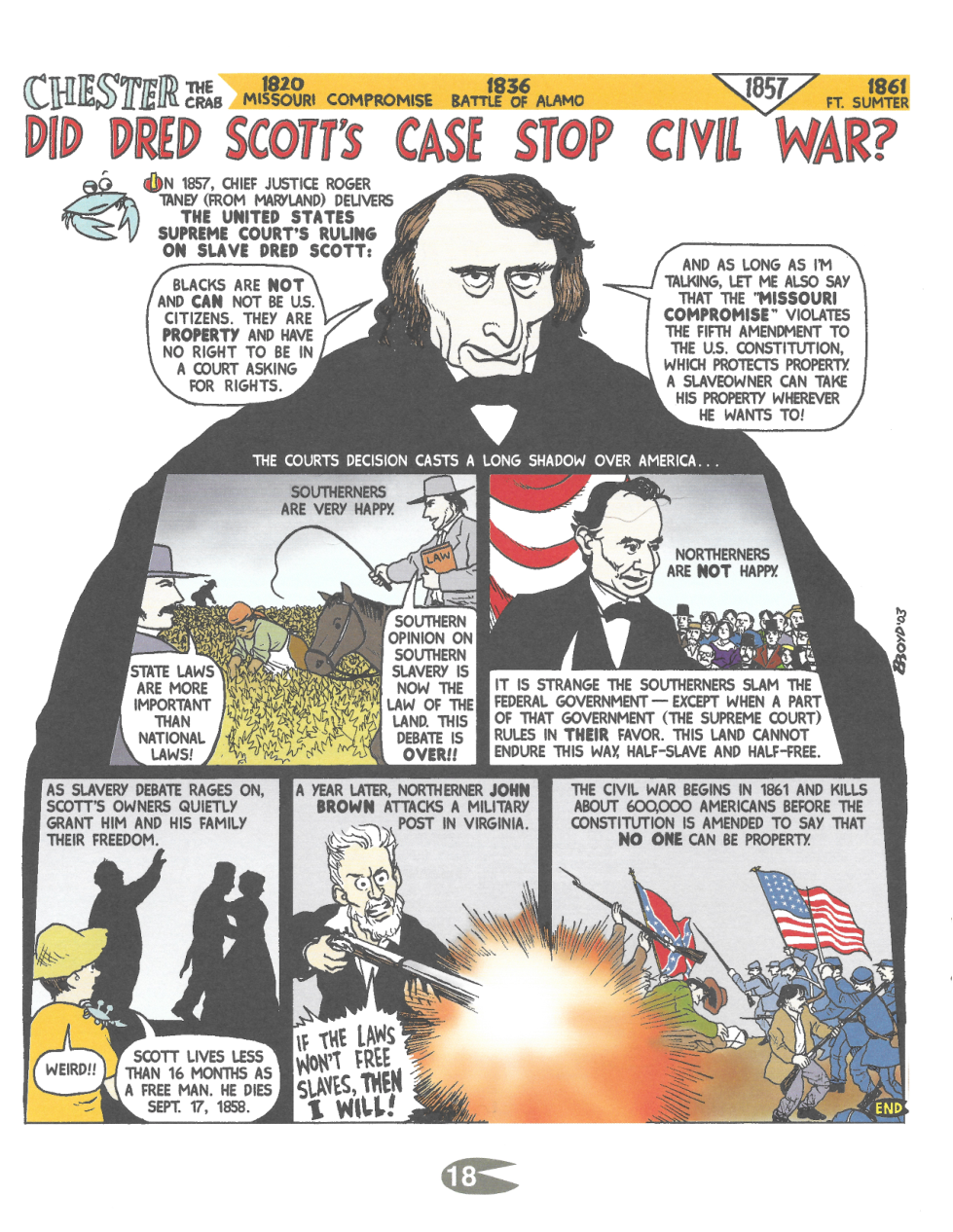
In 1857,the Supreme Court fanned the flames of controversy. An enslaved man from Missouri named Dred Scott had lived for years with his master in both the free state of Illinois and the free territory of Wisconsin. When his master died, Scott sued for his freedom. He argued that because he and his wife had lived in free territory, his whole family should be free. The Supreme Court denied Scott’s claim. Six of the nine justices ruled that enslaved people were slaves, no matter where they went.

Furthermore, the decision, written by Chief Justice Roger B. Taney [TAW-nee], stated that slaves were considered property, and property was protected by the 5th Amendment. According to Taney, denying Southerners the right to own slaves in the territories violated the Constitution. The decision also indicated that the US Constitution, when it was written, did not consider black people citizens. They had “no rights which the white man was bound to respect.” Because Scott was black, the logic went, he was not a citizen; therefore he had no right to file a lawsuit.

While the Kansas-Nebraska Act undid the Missouri Compromise, the Dred Scott decision made any attempt to keep slavery out of the territories unconstitutional. The decision was a great victory for the South. For abolitionists and many Northerners, the ruling was one more sign that the Southern “slaveocracy” would stop at nothing to further its cause.

Required
1
Required
1
Required
1
Required
1
Required
1
Question 22
22.

How many of the 9 Supreme Court Justices were slave owners? How do you think this impacted their decision?

Required
1
Question 23
23.

What was the Supreme Court's ruling about Dred Scott and his citizenship?

Required
1
Question 24
24.

What did the Dred Scott decision say about the Missouri Compromise?

Required
1
Question 25
25.

What happened to Dred Scott?

John Brown’s Raid

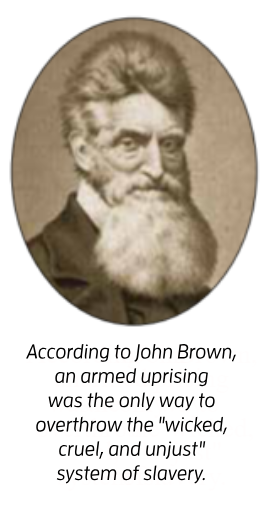
With tempers dangerously high, the abolitionist John Brown resurfaced—this time in western Virginia. Convinced that God had called him “to purge this land with blood,” Brown secretly planned to start a slave rebellion. He hoped it would spread throughout Virginia and other parts of the South. On an October night in 1859, Brown led a group of fewer than 20 men, including his sons, several free black men, and a few runaway slaves. They seized the federal arsenal at Harpers Ferry, Virginia, taking weapons and ammunition for an armed rebellion.

Soon after the group took over the arsenal, federal troops led by Colonel Robert E. Lee recaptured the facility, killing 10 of Brown’s followers and capturing most of the rest, including Brown. Brown was put on trial and convicted of treason. His public hanging turned him into a martyr for the abolitionist cause. A martyr is a person who is killed for his or her beliefs. When letters to and from other abolitionists were found in Brown’s rented house, Southerners were even more angered and afraid. The possibility of a slave revolt was always present, but Brown’s raid seemed to show the North’s commitment to end slavery, even if it meant killing Southerners in the process.

Required
1
Required
1
Required
1
Required
1
Question 2
2.

Why did Senator Stephen Douglas propose organizing Kansas and Nebraska?

Question 3
3.

What was the outcome of the Kansas-Nebraska Act on abolitionists?

Question 4
4.

Why did violence break out in Lawrence, Kansas?

Question 5
5.

What event led to the nickname 'Bleeding Kansas'?

Question 6
6.

What was the purpose of the Kansas-Nebraska Act?

Question 7
7.

Why did Southerners support the Kansas-Nebraska Act?

Question 8
8.

What led to the emergence of “Bleeding Kansas” in 1855?

Question 9
9.

How did the “Bleeding Kansas” conflict reflect overall tensions?

Question 18
18.

What was the main argument made by Dred Scott?

Question 19
19.

According to Chief Justice Taney, why was Dred Scott not considered a citizen?

Question 20
20.

How did the Dred Scott decision impact attempts to keep slavery out of the territories?

Question 21
21.

What was the Supreme Court's ruling on enslaved people in the Dred Scott case?

Question 26
26.

What was John Brown's goal in leading the raid?

Question 27
27.

How did the federal troops respond to John Brown's raid?

Question 28
28.

What consequence did John Brown face for his actions?

Question 29
29.

How did Brown's raid impact both Northerners and Southerners?