Solving Crimes with the Necrobiome

Last updated 8 months ago
16 questions
SOLVING CRIMES USING THE HUMAN NECROBIOME
(link to the video)
1

Death is a major event not only for the person who dies but also for the microbes that inhabit their body.
Which of the following statements best describes why?

1

Which of the following statements about cadavers (dead bodies) is most likely to be true?

1

After death, gases build up inside the body and cause the skin to rupture. Rupture is significant because microbes from outside the body can now access the inside. Which of the following can be a source of the microbes that enter the body after it ruptures?

Select all that apply.

1

Describe how the scientists in the video are using microbes to create a tool to estimate the time since death.

0

The law of conservation of energy states that the amount of energy in an isolated system stays constant. Explain how the decomposition of a cadaver demonstrates this law.

Think of the cadaver as a large energy source for hungry microbes.

0

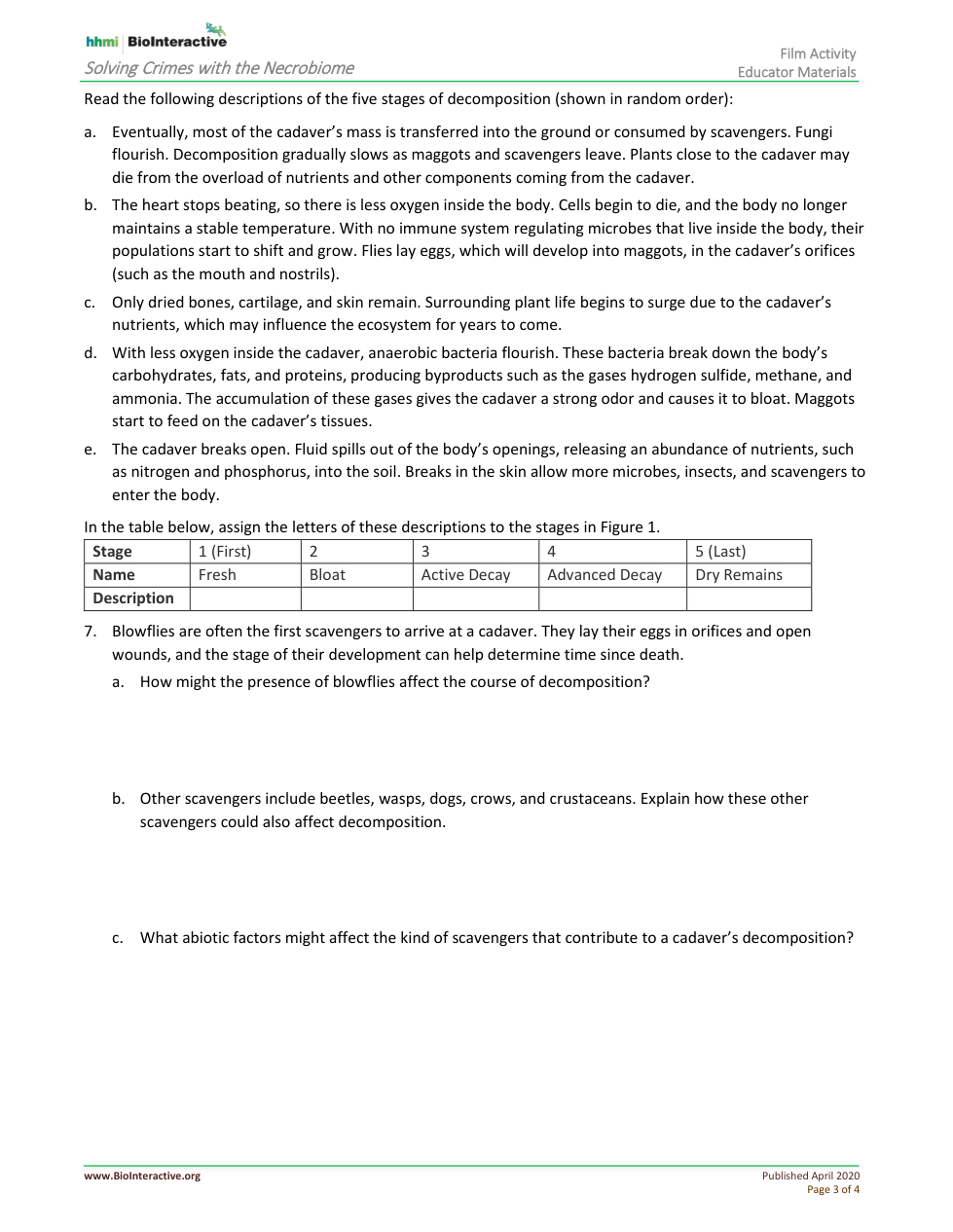
Add notes to the "show your work section" to describe what happens in each stage of decomposition.

1
__________
1
__________
1
__________
1
__________
1
__________
1

How might the presence of blowflies affect the course of decomposition?

1

Other scavengers include beetles, wasps, dogs, crows, and crustaceans. Explain how these other scavengers could also affect decomposition.

1

What abiotic factors might affect the kind of scavengers that contribute to a cadaver's decomposition?

0

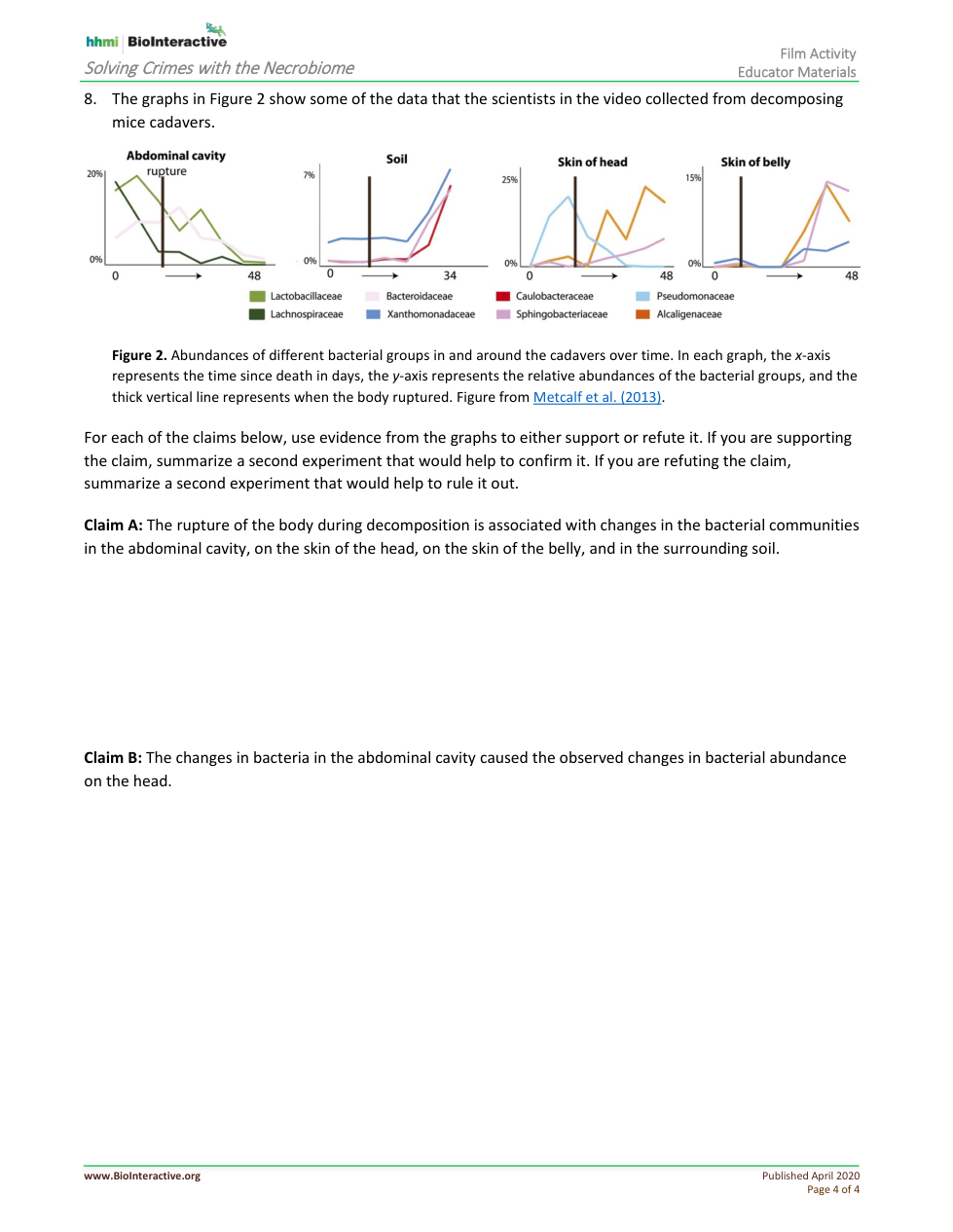
The rupture of the body during decomposition is linked with changes in the bacterial communities in the abdominal cavity, on the skin of the head, on the skin of the belly, and in the surrounding soil.

Use evidence from the graphs to support or refute this claim. If supporting, suggest a second experiment to confirm the claim. If refuting, suggest a second experiment to rule it out.

0

Changes in bacteria within the abdominal cavity led to the observed changes in bacterial abundance on the head.

Use evidence from the graphs to support or refute this claim. If supporting, suggest a second experiment to confirm the claim. If refuting, suggest a second experiment to rule it out.