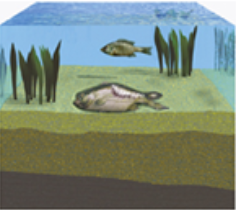
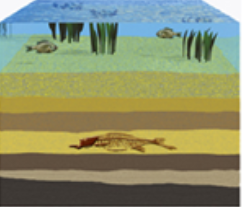
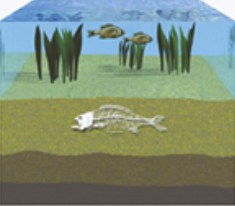
Watch the video below, then answer the questions.
Compaction and Cementation
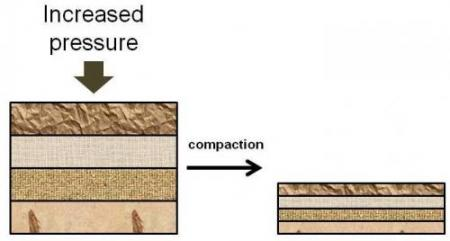
The processes by which sediments are changed into rock are complex, but can be simplified into two processes, called compaction and cementation.
Compaction:
happens when sediments are deeply buried, placing them under pressure because of the weight of overlying layers. This squashes the grains together more tightly.
is where new minerals stick the grains together – just as cement (from a bag) binds sand grains in a bricklayer’s mortar. If you look carefully at the microscope photo, you can see mineral crystals that have grown around the sediment grains and bonded them together.
Click on the image below to watch the video.
How does sediment form?
What is cementation?
What are some examples of sedimentary rock?
In order for sedimentary rock to form, the following processes must happen:
Cementation
Compaction
Erosion
Deposition
Weathering
Watch the video below.
What might be found trapped in layers of sedimentary rock?
What do fossils turn into over time?
Fossil fuels are made from the remains of ancient plants and animals.
Drag and drop the words to show the correct order of processes in sedimentary rock formation (first on top).
sedimentation
compaction
cementation
Choose the THREE processes that create and relocate sediment.
Drag and drop the words onto their matching definitions.
Compaction
Cementation
The process of squishing air or water from between sediment particles due to increased pressure.
The process of minerals sticking individual sediment grains together.
Drag and drop the pictures into the boxes show the order of fossil fuel formation.
What is the first step in forming sedimentary rock?
What is a common characteristic of fossil fuels?
What do sedimentary rocks form from?
What process turns buried plant material into fossil fuels?
Where do sedimentary rocks usually form?
Which type of sedimentary rock forms from organic matter?
How do fossil fuels form?
What are fossil fuels?
Where are fossil fuels found?