ENCYCLOPEDIA: NONRENEWABLE ENERGY
Nonrenewable energy comes from sources that will run out or will not be replenished in our lifetimes—or even in many, many lifetimes.
Most nonrenewable energy sources are fossil fuels: coal, petroleum, and natural gas. Carbon is the main element in fossil fuels. For this reason, the time period that fossil fuels formed (about 360-300 million years ago) is called the Carboniferous Period.
All fossil fuels formed in a similar way. Hundreds of millions of years ago, even before the dinosaurs, Earth had a different landscape. It was covered with wide, shallow seas and swampy forests.
Plants, algae, and plankton grew in these ancient wetlands. They absorbed sunlight and created energy through photosynthesis. When they died, the organisms drifted to the bottom of the sea or lake. There was energy stored in the plants and animals when they died.
Over time, the dead plants were crushed under the seabed. Rocks and other sediment piled on top of them, creating high heat and pressure underground. In this environment, the plant and animal remains eventually turned into fossil fuels (coal, natural gas, and petroleum). Today, there are huge underground pockets (called reservoirs) of these nonrenewable sources of energy all over the world.
Advantages and Disadvantages
Fossil fuels are a valuable source of energy. They are relatively inexpensive to extract. They can also be stored, piped, or shipped anywhere in the world.
However, burning fossil fuels is harmful to the environment. When coal and oil are burned, they release particles that can pollute the air, water, and land. Some of these particles are caught and set aside, but many of them are released into the air.
Burning fossil fuels also upsets Earth’s “carbon budget,” which balances the carbon in the ocean, earth, and air. When fossil fuels are combusted (heated), they release carbon dioxide into the atmosphere. Carbon dioxide is a gas that keeps heat in Earth’s atmosphere, a process called the “greenhouse effect.” The greenhouse effect is necessary to life on Earth, but relies on a balanced carbon budget.
The carbon in fossil fuels has been sequestered, or stored, underground for millions of years. By removing this sequestered carbon from the ground and releasing it into the atmosphere, Earth’s carbon budget is out of balance. This contributes to temperatures rising faster than organisms can adapt.
Coal
Coal is a black or brownish rock. We burn coal to create energy. Coal is ranked depending on how much “carbonization” it has gone through. Carbonization is the process that ancient organisms undergo to become coal. About three meters (10 feet) of solid vegetation crushed together form 0.3 meter (one foot) of coal!
Peat is the lowest rank of coal. It has gone through the least amount of carbonization. It is an important fuel in areas of the world including Scotland, Ireland, and Finland.
Anthracite is the highest rank of coal. Anthracite forms in regions of the world where there have been giant movements of the earth, such as the formation of mountain ranges. The Appalachian Mountains, in the eastern part of the United States, are rich in anthracite.
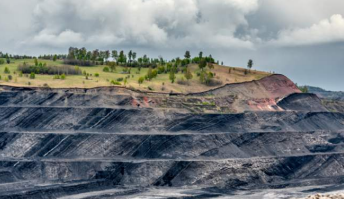
We mine coal out of the ground so we can burn it for energy. There are two ways that we can mine coal: underground mining and surface mining.
Underground mining is used when the coal is located below the surface of Earth, sometimes 300 meters (1,000 feet) deep—that’s deeper than most of the Great Lakes! Miners take an elevator down a mineshaft. They operate heavy machinery that cuts the coal out, and brings it above ground. This can be dangerous work because cutting coal can release dangerous gases. The gases can cause explosions or make it hard for miners to breathe.
Surface mining is used when the coal is located very near the surface of the planet. To get to the coal, companies must first clear the area. They take away the trees and soil. The coal can then be cut out of the ground more easily. Entire habitats are destroyed during this process.
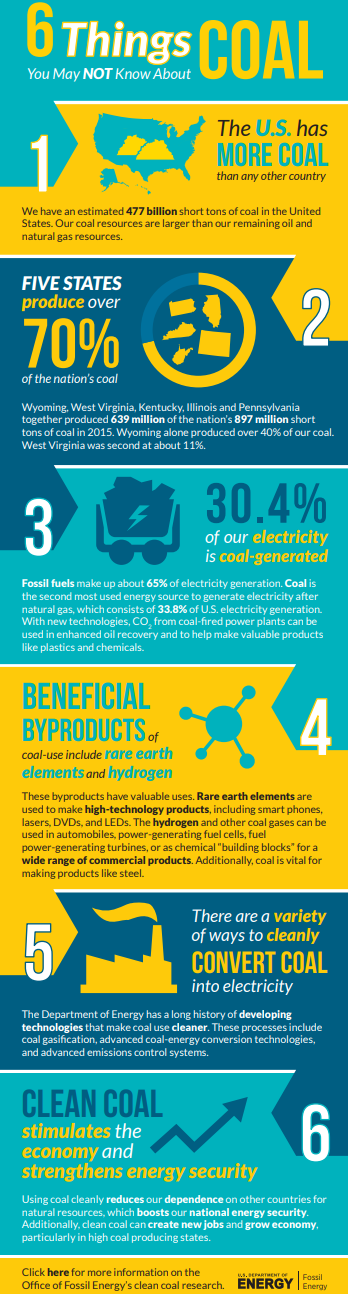
Almost 20 percent the electricity in the United States comes from coal. It gives power to our lights, refrigerators, dishwashers, and most other things we plug in. When coal is burned, it leaves “byproducts” that are also valuable. We use the byproducts to make cement, plastics, roads, and many other things.
Advantages and Disadvantages - Coal
Coal is a reliable source of energy. We can rely on it day and night, summer and winter, sunshine or rain, to provide fuel and electricity.
Using coal is also harmful. Mining is one of the most dangerous jobs in the world. Coal miners are exposed to toxic dust and face the dangers of cave-ins and explosions at work.
When coal is burned, it releases many toxic gases and pollutants into the atmosphere. Mining for coal can also cause the ground to cave in and create underground fires that burn for decades at a time.
Petroleum
Petroleum is a liquid fossil fuel. It is also called oil or crude oil.
Petroleum is trapped by underground rock formations. In some places, oil bubbles right out of the ground. At the LaBrea Tar Pits, in Los Angeles, California, U.S., big pools of thick oil bubble up through the ground. Remains of animals that got trapped there thousands of years ago are still preserved in the tar!
Most of the world’s oil is still deep under the ground. We drill through the earth to access the oil. Some deposits are on land, and others are under the ocean floor.
Once oil companies begin drilling with a “drill rig,” they can extract petroleum 24 hours a day, seven days a week, 365 days a year. Many successful oil sites produce oil for about 30 years. Sometimes they can produce oil for much longer.
When oil is under the ocean floor, companies drill offshore. They must build an oil platform. Oil platforms are some of the biggest artificial structures in the world!
Once the oil has been drilled, it must be refined. Oil contains many chemicals besides carbon, and refining the oil takes some of these chemicals out.
We use oil for many things. About half the world’s petroleum is converted into gasoline. The rest can be processed and used in liquid products such as nail polish and rubbing alcohol, or solid products such as water pipes, shoes, crayons, roofing, vitamin capsules, and thousands of other items.
Advantages and Disadvantages - Petroleum
There are advantages to drilling for oil. It is relatively inexpensive to extract. It is also a reliable and dependable source of energy and money for the local community.
Oil provides us with thousands of conveniences. In the form of gasoline, it is a portable source of energy that gives us the power to drive places. Petroleum is also an ingredient in many items that we depend on.
However, burning gasoline is harmful to the environment. It releases hazardous gases and fumes into the air we breathe. There is also the possibility of an oil spill. If there is a problem with the drilling machinery, the oil can explode out of the well and spill into the ocean or surrounding land. Oil spills are environmental disasters, especially offshore spills. Oil floats on water, so it can look like food to fish and ruin birds’ feathers.
Natural Gas
Natural gas is another fossil fuel that is trapped underground in reservoirs. It is mostly made up of methane. You may have smelled methane before. The decomposing material in landfills also release methane, which smells like rotten eggs.
There is so much natural gas underground that it is measured in millions, billions, or trillions of cubic meters.
Natural gas is found in deposits a few hundred meters underground. In order to get natural gas out of the ground, companies drill straight down. However, natural gas does not form in big open pockets. Natural gas is trapped in rock formations that can stretch for kilometers.
To reach natural gas, some companies use a process called “hydraulic fracturing,” or fracking. Hydraulic means they use water, and fracturing means to “split apart.” The process uses high-pressure water to split apart the rocks underground. This releases the natural gas that is trapped in rock formations. If the rock is too hard, they can send acid down the well to dissolve the rock. They can also use tiny grains of glass or sand to prop open the rock and let the gas escape.
We use natural gas for heating and cooking. Natural gas can also be burned to generate electricity. We rely on natural gas to give power to lights, televisions, air conditioners, and kitchen appliances in our homes.
Natural gas can also be turned into a liquid form, called liquid natural gas (LNG). LNG is much cleaner than any other fossil fuels.
Liquid natural gas takes up much less space than the gaseous form. The amount of natural gas that would fit into a big beach ball would fit into a ping-pong ball as a liquid! LNG can be easily stored and used for different purposes. LNG can even be a replacement for gasoline.
Advantages and Disadvantages - Natural Gas
Natural gas is relatively inexpensive to extract, and is a “cleaner” fossil fuel than oil or coal. When natural gas is burned, it only releases carbon dioxide and water vapor (which are the exact same gases that we breathe out when we exhale!) This is healthier than burning coal.
However, extracting natural gas can cause environmental problems. Fracturing rocks can cause mini-earthquakes. The high-pressure water and chemicals that are forced underground can also leak to other sources of water. The water sources, used for drinking or bathing, can become contaminated and unsafe.