AP AFAM Semester 1 Exam
star
star
star
star
star
Last updated 11 months ago
60 questions
This exam contains 60 multiple-choice questions from Units 1 & 2 (up to topic 2.22).
Each question on this exam is followed by 4 suggested answers. Select the best answer to each question.

Required
1
How does the interdisciplinary approach of African American Studies, as reflected in the source, contribute to understanding Africa's history and its connection to the African diaspora?

Required
1
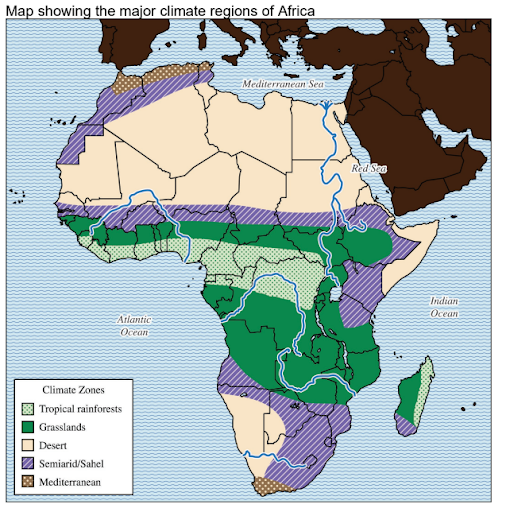
How did Africa’s diverse climate zones, as illustrated in the map, contribute to the development of distinct economic activities across the continent?
Required
1
Which geographic feature, shown in the map, played a significant role in connecting trade between the Sahara to the north and the tropical regions to the south?

Required
1
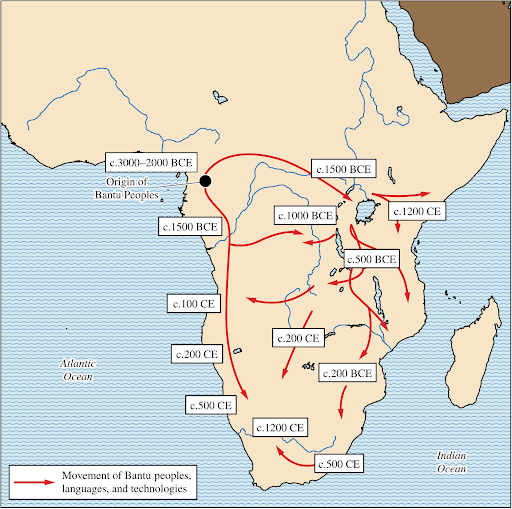
What were the primary effects of the Bantu expansion on the linguistic and cultural diversity of Africa, and how is this connected to the genetic heritage of African Americans?

Required
1
What was a key feature of the complex societies that emerged in ancient East Africa, such as Egypt and Nubia, and how did their interactions shape their development?
Required
1
What is the Nok society, which emerged around 500 BCE in present-day Nigeria, best known for?
Required
3
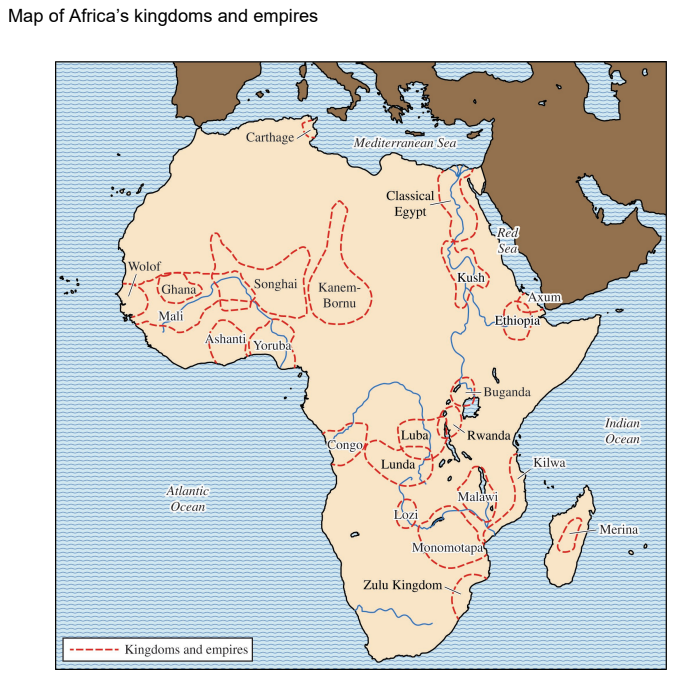
Match each Sudanic empire to its defining feature.
| Draggable item | arrow_right_alt | Corresponding Item |
|---|---|---|
Mali | arrow_right_alt | The largest Sudanic empire, declined due to the shift from trans-Saharan to Atlantic trade. |
Songhai | arrow_right_alt | Known for its wealth in gold mines and being the earliest Sudanic empire to emerge. |
Ghana | arrow_right_alt | Flourished under Mansa Musa, known for his pilgrimage to Mecca and promotion of Islam. |
…

Required
1
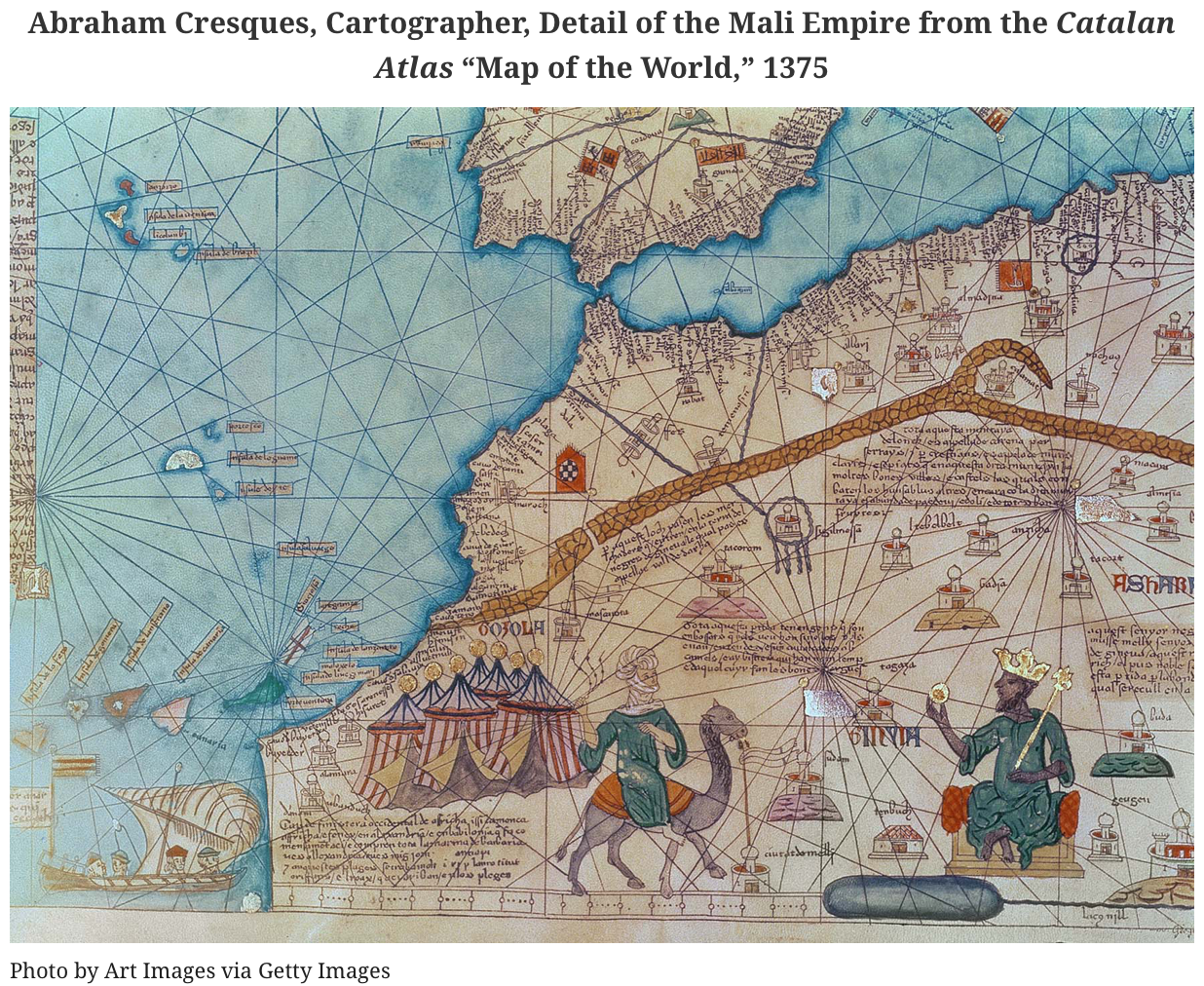
Which of the following best captures the significance of Mansa Musa of the Mali Empire as depicted on the map?
Required
1
A Muslim merchant's journey to the Mali Empire in the fourteenth and fifteenth centuries was most likely motivated by
Required
1
Which of the following best explains the importance of griots to the Mali Empire?

Required
1
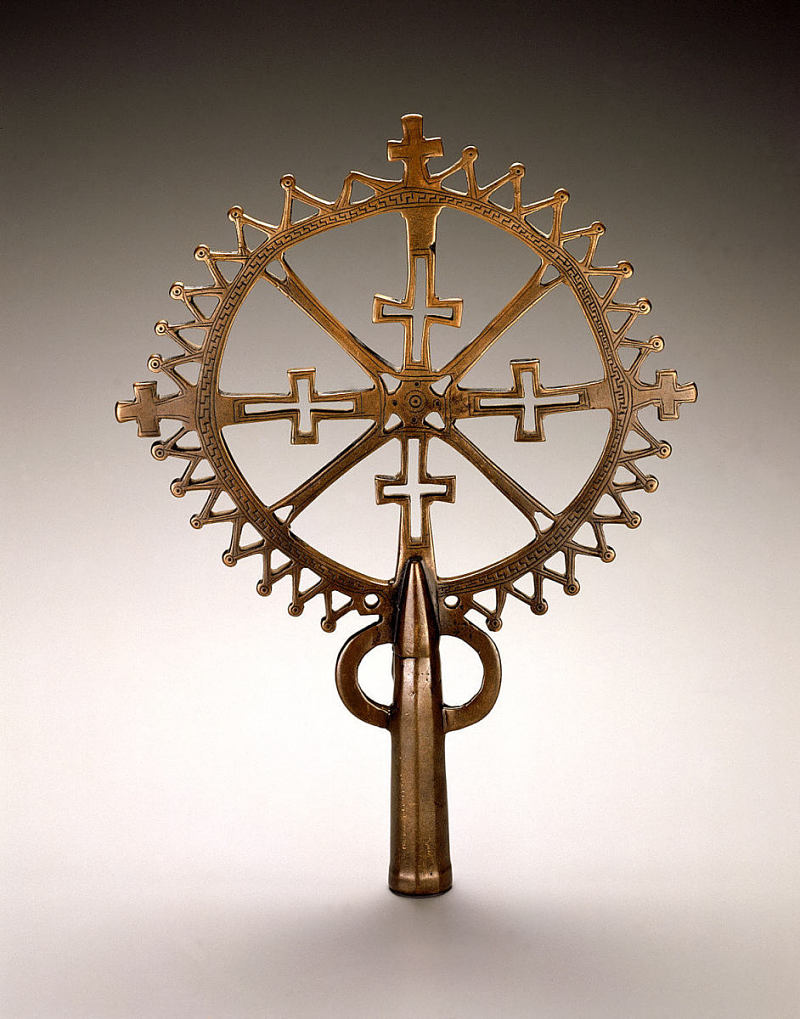
How did processional crosses, like the artifact shown in the image, connect to the cultural and historical significance of the Aksumite Empire?
Required
1
Why is the Aksumite Empire historically significant to Black communities and African American Studies?
![Oya’s Betrayal, Harmonia Rosales, 2020 24”x 36” [Courtesy of Harmonia Rosales]](https://d3rqz33hmpm7kb.cloudfront.net/2024-10-30/5ebbea71395626430eed376b/6721b0cd752dc355ac27f77c_Source15.png)
Required
1
How does the image reflect the syncretic religious practices that developed in West and West Central African societies and were carried forward in the Americas?
Required
1
What role did syncretic religious practices, such as those depicted in the image, play in the lives of African-descended communities in the Americas?

Required
1
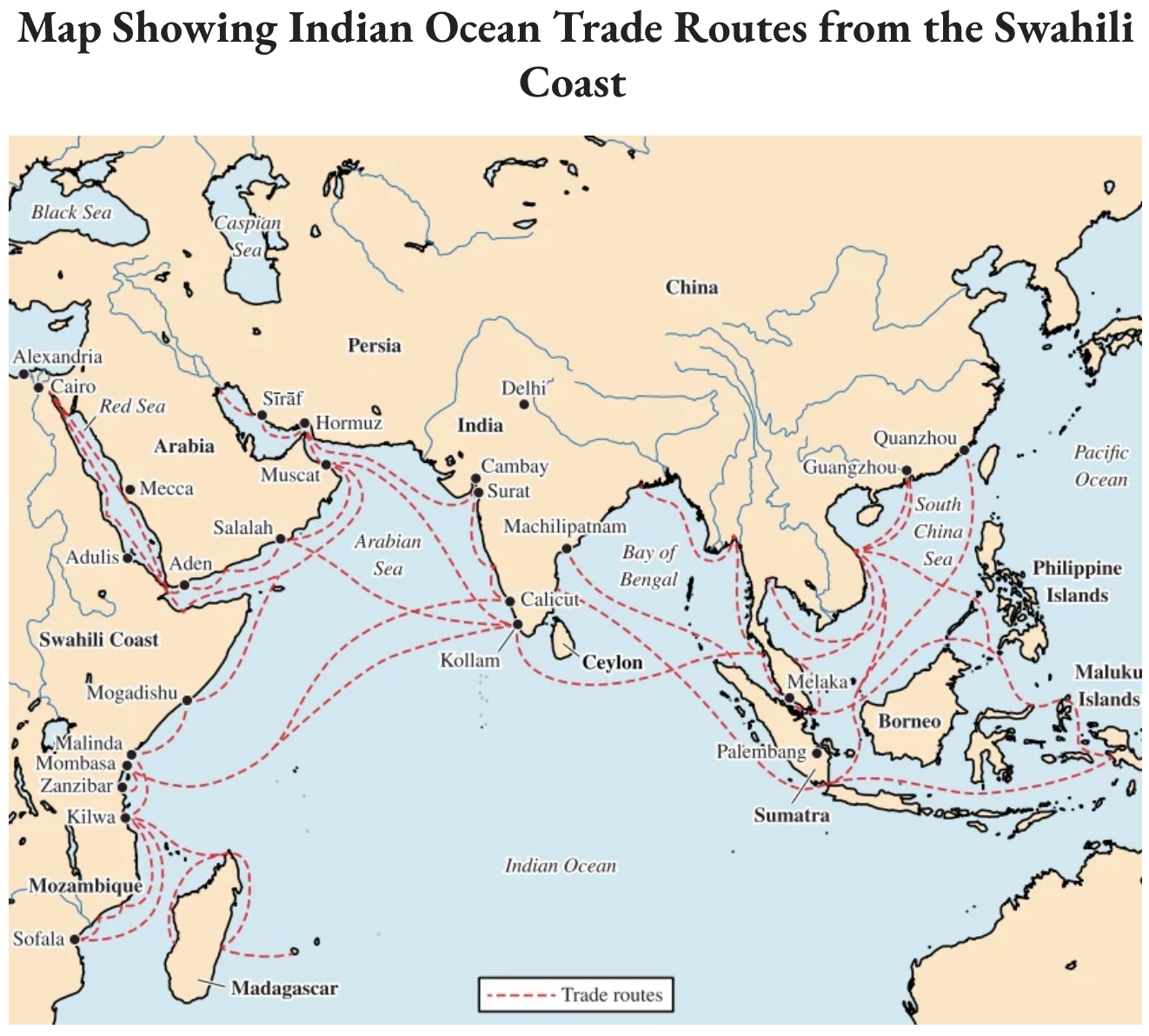
How did geographic and cultural factors contribute to the rise of city-states on the Swahili Coast?
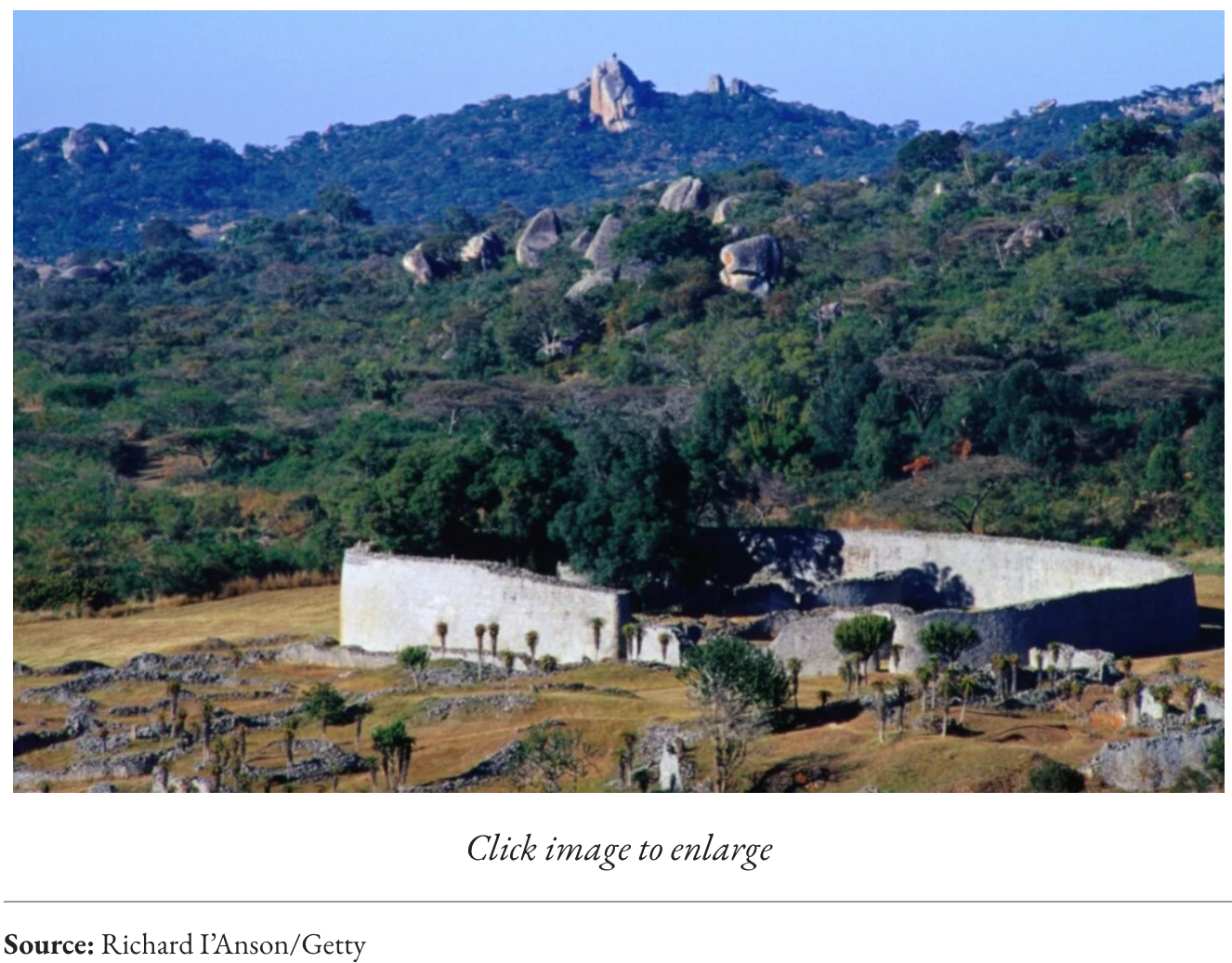
Photographs of Great Zimbabwe’s Walls and Stone Enclosures, Twelfth to Fifteenth Century
Required
1
What was the significance of the stone architecture in Great Zimbabwe?

Required
1
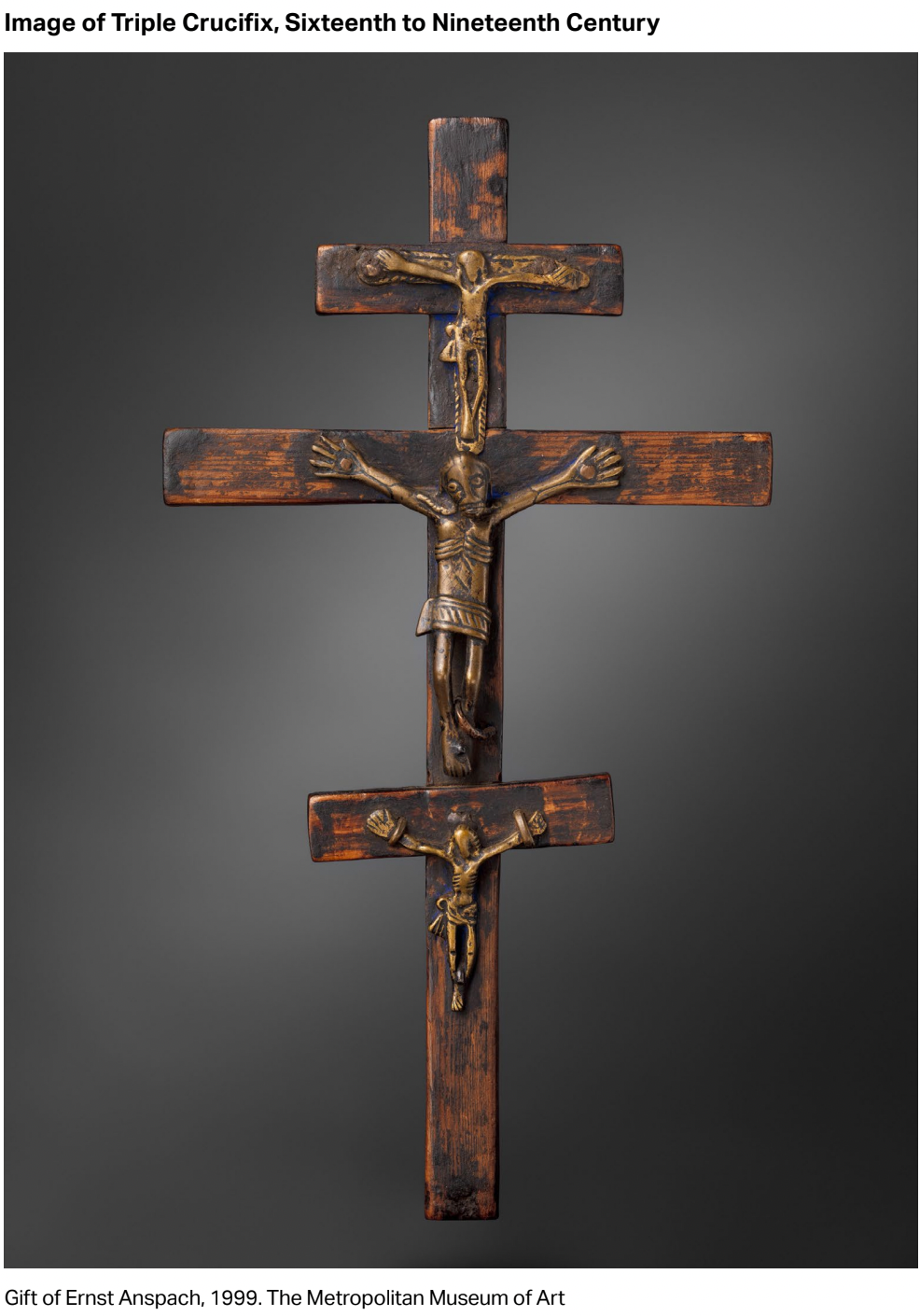
How did the adoption of Christianity affect the Kingdom of Kongo's economy and religious practices?
Required
1
What role did the Kingdom of Kongo play in the transatlantic slave trade?
Required
1
How did Christian cultural practices from the Kingdom of Kongo influence early generations of African Americans?
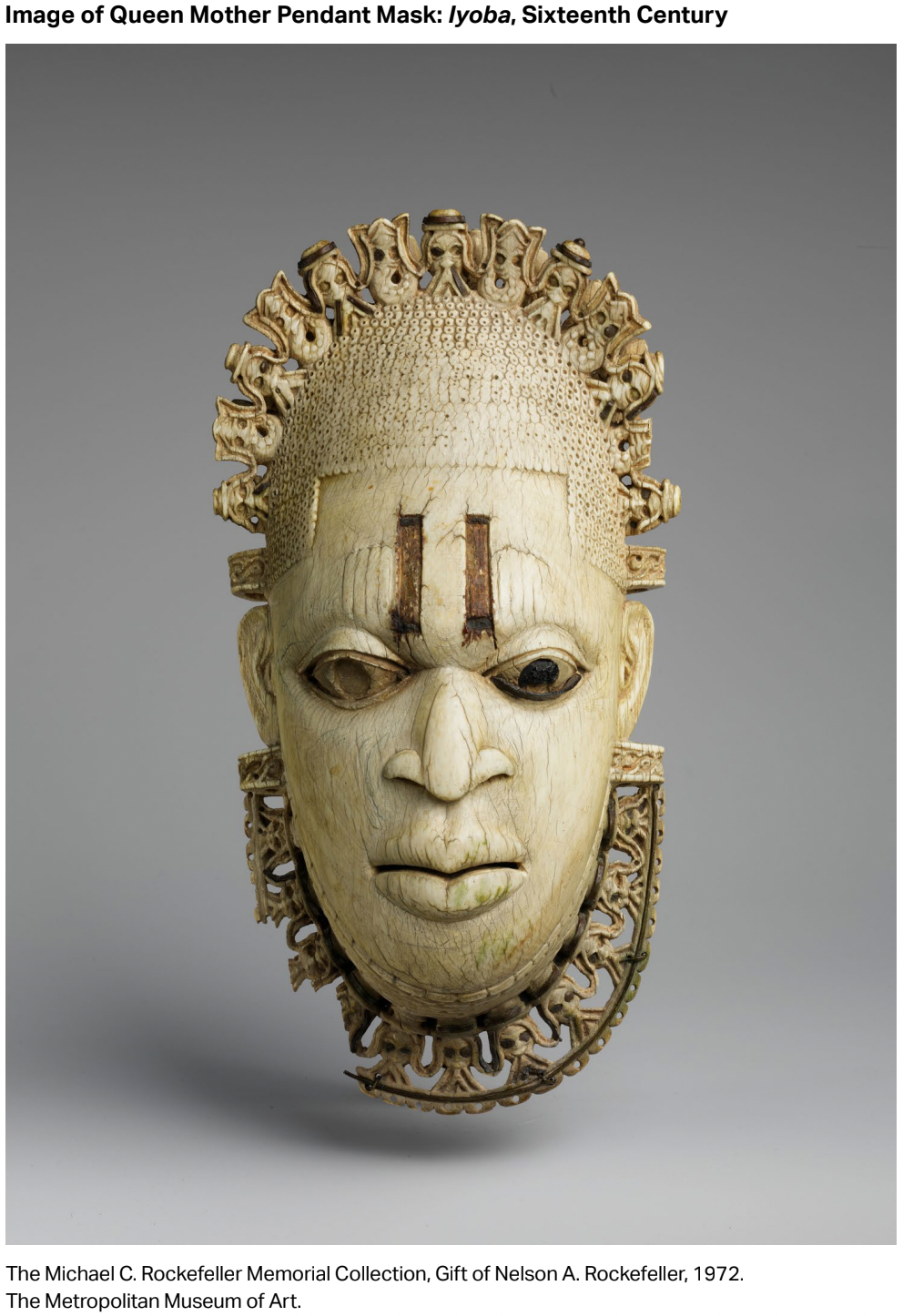
Image of Queen Mother Pendant Mask: Iyoba, 16th century
(The Michael C. Rockefeller Memorial Collection, Gift of Nelson A. Rockefeller, 1972. The Metropolitan Museum of Art.)
Required
1
Which of the following best highlights the political legacies of Queen Idia and Queen Njinga?

Required
1
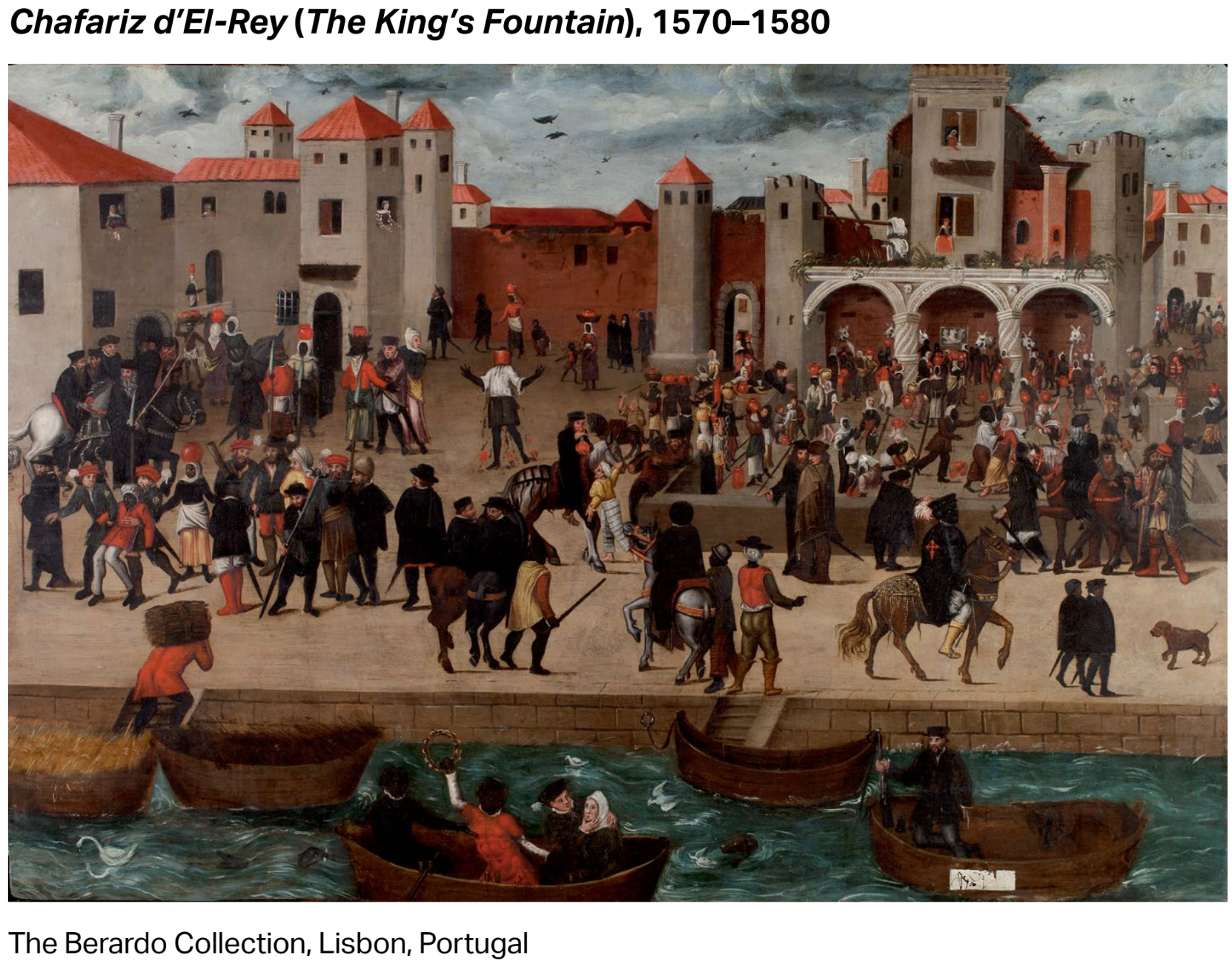
What were some of the reasons Africans traveled to Europe and Europeans traveled to Africa before the onset of the transatlantic slave trade?
Source: Juan Garrido, Petition to Charles V, Holy Roman Emperor and King of Spain, 1538
"I, Juan Garrido, black resident...of this city...appear before Your Mercy and state that I am in need of making a [petition]...a report on how I served Your Majesty in the conquest and pacification of this New Spain, from the time when the Marqués del Valle [Cortés] entered it; and in his company I was present at all the invasions and conquests and pacifications which were carried out, always with the said Marqués, all of which I did at my own expense without being given either salary or allotment of natives...or anything else. As I am married and a resident of this city, where I have always lived; and also as I went with the Marqués... [Cortés] to discover the islands which are in that part of the southern sea [the Pacific] where there was much hunger and privation1; and also as I went to discover and pacify the islands of...Puerto Rico; and also as I went on the pacification and conquest of the island of Cuba with... Diego Velázquez; in all these ways for thirty years have I served and continue to serve Your Majesty-for these reasons stated above do I petition Your Mercy. And also because I was the first to have the inspiration to sow maize here in New Spain and to see if it took; I did this and experimented at my own expense."
'the act of depriving someone of something
Required
1
Which of the following best describes the significance of Juan Garrido as a historical figure in African American Studies?
Required
1
Garrido and Restall provide evidence for which of the following statements about Africans in the Americas during the sixteenth century?
…
Required
1
Which of the following most directly motivated enslaved ladinos to participate in the conquest of the Americas?
Required
1
Which of the following statements best supports the claim that Africans served an important role in colonizing the Americas?

Required
1
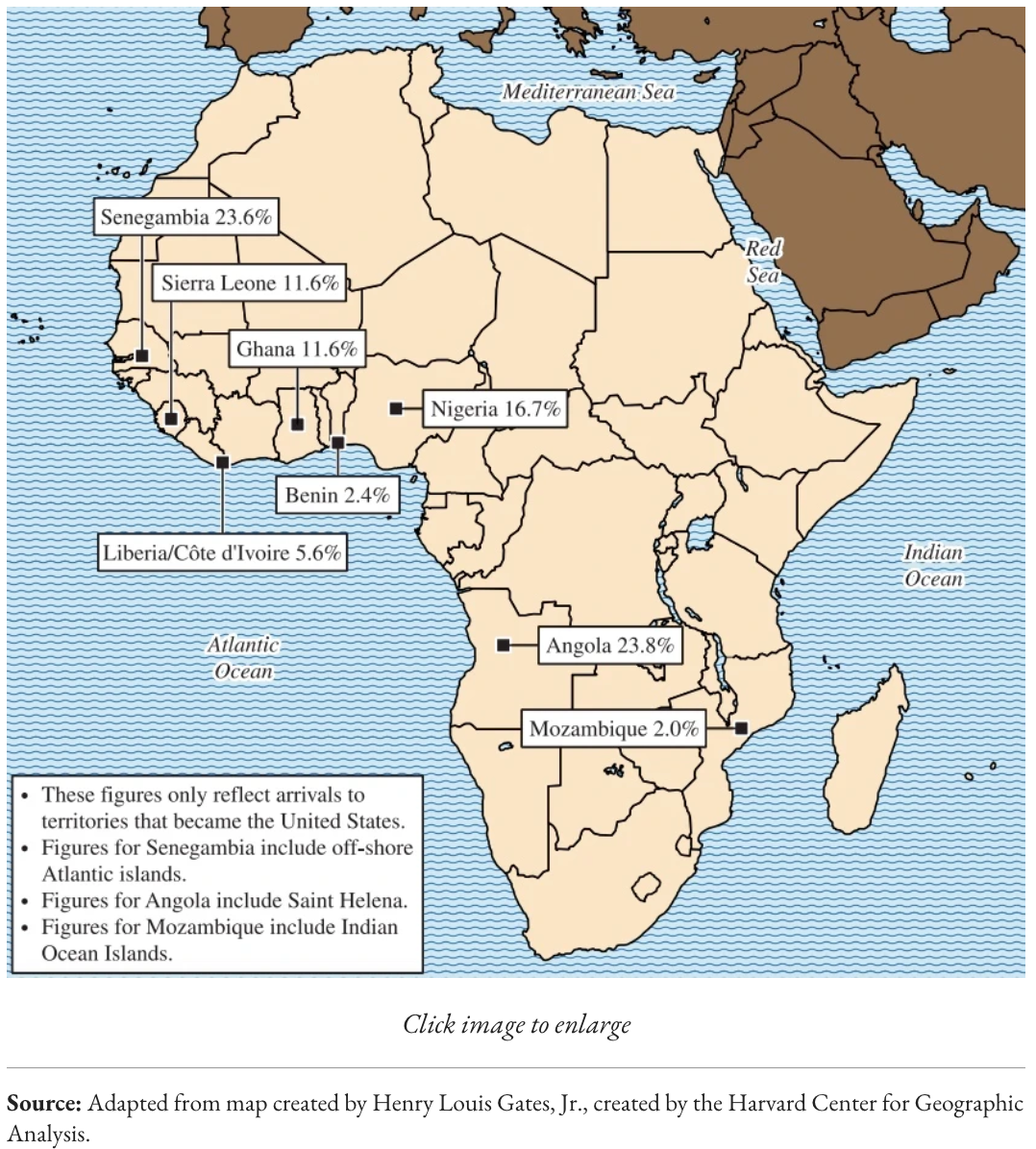
According to the map, which two regions accounted for nearly half of the enslaved Africans transported to mainland North America?
Required
1
How did the diverse origins of enslaved Africans, as shown on the map, influence African American communities in the United States?
Source: Excerpt from Chapter 2 of The Interesting Narrative of the Life of Olaudah Equiano, or Gustavus Vassa, the African. Written by Himself, 1789
"The first object which saluted my eyes when I arrived on the coast was the sea, and a slave ship, which was then riding at anchor, and waiting for its cargo. These filled me with astonishment, which was soon converted into terror when I was carried on board... I was soon put down under the decks, and there I received such a salutation in my nostrils as I had never experienced in my life: so that, with the loathsomeness of the stench, and crying together, I became so sick and low that I was not able to eat, nor had I the least desire to taste any thing. I now wished for the last friend, death, to relieve me; but soon, to my grief, two of the white men offered me eatables; and, on my refusing to eat, one of them held me fast by the hands, and laid me across I think the windlass, and tied my feet, while the other flogged me severely. I had never experienced any thing of this kind before; and although, not being used to the water, I naturally feared that element the first time I saw it, yet nevertheless, could I have got over the nettings, I would have jumped over the side, but I could not..."
Required
1
Based on the excerpt, how does Olaudah Equiano describe his first encounter with the slave ship?
Required
1
How does the excerpt illustrate the experiences of enslaved Africans during the Middle Passage?

Required
1
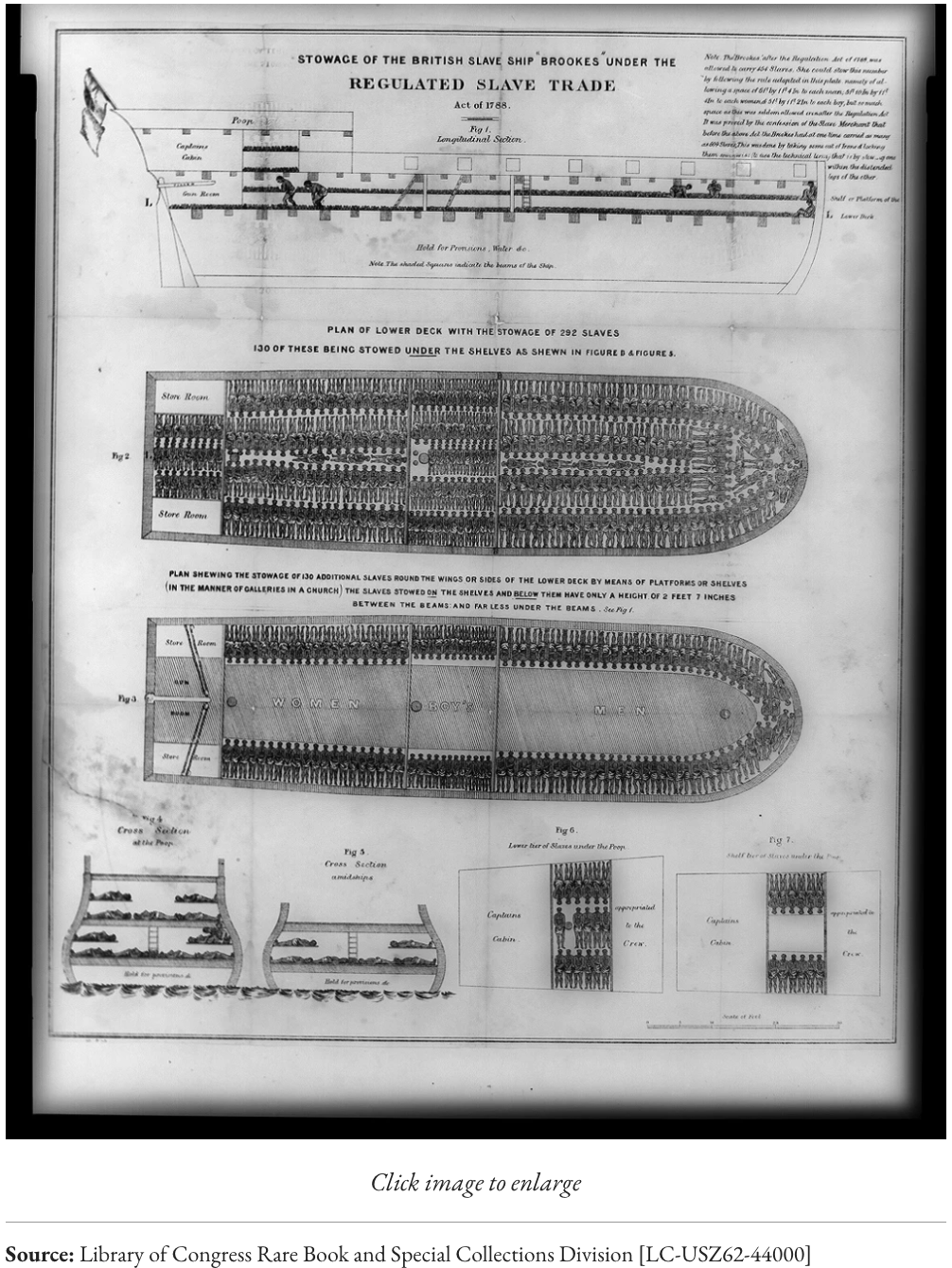
How does the diagram of the British slave ship "Brookes" illustrate the commodification of enslaved Africans during the Middle Passage?
Required
1
What role did African resistance aboard slave ships, such as those depicted in the diagram, play in shaping the abolitionist movement?

Required
1
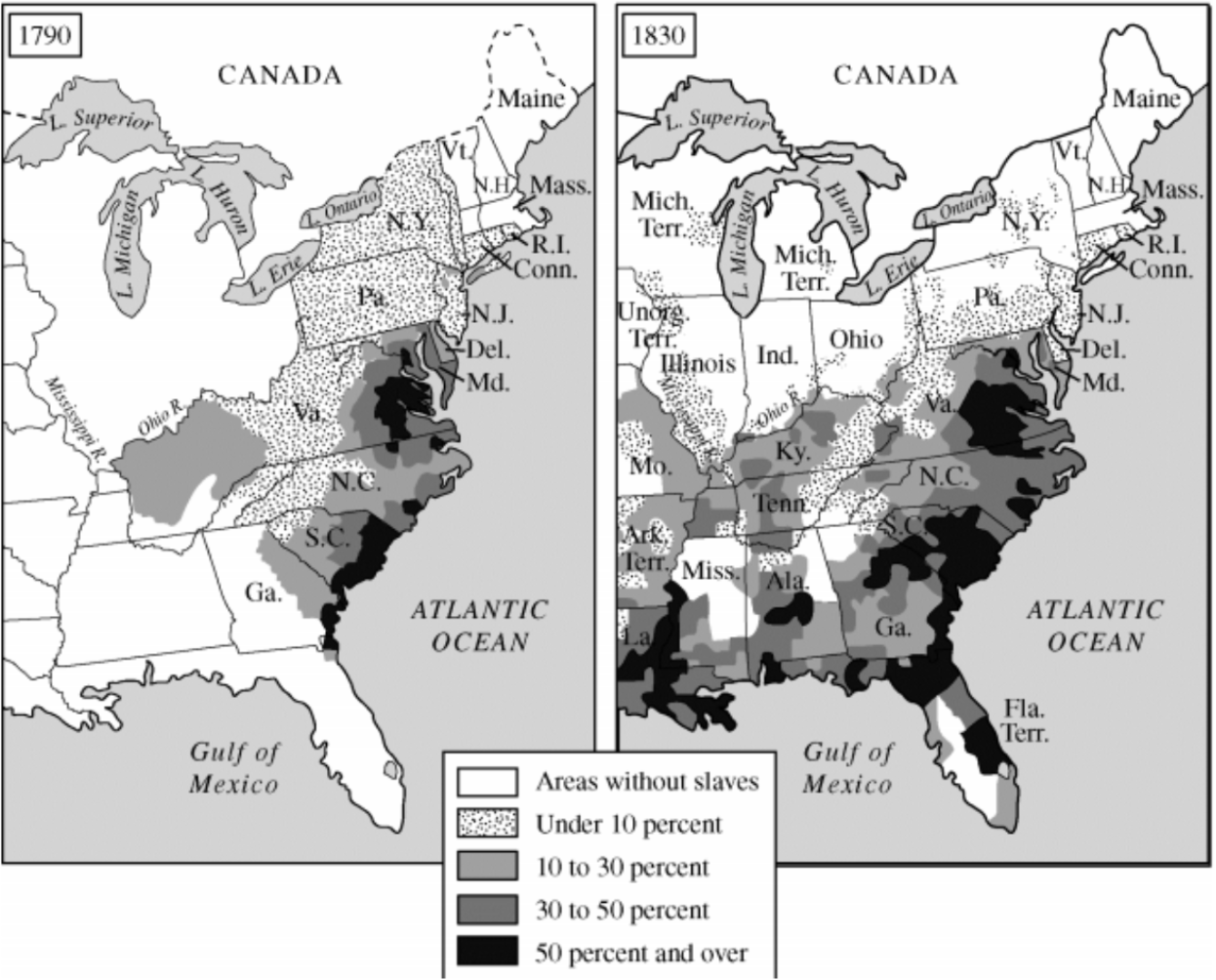
Which of the following best accounts for the change in the map?
Required
1
What was the impact of the growth of the cotton industry on enslaved African American families during the early 1800’s?
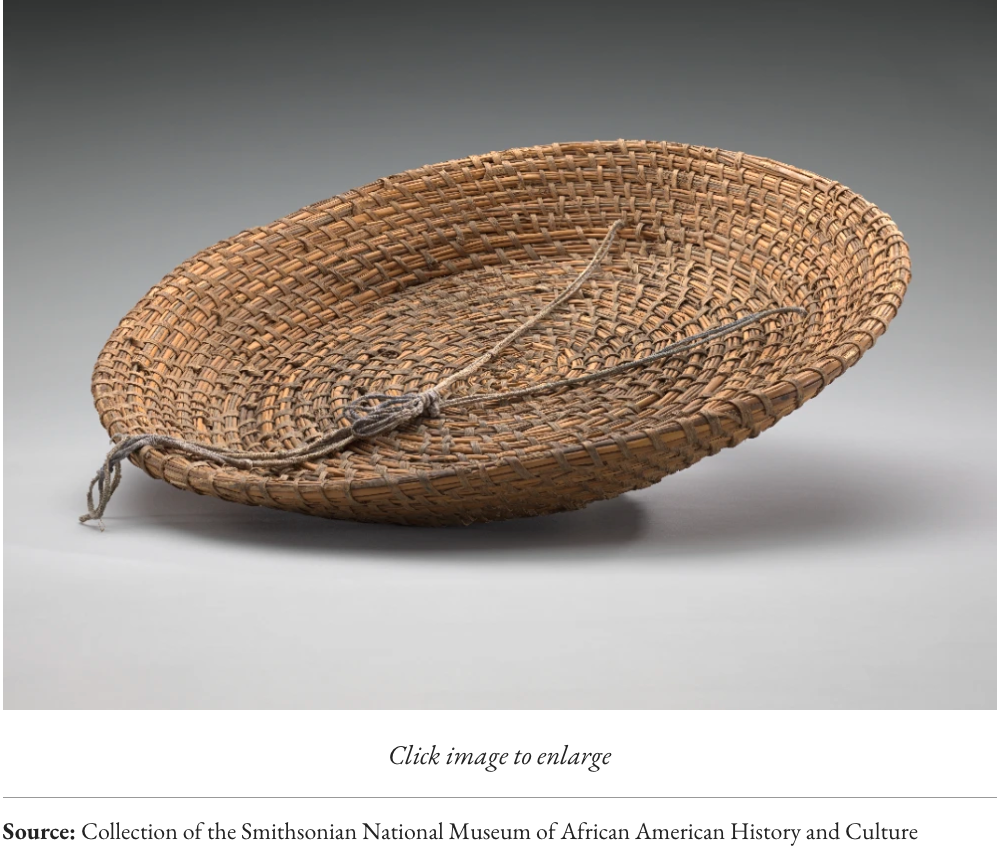
Source: Rice Fanner Basket, Circa 1863
Required
1
How does the image of the woven basket reflect the specialized skills enslaved Africans brought to the Americas?
Required
1
What does the exploitation of skills like basket weaving by enslaved Africans reveal about their roles in the American economy?
Source: Excerpts from the South Carolina Slave Code, 1740
"I. And be it enacted…That all Negroes and Indians, (free Indians in amity with this government, and degrees, mulattoes, and mestizos, who are now free, excepted,) mulattoes or mestizos who now are, or shall hereafter be, in this Province, and all their issue and offspring, born or to be born, shall be, and they are hereby declared to be, and remain forever hereafter, absolute slaves, and shall follow the condition of the mother, and shall be deemed, held, taken, reputed and adjudged in law, to be chattels personal, in the hands of their owners and possessors, and their executors, administrators, and assigns, to all intents, constructions and purposes whatsoever."
Required
1
What legal principle regarding slavery was established by the South Carolina Slave Code of 1740, as illustrated in the excerpt?
Required
1
How did the South Carolina Slave Code reflect the racialized nature of slavery in the colony?

Required
1
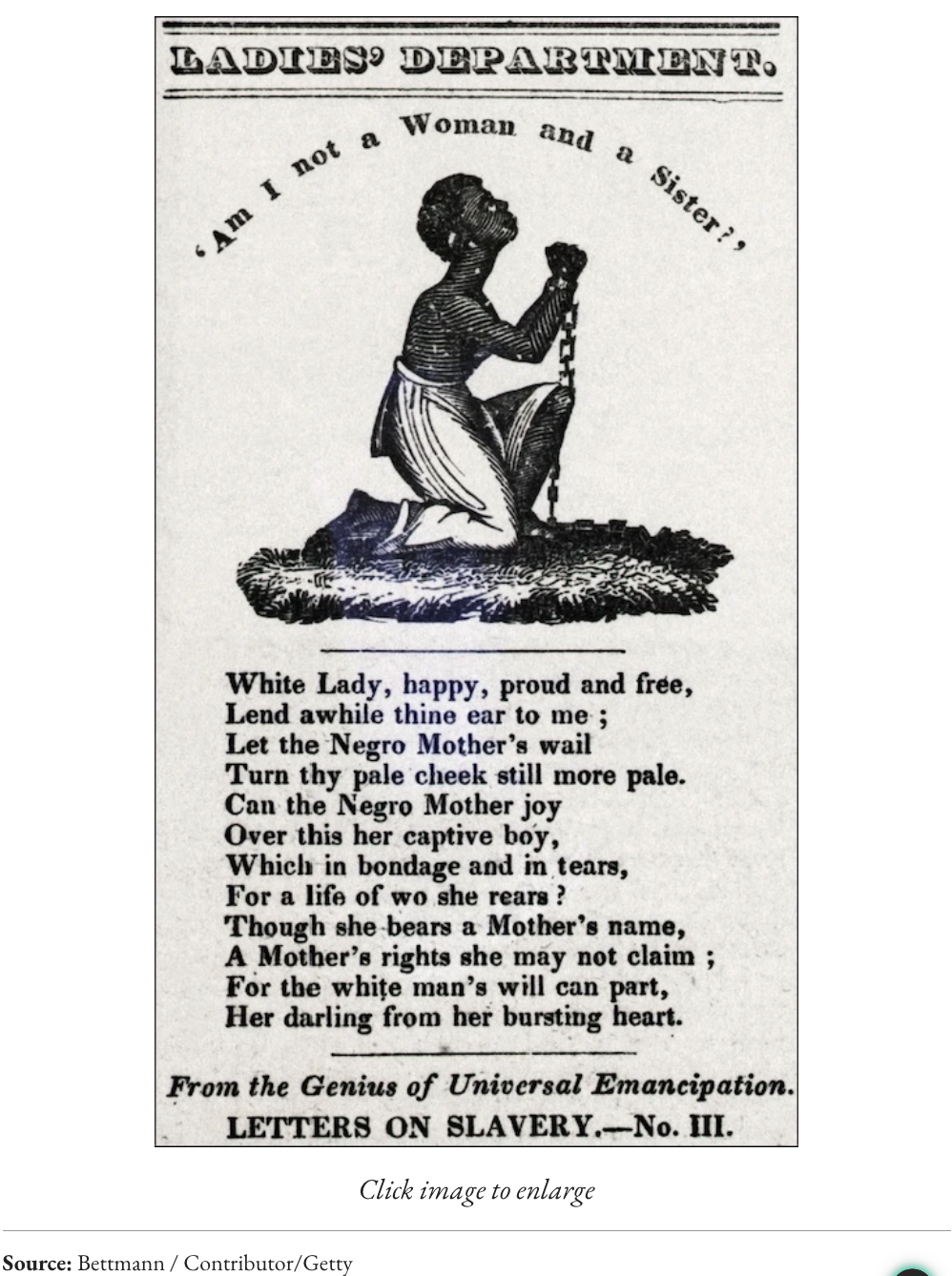
How does the image reflect the impact of the legal principle of partus sequitur ventrem on African American families?
Required
1
What does the phrase "Am I not a Woman and a Sister?" in the image suggest about the role of race and gender in the abolitionist movement?
Source: Excerpt from Chapter 6 of My Bondage and My Freedom by Frederick Douglass, 1855
"This they would sing, with other words of their own improvising—jargon to others, but full of meaning to themselves. I have sometimes thought, that the mere hearing of those songs would do more to impress truly spiritual-minded men and women with the soul-crushing and death-dealing character of slavery, than the reading of whole volumes of its mere physical cruelties. They speak to the heart and to the soul of the thoughtful...
The remark is not unfrequently made, that slaves are the most contended and happy laborers in the world. They dance and sing, and make all manner of joyful noises—so they do; but it is a great mistake to suppose them happy because they sing. The songs of the slave represent the sorrows, rather than the joys, of his heart; and he is relieved by them, only as an aching heart is relieved by its tears. Such is the constitution of the human mind, that, when pressed to extremes, it often avails itself of the most opposite methods. Extremes meet in mind as in matter... Sorrow and desolation have their songs, as well as joy and peace. Slaves sing more to make themselves happy, than to express their happiness."
Required
1
What role did spirituals play in the lives of enslaved African Americans?
…
Required
1
How did enslaved African Americans combine African and local influences in their forms of self-expression?
Source: Selections of letters written to newspapers from Call and Response, 1831–1841
Thomas L. Jennings, Letter in Freedom’s Journal, April 4, 1828
“Our claims are on America; it is the land that gave us birth. We know no other country. It is a land in which our fathers have suffered and toiled. They have watered it with their tears and fanned it with their sighs.
Our relation with Africa is the same as the white man’s is with Europe. We have passed through several generations in this country and consequently we have become naturalized. Our habits, our manners, our passions, our dispositions have become the same. The same mother’s milk has nourished us both in infancy; the white child and the colored have both hung on the same breast. I might as well tell the white man about England, France or Spain, the country from whence his forefathers emigrated, and call him a European, as for him to call us Africans. Africa is as foreign to us as Europe is to them.”
Required
1
How did changing demographics and debates about identity influence the terms African Americans used to identify themselves in the nineteenth century?
Required
1
What was a key effect of the asylum offered by Spanish Florida in the seventeenth and eighteenth centuries?
Required
1
How did the Haitian Revolution influence African diasporic communities and Black political thought?
Required
1
What were some daily forms of resistance demonstrated by enslaved African Americans?
Source: “Why Sit Here and Die” by Maria W. Stewart, 1832
"And such is the powerful force of prejudice. Let our girls possess what amiable qualities of soul they may; let their characters be fair and spotless as innocence itself; let their natural taste and ingenuity be what they may; it is impossible for scarce an individual of them to rise above the condition of servants. Ah! why is this cruel and unfeeling distinction? Is it merely because God has made our complexion to vary?"
Required
1
How does Maria W. Stewart highlight the struggles of free Black women in her speech "Why Sit Here and Die"?

Required
1
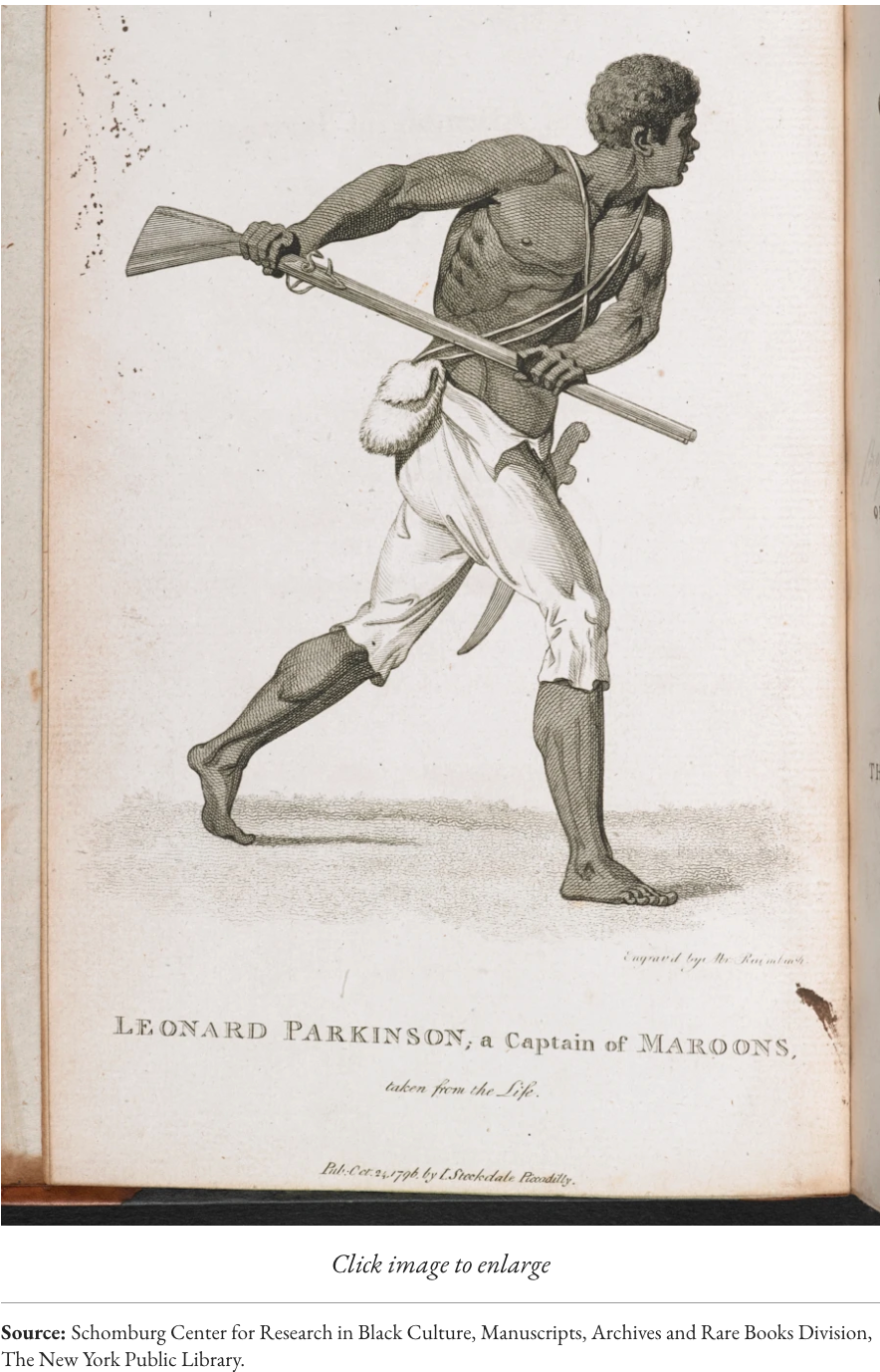
What were the characteristics of maroon communities across the African diaspora?
Required
1
What was the significance of maroon wars in the African diaspora?

Required
1
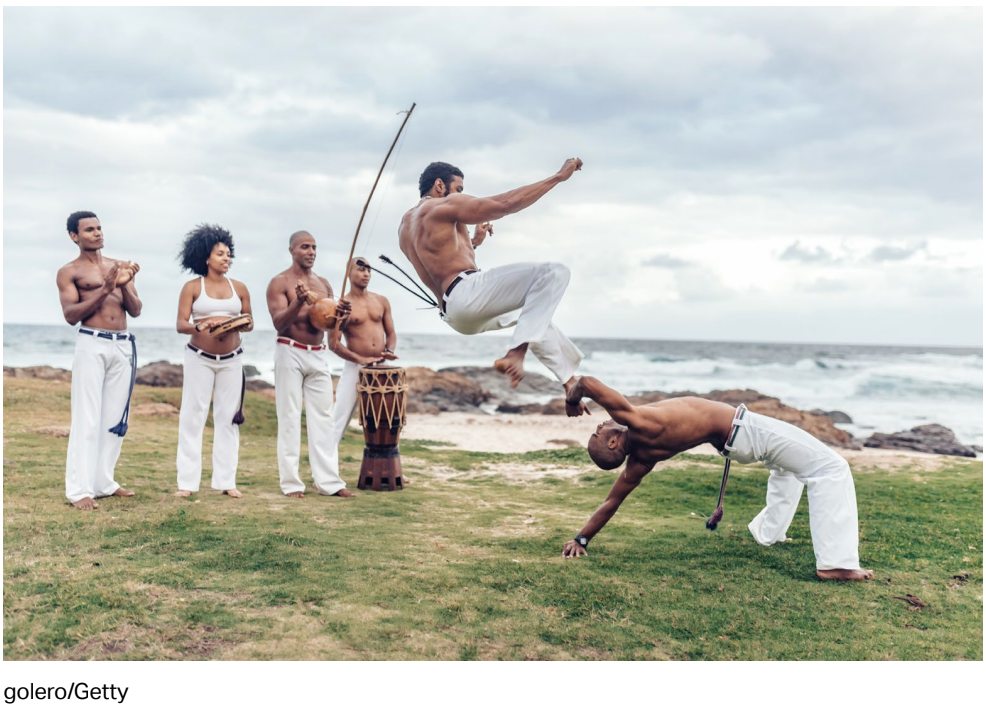
How did the arrival of a massive number of enslaved Africans in Brazil influence cultural practices in the region?
Source: Diary Entry Recounting the Capture of 41 Black Seminoles by Gen. Thomas Sidney Jesup, 1836
"Soon after captured an Indian from whom information was obtained of the situation of a negro village at the head of the lake. Detached Lt. Col. Caulfield with two companies of his battalion, accompanied by Capt. Crossman and Lieut. Chambers, also by an interpreter and the Indian prisoner- Genl. J. moved forward with the remainder of the command about five miles encamped on a beautiful lake – Lieut. Col. Caulfield returned about 9 p.m. with forty one negro prisoners, having surprised the village, captured the greater part of its inhabitants, and burnt the houses and property which they could not bring in."
Required
1
How did Black Seminoles participate in the Second Seminole War (1835–1842) as highlighted in the diary excerpt?
Required
1
How did the expansion of slavery impact relations between Black and Indigenous communities, according to the historical context?
Source: “West India Emancipation” by Frederick Douglass, 1857
"…Let me give you a word of the philosophy of reform. The whole history of the progress of human liberty shows that all concessions have been born of earnest struggle…If there is no struggle there is no progress. Those who profess to favor freedom and yet deprecate agitation, are men who want crops without plowing up the ground, they want rain without thunder and lightning. They want the ocean without the awful roar of its many waters.
This struggle may be a moral one, or it may be a physical one, and it may be both moral and physical, but it must be a struggle. Power concedes nothing without a demand. It never did and it never will…In the light of these ideas, Negroes will be hunted at the North, and held and flogged at the South so long as they submit to those devilish outrages, and make no resistance, either moral or physical…"
Required
1
Which of the following statements best reflects the perspective of those who disagreed with Douglass’ claim in the document above?
Source: “An Address to the Slaves of the United States” by Henry Highland Garnet, 1843
"Brethren and Fellow Citizens:—Your brethren of the North, East, and West have been accustomed to meet together in National Conventions, to sympathize with each other, and to weep over your unhappy condition. In these meetings we have addressed all classes of the free, but we have never, until this time, sent a word of consolation and advice to you. We have been contented in sitting still and mourning over your sorrows, earnestly hoping that before this day your sacred liberty would have been restored. But, we have hoped in vain.
...
Slavery! How much misery is comprehended in that single word. What mind is there that does not shrink from its direful effects? Unless the image of God be obliterated from the soul, all men cherish the love of Liberty. The nice discerning political economist does not regard the sacred right more than the untutored African who roams in the wilds of Congo. Nor has the one more right to the full enjoyment of his freedom than the other. In every man’s mind the good seeds of liberty are planted, and he who brings his fellow down so low, as to make him contented with a condition of slavery, commits the highest crime against God and man.
...
TO SUCH DEGREDATION IT IS SINFUL IN THE EXTREME FOR YOU TO MAKE VOLUNTARY SUBMISSION... The forlorn condition in which you are placed, does not destroy your moral obligation to God. … THEREFORE IT IS YOUR SOLEMN AND IMPERATIVE DUTY TO USE EVERY MEANS, BOTH MORAL, INTELLECTUAL, AND PHYSICAL THAT PROMISES SUCCESS. If a band of heathen men should attempt to enslave a race of Christians, and to place their children under the influence of some false religion, surely Heaven would frown upon the men who would not resist such aggression, even to death."
Required
1
According to Henry Highland Garnet and other supporters of the radical resistance movement, what was considered an acceptable means for enslaved African Americans to achieve freedom?
Source: Harriet Tubman, testimony as compiled in Benjamin Drew's A North-Side View of Slavery, 1856
"I grew up like a neglected weed,-ignorant of liberty, having no experience of it. Then I was not happy or contented: every time I saw a white man I was afraid of being carried away. I had two sisters carried away in a chain-gang, one of them left two children. We were always uneasy. Now I've been free, I know what a dreadful condition slavery is. I have seen hundreds of escaped slaves, but I never saw one who was willing to go back and be a slave. I have no opportunity to see my friends in my native land.¹ We would rather stay [there], if we could be as free there as we are here. I think slavery is the next thing to hell."
1"Native land" refers to Maryland in the United States, where Harriet Tubman was formerly enslaved.
Required
1
Based on the passage, which of the following describes an outcome of escaping to freedom in the North for formerly enslaved people?
Required
1
Which of the following broader historical contexts best explains Tubman's fear of "being carried away"?
Required
1
Tubman's testimony was part of a larger effort by abolitionists to highlight which of the following?
Required
1
What was a significant consequence of the high number of African Americans fleeing enslavement?

Required
1
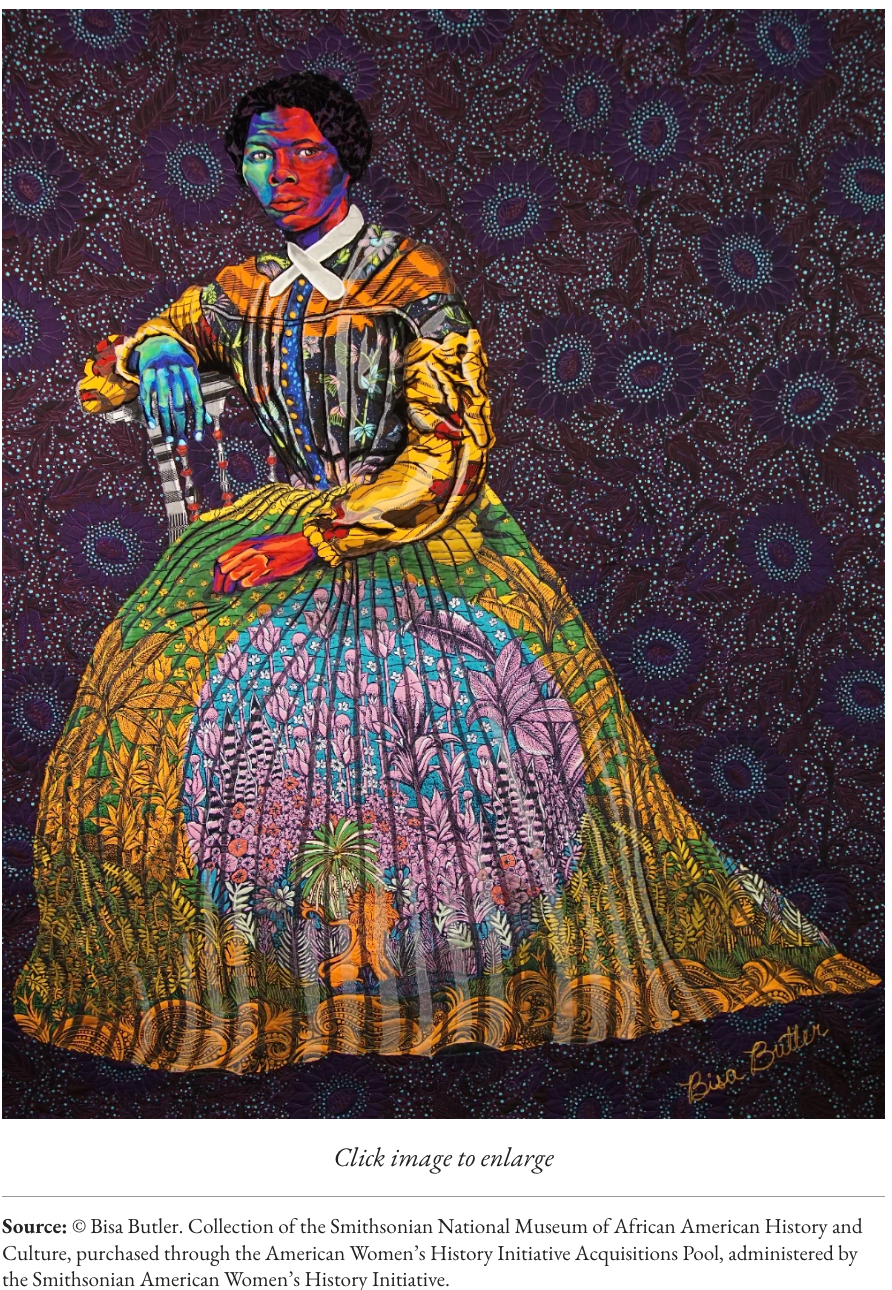
What was the role of the figure depicted in the image during the Civil War?
Required
1
Which of the following best describes the significance of photography and artwork, like Bisa Butler’s quilt, depicted in the image?
Source: Excerpt from Incidents in the Life of a Slave Girl: Written by Herself by Harriet A. Jacobs, 1860 (sections V–VIII, XIV, XXI)
"V.
THE TRIALS OF GIRLHOOD.
DURING the first years of my service in Dr. Flint's family, I was accustomed to share some indulgences with the children of my mistress... But I now entered on my fifteenth year—a sad epoch in the life of a slave girl. My master began to whisper foul words in my ear. Young as I was, I could not remain ignorant of their import. I tried to treat them with indifference or contempt. The master's age, my extreme youth, and the fear that his conduct would be reported to my grandmother, made him bear this treatment for many months. He was a crafty man, and resorted to many means to accomplish his purposes. Sometimes he had stormy, terrific ways, that made his victims tremble; sometimes he assumed a gentleness that he thought must surely subdue. Of the two, I preferred his stormy moods, although they left me trembling. He tried his utmost to corrupt the pure principles my grandmother had instilled. He peopled my young mind with unclean images, such as only a vile monster could think of. I turned from him with disgust and hatred. But he was my master. I was compelled to live under the same roof with him—where I saw a man forty years my senior daily violating the most sacred commandments of nature. He told me I was his property; that I must be subject to his will in all things. My soul revolted against the mean tyranny. But where could I turn for protection? No matter whether the slave girl be as black as ebony or as fair as her mistress. In either case, there is no shadow of law to protect her from insult, from violence, or even from death; all these are inflicted by fiends who bear the shape of men."
Required
1
What does Harriet Jacobs’ description of her experiences as a young enslaved girl reveal about the gendered nature of resistance during slavery?