Specail Senses Inquiry worksheet review

Last updated 3 months ago
41 questions
Describe the structure and function of the accessory structures of the eye, including the eyelid, conjunctiva, lacrimal apparatus, and extrinsic muscles, and explain their roles in protecting and maintaining the health of the eye.
The eye is a fascinating organ that needs protection and support to function effectively, and several accessory structures help maintain its health and well-being. Let’s dive into these important components, making the eye a remarkable and well-guarded window to the world!
1. Eyelids Think of the eyelids as the eye's personal bodyguards. They open and close to shield the eye from dust, light, and potential harm. When you blink, the eyelids also spread tears across the surface of your eye, keeping it moist and comfortable. Plus, they keep those pesky allergens at bay—no one wants to have itchy eyes! 2. Conjunctiva: The conjunctiva is a thin, transparent membrane that covers the front of the eye and the inner surface of the eyelids. It acts like a protective shield that helps keep the eye moist. It also contains cells that produce mucus and tears; think of it as the eye’s very own moisturizer! Additionally, the conjunctiva is important for immune defense, helping to ward off infections. 3. Lacrimal Apparatus: Ever wonder how tears flow when you cry? The lacrimal apparatus is responsible for tear production and drainage. It includes tear glands (called lacrimal glands) that produce tears and little ducts that drain them away. Tears not only express our feelings but also wash away debris and provide nutrients to the eye. So next time you shed a tear, remember, it's part of your eye’s health defense! 4. Extrinsic Muscles: These muscles are the mini powerhouses that control eye movement. They allow your eyes to look up, down, left, and right. This movement is crucial for activities like reading, driving, or simply taking in the sights around you. Keeping our eye muscles strong helps maintain coordination and alignment, which is vital for clear vision. Together, these accessory structures play crucial roles in protecting the eye and promoting its health. They work like a well-organized team, ensuring that our eyes stay safe, moist, and ready to take in the vibrant world around us. Remember, taking care of our eyes is just as important as any other part of our body!
1

What is the primary role of the eyelids?

1

Which of the following structures contribute to keeping the eye moist? (Select all that apply)

1

Explain how the lacrimal apparatus contributes to the health of the eye.

1

The extrinsic muscles of the eye help in protecting it from infections.
Identify and explain the three layers of the eyeball—fibrous tunic, vascular tunic, and nervous tunic—detailing the specific parts such as the sclera, cornea, choroid, ciliary body, iris, lens, pupil, and retina, as well as their respective functions in vision.
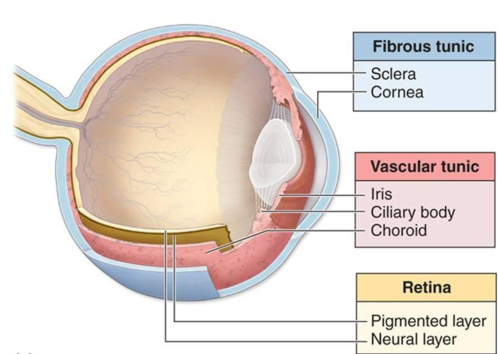
Welcome to the fascinating world of the eyeball, a marvelous organ designed for seeing! Imagine your eye as a high-tech gadget with three amazing layers, each with its own job to do. Let’s dive into these layers: the fibrous tunic, the vascular tunic, and the nervous tunic.
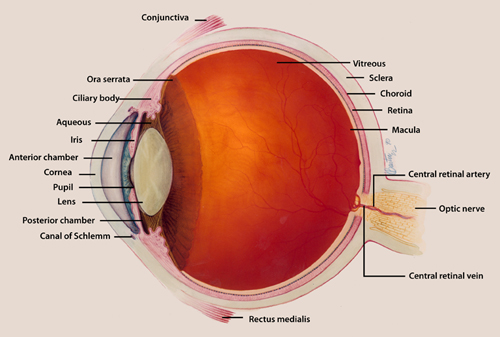
First up is the fibrous tunic. This outer layer of your eye is like a sturdy shield that ensures protection. It’s made up of two main parts: the sclera and the cornea. The sclera is the white part of your eye, giving it strength and shape. The cornea, on the other hand, is the clear front part that helps focus light onto the next layer. Together, they keep your eye safe and start the process of vision! Next, we have the vascular tunic—also known as the uvea. This middle layer is essential for nourishing the eye. It consists of three parts: the choroid, ciliary body, and iris. The choroid is a dark, thin layer filled with blood vessels that supplies nutrients and oxygen to the eye. The ciliary body connects the choroid to the iris and is crucial for changing the shape of the lens (the part that focuses light) to help focus on objects near and far. And don’t forget the iris! This colorful part controls how much light enters the eye through a hole called the pupil. If it’s bright, the iris makes the pupil smaller; if it’s dark, the pupil gets bigger. It’s like a built-in camera setting! Finally, we arrive at the nervous tunic, or the retina! This innermost layer is the true superstar of vision. The retina is packed with light-sensitive cells called rods and cones. The rods help you see in dim light, while the cones let you see colors and fine details. When light hits the retina, these cells convert the light into electrical signals, which travel to the brain through the optic nerve. Your brain then processes these signals, allowing you to see everything around you! So there you have it—the three layers of the eyeball working together to create the gift of sight! Understanding these components not only helps you appreciate how your eyes work but also the complexity of vision itself. Next time you look into someone's eyes, remember all the incredible science happening beneath the surface!
1

What is the main function of the cornea in the eye?

1

Which parts are included in the vascular tunic of the eye? Select all that apply.

1

Describe the role of rods and cones in the retina.

1

The iris is responsible for changing the shape of the lens.

Analyze the process of light refraction and the mechanisms by which the cornea and lens focus light on the retina, including the roles of the ciliary body and iris in adjusting for different lighting conditions.
Light refraction is like a magical bending of light waves, and it plays a crucial role in how we see the world around us! Imagine this: when light rays travel through different materials, like air and water, they slow down and change direction. This bending of light is called refraction. In our eyes, two main parts - the cornea and the lens - work together to focus light on the retina, which is like the film in a camera! First, the cornea does most of the heavy lifting. It's the clear, dome-shaped surface at the front of your eye. As light hits the cornea, it bends significantly due to the cornea’s curved shape and the fact that light travels slower in the denser tissues of the eye. The cornea refracts the light so that it converges towards the center of the eye. Next, the lens of your eye steps in to fine-tune the focus. The lens is flexible and can change shape thanks to the ciliary body, which is a ring of muscles surrounding the lens. When you look at something close, the ciliary muscles contract, allowing the lens to become thicker and bend the light rays even more. When you look at something far away, the ciliary muscles relax, and the lens flattens out, which helps focus the light properly on the retina. But wait, there's more! The iris, which is the colored part of your eye, also plays a crucial role in how we adapt to different lighting conditions. It controls the size of the pupil – the opening that lets light in. When it’s bright outside, the iris makes the pupil smaller to reduce the amount of light that enters the eye, helping to protect the retina. In contrast, in dim light, the iris opens the pupil wider, allowing more light to flood in so we can see better. In summary, the cornea and lens work together like a well-choreographed dance to focus light on the retina, while the ciliary body and iris adjust to different lighting conditions, helping us to see clearly in any environment. So the next time you adjust your gaze, remember the incredible teamwork happening within your eyes to make it possible!
1

What is the primary function of the cornea in the eye?

1

Which of the following parts of the eye help in adjusting the focus for different distances? (Select all that apply)

1

How does the iris adapt to different lighting conditions?

1

The lens of the eye becomes thinner when looking at distant objects.

Evaluate the importance of photoreceptor cells in the retina (rods and cones) in visual perception, including their functions in detecting light and color, and discuss common diseases or disorders that can affect these components of the eye.
Imagine you are a photographer trying to capture the most breathtaking sunset. Your camera needs special types of sensors to pick up the light and colors beautifully, right? Well, think of your eyes as nature's perfect camera! They have special cells called photoreceptors, which live in the retina at the back of your eye. These photoreceptors come in two main types - rods and cones - and they work together like a dynamic duo for your vision. Rods are like the night vision goggles of your eyes, helping you see in low light conditions. They are super sensitive to light and are excellent at detecting movement and shapes but are not able to detect color. So, if you find yourself in a dimly lit room, those rods are hard at work helping you navigate without bumping into things! On the other hand, we have cones, which are the colorful artists of your vision. There are three types of cones in your retina, and each type is sensitive to different colors: red, green, and blue. When light hits these cones, they send signals to your brain that allow you to see and differentiate a vibrant rainbow or the intricate details of a flower's petals. Now, let's talk about why these tiny cells are so important. They allow us to experience the world in breathtaking detail! Without rods and cones, we would miss out on the color of a sunset, the joy of seeing a loved one's smile, or the ability to read our favorite book. However, just like any delicate system, these photoreceptors can be affected by certain diseases. Conditions like retinitis pigmentosa can lead to the gradual loss of rod cells, causing night blindness. This means that the world after sunset might get very dark for someone with this condition. Then there's color blindness, where some cones may not function properly, affecting how someone perceives colors. In summary, rods and cones in the retina are essential for our visual perception, helping us see both in the dark and revel in the colors of life. Protecting our eyes and understanding these diseases can help us maintain our vision for years to come, so keep those sunglasses handy and see the world clearly!
1

What are the two main types of photoreceptors found in the retina?

1

Explain how rods and cones contribute to our ability to see in different lighting conditions.

1

Which of the following conditions can affect the function of photoreceptors?

1

Rods are responsible for detecting color in the visual spectrum.

The Ear
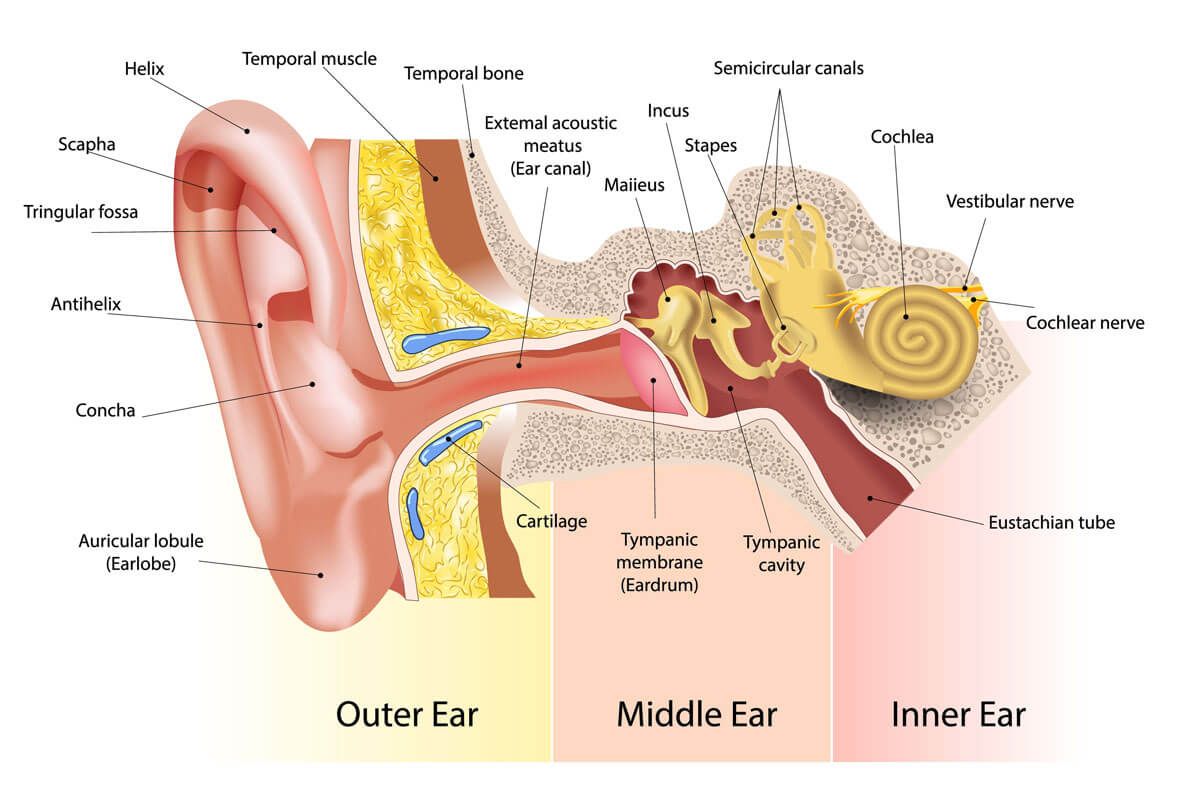
The human ear is a remarkable structure that enables us to hear and maintain balance. It can be divided into three main parts: the outer ear, middle ear, and inner ear, each containing essential anatomical components.
The outer ear includes the auricle, or pinna, which is the visible part of the ear. Its unique shape helps to capture sound waves from the environment. These sound waves travel through the auditory canal, a tube that directs them toward the middle ear. In the middle ear, the tympanic cavity houses the tympanic membrane, commonly known as the eardrum. The eardrum vibrates in response to sound waves, sending these vibrations to three tiny bones known as the auditory ossicles. These bones—malleus (hammer), incus (anvil), and stapes (stirrup)—amplify the sound and transmit the vibrations to the inner ear. Additionally, the auditory (Eustachian) tube connects the middle ear to the throat, helping to equalize pressure. The inner ear contains the semicircular canals and the vestibule, which are vital for balance; they detect changes in head position and movement. Additionally, the cochlea is a spiral-shaped structure containing the Organ of Corti, the sensory organ responsible for converting vibrations into electrical signals that the brain interprets as sound. Understanding the components of the ear helps us appreciate the complexity of hearing and balance, two essential functions for our daily lives.
1

Which part of the ear is primarily responsible for hearing?

  • Inner Ear
  • Outer Ear
  • Middle Ear
  • Hearing
  • Ear Parts
  • Functions
1

What connects the middle ear to the throat?

  • Auricle
  • Auditory Tube
  • Cochlea
  • Eardrum
  • Ear Structures
1

Name the component responsible for balance within the inner ear.

  • Semicircular Canals
  • Vestibule
  • Cochlea
  • Balance
  • Inner Ear Components
  • Functions
1

What amplifies sound in the middle ear?

  • Sound Amplification
  • Auditory Ossicles
  • Eardrum
  • Auricle
  • Functions
  • Middle Ear Structures
1

What are the parts of the human ear?

1

What does the tympanic membrane do?

1

Which structures are found in the inner ear?

1

What is the role of the auditory ossicles?

The senses of taste and smell are critical components of how we perceive flavor and experience the world around us. Two key anatomical structures involved in these senses are the gustatory cells, found in taste buds, and the olfactory bulb, located in the nasal cavity.
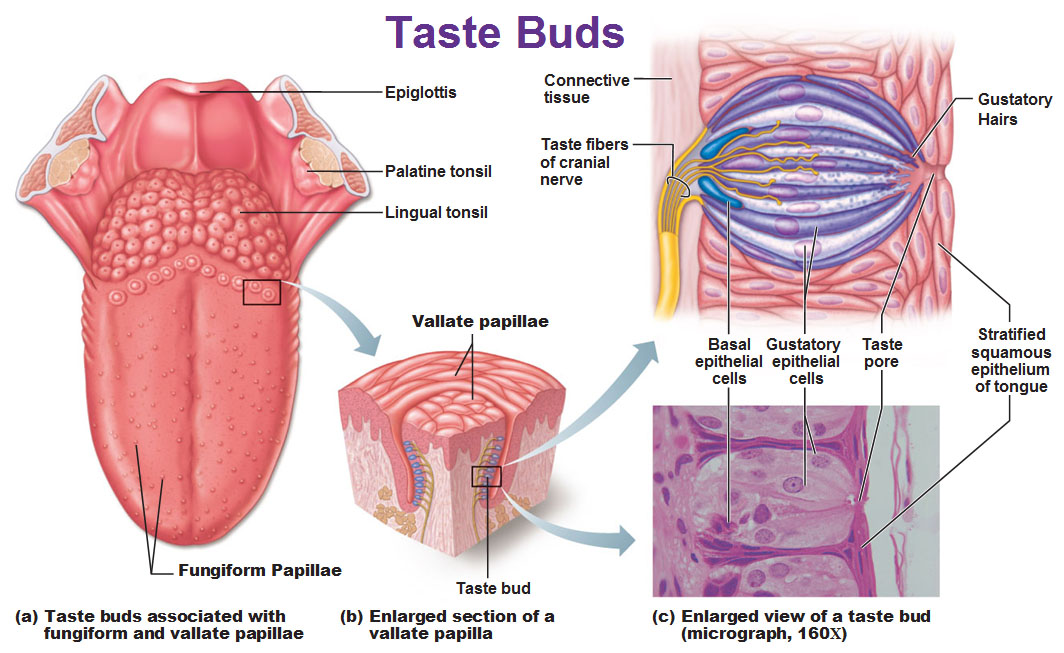
Gustatory cells are specialized sensory cells located within taste buds, which are primarily found on the tongue. Each taste bud consists of about 50 to 100 gustatory cells that detect different taste modalities: sweet, sour, salty, bitter, and umami (savory). When you eat, food molecules dissolve in saliva and interact with these gustatory cells. This interaction sends signals to the brain, allowing you to identify and enjoy various flavors. The ability to taste is essential not only for enjoying food but also for detecting potentially harmful substances, as many bitter tastes indicate toxicity. On the other hand, the olfactory bulb plays a vital role in the sense of smell. Located at the base of the brain, it receives signals from olfactory receptors in the nasal cavity. When you inhale, airborne molecules bind to these receptors, creating a signal that travels to the olfactory bulb. This signals the brain about the specific scent, contributing significantly to your overall perception of flavor. Without our sense of smell, our ability to taste would be greatly diminished, emphasizing the interconnectedness of these two senses. Together, the gustatory cells and olfactory bulb form an intricate system that enhances our sensory experiences, allowing us to savor the deliciousness of food and appreciate the aromas in our environment.
1

What role do gustatory cells play?

1

Where are gustatory cells primarily located?

1

What is the purpose of the olfactory bulb?

1

How does our sense of smell affect taste?

1

What do gustatory cells detect in taste buds?

1

Where are the olfactory bulbs located in the body?

1

How do gustatory cells send signals to the brain?

1

How does the sense of smell influence flavor?

Eye Conditions

Ametropia
  • What it is: Ametropia is a general term for vision problems caused by abnormal refracted light, leading to blurred vision. It includes myopia, hyperopia, and astigmatism.
  • Cause: The eye cannot focus light directly onto the retina.
  • Signs/Symptoms: Blurred vision, headaches, and eye strain.
  • Treatment: Corrective lenses (glasses or contact lenses) or refractive surgery (e.g., LASIK).
Myopia (Nearsightedness)
  • What it is: Myopia is a condition where distant objects appear blurry because light focuses in front of the retina.
  • Cause: The eyeball is too long, or the cornea is too curved.
  • Signs/Symptoms: Difficulty seeing distant objects clearly, squinting, eye strain, and headaches.
  • Treatment: Glasses, contact lenses, or refractive surgery.
Hyperopia (Farsightedness)
  • What it is: Hyperopia is a condition where close objects appear blurry because light focuses behind the retina.
  • Cause: The eyeball is too short, or the cornea is too flat.
  • Signs/Symptoms: Difficulty seeing close objects clearly, eye strain, headaches, and squinting.
  • Treatment: Glasses, contact lenses, or refractive surgery.
Presbyopia
  • What it is: Presbyopia is age-related difficulty in focusing on close objects due to the lens becoming less flexible.
  • Cause: Loss of lens elasticity with age.
  • Signs/Symptoms: Difficulty reading small print, needing to hold reading materials at arm's length, eye strain, and headaches.
  • Treatment: Reading glasses, bifocals, contact lenses, or surgery.
Cataracts
  • What it is: Cataracts are a clouding of the eye's lens, leading to decreased vision.
  • Cause: Aging, injury, or other conditions.
  • Signs/Symptoms: Blurred vision, difficulty seeing at night, sensitivity to light, seeing halos around lights, and frequent changes in eyeglass prescription.
  • Treatment: Cataract surgery to replace the cloudy lens with an artificial one.
Conjunctivitis (Pink Eye)
  • What it is: Conjunctivitis is inflammation or infection of the conjunctiva, causing redness, itching, and discharge.
  • Cause: Viruses, bacteria, allergens, or irritants.
  • Signs/Symptoms: Redness, itching, discharge, tearing, and a gritty feeling in the eye.
  • Treatment: Depends on the cause; may include antiviral or antibiotic eye drops, antihistamines, or avoiding irritants.
Strabismus
  • What it is: Strabismus is a misalignment of the eyes, where they do not look in the same direction at the same time.
  • Cause: Imbalance in the eye muscles, nerve damage, or issues in the brain controlling eye movement.
  • Signs/Symptoms: Misaligned eyes, double vision, and difficulty focusing.
  • Treatment: Glasses, eye exercises, patching, or surgery to correct muscle alignment.
Glaucoma
  • What it is: Glaucoma is a group of eye conditions that damage the optic nerve, often due to increased intraocular pressure.
  • Cause: Increased pressure in the eye, fluid buildup.
  • Signs/Symptoms: Gradual loss of peripheral vision, eye pain, headaches, blurred vision, and halos around lights.
  • Treatment: Medications (eye drops), laser treatment, or surgery to reduce eye pressure.
Macular Degeneration
  • What it is: Macular degeneration is the deterioration of the central part of the retina (macula), leading to vision loss.
  • Cause: Age-related changes in the retina.
  • Signs/Symptoms: Blurred or reduced central vision, difficulty recognizing faces, and seeing straight lines as wavy.
  • Treatment: No cure, but treatments include vitamins, anti-VEGF injections, and laser therapy to slow progression.

Ear Conditions

Vertigo
  • What it is: Vertigo is a sensation of spinning or dizziness, often caused by inner ear problems.
  • Cause: Inner ear issues like benign paroxysmal positional vertigo (BPPV), Meniere's disease, or vestibular neuritis.
  • Signs/Symptoms: Sensation of spinning, dizziness, nausea, vomiting, and balance issues.
  • Treatment: Vestibular rehabilitation, medications, or repositioning maneuvers like the Epley maneuver.
Tinnitus
  • What it is: Tinnitus is ringing, buzzing, or other noises in the ears not caused by an external sound.
  • Cause: Exposure to loud noise, ear infections, earwax buildup, or age-related hearing loss.
  • Signs/Symptoms: Ringing, buzzing, or hissing sounds in the ears.
  • Treatment: Addressing the underlying cause, sound therapy, hearing aids, or medications.
Middle Ear Infection (Otitis Media)
  • What it is: Otitis media is an infection of the middle ear, causing pain, fluid buildup, and sometimes hearing loss.
  • Cause: Bacterial or viral infection.
  • Signs/Symptoms: Ear pain, fever, hearing loss, and fluid drainage from the ear.
  • Treatment: Antibiotics for bacterial infections, pain relievers, and sometimes surgical drainage.
Deafness
  • Conductive Deafness:What it is: Hearing loss caused by problems in the outer or middle ear that block sound transmission. Cause: Ear infections, earwax buildup, or damaged eardrum. Signs/Symptoms: Muffled hearing, difficulty hearing soft sounds. Treatment: Removing earwax, treating infections, or surgery.
  • Sensorineural Deafness:What it is: Hearing loss caused by damage to the inner ear or auditory nerve. Cause: Aging, noise exposure, or genetic factors. Signs/Symptoms: Difficulty hearing, especially in noisy environments, and trouble understanding speech. Treatment: Hearing aids, cochlear implants, or assistive listening devices.
1

What are common symptoms of ametropia?

1

What is the cause of myopia?

1

Which treatments are used for hyperopia?

1

Which sign is associated with presbyopia?

1

What is Ametropia?

1

What is myopia?

1

What causes hyperopia?

1

Which is a symptom of cataracts?

dalksjdlfiwelkcsld
Required
1