Unit 6 - Item 1
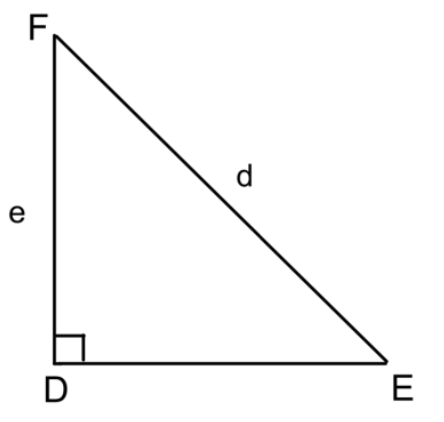
Use the given triangle to identify and explain the following:
Unit 6 - Item 1
Use the given triangle to identify and explain the following:
Identify the sin E, cos F, cos E and sin F. Explain your process for finding each ratio.
Unit 6 - Item 2
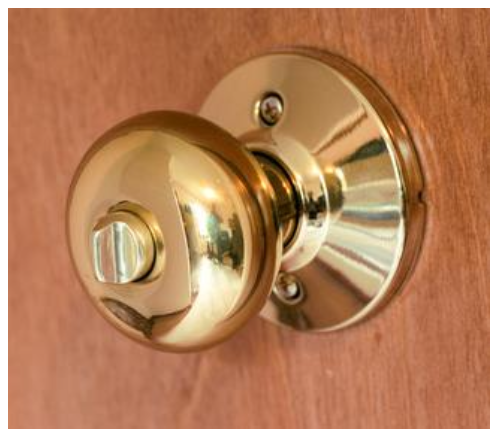
Sophia is trying to open a door by turning the doorknob.
Part A
A certain doorknob must turn 40 degrees in order to open a door. What is this angle measurement as a radian measure?
Part B
If a similar doorknob must turn 5𝜋/18 in order to open a door, what would be the measurement of the turn in degrees?
Unit 6 - Item 3
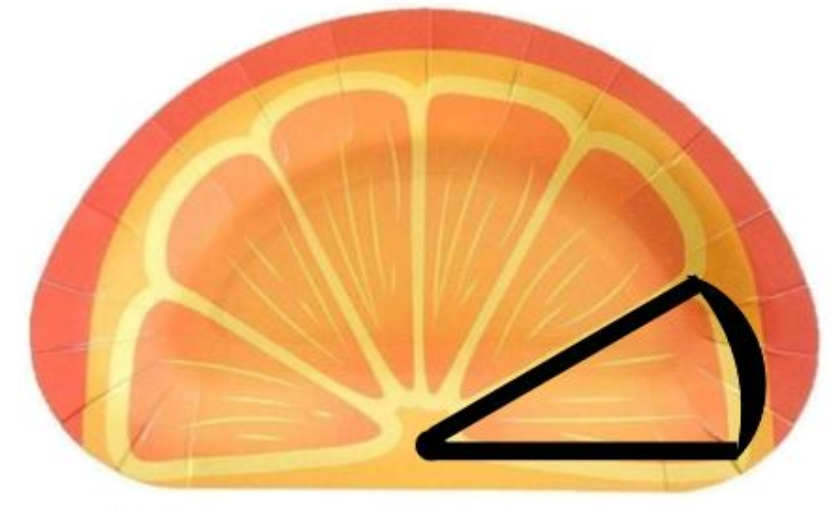
In a tangerine, a carpel is a segment of juice-filled membranes. If you were to slice a tangerine,
these can be seen. Angela is examining a tangerine slice which has 12 equal carpels with
radius of 1 inch. Half of the slice is shown above. She decides to investigate using what she has
learned in her Geometry class.
Explain how Angela can find the length of the arc shown above. Round your answer to the nearest thousandth.
Unit 6 - Item 4
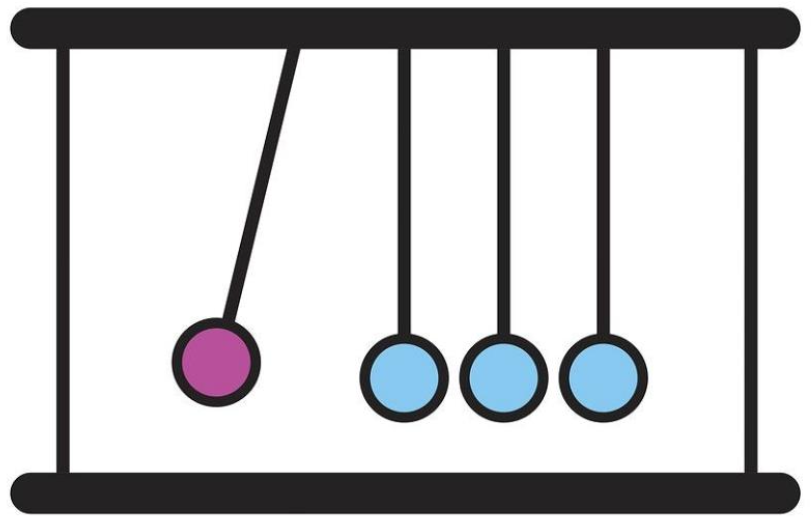
A pendulum swings as part of a set called Newton’s Cradle, as shown in the figure below. Given that the pink marble is being pulled at an arc 2 inches from its neutral position, approximately as shown below, answer the following.
Part A
If the length of the string is 8 inches, what is the measure of the angle of displacement in radians.
Part B
Form a hypothesis regarding the impact of the length of the string on the angle of displacement. Find the angle of displacement if the string is lengthened to 10 inches and shortened to 5
inches. Use this information to confirm or contradict your hypothesis and draw conclusions.
Part C
Given a string of 8 inches, compare the angle of displacement if the marble is pulled in an arc 7 inches from its neutral position and 1 inch from its neutral position. Compare these measurements to determine the impact of the arc length on the angle measurement.
Unit 6 - Item 5
Adasia and her sister Selene have a few errands to run. Use the grid below to help answer the following, assuming that their home is located at the origin:
Part A
Selene left home and traveled 1 mile at a heading of north 60 degrees east, identify her location as coordinates with respect to the origin. What would be the reference angle in this case?
Unit 6 - Item 6
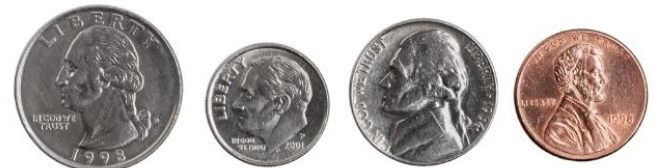
The U.S Mint produces all U.S coins. The four most common currencies are represented above. Use the above picture to answer the following questions. Assume the faces of all U.S coins follow the mathematical definition of a circle.
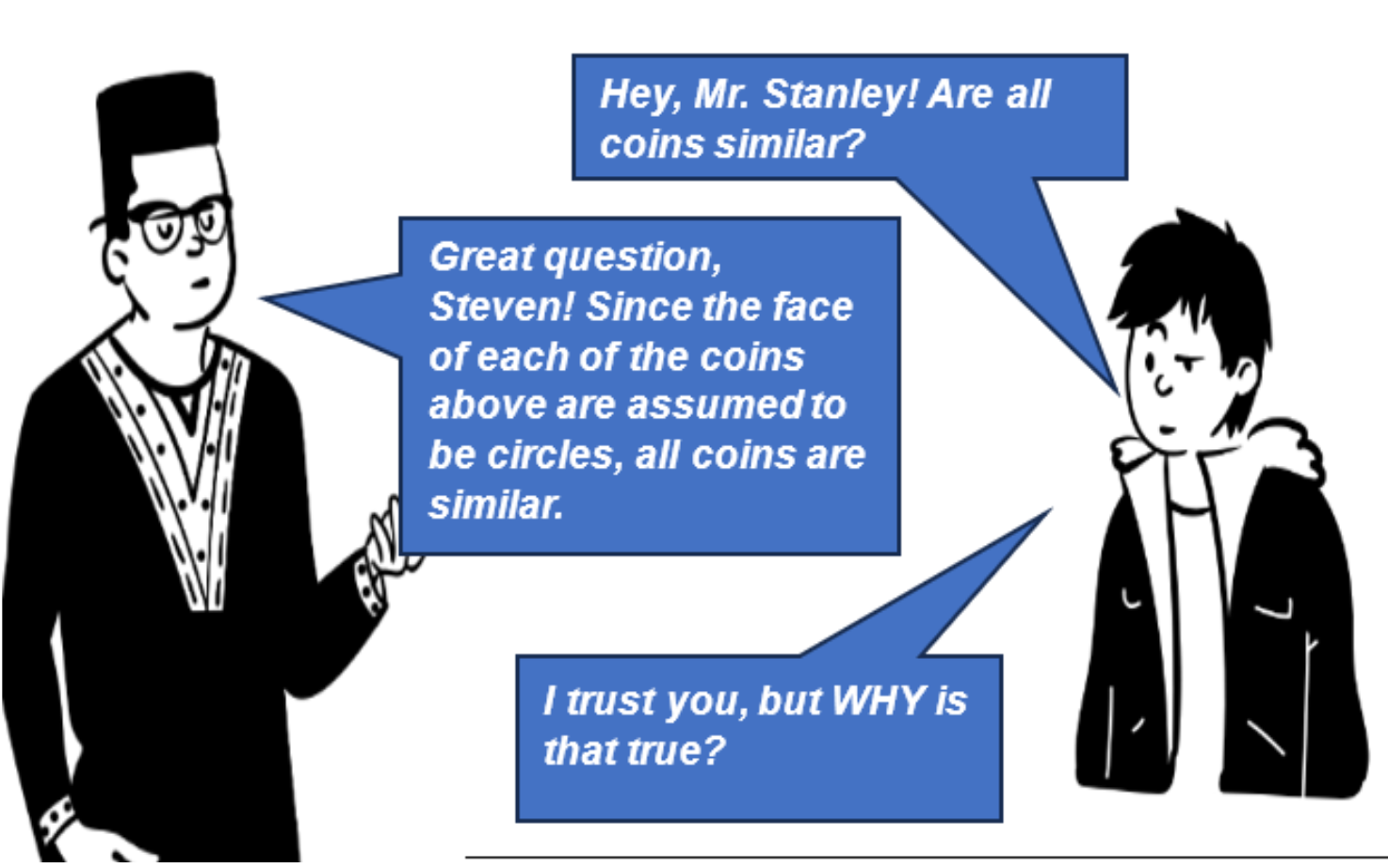
Part A:
Mr. Stanley knows he can count on you to provide mathematical reasoning for why all coins are similar. Provide an explanation to Stephen and your classmates why all coins
are similar.
Part B:
Find the following measurements: (measurements are rounded to the nearest hundredth)
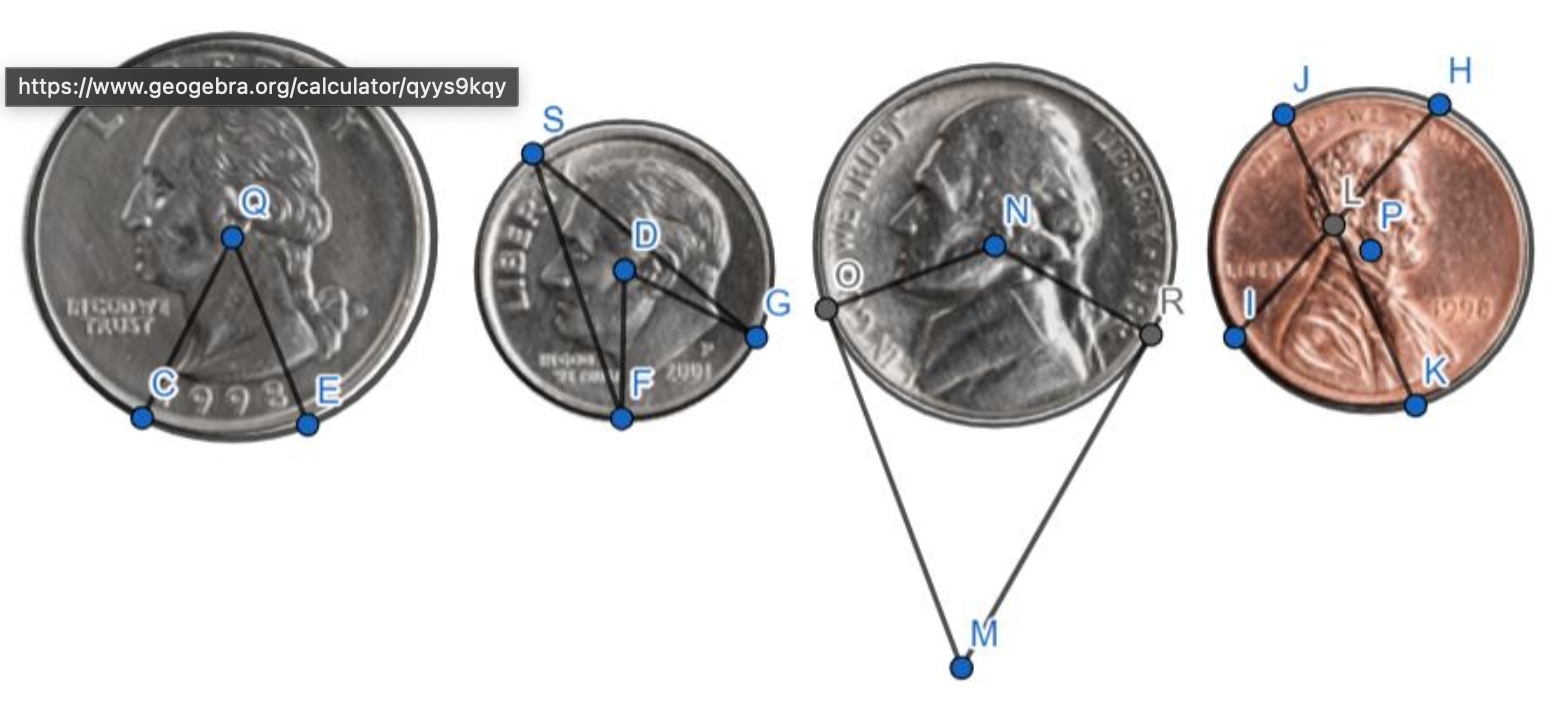
Unit 6 - Item 7
You are on the board for a local non-profit. You have been tasked with creating a logo and
printing it on T-shirts for an upcoming event.
Part 1: Create a logo using a minimum of two circles. Using graph paper or a digital geometric tool, such as GeoGebra or Desmos, create a visual of the logo. Write the equation for the circles
you used in standard form.
Part 2: Suppose the printing company needs to have the logo reflected for printing purposes. If the logo is reflected over the x axis, what are the new equations of the circles?
Unit 6 - Item 8
An artist is creating a drawing of an ice cream cone.
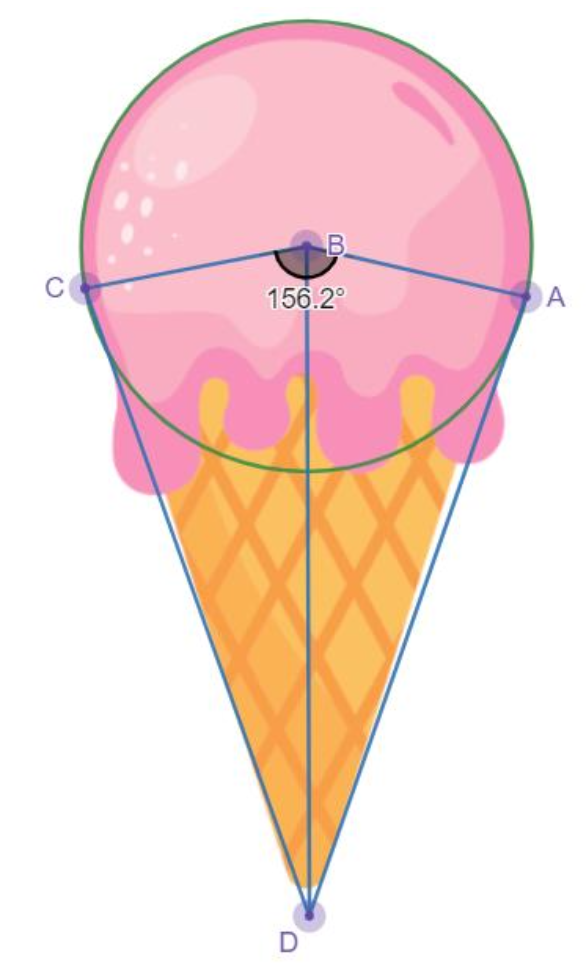
Part A
Using the image of the ice cream cone, determine the angle of the cone (Angle CDA) for the artist to use in the drawing.
Part B
To support the artist’s accuracy of the drawing, prove that BD is the angle bisector of <CDA in the image.
Unit 6 - Item 9
Part A
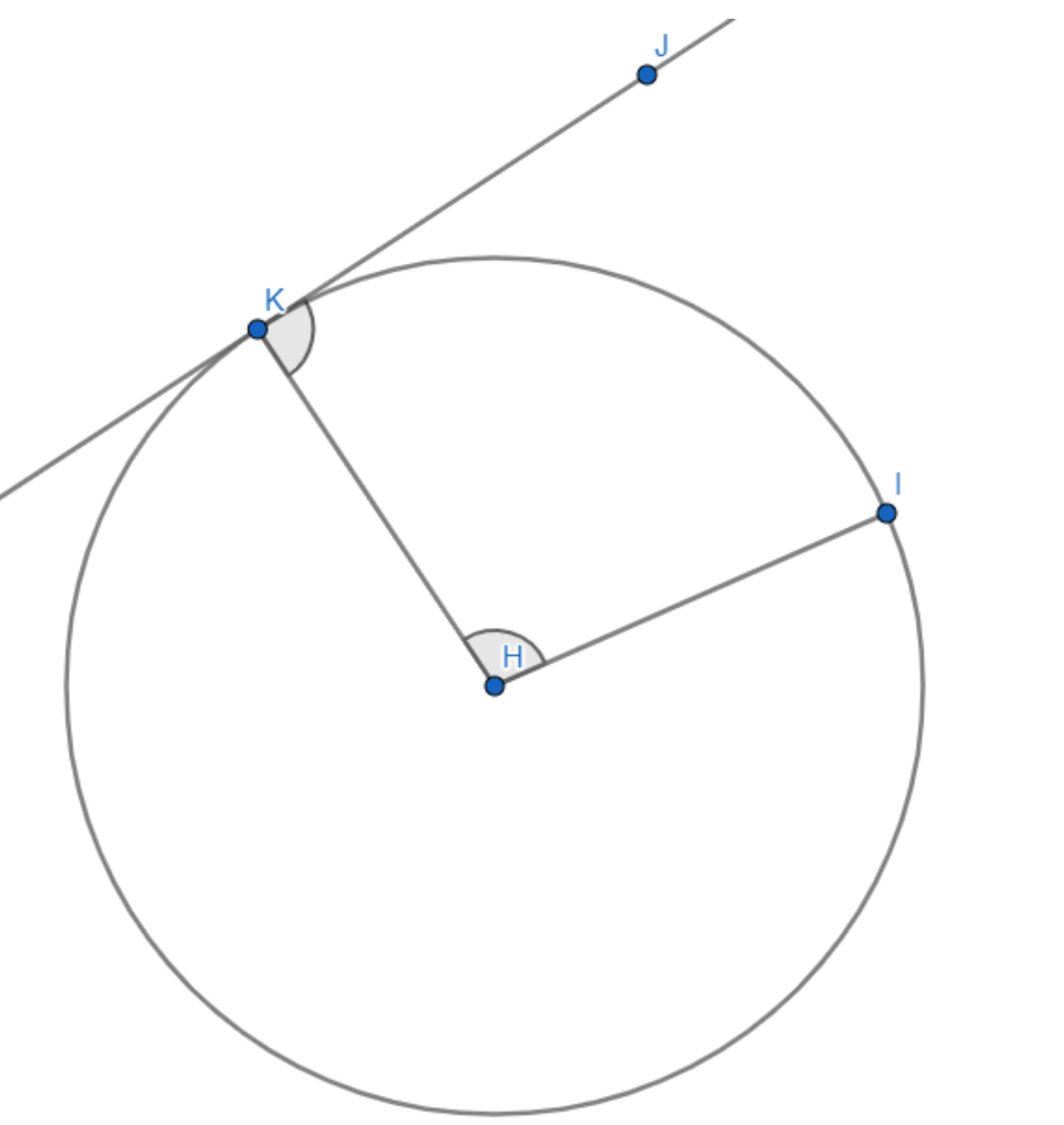
How is an angle formed by a radius intersecting a tangent line at the point of tangency different from a central angle?
Part B
How is an angle formed by a radius intersecting a tangent line at the point of tangency similar to a central angle?
Part C
Create your own circle problem using graph paper or a digital geometric tool. Choose at least two theorems and/or angle relationships listed below to justify and prove using the circle drawn:
Unit 6 - Item 10
The mayor of your town has hired an urban planner to design an innovative roundabout. The urban planner will plan the actual roadway, but the planner has requested you support them with the center of the roundabout.
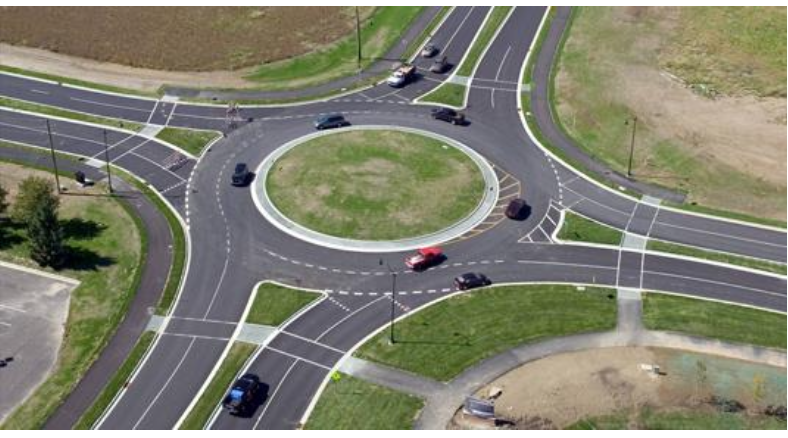
Decide on a radius for the center of the roundabout. This should be a realistic radius for a roundabout.
Using a reasonable scale, use a compass to draw a circle with the specified radius on graph paper.
Draw radii from the center of the circle to create several sectors within the circle.
Label the central angles and use the angle relationships to calculate the measure of each angle in degrees.
Calculate the arc lengths of each sector using the formula arc length = (central angle measure/360) x (2πr).
Calculate the area of each sector using the formula area = (central angle measure/360) x πr².
Write equations for each sector by finding the coordinates of the endpoints of the arc and using the distance formula to find the equation of the chord.
Use the equation of the circle and the equations of the sectors to graph the circular garden.
Write a short report explaining the design choices and the mathematical calculations used.
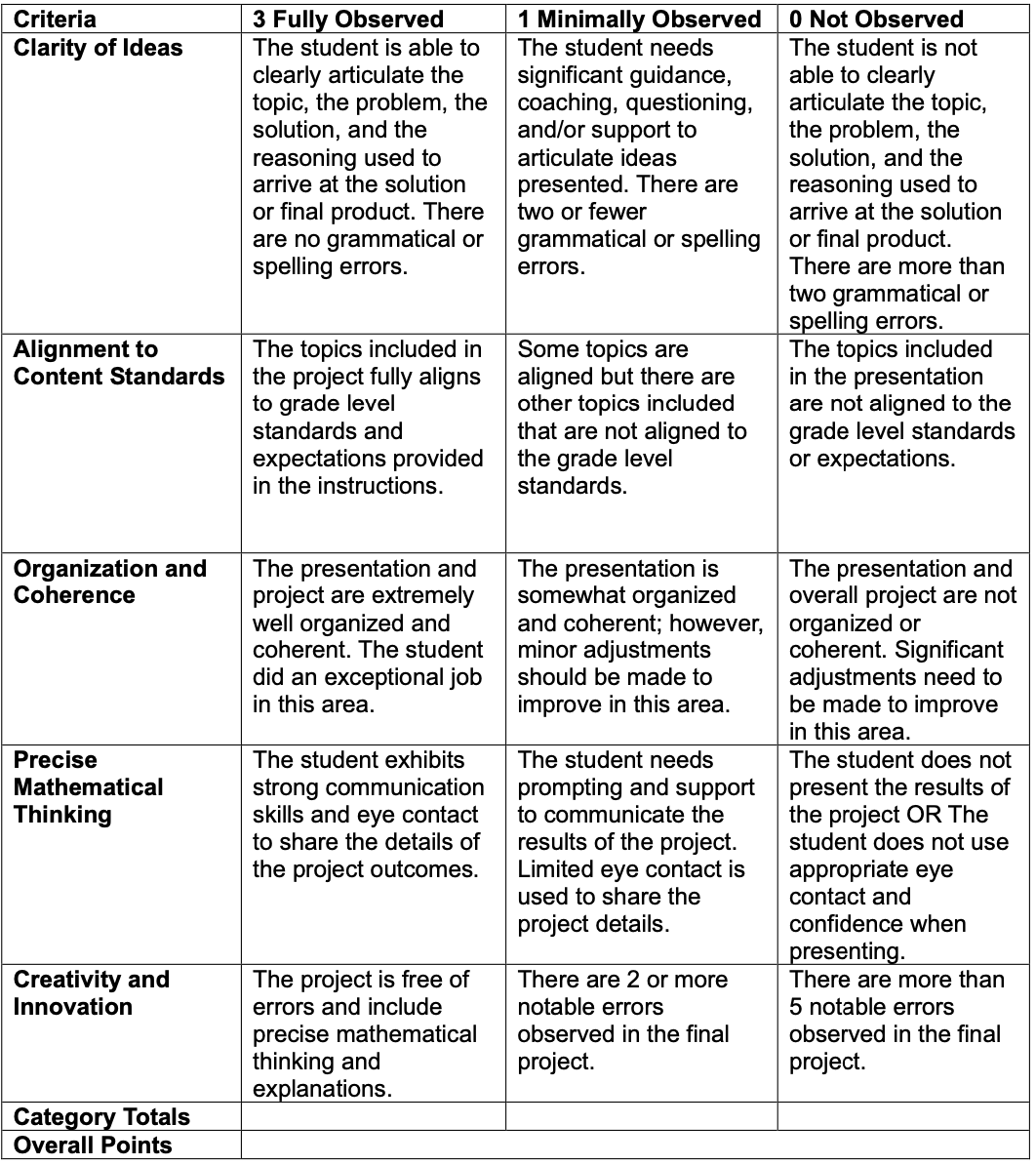
Complete Steps 1-9.
Part B
Adasia starts her day by traveling 1 mile on a heading of north 60 degrees west, identify her coordinates with respect to the origin. What would be the reference angle in this case?
Part C
If Adasia decides to travel one mile south from this point, what are the coordinates of her final destination?