Log in
Sign up for FREE
arrow_back
Library
Unit Test - Sedimentary Rock & Fossil Fuels
By NICHOLAS GLAESER
star
star
star
star
star
Share
share
Last updated 9 months ago
20 questions
Add this activity
1
5.10.B
1
5.10.B
1
5.10.B
1
5.10.B
1
5.10.B
1
5.10.B
1
5.10.B
1
5.10.B
1
5.10.B
1
5.10.B
1
5.10.B
1
5.10.B
1
5.10.B
1
5.10.B
1
5.10.B
1
5.10.B
1
5.10.B
1
5.10.B
1
5.10.B
1
5.10.B
Question 1
1.
How are sedimentary rocks primarily formed?
From ancient trees decaying.
From volcanic eruptions.
From melted lava cooling down.
Layers of sediments compact over time.
Question 2
2.
Which of the following forms over millions of years underground?
Earthquakes creating magma.
Fossil fuels like coal, oil, and natural gas.
Ocean waves creating energy.
Sunlight changing rocks.
Question 3
3.
A river deposits layers of minerals and other rocks at its mouth. Over time, what kind of rock is formed by the deposits?
Igneous
Metamorphic
Sedimentary
Not here
Question 4
4.
A student made a list of the steps needed to form a sedimentary rock. What steps are next in the process?
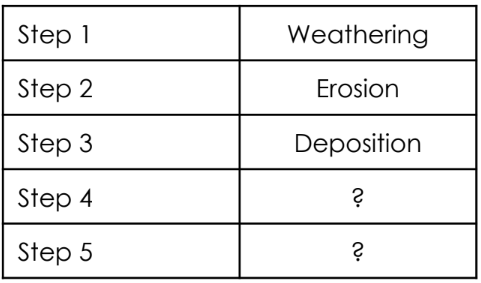
Heat and pressure
Precipitation and evaporation
Compaction and cementation
Cooling and hardening
Question 5
5.
Coal, petroleum, and natural gas are all fossil fuels. Fossil fuels originated from —
decayed rocks from within Earth's crust
plants that survived Earth's changes
heat preserved within Earth's crust
buried, dead organisms changed by heat and pressure
Question 6
6.
Which is NOT a factor in the formation of fossil fuels?
Pressure
Time
Melting
Heat
Question 7
7.
Which of the following are NOT examples of fossil fuels? Select TWO answers.
Solar energy
Natural gas
Coal
Petroleum
Gold
Question 8
8.
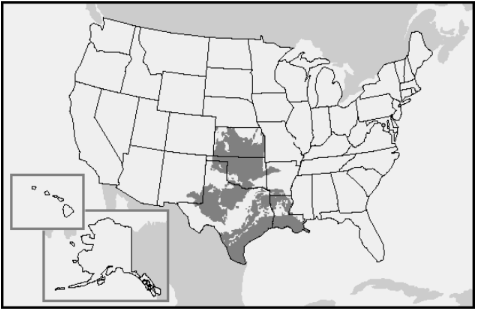
This map shows the Mid-Continent Oil Field, where oil can be found underground.
What does this map tell us about the environment in Texas millions of years ago?
Texas was once covered by trees.
Texas was once covered by snow.
Texas was once covered by water.
Texas was once hot and dry.
Question 9
9.
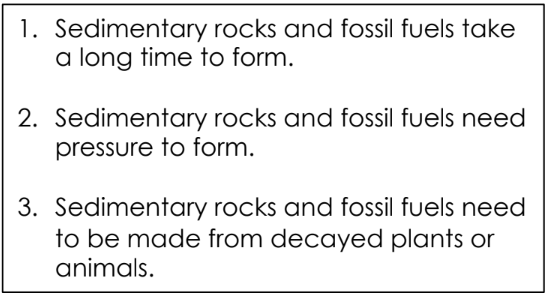
A student made three statements about sedimentary rocks and fossil fuels:
Which statement is incorrect?
Statement 1
Statement 2
Statement 3
None of them
Question 10
10.
Which fossil fuel is formed by the process shown?
Coal
Sedimentary rock
Natural Gas
Oil
visibility
View drawing
Question 11
11.
Which processes are required for the formation of sedimentary rock?
Weathering and melting
Boiling and pressure
Pressure and cooling
Deposition and compaction
Question 12
12.
Which of the following are NOT examples of fossil fuels? Select
TWO
answers.
Solar energy
Natural gas
Corn oil
Petroleum
Coal
Question 13
13.
Which of the following best completes the process shown in the chart?
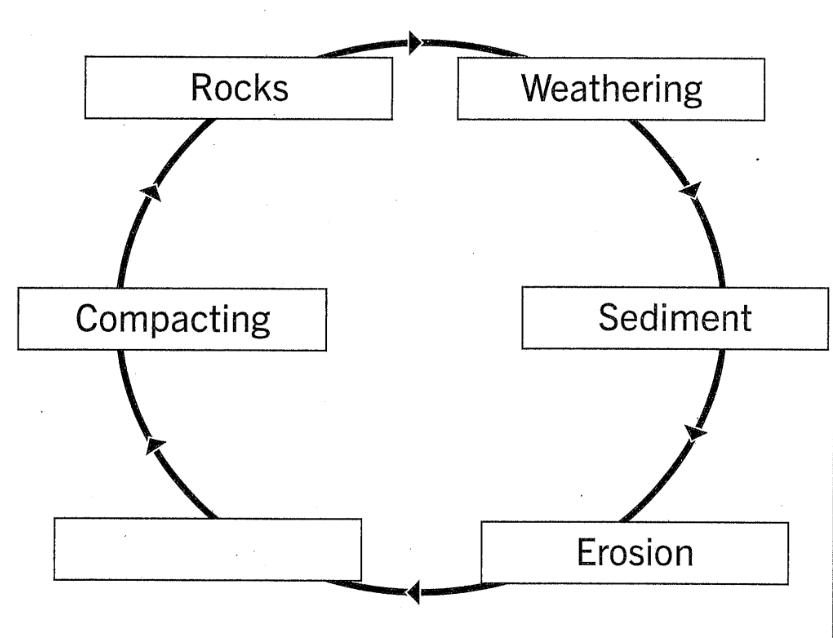
Other Answer Choices:
drag_indicator
Cementing
drag_indicator
Deposition
drag_indicator
Layers
drag_indicator
Transporting
Question 14
14.
What do the processes of the formation of sedimentary rocks and fossil fuels have in common?
Sedimentary rocks are the only type of rock where fossils are found that produce energy.
Fossil fuels and sedimentary rocks are burned to release energy.
Sedimentary rocks and fossil fuels are mixed with fossils to provide energy.
Sedimentary rocks and fossil fuels are both formed over a long period of time with high pressure.
Question 15
15.
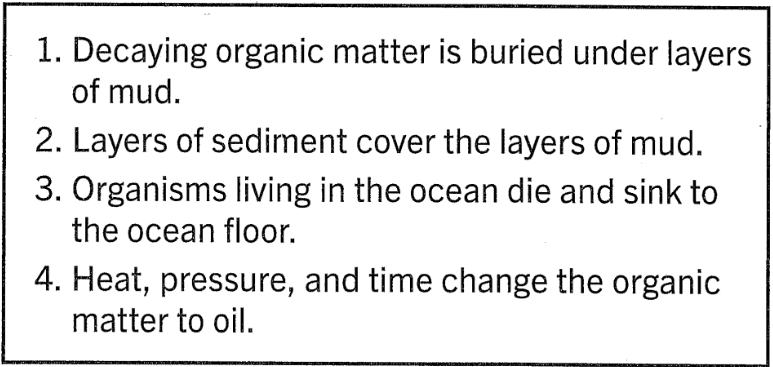
Some oil is formed from organic matter in the ocean. The list below displays the steps that lead to the formation of this type of fossil fuel.
Which of the following depicts the correct order of this process?
1, 2, 3, 4
2, 4, 1, 3
3, 1, 2, 4
3, 2, 1, 4
Question 16
16.
Which statement best explains how
coal
was formed?
Fossils of dinosaurs such as the Tyrannosaurus rex were buried and became coal after millions of years.
Pieces of coal were buried beneath many layers of sedimentary rock.
Heat and pressure transformed the remains of prehistoric plants into coal.
Rocks were broken into smaller pieces called sediment, which formed layers over time.
Question 17
17.
Which fossil fuel is formed from decomposed plant material?
Coal from ancient swamp plants.
Limestone from ocean shells.
Natural gas from rocks.
Oil from freshwater fish.
Question 18
18.
What is a common source of
petroleum
formation?
Wind erosion on the land.
Rainwater collecting in rocks.
The remains of plants from a swamp.
Decaying marine organisms under heat and pressure.
Question 19
19.
What role do fossils play in sedimentary rock formation?
Fossils dissolve in heat.
Fossils form from organic material in sediment layers.
Fossils come from igneous rocks.
Fossils are made from minerals only.
Question 20
20.
Which process contributes to the formation of fossil fuels?
Evaporation of water over time.
Formation from sediments cooling.
Decomposition of ancient plants and animals under pressure.
Melting of rocks in volcanoes.