Organize the steps listed below to show how to conjugate a verb in the imperfect. Add a number in the box next to each step. Place them in order from step 1 to step 6.
When we translate a verb in the imperfect from Spanish to English, we can use any of the following translations:
We used to....
We would .... + verb
we were + verb ing
Read about the childhood memories Carlos is sharing with his friend Tom. Complete Carlos’s statements with the imperfect form of the appropriate verb in parentheses.
De pequeños, mis hermanos y yo
Match the trigger words with their translations
| Stavka koja se može prevući | arrow_right_alt | Odgovarajuća stavka |
|---|---|---|
muchas veces | arrow_right_alt | often |
los lunes | arrow_right_alt | In general |
Por lo general | arrow_right_alt | Almost always |
de vez en cuando | arrow_right_alt | many times |
casi siempre | arrow_right_alt | from time to time |
A menudo | arrow_right_alt | On Mondays |
Answer the following questions and write complete sentences to tell about your childhood.
1. ¿Dónde jugaban tus amigos y tú?
2. ¿Qué coleccionabas cuando eras niño/a?
3. ¿Cómo se portaban tus vecinos cuando eras niño/a?
4. ¿Qué compartían tus amigos?
Complete the following comments about these people when they were children, using the imperfect form of the verbs ver, ir, or ser.
1. De niña, Julieta
2. De pequeños, mis primos
3. Javier, ¿
4. Mis muñecas
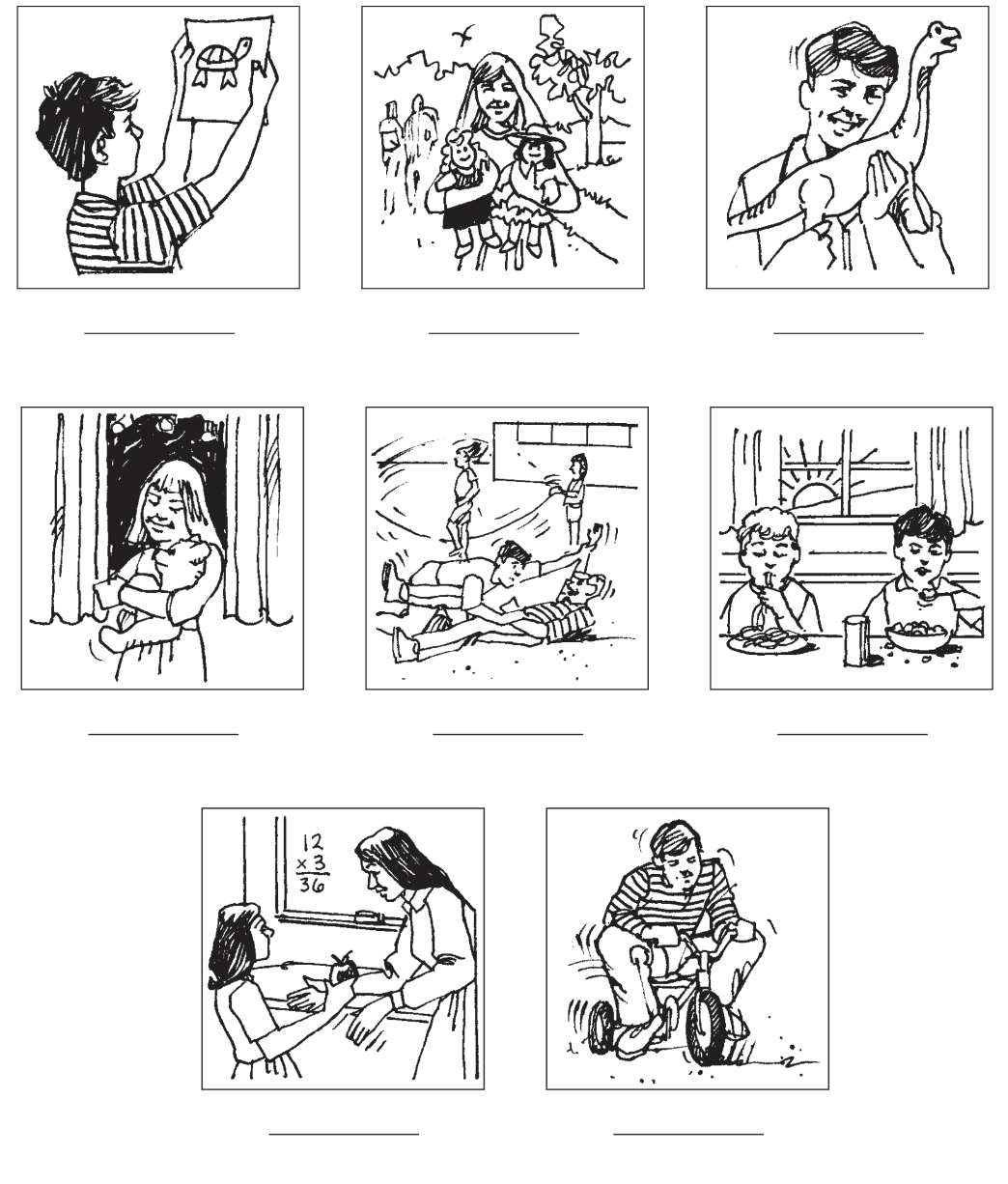
Listen as Patricia listens to her favorite popular radio show “Yo no lo sabía” to find out things that she didn’t know about some of her favorite movie and TV personalities. Match what you hear the DJ say about her favorite celebrities to the pictures below. Write the number of each piece of gossip underneath the picture it refers to. You will hear each piece of gossip twice.