Log in
Sign up for FREE
arrow_back
Library

P01 EOTT - Forces and Energy

star
star
star
star
star
Last updated 1 day ago
32 questions
Required
1
Required
1
Required
1
Required
1
Required
1
Required
1
Required
1
Required
1
Required
1
Required
1
Required
1
Required
1
Required
1
Required
1
Required
1
Required
1
Required
1
Required
1
Required
1
Question 1
1.

Question 2
2.

Question 3
3.

Question 4
4.

Question 5
5.

Question 6
6.

Question 7
7.

Question 8
8.

Question 9
9.

Question 10
10.

Question 11
11.

Question 12
12.

Question 13
13.

Question 14
14.

Question 15
15.

Question 16
16.

Question 17
17.

Question 18
18.

Question 19
19.

This question is on representing forces.
Required
1
Required
1
Required
1
Required
2
This question is on resultant forces.

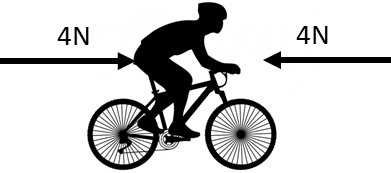
Describe the resultant force acting on the following objects.
Required
2
Required
2
Required
2
This question is on how resultant forces effect the motion of objects.
Required
3
Required
2
This question is about an investigation into forces.
Required
6
Question 29
29.

This question is about energy transfers.

Describe the energy transfer and explain what causes the flowing changes.

Example) A battery powered motor is used to lift a car into the air. “The motor exerts a pulling force on the car.. Energy is transferred from the chemical store of the battery to the gravitational store of the mass."
Required
3
Required
3
This question is about analysing data.
Required
4
What piece of equipment is used to measure forces?
Newton meter
Joule meter
Scales
Voltmeter
When an object is moving what direction will friction act in?
Same direction as motion
Opposite direction to motion
All directions
Down
When does a system store energy chemically?
If it is made of atoms
If it is moving
If it is hotter than the coldest thing
If there are chemical substances which can react
What unit is the energy transferred when a fuel is used is measured in?
Metres
Litres
Newtons
Joules
How do you calculate a resultant force is the unbalanced forces are in the same direction?
Force A x Force B = resultant force
Bigger force - smaller force = resultant force
Bigger force + smaller force = resultant force
Force A + Force B = resultant force
What direction does an objects weight act in?
Backwards
Down
Up
In all directions
What causes energy to be transferred to the surroundings when a force moves an object?
Its weight
Friction
The normal contact force
Its mass
What do we call the variable scientists measure to judge the effect of the experiment?
Control variable
Fair test variable
Dependent variable
Independent variable
What happens to the energy stored in a fuel when it is used to produce motion?
Energy is transferred
Energy is burnt
Energy is used up
Energy gets smaller
Which variable is the one scientists change in an investigation?
Independent variable
Control variable
Fair test variable
Dependent variable
How do you calculate a resultant force if the unbalanced forces are in opposite directions?
Force A x Force B = Resultant force
Bigger force + Smaller force = Resultant force
Force A + Force B = Resultant force
Bigger force - Smaller force = Resultant force
What do you call variables scientists need to keep the same in an investigation?
Dependent variable
Independent variables
Control variable
Fair test variables
If an objects motion does not change the forces acting on it must be ___________.
balanced
zero newtons
small
unbalanced
Why might the amount of energy appear to decrease during a change?
Some energy is lost
Some energy is destroyed
The energy is used up
Some energy is always transferred to the surroundings
When does a system store energy kinetically?
If there are chemical substances that can react
If it is hotter than the coldest thingI
If objects are moving
f springy objects are stretched or squashed
How many forces are acting on an object which is “resting” on a solid surface?
Two
Three
No forces are acting
One
What is an energy resource?
A material used as a source of energy
A material used to make energy
A type of energy
What piece of equipment is used to measure mass?
Scales
Newton meter
Joule meter
Voltmeter
Where should a force arrow start (or finish) on an object?
The back of an object
The middle of an object
Where a force acts on an object
Anywhere
Question 20
20.

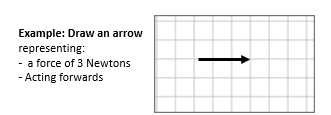
Draw an arrow representing the following forces. One box = One Newton.
Question 21
21.

Draw an arrow representing the following forces. One box = One Newton.

Question 22
22.

Draw an arrow representing the following forces. One box = One Newton.

Question 23
23.

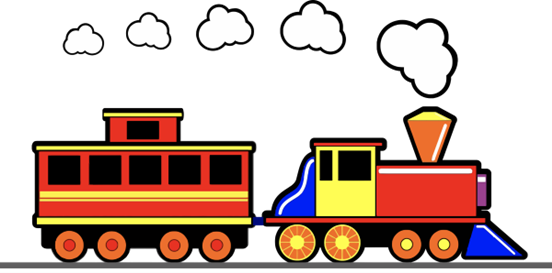
Draw an arrow representing a pushing force of 4 Newtons exerted on the back of the train.

Question 24
24.

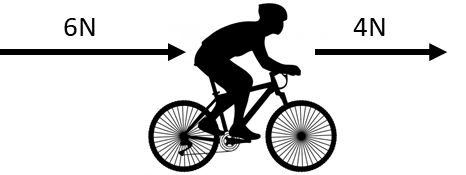
A cyclist being pushed forward by a force of 6N and pulled forwards by a force of 4N.

Question 25
25.

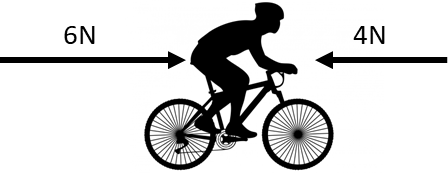
A Box being pushed forward by a force of 6N and pulled back by a force of 4N.

Question 26
26.

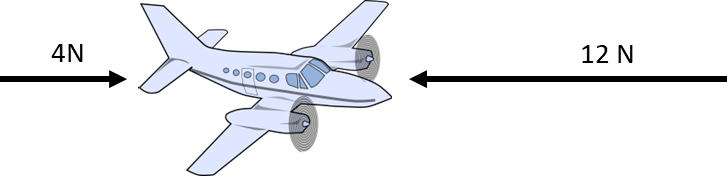
A Plane being pushed forward by a force of 4N and pushed back by a force of 12N.

Question 27
27.

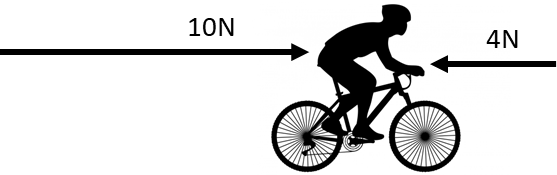
A cyclist is moving forwards with an initial speed of 4 m/s. The bike is pushed forwards with a force of 10 N is and pushed backwards with a force of 4 N. Calculate the resultant force and describe how this will affect the motion of the cyclist.

Question 28
28.

A different cyclist is also moving forwards with an initial speed of 4 m/s. The bike is pushed forwards with a force of 4 N is and pushed backwards with a force of 4 N.
Calculate the resultant force and describe how this will affect the motion of the cyclist.

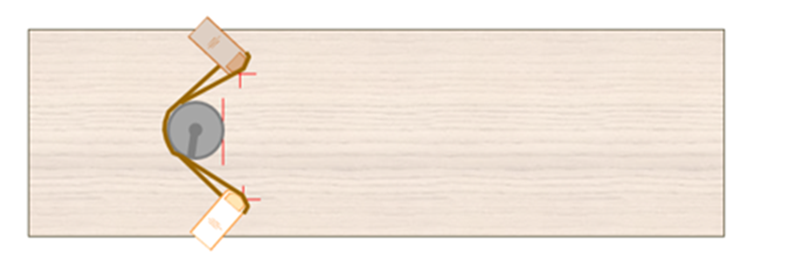
A mass is pushed across a table by an elastic band. When it was pushed away by the elastic band it had an initial speed of 1 m/s. The speed of the mass slowed down until it stopped completely. Write an answer that: - Describes what force slows the mass down - Explains what causes the force - Explains what can be done to reduce its effect
Question 30
30.

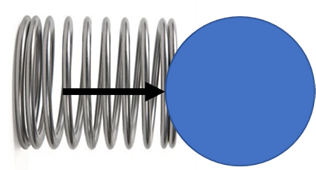
A squashed spring pushes a ball so it starts rolling along the floor.

Question 31
31.

A train burns a fuel to pull a carriage until it starts moving.

Question 32
32.

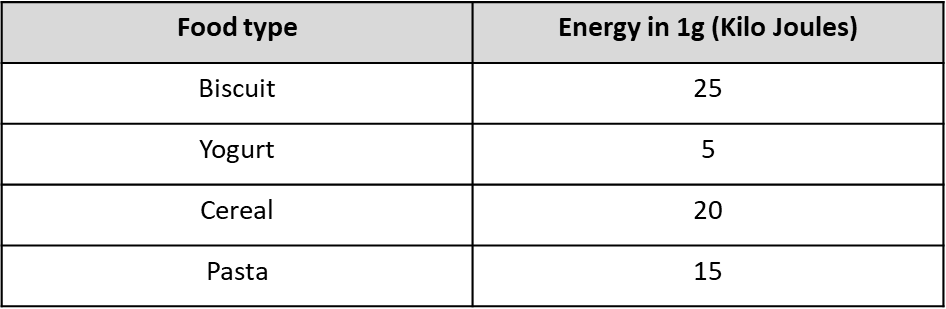
A student worked out the amount of energy stored in 100g of different foods.

Use the information in the table to complete the bar graph.