Log in
Sign up for FREE
arrow_back
Library

P04 EOTT - Where are we in space?

star
star
star
star
star
Last updated about 2 hours ago
34 questions
Required
1
Required
1
Required
1
Required
1
Required
1
Required
1
Required
1
Required
1
Required
1
Required
1
Required
1
Required
1
Required
1
Required
1
Required
1
Required
1
Required
1
Required
1
Required
1
Required
1
Required
1
Required
1
Question 1
1.

What is the solar system?

Question 2
2.

What does the size of a planet’s gravity depend on?

Question 3
3.

Why is the moons gravity weaker than the Earth's gravity?

Question 4
4.

What object in the solar system has the strongest gravity?

Question 5
5.

How does gravity change if you travel further away from the Earth?

Question 6
6.

What causes planets to orbit the sun?

Question 7
7.

Why does the moon move across the night sky?

Question 8
8.

What is a constellation?

Question 9
9.

Why do stars move across the night sky?

Question 10
10.

Why are different constellations visible at different points in the year

Question 11
11.

Why do we see different stars in summer and winter?

Question 12
12.

Why does the sun seem brighter and larger than other stars?

Question 13
13.

What is a light year?

Question 14
14.

What is a galaxy?

Question 15
15.

What is the universe?

Question 16
16.

How many galaxies are there in the universe?

Question 17
17.

What are the two hemispheres of the Earth?

Question 18
18.

How often does the hemisphere tilted towards the sun change?

Question 19
19.

What season is it when a hemisphere is tilted away from the sun?

Question 20
20.

What season is it when a hemisphere is tilted towards the sun?

Question 21
21.

How many variables are usually changed in an investigation?

Question 22
22.

Why do scientists control some variables during an investigation?

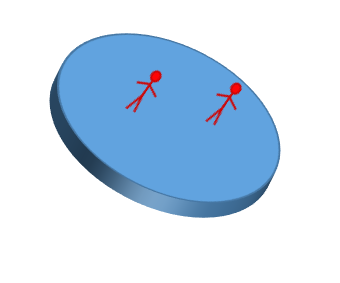
We live on the surface of a planet we call the Earth. A Year 6 student draws the following diagram to show people on the surface of the Earth.
Required
1
Question 23
23.

What is wrong about the shape of the Earth in this diagram?
Required
2
Question 24
24.
Required
2
Question 25
25.

Why do we have night and day?

Required
3
Question 26
26.
Other Answer Choices:
shadow
illuminates
luminous
opaque
radiates
Required
3
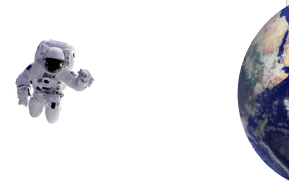
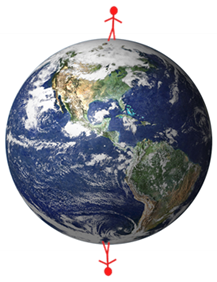
An astronaut is floating above the Earth, in outer space.

Required
1
Required
2
Question 29
29.

Explain why gravitational attraction is a “non contact” force.

Required
2
Question 30
30.

Required
6
Question 31
31.

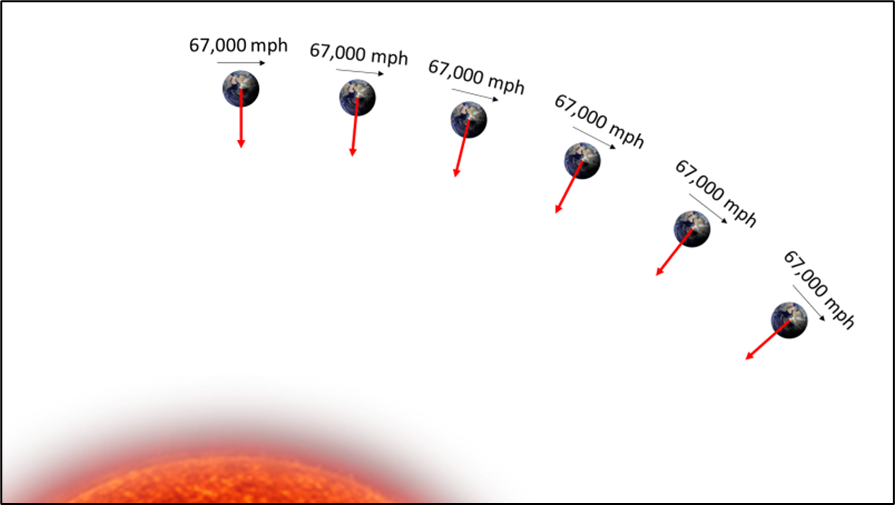
Explain why the Earth follows a curved path around the sun.
Write your answer in full sentences using bullet points. Write one bullet point sentence for each of the questions below:
- What speed is the Earth moving at?
- If no forces were acting on Earth, would it follow a straight or curved path?
- What object is exerting a force on the Earth
- Where is the force exerted on the Earth acting towards?
- How does the Earth’s resultant force compare to the Earth’s direction?
- How does the force exerted on the Earth change its motion?

This question is about how energy and information spread out through space.

Required
1
Required
1
Question 33
33.

What is the sun’s main energy store?

Required
4
Question 34
34.

Explain why the southern hemisphere is hotter in summer then in winter.

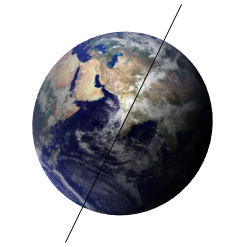
The following diagrams show two ways the Earth is moving around in space.
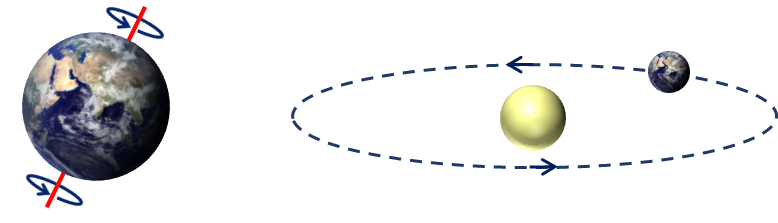
Complete the following sentences: The Earth takes one _______ to orbit the sun. The Earth takes one _______ to rotate on its axis.
Describe the motion of the moon and how long it takes to complete.
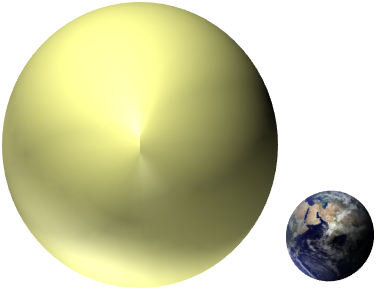
Complete the following paragraph by adding the missing words from the box below.
The sun is a _____________ object at the centre of the solar system. The sun _____________ light in all directions. The Earth is an ___________ object – this means light cannot travel through it. Light radiated from the sun ________________ half the Earth and leaves the other half in ___________ .
Question 27
27.

Explain why the motion of the Earth causes the sun to appear to move across the sky during the day.

Question 28
28.

What forces will the astronaut experience?

Explain why the people in the diagram will both experience “down” in opposite directions.

Question 32
32.

Which of the following describes an important source of light in the solar system?