Log in
Sign up for FREE
arrow_back
Library

B01+B02 EOTT - Cellular the unit of life & Inheritance and the genome (29/01/2025)

star
star
star
star
star
Last updated 11 days ago
31 questions
Required
1
Required
1
Required
1
Required
1
Required
1
Required
1
Required
1
Required
1
Required
1
Required
1
Required
1
Required
1
Required
1
Required
1
Required
1
Question 1
1.

Question 2
2.

Question 3
3.

Question 4
4.

Question 5
5.

Question 6
6.

Question 7
7.

Question 8
8.

Question 9
9.

Question 10
10.

Question 11
11.

Question 12
12.

Question 13
13.

Question 14
14.

Question 15
15.

All living things are made of cells.
1
1
2
3
This question is about calculating magnification. Marks will be awarded for showing working.
1
2
3
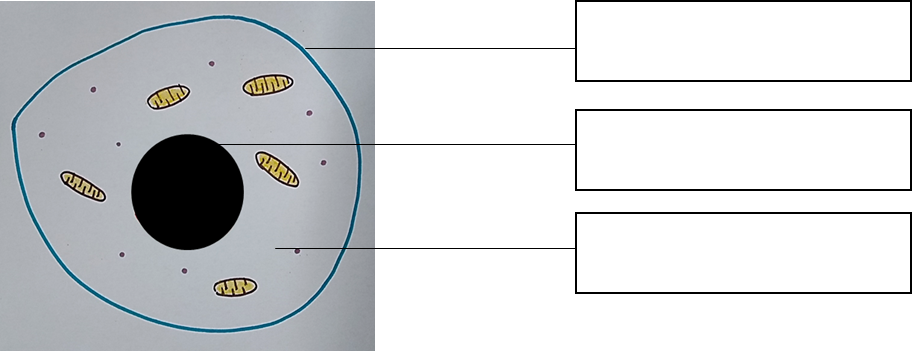
This question is about animal cells.
3
1
1
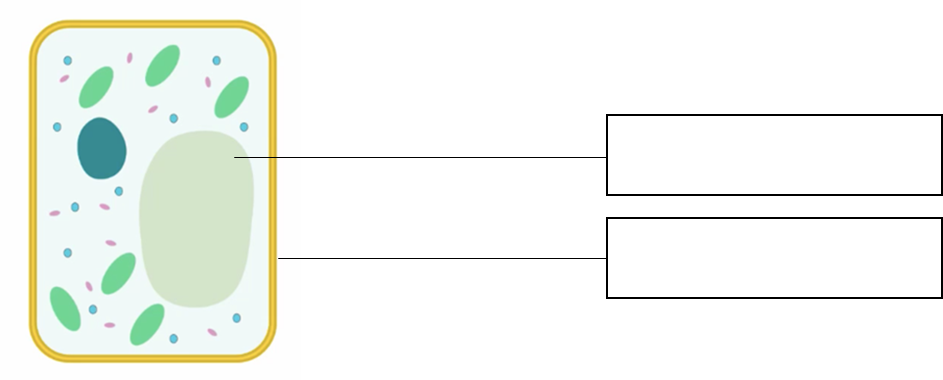
This question is about plant cells.
2
4
Question 27
27.

This question is about cell nucleus.

2
1
2
Two parents have 3 children.

6
Question 31
31.

Which of the following is not one of the seven characteristics of living organisms?
Breathing
Nutrition
Respiration
Sensitivity
How many of the seven characteristics of living organisms do plants show?
5
6
7
4
Why can it be hard to observe 'movement' in plants?
Plants don't move
plants move slowly towards sources of light
Plants move quickly towards sources of light
Plants only move at night
What chemical reaction is carried out by all living organisms?
breathing
diffusion
photosynthesis
respiration
What is the smallest structure that can be alive?
atom
molecule
cell
organism
What are sub-cellular structures (like cell membranes) made from?
organisms
individual atoms
biological molecules
cells
What is an organism?
A type of living thing
a type of cell
what a cell is made from
an individual living thing
Describe the arrangement and motion of particles in the cytoplasm.
Close together, randomly arranged and constantly vibrating
Close together, regularly arranged and constantly moving over each other.
Close together, randomly arranged and constantly moving over each other.
Close together, regularly arranged and constantly vibrating.
How does the cell membrane control which substances pass in and out of the cell?
Tiny holes allow all molecules to pass in and out.
Holes allow all molecules to pass in and out.
Holes allow larger molecules to pass in and out.
Tiny holes allow smaller molecules to pass in and out.
Complete the sentence “the cell membrane is a _________ __________ membrane.
partially permeable
partially impermeable
fully impermeable
fully permeable
What process moves substances from high to low concentration?
diffusion
cell membrane transport
cell transport
membrane transport
Which scientists discovered the structure of DNA?
Rosalind Franklin
Watson and Crick, working with Rosalind Franklin
Watson and Crick
Watson and Crick, with evidence from Rosalind Franklin
What is the structure of DNA?
A single helix
A double helix
A long single strand of a chemical substance
A double stranded complex
In extracting DNA: What is the role of the washing up liquid?
Break up membrane around nucleus – release the DNA
Break up the cells and release nucleus
Clump together DNA molecules to make them visible
To clean the DNA
What is variation?
large differences between members of a species
Different types of organism
Similarities between members of a species
Small differences between members of a species
Question 16
16.

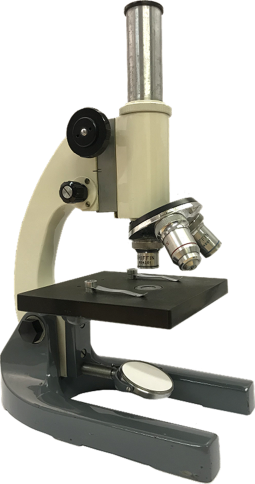
Name the piece of equipment used to observe cells.

Question 17
17.

Why can we not see cells with our eyes?

Question 18
18.

What does magnification mean?

Question 19
19.

Draggable itemarrow_right_altCorresponding Item
arrow_right_alt
arrow_right_alt
arrow_right_alt
Question 20
20.

Write the equation that links total magnification, eye piece lens magnification and objective lens magnification.

Question 21
21.

A microscope has an eyepiece lens of x10 magnification and an objective lens of x10 Calculate the total magnification:

Question 22
22.

A microscope has an eyepiece lens of x10 magnification and total magnification of x400 Calculate the magnification of the objective lens.

Question 23
23.
Other Answer Choices:
Nucleus
Cytoplasm
Mitochondria
Cell membrane
Question 24
24.

Which part of a cell controls what goes in and out of the cell?

Question 25
25.

Describe what happens in the cytoplasm of the cell?

Question 26
26.
Complete the boxes to label two parts of a cell only found in plant cells.
Other Answer Choices:
Vacuole
Cell wall
Mitochondria
Cell membrane
Compare the structure of an animal and plant cell. - What is similar - What is different
Question 28
28.

What is the role of the nucleus?

Question 29
29.

Question 30
30.

We inherit all our genetic information. Describe where we inherit our genetic information from.

The children's appearances are similar to their parents but they are still all different. Explain why the children are similar but not exactly the same.
Match the equipment to its function.
Objective lens
Makes image clearer
Light or mirror
Makes image bigger
Focus wheel
Makes image brighter
Genetic information is stored in the nucleus. What is the name of all the genetic information in our body?
Our genome
Our gene
Our cytoplasm
Our environment