The Andes Mountains
The Andes Mountains are located in South America, as shown in Figure 1, Map A. They are the world’s longest mountain chain located on Earth’s continents. Also, the vast majority of volcanoes in South America are located in this mountain region. Several of the volcanoes are active. One volcanic eruption in 2015 resulted in ash clouds reaching 6,000 meters in height.
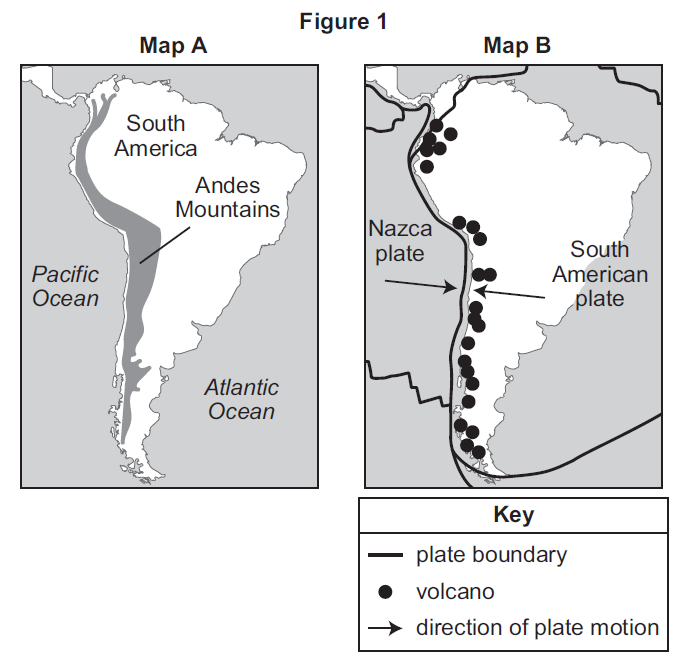
This region formed as a result of mountain building over millions of years. This was mostly caused by the movement of the Nazca and South American tectonic plates. This movement also formed several volcanoes, as shown in Figure 1, Map B.
Figure 2 shows a cross-section view of how the Andes formed. The process shown is called subduction. This occurs when the dense oceanic crust of one plate moves beneath the less dense continental crust.
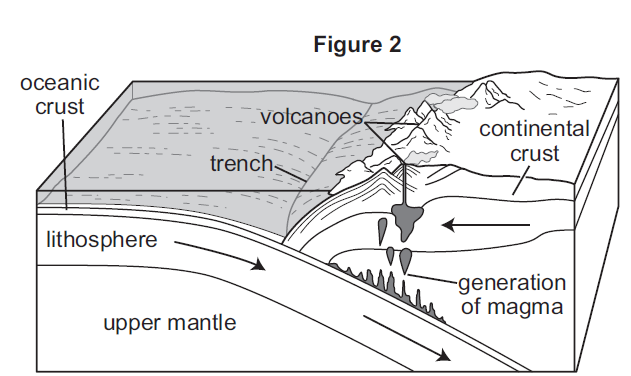
The lithosphere, which is part of the lower crust and upper mantle, also moves below the less dense continent. As this happens, the rock experiences intense heat and pressure, resulting in the formation of magma. This magma rises to eventually play a part in the formation of volcanoes.
The subduction process involves great forces that can also result in earthquakes. One of the most powerful earthquakes ever recorded occurred in Valdivia, Chile, which is located in the southern region of the Andes.
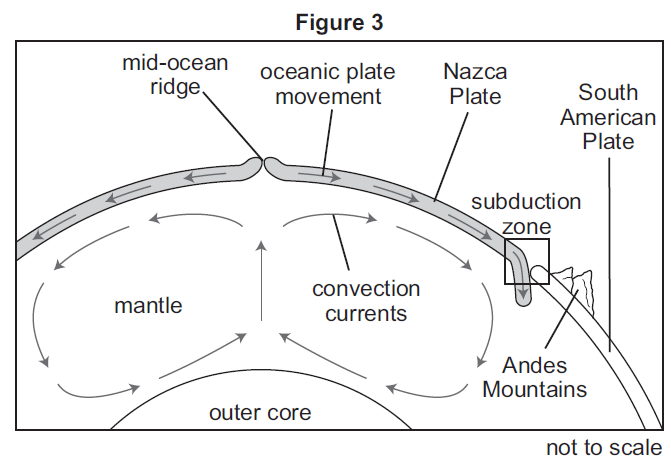
Figure 3 shows a global view of how the Andes formed. Rock is formed at the mid-ocean ridge of the Pacific Ocean. As this rock is formed, the rock pushes outward. This causes rock at the subduction zone near the Andes to move under the continental crust.