Science 8 - Testlet 014- Life Science
star
star
star
star
star
Last updated 6 months ago
5 Nsɛmmisa
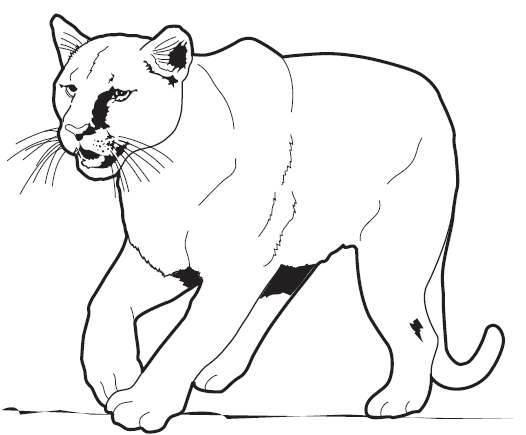
Students study mountain lion sightings in Missouri. Mountain lions are large predators in the cat family. A mountain lion is shown below.
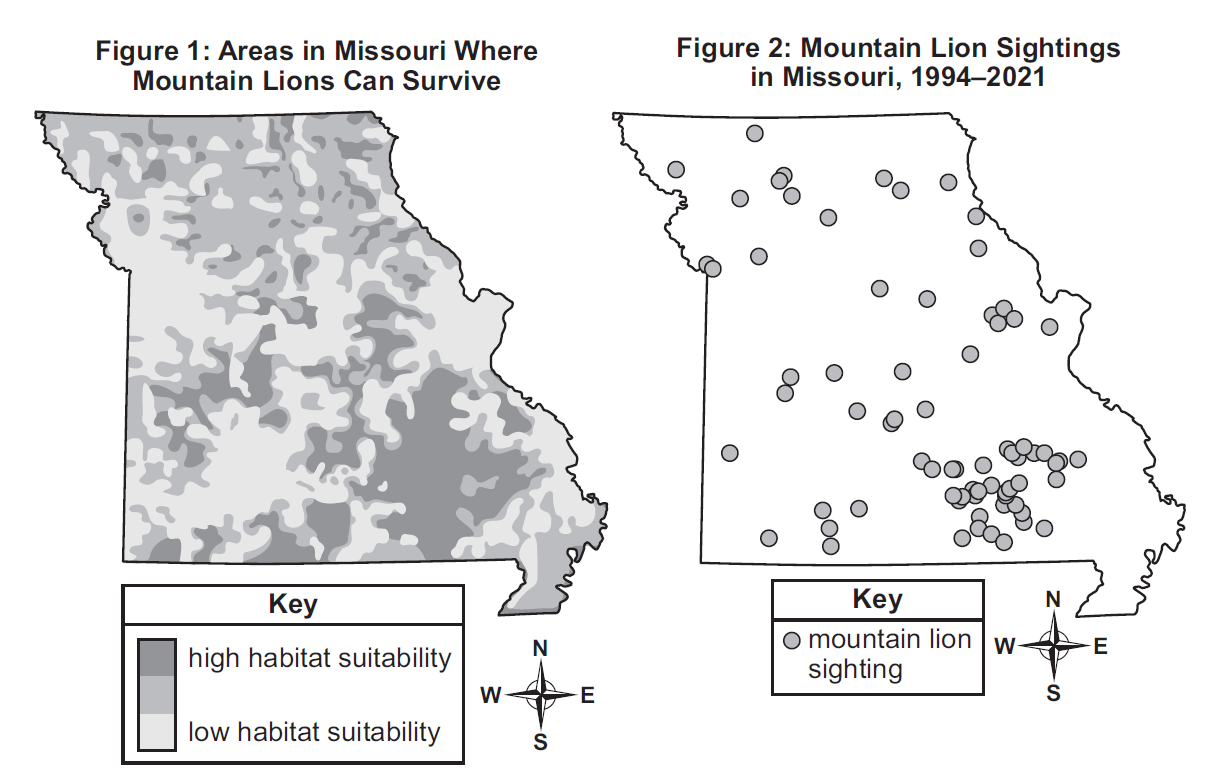
The students compare the two maps of Missouri below. The map in Figure 1 shows habitat suitability for mountain lions. The map in Figure 2 shows where mountain lions were seen between 1994 and 2021.
Living organisms like mountain lions need resources from the environment to survive and reproduce, including energy sources, space to live, and mates. Mountain lions are carnivorous predators that eat primary consumers like deer, rabbits, and bighorn sheep. They also eat opossums, raccoons, skunks, and coyotes. Mountain lions usually hunt at night and silently stalk or hunt prey from behind. Mountain lions are found in many different types of ecosystems across North America and can make their home anywhere there is shelter and prey.
Select the two most likely ways an increased mountain lion population would affect Missouri ecosystems.
A student studied facts about mountain lions. The list shows the student’s research.
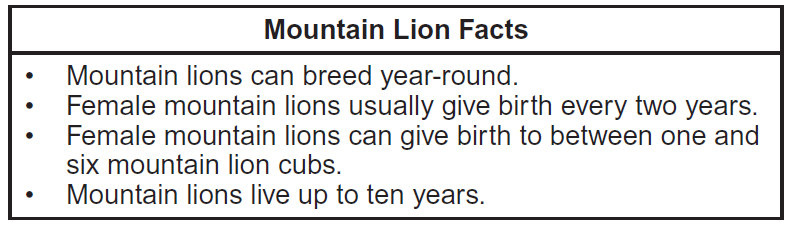
Explain how one characteristic benefits species survival for the mountain lion.
From 1919 to 1994, there were no confirmed mountain lion sightings in Missouri. Most mountain lion sightings occurred in western parts of the United States. Which explanation best explains why mountain lion sightings began again in Missouri in 1994?
In 1999, a mountain region began controlling the mountain lion population in an effort to protect populations of other organisms. One major organism this effort was trying to protect was the desert bighorn sheep. The graph below shows the desert bighorn sheep population from 1980 to 2016 for the mountain region.
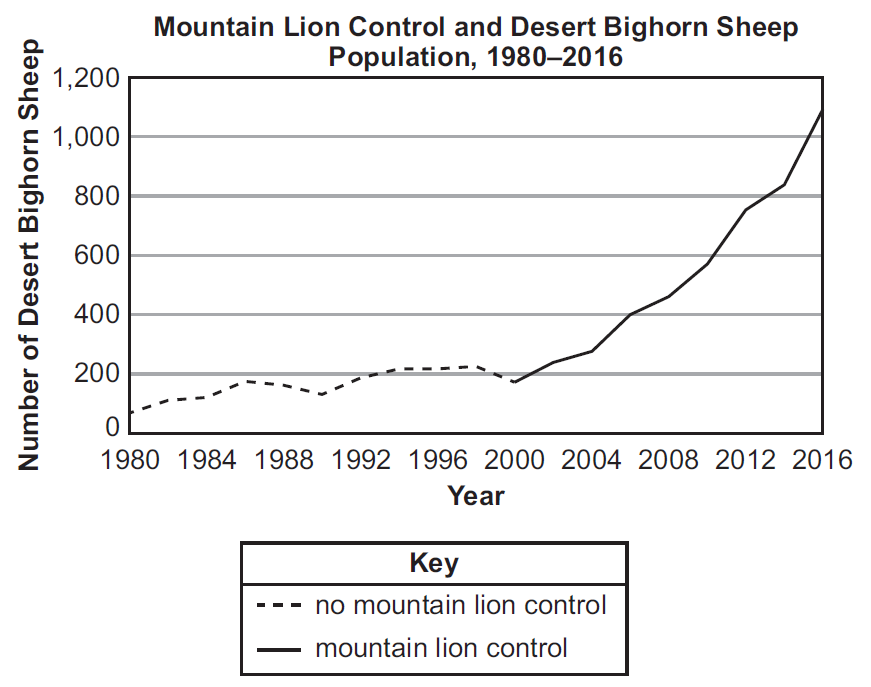
Controlling the mountain lion population allowed in the population of desert bighorn sheep due to .
In order to understand how mountain lions interact with their environment, a researcher studied the populations of two other mammals that live in the same Missouri ecosystem, shown in the graph below.
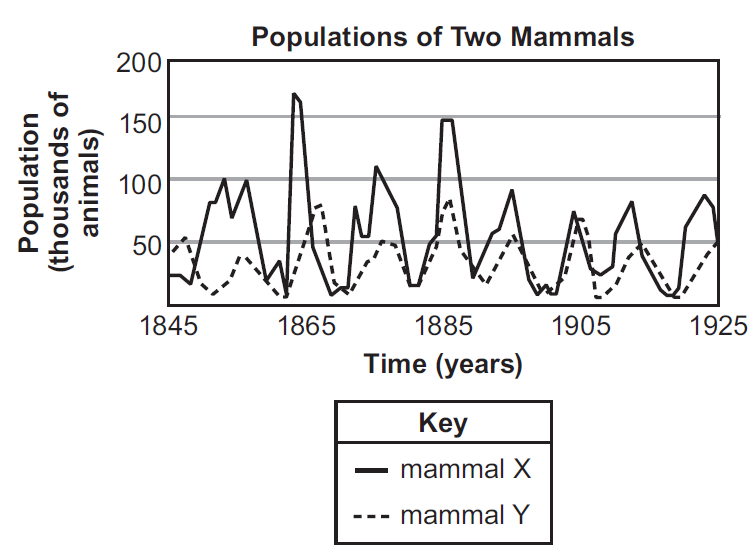
The graph shows a general pattern that the population of mammal X the population of mammal Y. The graph provides evidence that mammal Y is most likely a .