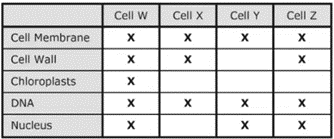
Which of the following structures are not found in BOTH an animal and a plant cell? Select TWO correct answers.
A molecule is composed of chains of amino acids. The sequence of the amino acids determines the shape and the function of the molecule. Identify the molecule.
The endosymbiotic theory of eukaryote evolution states that organelles in eukaryotic cells and are derived from bacteria. Which statement is the STRONGEST evidence in support of the endosymbiotic theory of eukaryote evolution?
What is the job of a protein? Select all that apply.
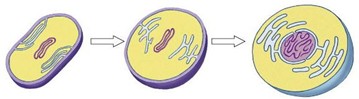
1. Which choice below BEST describes the process in the photo?
I. The fully developed nucleus and ER.
II. The plasma membrane begins enfolding into the cell
III. Beginning formation of membrane-bound organelles
Students use a microscope to look for structures present in four different cells. The students placed an X for each structure that was viewed for each cell on the table shown. Which cell that was viewed is most likely a prokaryote?
Aside from the cell membrane, what are the three other components that all cells have? Choose the correct answer for each.
All cells have a jelly-like region of the cell called . The genetic material of the cell is and multiple where proteins are synthesized.
The table identifies the four categories of organic biological compounds. There are four partial descriptions of the compound types. Match each descriptive phrase with the compound type to which it applies.
| Draggable item | arrow_right_alt | Corresponding Item |
|---|---|---|
Nucleic Acids | arrow_right_alt | Fats/oils |
Lipids | arrow_right_alt | Enzymes |
Proteins | arrow_right_alt | Sugar/glucose |
Carbohydrates | arrow_right_alt | DNA |
Match the cell structure with its primary function.
| Draggable item | arrow_right_alt | Corresponding Item |
|---|---|---|
protein synthesis | arrow_right_alt | Nucleus |
Provides energy for the cell | arrow_right_alt | Ribosomes |
Support | arrow_right_alt | Cell membrane |
Controls cell activities | arrow_right_alt | Cell Wall |
Controls what goes in and out of the cell | arrow_right_alt | Mitochondria |

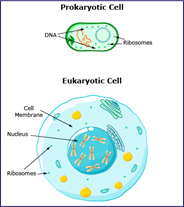
This diagram compares the structures of a prokaryotic cell and a eukaryotic cell. Which conclusion BEST explains how these two types of cells differ in complexity?

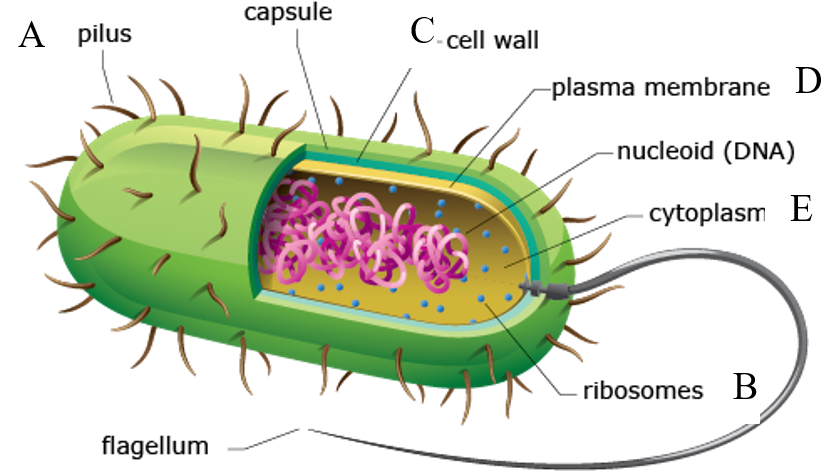
Pictured below is a typical bacterial cell. Select the cell parts that COULD be found in both Prokaryotic AND Eukaryotic cells.