Log in
Sign up for FREE
arrow_back
Library
Slow Changes - Task Cards
By NICHOLAS GLAESER
star
star
star
star
star
Share
share
Last updated 9 months ago
20 questions
Add this activity
1
5.7.B
1
5.7.B
1
5.7.B
1
5.7.B
1
5.7.B
1
5.7.B
1
5.7.B
1
5.7.B
1
5.7.B
1
5.7.B
1
5.7.B
1
5.7.B
1
5.7.B
1
5.7.B
1
5.7.B
1
5.7.B
1
5.7.B
1
5.7.B
1
5.7.B
1
5.7.B
Question 1
1.
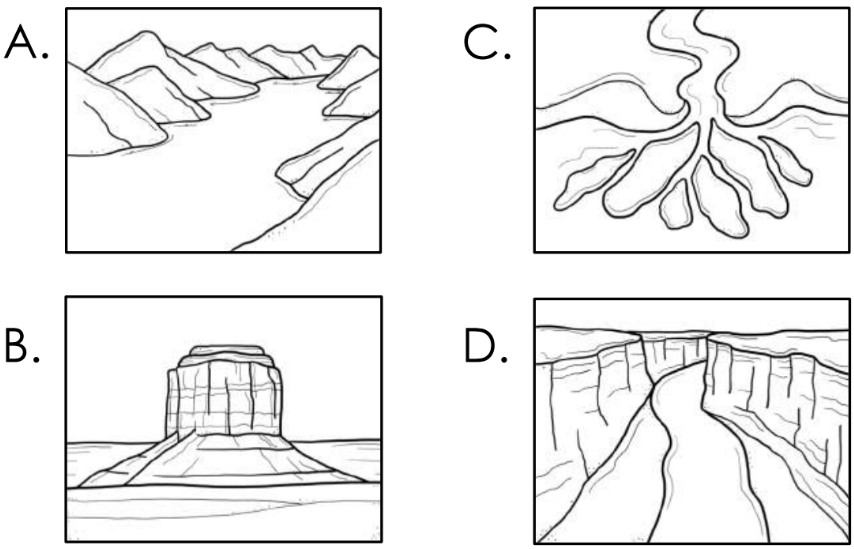
Which image shows sediment?
Question 2
2.
Which image shows a canyon?
Question 3
3.
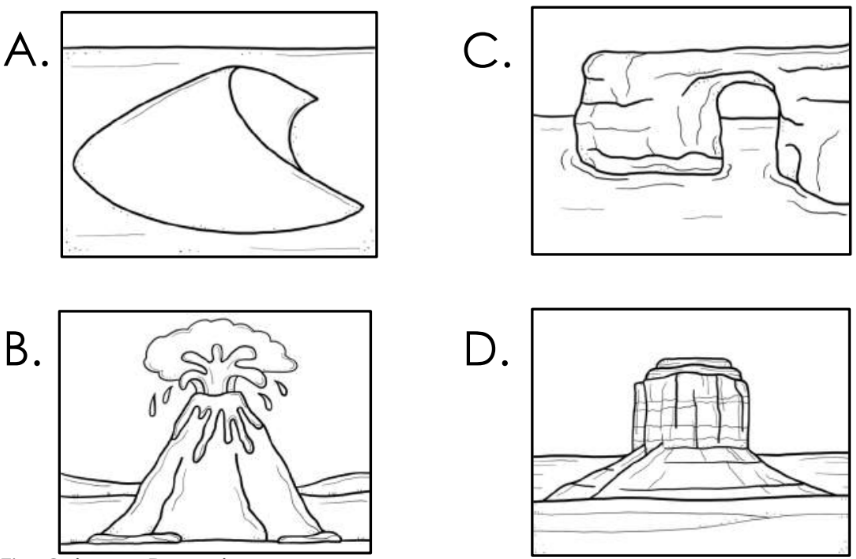
Which image shows a sand dune?
Question 4
4.
Which image shows a valley?
Question 5
5.
Which event is an example of a slow change to Earth’s surface?
Volcanic eruption
Earthquake
Weathering
Landslide
Question 6
6.
Which event is NOT an example of weathering?
Wind dropping off sediments to form a sand dune
Ice breaking a rock into smaller pieces
A river carving out a canyon
Wind and rain breaking off sediments from a rock
Question 7
7.
Which image shows the effects of rock being weathered by wind?
Frost wedging
Glacial valley
River delta
Aeolian arch
Question 8
8.
Which event is an example of deposition?
A river dropping off sediments at the mouth of the river
A river forming a valley
A river carrying sediments
A river carving out a canyon
Question 9
9.
What is erosion?
The movement of sediment from one place to another
Small pieces of weathered rock
The dropping off of sediment in a new location
Frost wedging
Question 10
10.
What is deposition?
The dropping off of sediment in a new location
The formation of a canyon
Frost wedging
The breaking down of larger rocks into smaller pieces
Question 11
11.
What is a canyon?
A U-shaped valley formed by a glacier
A V-shaped valley formed by a river
A V-shaped valley formed by a glacier
A U-shaped valley formed by a river
Question 12
12.
What is weathering?
The movement of sediment from one place to another
The dropping off of sediment in a new location
The breaking down of rock into sediment
Small pieces of sediment
Question 13
13.
What is another word for a V-shaped valley?
Delta
Glacial valley
Sand dune
Canyon
Question 14
14.
How are river deltas and sand dunes similar?
Both are formed by rain.
Both are formed by weathering.
Both are formed by ice.
Both are formed by deposition.
Question 15
15.
How are glacial erosion and frost wedging similar?
Both involve wind.
Both involve deposition.
Both involve waves.
Both involve ice.
Question 16
16.
How do U-shaped valleys and V-shaped valleys differ?
U-shaped valleys are formed by glaciers while V-shaped valleys are formed by rivers.
U-shaped valleys are formed by wind while V-shaped valleys are formed by ice.
U-shaped valleys are formed by rivers while V-shaped valleys are formed by glaciers.
Question 17
17.
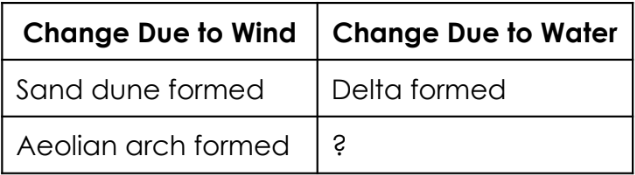
Which phrase belongs in the blank?
Mountain formed
Glacier formed
Canyon formed
U-shaped valley formed
Question 18
18.
Which diagram shows the correct order of processes that result in slow changes to Earth’s surface?
Deposition → erosion → weathering
Deposition → weathering → erosion
Weathering → deposition → erosion
Weathering → erosion → deposition
Question 19
19.
Which list includes only landforms that are formed due to deposition?
Question 20
20.
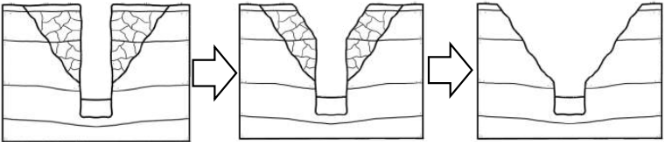
What processes are shown in the diagram below?
Deposition to form a valley
Weathering to form a river delta
Weathering and erosion to form a valley
Deposition to form a sand dune