1
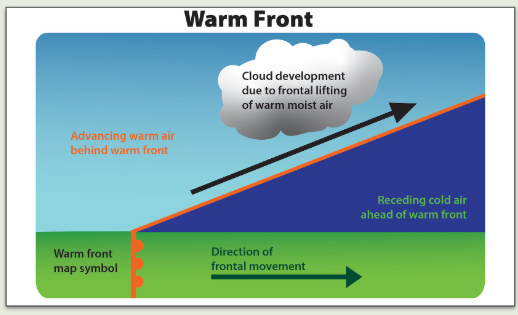
How does your model compare with this model of a warm front?
How does your model compare with this model of a warm front?
Work with a Partner:
Think about the data we analyzed in our last lesson.
As we looked for patterns in the air temperature and relative humidity data, what were we able to figure out?
What interesting things did we see happening along the boundary between a warm air mass and a cold air mass?
Draw what you think will happen to the warm and cold air masses that are right next to each other. How will the air move?
Map the Components of both systems.
What do you predict will happen to the waters when the foam barrier is removed?
How does warm water interact with cold water after we remove the vertical boundary? Why do you think this happened?
What do you think happens when warm air moves towards cold air? And what do you think happens when cold air moves towards warm air? Draw the parcels of air interacting using your observations from the water demonstration.
How does your model compare with this model of a warm front?
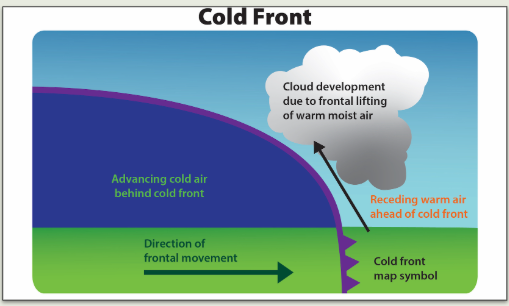
How does your model compare with this model of a cold front?