Log in
Sign up for FREE
arrow_back
Library

Grade 6 Unit 3 Assessment (2/4/2025)

star
star
star
star
star
Last updated over 1 year ago
7 questions
Required
1
RI.6.6
Required
3
Question 2
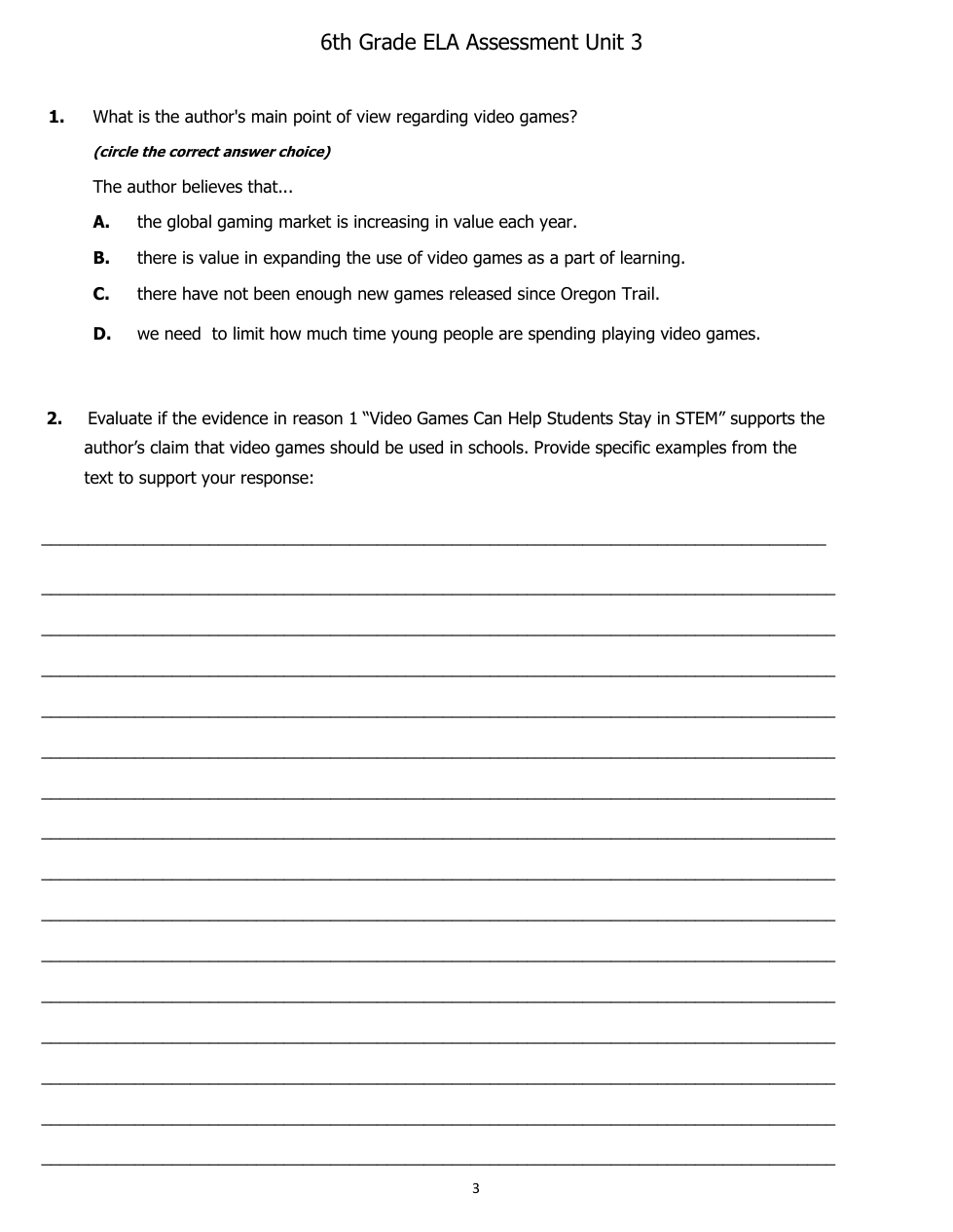
2.

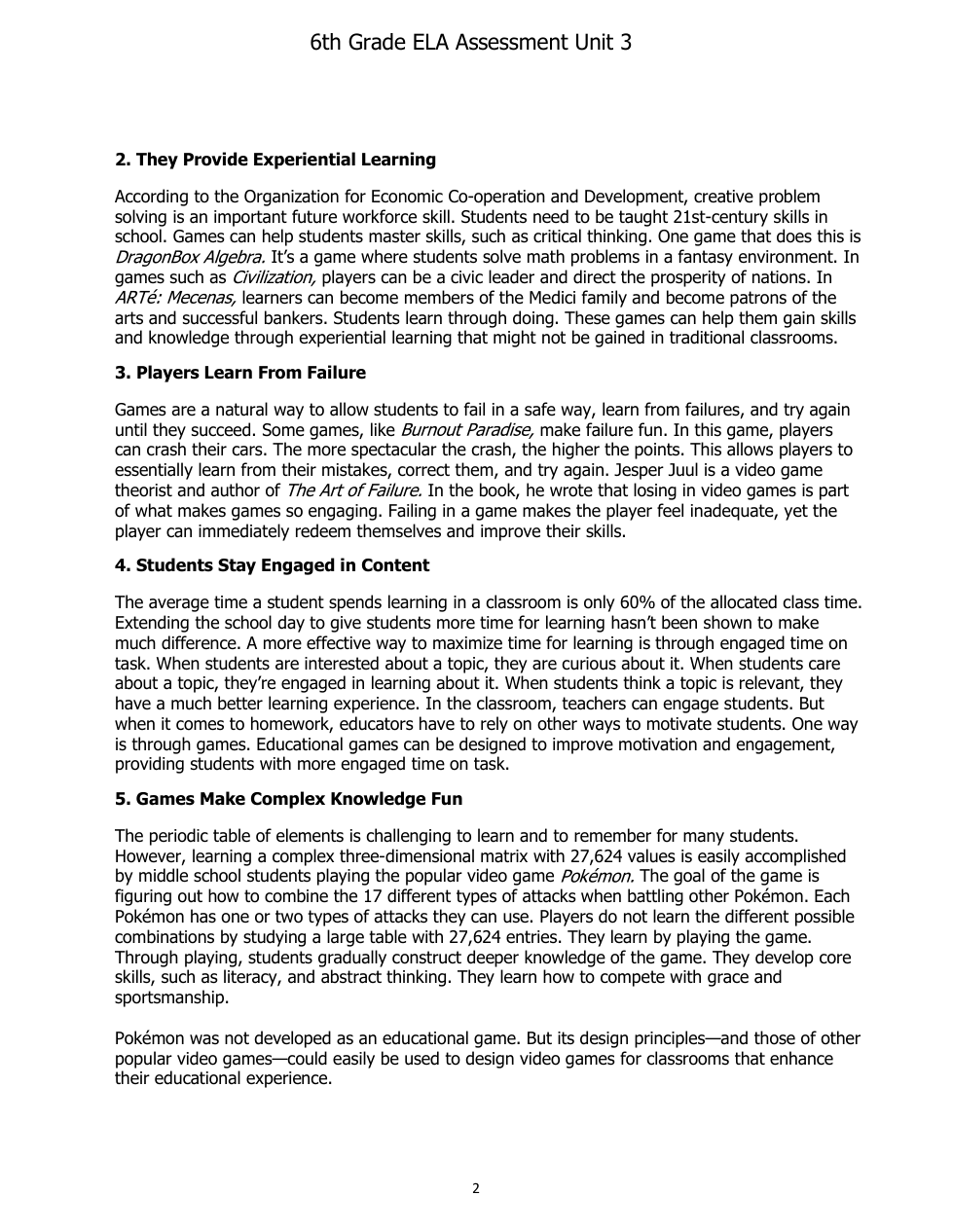
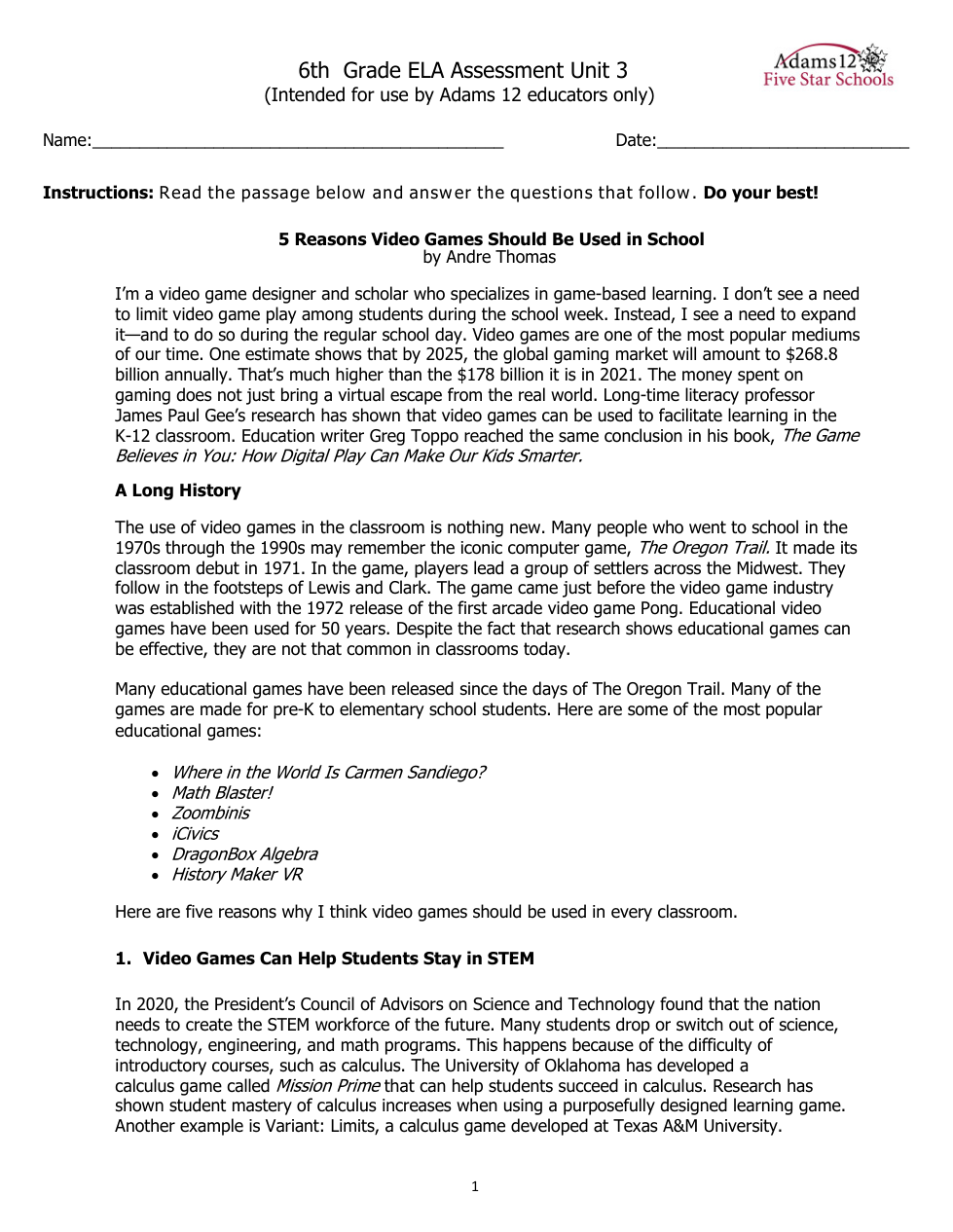
Evaluate if the evidence in reason 1, “Video Games Can Help Students Stay in STEM,” supports the author’s claim that video games should be used in schools. Provide specific examples from the text to support your response:

RI.6.8
Required
10
Question 3
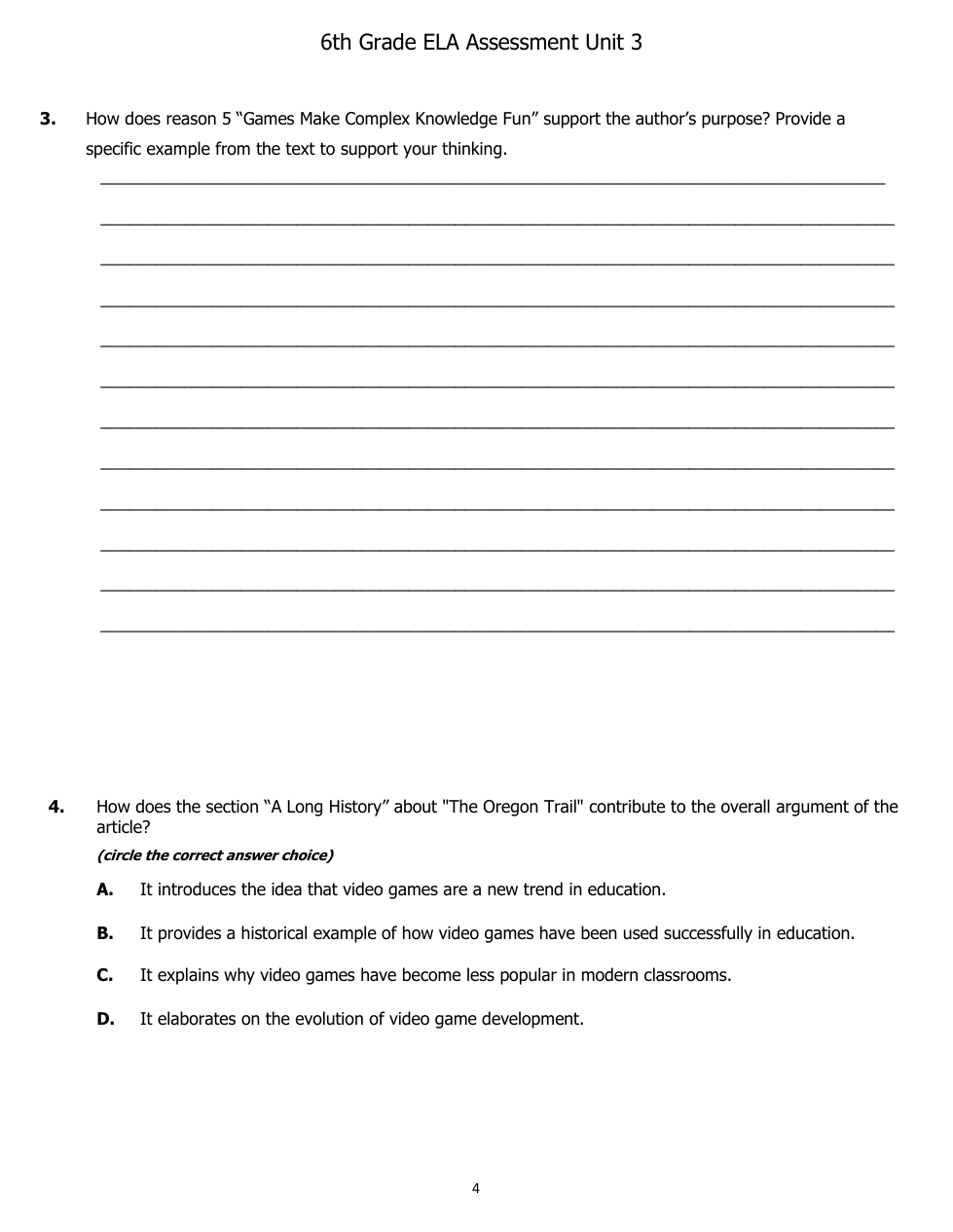
3.

How does reason 5, 'Games Make Complex Knowledge Fun,' support the author’s purpose? Provide a specific example from the text to support your thinking.

RI.6.6
Required
1
RI.6.5
Required
1
RI.6.8
Required
1
RI.6.5
Required
8
Question 7
7.

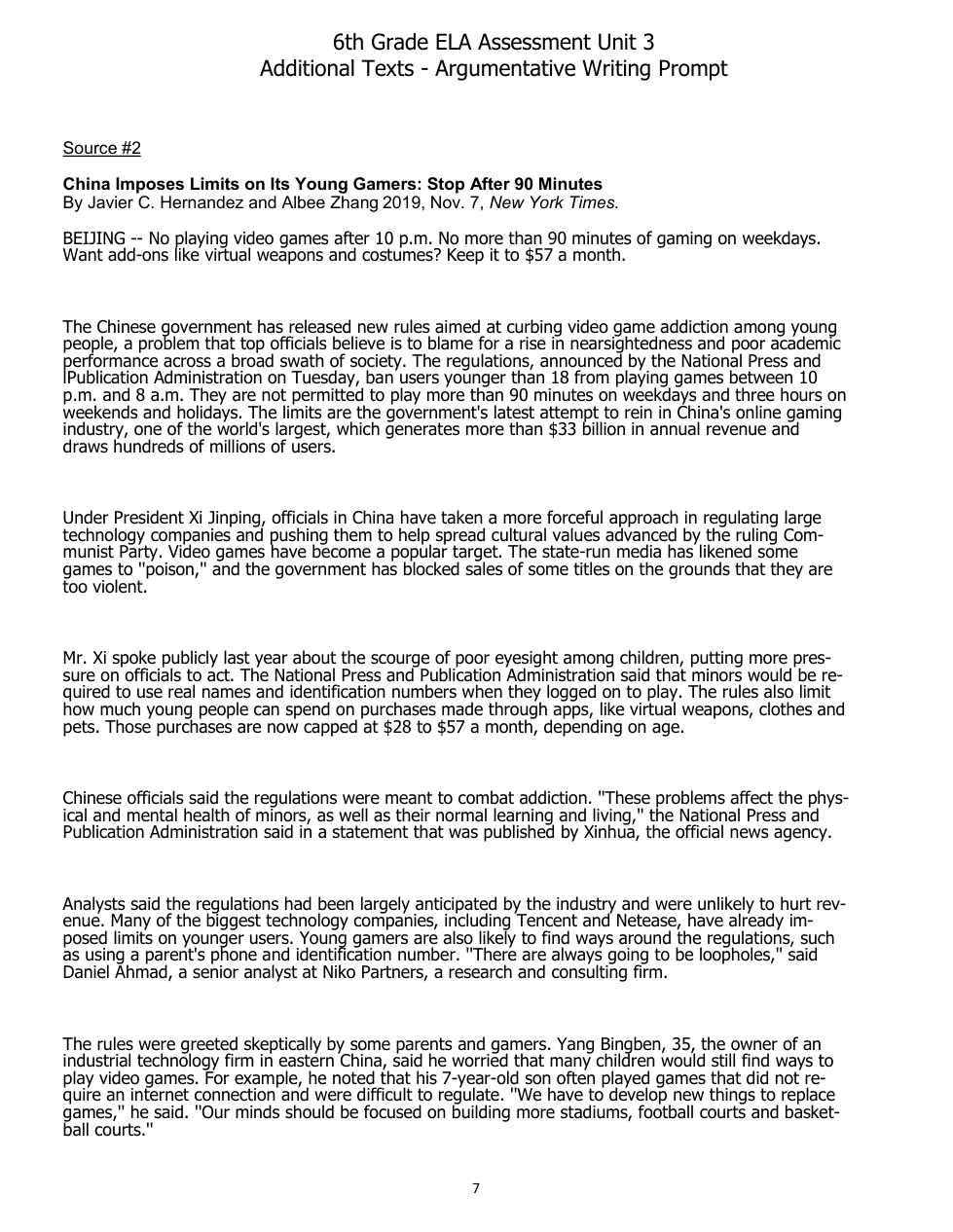
After reviewing the excerpts from the sources, what argument can you make about the limitations on video game play for students?

W.6.1.a
W.6.1.b
…
Question 1
1.

Question 4
4.

Question 5
5.

Question 6
6.

What is the author's main point of view regarding video games?
The global gaming market is increasing in value each year.
There is value in expanding the use of video games as a part of learning.
There have not been enough new games released since Oregon Trail.
We need to limit how much time young people are spending playing video games.
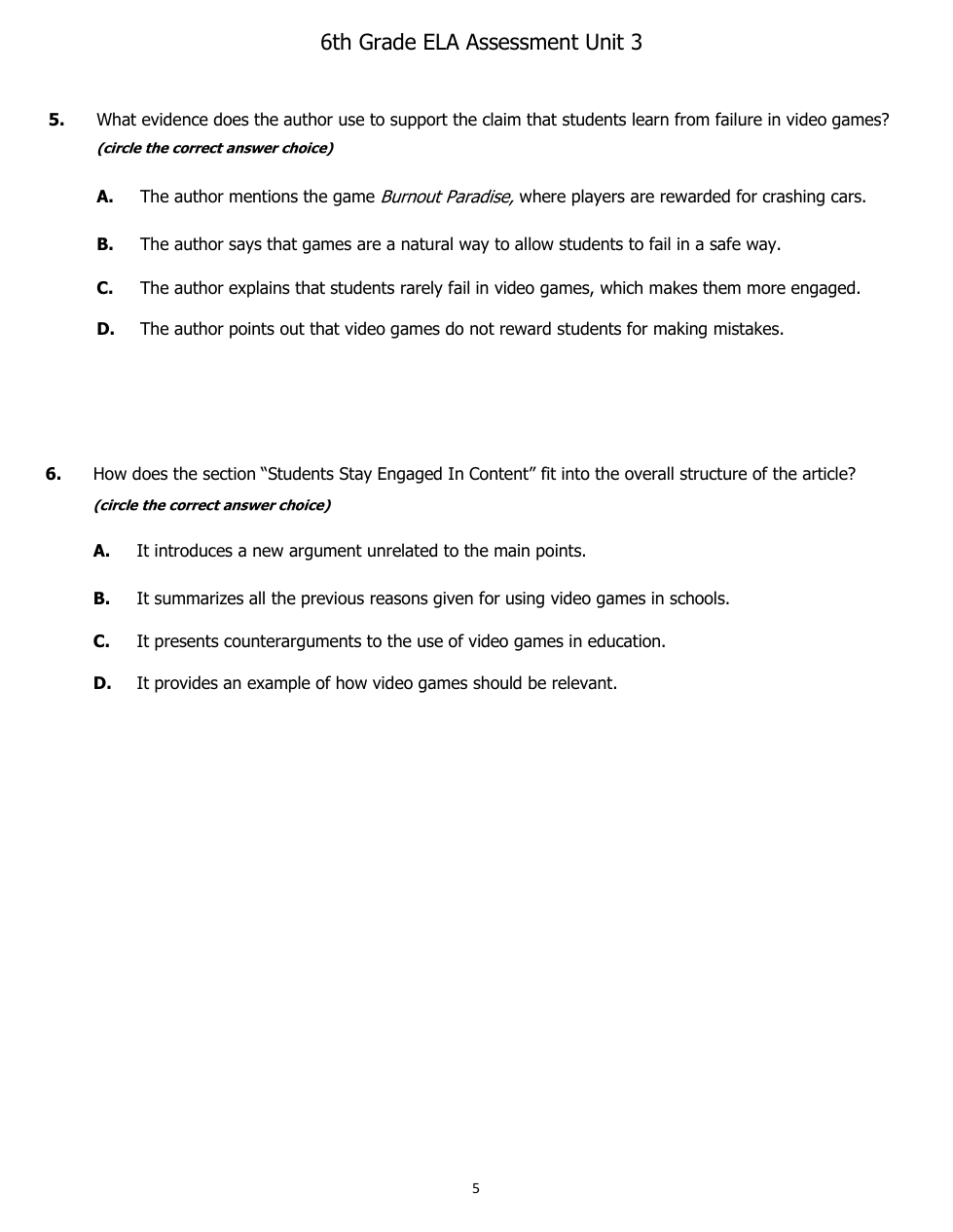
How does the section 'A Long History' about 'The Oregon Trail' contribute to the overall argument of the article? (Circle the correct answer choice)
A. It introduces the idea that video games are a new trend in education.
B. It provides a historical example of how video games have been used successfully in education.
C. It explains why video games have become less popular in modern classrooms.
D. It elaborates on the evolution of video game development.
What evidence does the author use to support the claim that students learn from failure in video games?
A. The author mentions the game Burnout Paradise, where players are rewarded for crashing cars.
B. The author says that games are a natural way to allow students to fail in a safe way.
C. The author explains that students rarely fail in video games, which makes them more engaged.
D. The author points out that video games do not reward students for making mistakes.
How does the section 'Students Stay Engaged In Content' fit into the overall structure of the article?
A. It introduces a new argument unrelated to the main points.
B. It summarizes all the previous reasons given for using video games in schools.
C. It presents counterarguments to the use of video games in education.
D. It provides an example of how video games should be relevant.