Ɛhia
1
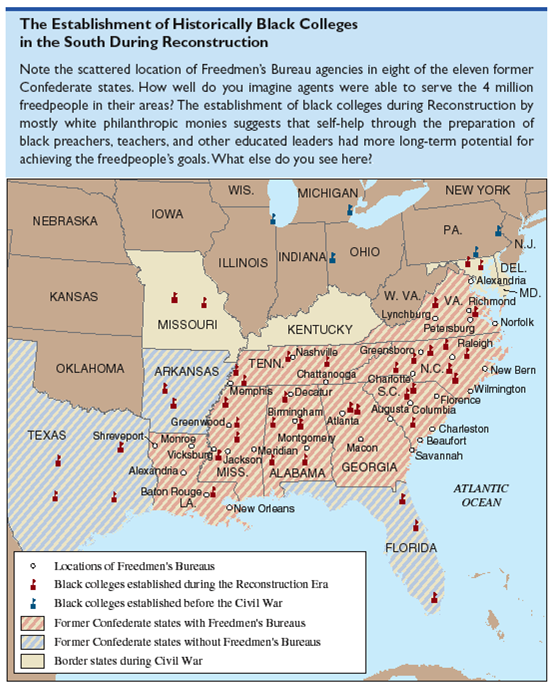
There were 2 Historically Black Colleges founded during the Reconstruction Era in Atlanta. Can you name them?
There were 2 Historically Black Colleges founded during the Reconstruction Era in Atlanta. Can you name them?
The end of the war and the 13th Amendment brought freedom to nearly 4 million enslaved people in the United States. African Americans celebrated this “day of Jubilee.” For many, however, freedom did not come immediately. They had to wait for Union soldiers to liberate them. Others had to wait until their masters officially, though reluctantly (unwillingly), accepted emancipation. Freed people knew that the poverty and racism they faced would present an uphill climb, but they began to build new lives.
In Georgia and elsewhere, newly emancipated blacks exercised their freedom by taking to the road, some in an effort to reunite with lost family and friends. They looked for new opportunities, and learning to read and write became a chief goal. Freed people formed churches and other organizations to provide support for each other. They worked to build strong families and shape their communities.
Some freed people did not leave their plantations because they were too old and sick or too young and had no family. In some cases, elderly slaves stayed on the plantation to live out the remainder of their lives. It was also true that some newly freed people agreed to stay in order to care for a sick or elderly master. Freedom meant something different to everyone
Near the end of the war, Congress created an agency called the Bureau of Refugees, Freedmen, and Abandoned Lands. Most people just called it the Freedmen’s Bureau. Its primary goal was to protect and help freed people, but it also helped poor whites displaced by the war. Bureau agents—many of them volunteers from the North and the South—fed the poor, created schools for black children, and provided medical care for those in need. They helped freed people find lost family and friends. They also provided freed people with some protection from hostile whites. Now that slavery was over, white planters and others had to pay freedmen for their labor. The Freedmen’s Bureau helped settle disputes and negotiate labor contracts between planters and freedmen.
The Freedmen’s Bureau prevented thousands of Georgians from starving during the first three years after the war. Within 18 months after hostilities ceased, the bureau had distributed over three-quarters of a million rations to Georgians (both black and white). In a controversial move, Brigadier General Davis Tillson, who oversaw the bureau's business in Georgia and South Carolina, ordered the with holding of rations from healthy The Second Civil War adult males who were not working. He also ordered businesses and farms that needed workers to hire them. He believed this would minimize vagrancy (homelessness or joblessness) and encourage able-bodied men to work so that emergency resources would be more available for those who truly needed them.
The accomplishments of the Freedmen's Bureau were remarkable, considering the shortages of resources and supplies the workers often faced. Across the South, the bureau issued more than 21 million rations, established more than 40 hospitals, treated nearly half a million cases of illness, provided free transportation to more than 30,000 persons dislocated by the war, and supervised hundreds of labor contracts.
Threats of violence from angry whites made the job of bureau agents difficult. In some cases, white people who opposed their work killed bureau agents. Of course, there were some dishonest agents who demanded a percentage of the labor contracts they worked out between employers and freedmen. But overall, and in spite of the difficulties, much good had been accomplished by 1872, when Congress allowed authorization of the agency to expire
There were 2 Historically Black Colleges founded during the Reconstruction Era in Atlanta. Can you name them?
The Sea Islands had become a refuge (safe place for shelter) for emancipated blacks as soon as the Union army gained control of the islands and the coastal mainland. In several island communities, freedmen created a government and set up a school system. At the end of the war, freed people who had followed Sherman’s March gathered by the thousands along the coast. To deal with the growing number of refugees, Sherman issued Special Field Order No. 15. It ordered the confiscated lands to be distributed in 40-acre plots to the newly freed families living on the islands. Stories that freedmen would receive “40 acres and a mule” created a stir throughout Georgia and South Carolina. Landownership was one of the hallmarks of freedom for black Americans and white Americans alike.
This promised land became known as “Sherman’s Reservation. "It included the region’s largest rice and cotton plantations, where so many enslaved African Americans had worked for so long. For months after the hostilities ended, white plantation owners were not allowed to reclaim these lands. However, in the fall of 1865, President Andrew Johnson rescinded (cancelled) the order, allowing the previous owners to reclaim their property. Sherman’s order was controversial then and remains so today.
The order became the basis of demands that the federal government compensate (give something in recognition of loss and suffering to) the formerly enslaved and their descendants. In the end, the government did not do this. The freed people had to either leave the land or sign labor contracts with the planters. The dream of 40 acres and a mule turned bitter. It reminded African Americans that the federal government had freed them but left them without the resources to live.
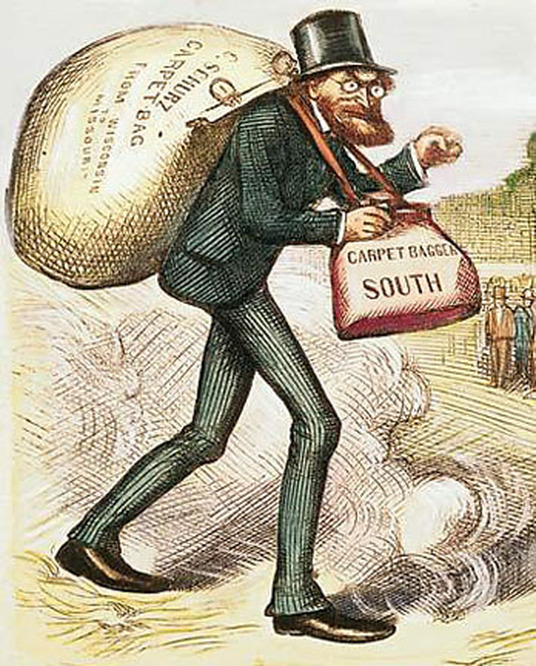
Southerners had nicknames for white Northerners and Southerners who supported the Freedmen’s Bureau. They used the term “carpetbaggers” for Northerners who came south to work for the bureau and other agencies during Reconstruction. The nickname came from the luggage they carried, which was made from carpet-like material.
Some carpetbaggers were former Union soldiers who stayed in the South after the war ended. Others were teachers and missionaries who hoped to help freed people. A few saw an opportunity to make money while the South was rebuilding, and out of this group, some were men who hoped to benefit from dishonest labor negotiations and business dealings. Many Southerners viewed carpetbaggers as unwelcome intruders who came south to make quick money.
For many Southerners, “scalawags” were even worse than carpetbaggers. Scalawags were white Southerners who cooperated with Reconstruction. They were seen as traitors. Southern Democrats especially disliked scalawags because they supported the Freedmen’s Bureau and the Republicans. Chief among Georgia politicians who were viewed with scorn during Reconstruction was Joseph Brown. He was the former governor who had led the way for secession and had been a powerful force during the Civil War, but his conversion to the Republican Party after the war and his encouragement of Georgians to accept the terms of Reconstruction were not popular. Surprisingly Georgia leaders continued to seek him out for advice, but his statewide popularity did not return until Reconstruction ended in Georgia and he returned to the Democratic Party.
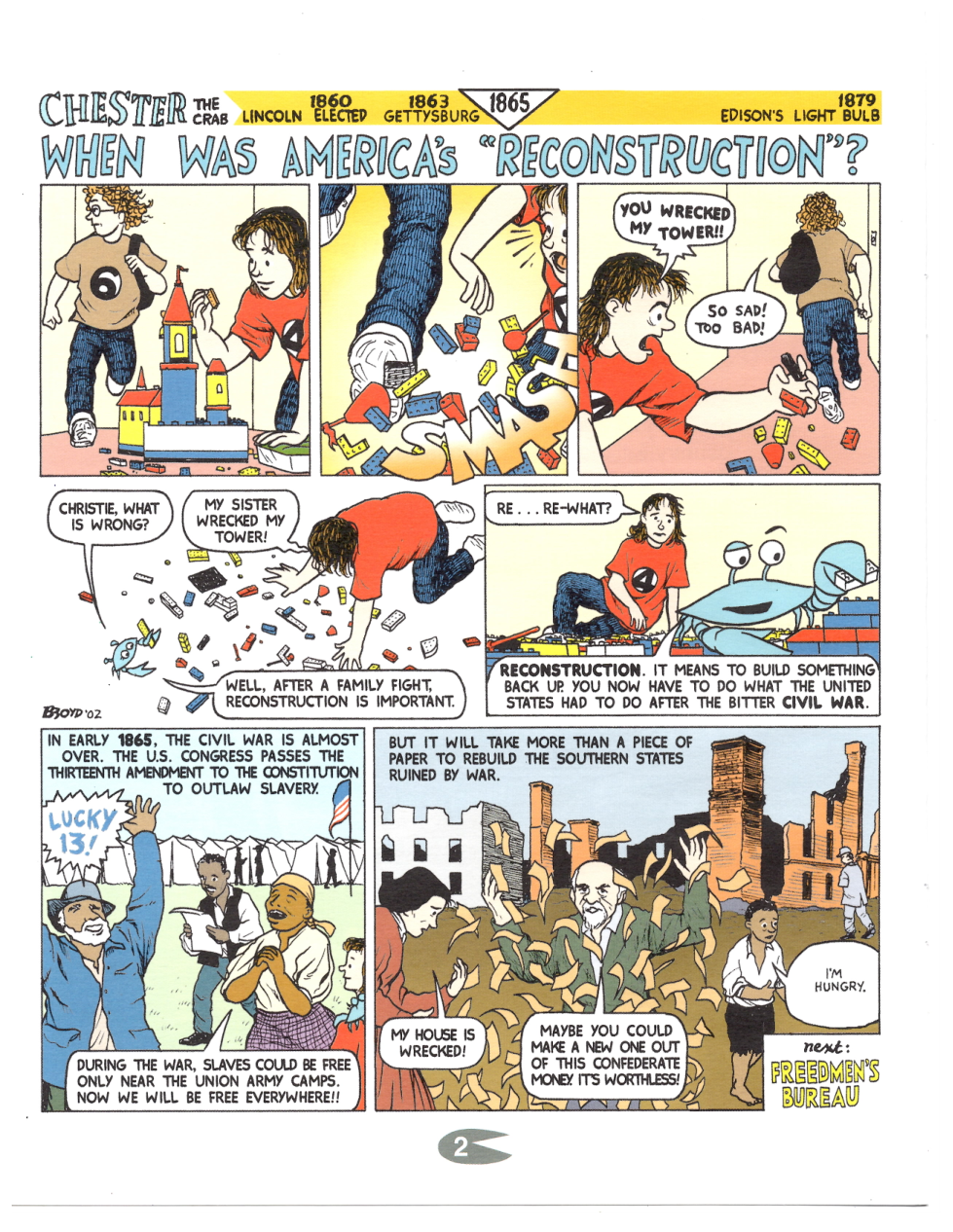
According to the comic, what was “worthless” at the end of the war?
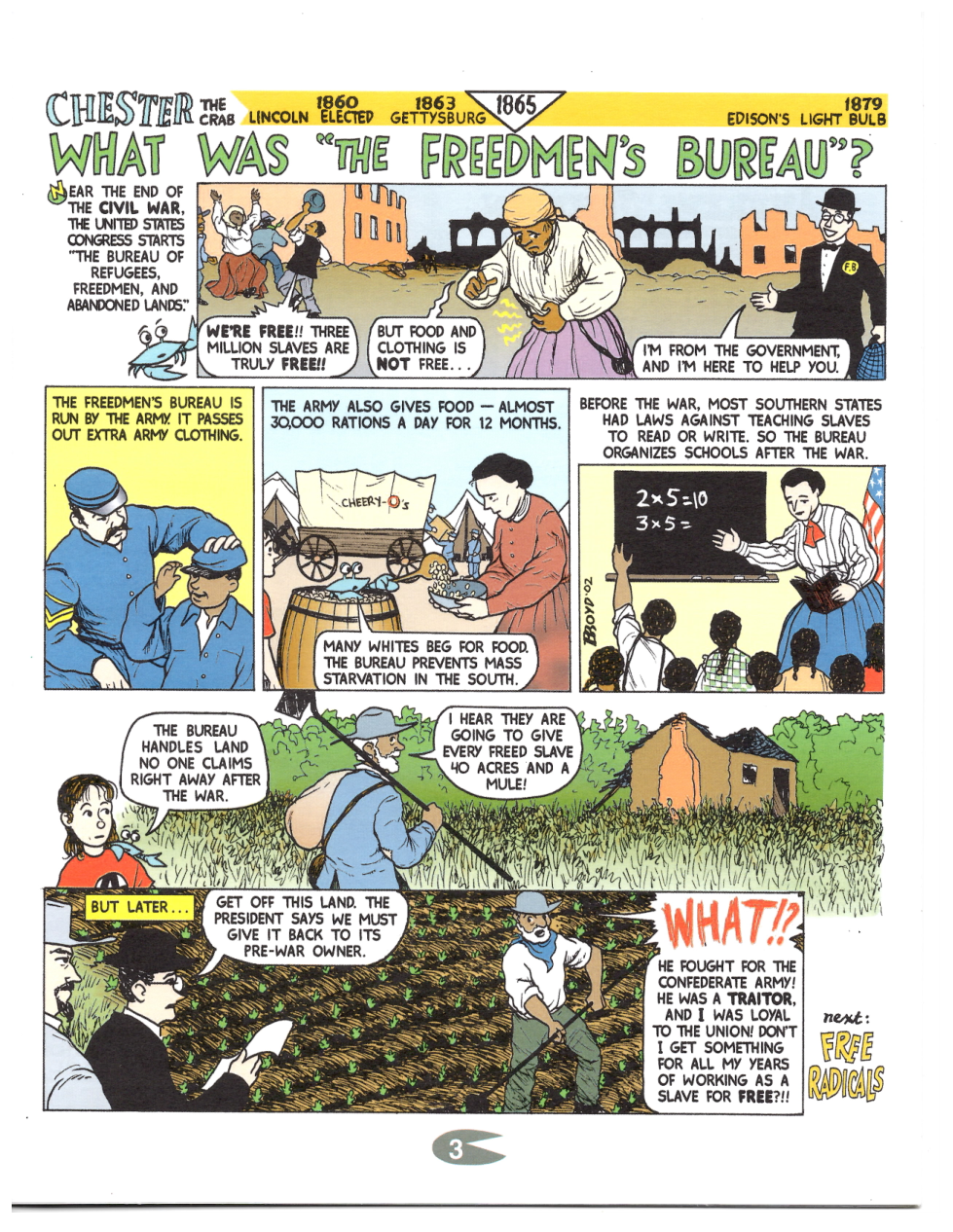
List four things that the Freedmen’s Bureau did according to the comic:
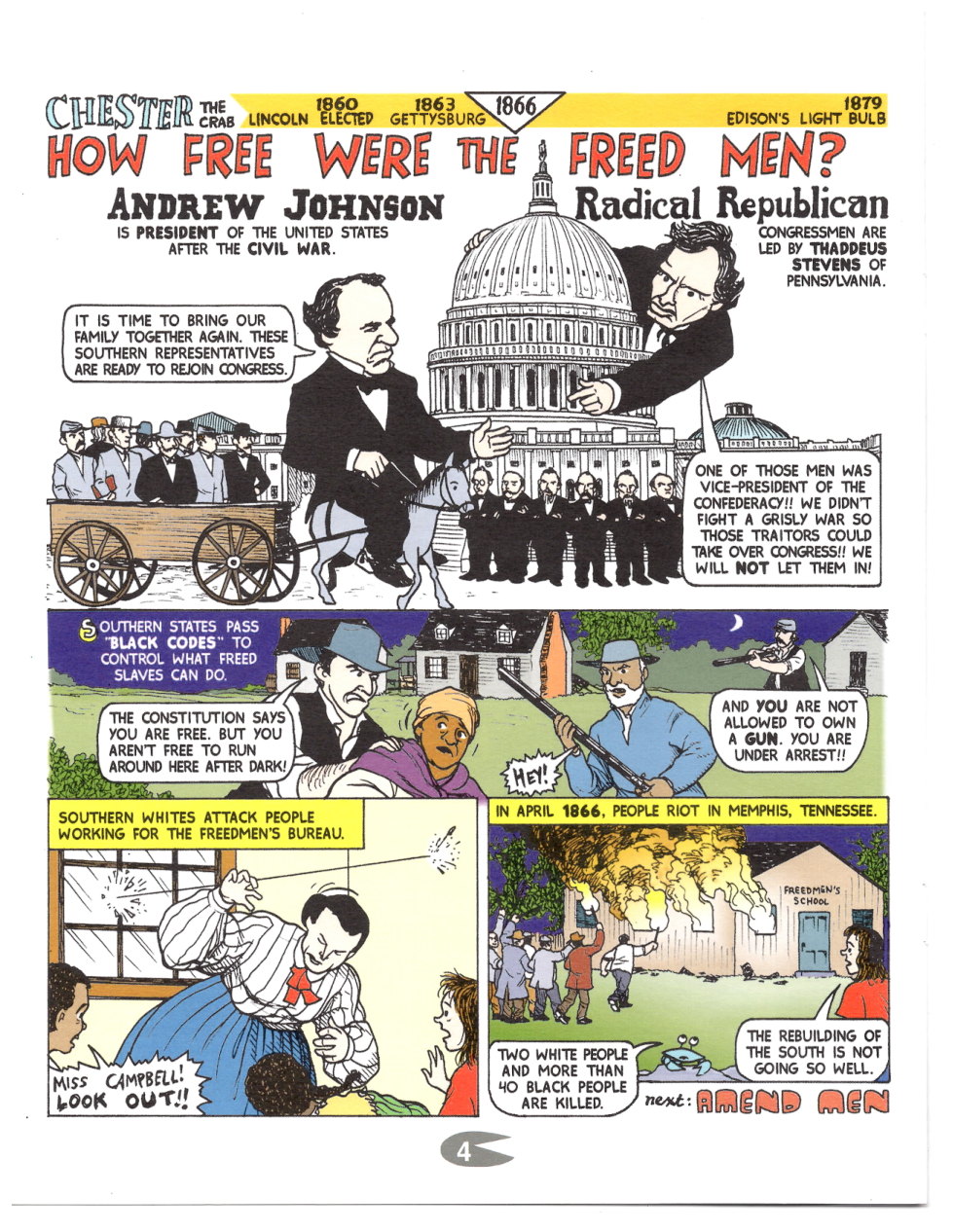
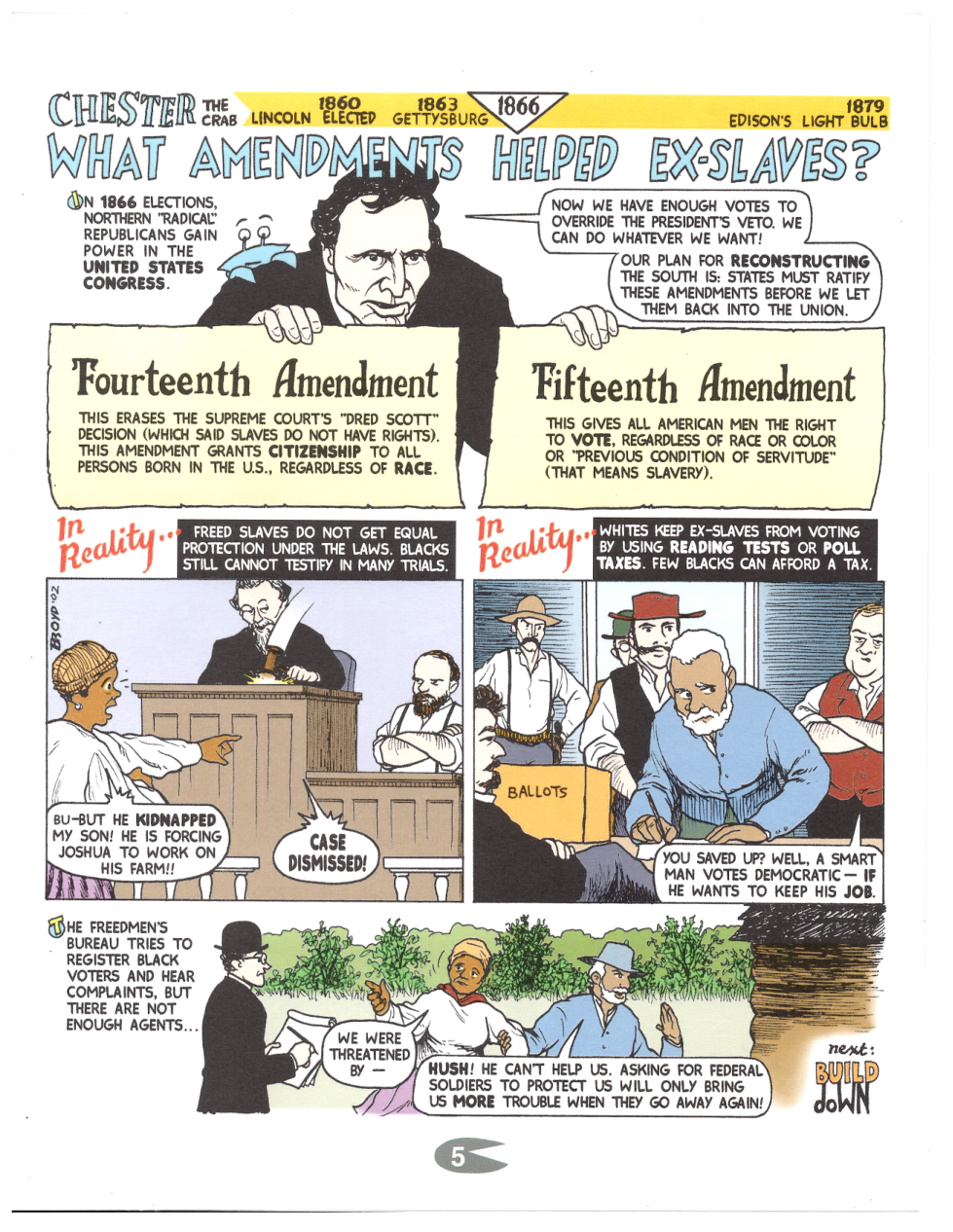
The 14th Amendment was supposed to grant citizenship and equal rights to all, but what was it like “in reality” for African Americans in the South?
The 15th Amendment was supposed to grant the right to vote to all men, but what was it like “in reality” for African Americans in the South?
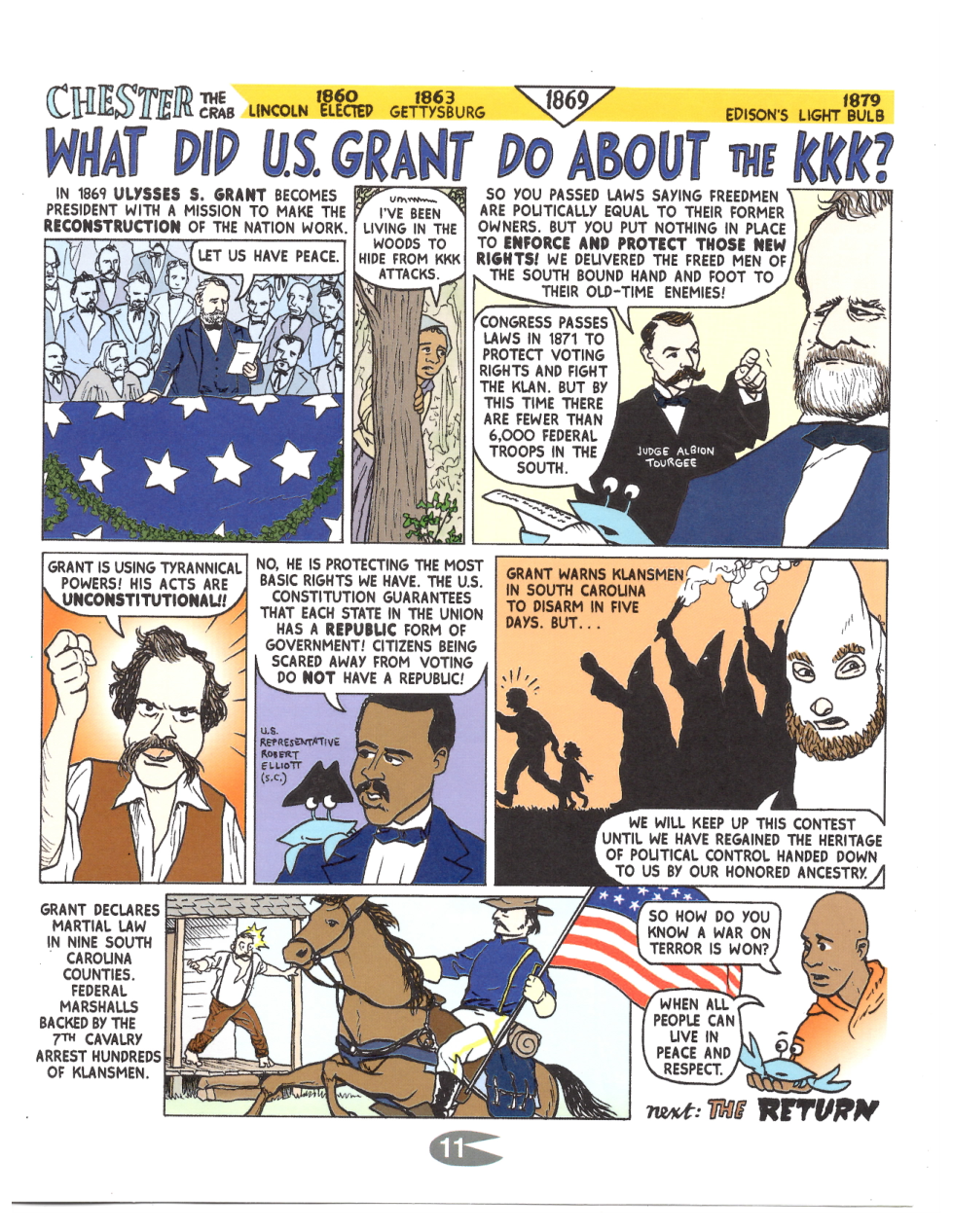
When President Johnson’s power waned and the Radical Republicans took control of Congress, things began to change rapidly for Georgia. Once Congressional and military Reconstruction became the norm, organized pockets of intense resistance by insurgents (people who forcibly opposed Reconstruction) developed in Georgia and the rest of the South.
Although the new social status of African Americans was a concern for many white Southerners, changes on the political front appeared to be even more disconcerting (unsettling). Freedmen were making laws and political decisions that affected the daily lives of everyone. White resentment (bitter feelings) toward Republicans and blacks grew rapidly in Georgia and other Southern states.
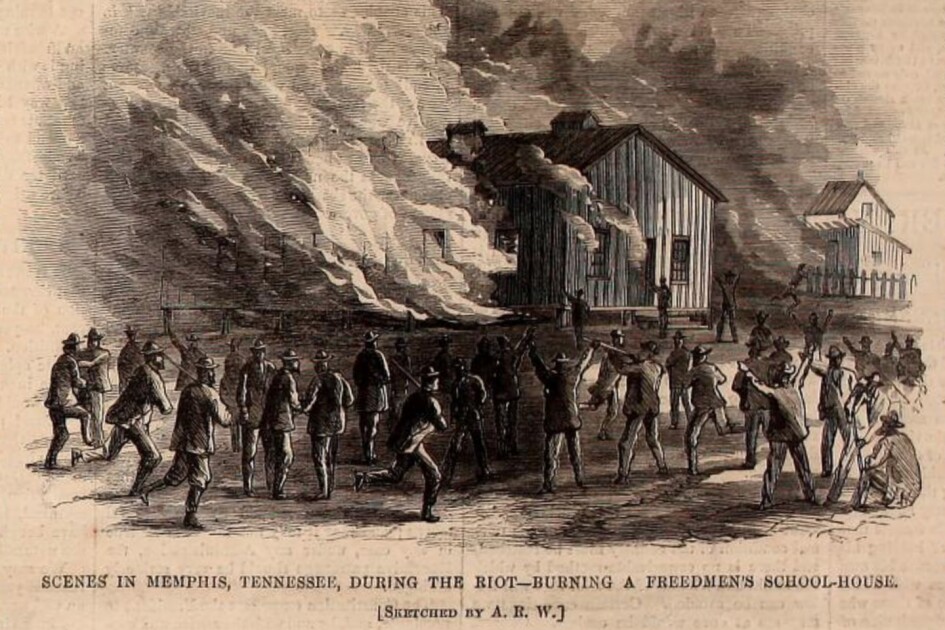
Former Confederates and the Southern Democratic Party they once controlled could never hope to win an election. With the Southern economy in ruins, unemployment skyrocketed. To address these anxieties and uncertainties, many young white men began to form secret societies that had a violent streak. White mobs burned black churches and schools in order to intimidate newly freed people. The black community rapidly rebuilt them, and these important institutions survived. But although the violent efforts at social intimidation were not always effective, they created an atmosphere of fear and uncertainty among blacks. Even more effective was intimidation on the political front. They worked to scare black voters away from going to the polls.
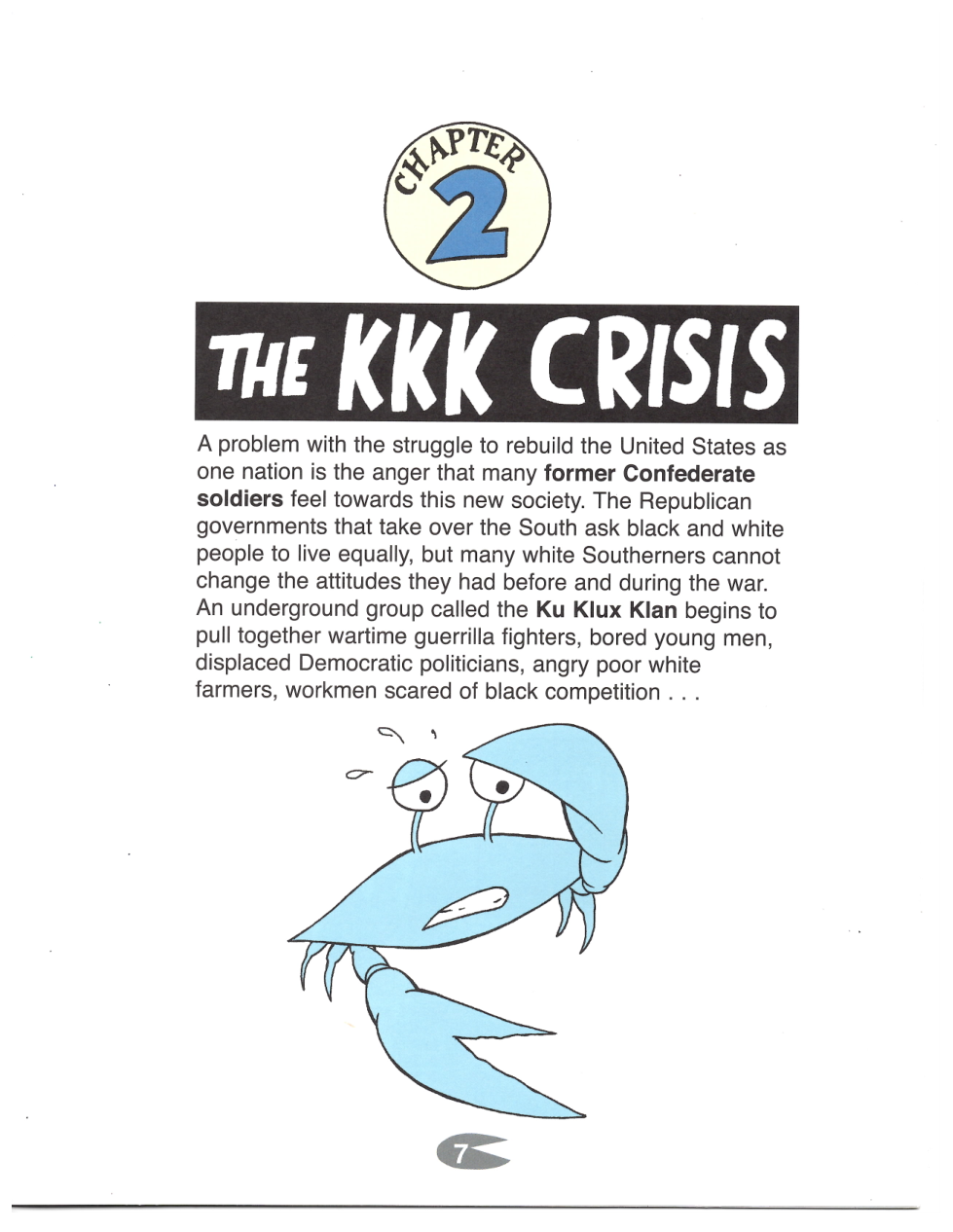
The Ku Klux Klan
Although most Southern whites saw no future in continued open resistance to the federal government, many war veterans and political leaders were willing to resist anonymously (without revealing their identities). They turned to a new organization called the Ku Klux Klan or KKK.
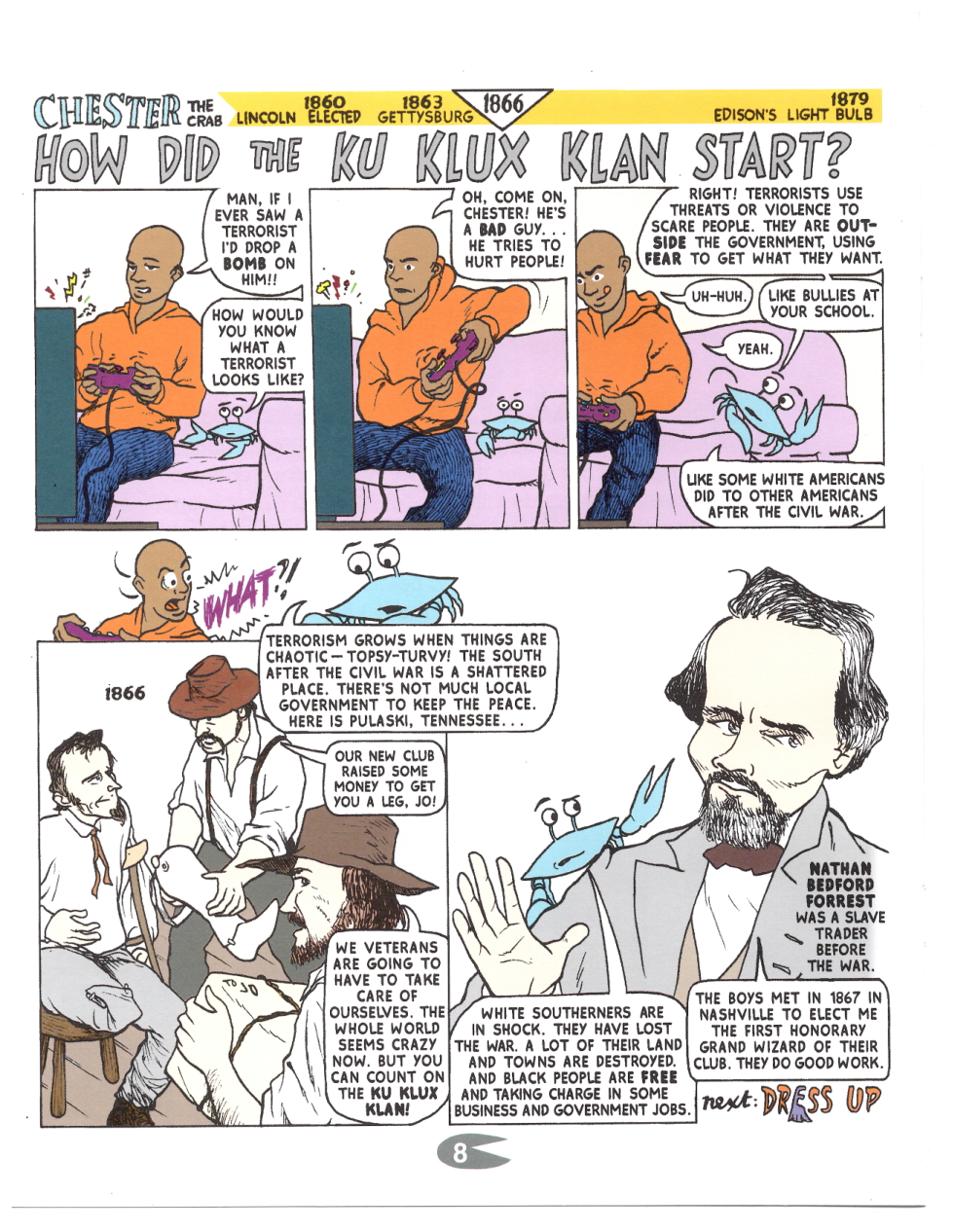
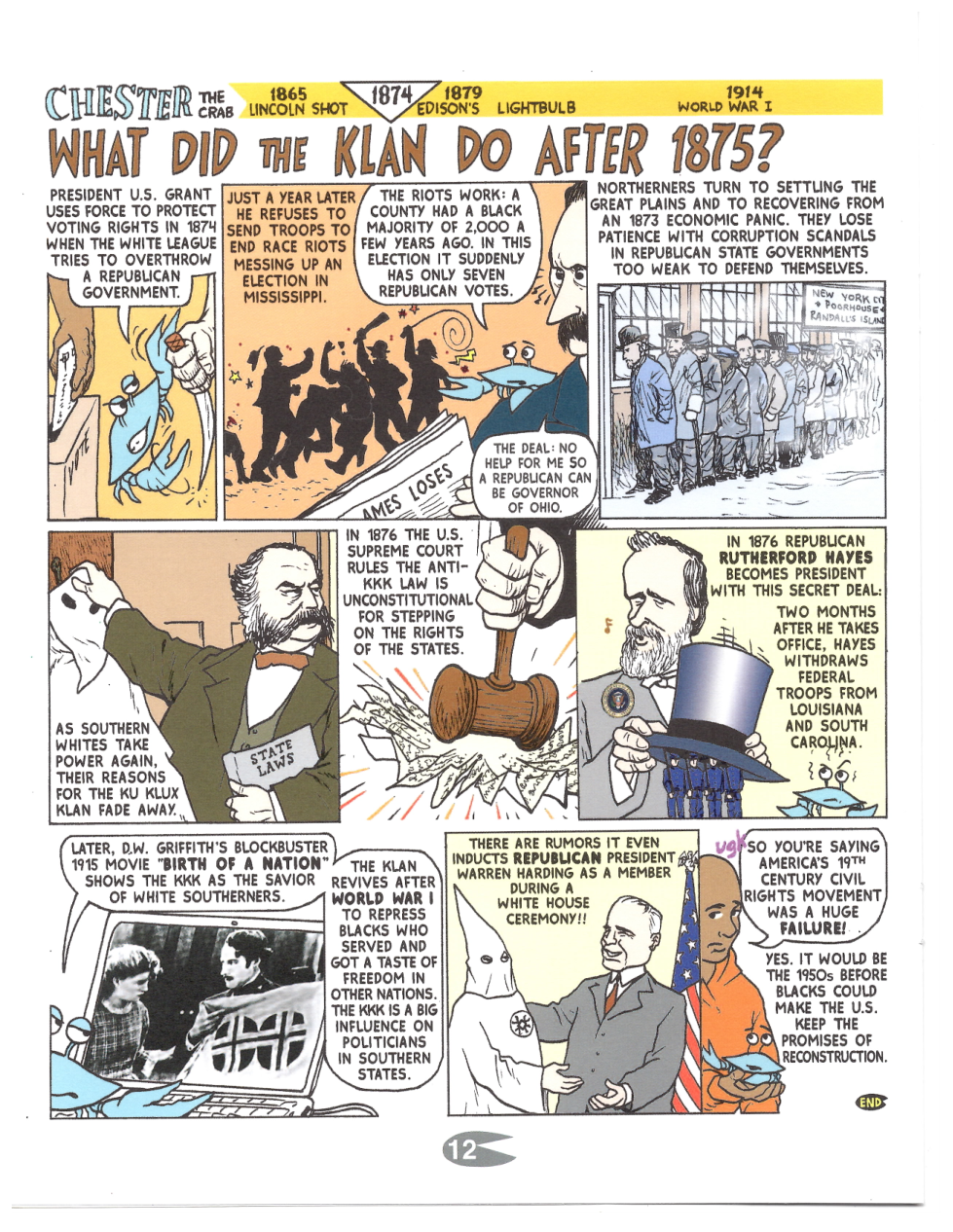
The KKK had been founded as a secret club for former Confederate soldiers in Tennessee in 1866. It came to symbolize white resistance to Reconstruction and to be recognized as the violent arm of the Democratic Party. Klan members wanted to restore the pre-war social order of Georgia, especially white supremacy, the belief that whites were superior to all others in authority, power, and status.
The Klan was so secretive that even historians today have trouble pinning down its early leaders and participants. Historians generally agree though, that former Confederate General Nathan Bedford Forrest was a founder, and that its initial leader in Georgia was former Confederate General John B. Gordon.
Terror Tactics
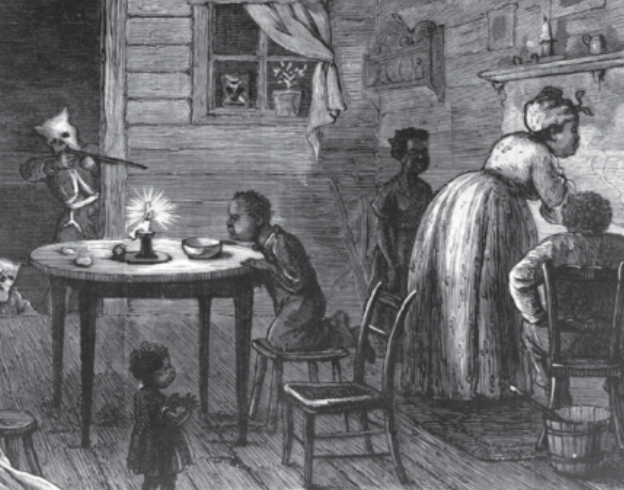
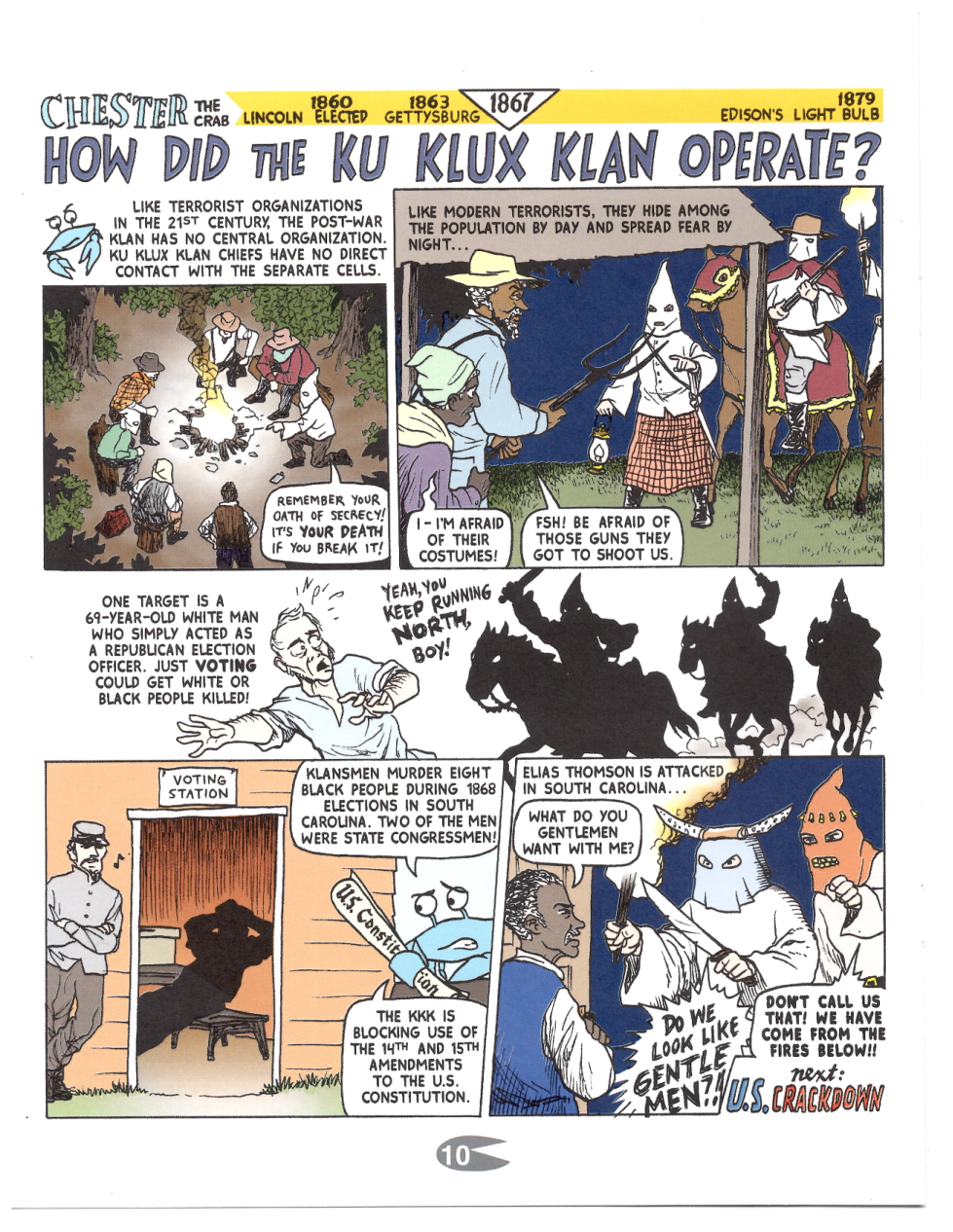
Disguised in white robes with hoods suggesting the ghosts of Confederate soldiers, KKK members terrorized freedmen, Jews, carpetbaggers, and scalawags. They burned crosses or left coffins outside their homes. Sometimes they dragged their victims from bed in the middle of the night, beating, whipping, and in some cases shooting or hanging them in an act known as lynching. They torched black schools, churches, and homes as well.
These tactics of violence and intimidation did keep African Americans and white Republican voters away from the polls. They stayed at home or followed orders and voted for Democrats. Some Republicans resigned from office, and others hired bodyguards. Those with less money often hid in the woods for days at a time if they heard rumors that they might be targeted. G.W. Ashburn, a white Republican from Columbus, was warned about his interactions with and political support for freedmen. Several days later, after not responding to the threats, he was murdered.
Between the April 1868 election for state government officials and the November 1868 presidential election, the Republican vote in Georgia almost disappeared. In one Georgia county where the April vote had been over 1,200 votes for Republicans, the November election produced only one Republican vote.
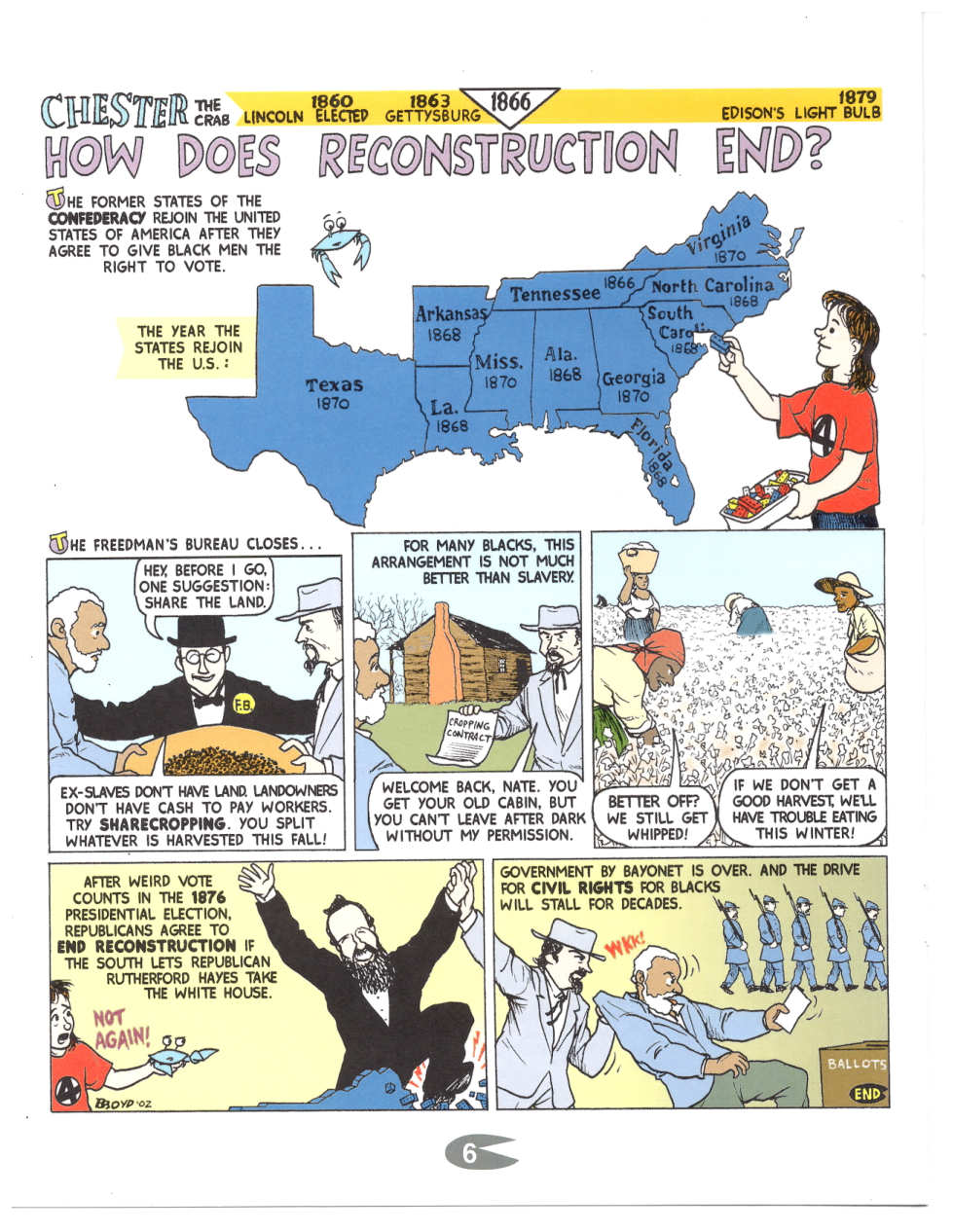
What year did Georgia rejoin the U.S.?
What did the 13th Amendment accomplish?
Why did some freed people stay on plantations?
What role did churches play for freed people?
What was the main goal of the Freedmen's Bureau?
Who oversaw the bureau's work in Georgia and South Carolina?
What did the Freedmen's Bureau provide to those in need?
What was a challenge faced by bureau agents?
What significant action did President Abraham Lincoln take on January 1st, 1863?
Which of the following was an achievement of the Freedmen's Bureau?
Why did the Freedmen's Bureau face challenges after President Lincoln's assassination?
What did Sherman’s Special Field Order No. 15 promise?
Who canceled Sherman’s order allowing land distribution?
What became known as 'Sherman's Reservation'?
How did freed people feel about the land promise?
What term did Southerners use for Northerners supporting Reconstruction?
Who were scalawags in Southern society during Reconstruction?
What motivated some carpetbaggers to come to the South?
Why did Southern Democrats dislike scalawags? CHOOSE TWO
What fueled the resistance by white Southerners in Georgia during Reconstruction? What made them angry?
What was a main goal of the Ku Klux Klan?
How did the KKK violate the rights of African Americans politically?
What rights were granted to freed people during the Reconstruction era?
Where did the Klan's presence have the strongest influence?
What was one method used by the Klan to terrorize Black Americans?
What law did President Ulysses S. Grant sign in response to Klan violence?