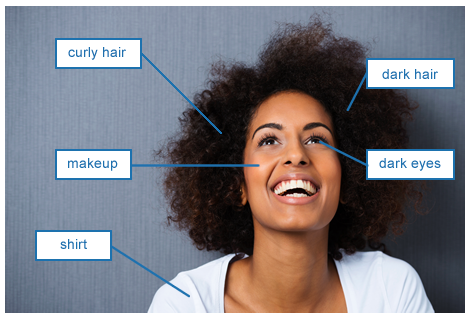
Do you have the same color eyes as your best friend? You might not. Different people have different color eyes. Eye color, along with things like height, hair color, and the shape of your nose are all traits. A trait is a characteristic that not all individuals of a species have in common.
These girls all have different traits, such as the color and curliness of their hair and the color of their eyes.
Inherited traits are traits that living things get from their parents. Offspring might look more like one parent than the other, or he or she might look like a blend of both parents.
The children in this family share some traits with their parents.
Question 1
1.
Question 2
2.
Which of these are inherited traits?
Question 3
3.
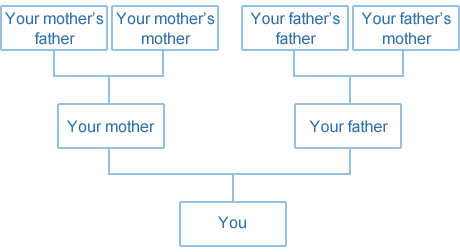
You get your inherited traits from your mother and father. Where did they get their inherited traits from? They came from their parents—your grandparents! Traits are passed down from one generation to the next. Sometimes they skip a generation. This is why someone might look more like his grandfather than his father.
Your parents traits come from their parents. We can represent this through a family tree, like this one!
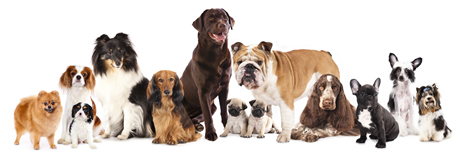
As we have already seen, organisms can have many differences in their traits. Members of the same species can have very different inherited traits and look very different. However, members of the same species will share some traits. People may have many differences, but we all look like humans.
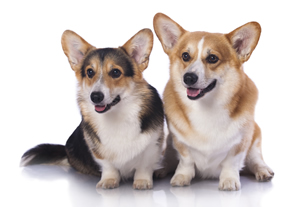
All dogs are the same species. The different breeds of dogs show just how diverse their traits can be!
Question 4
4.
Question 5
5.
Question 6
6.
There are other types of traits. The environment and education can cause an organism to have new or different traits. These traits are called acquired traits because they are acquired, or gained, by living in a specific environment.
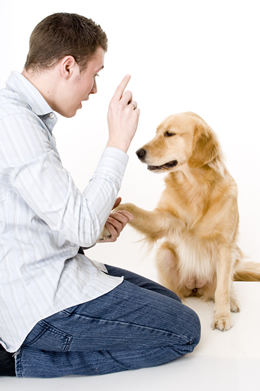
Dogs can learn how to shake hands. This is an acquired trait. The dog is not born able to shake hands, and will not pass down the knowledge to its offspring.
Question 7
7.
Question 8
8.
Question 9
9.
Question 10
10.
Question 11
11.
What would happen if organisms of a certain species were not able to reproduce? That species would not be able to exist for more than one generation. Reproduction allows species to exist from one generation to the next by passing on genetic information.
All organisms must reproduce, but not all organisms reproduce the same way. Some organisms reproduce through asexual reproduction. Asexual reproduction is when one organism produces offspring that are identical to itself. There is only one parent in asexual reproduction, so an offspring receives all of its genes from one parent. Some advantages of asexual reproduction are it is efficient and often reproduction is quick. Disadvantages include no variation and no adaptability over generations.
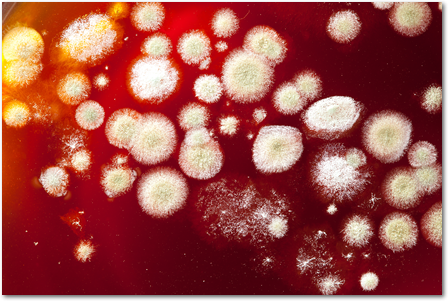
Mold can reproduce asexually through the use of spores.
Question 12
12.
Question 13
13.
Asexual reproduction results in offspring that are genetically__________
the parent.
Asexual reproduction is common among unicellular organisms. However, most multicellular organisms reproduce sexually. Sexual reproduction is when two parents each contribute a sex cell to a new offspring. Sexual reproduction involves meiosis. Offspring that are produced through sexual reproduction are not genetically identical to either of their parents because they receive half of their genes from each parent.
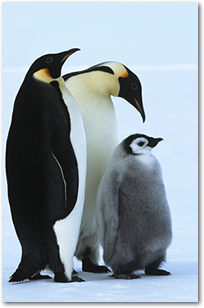
Emperor penguins, like most birds, reproduce sexually.
Question 14
14.
Question 15
15.
1 parent __________
2 parents __________
genetically identical __________
Variation __________
Why do organisms not all use the same type of reproduction? Is one type of reproduction better than the other? Sexual and asexual reproduction both have advantages and disadvantages.
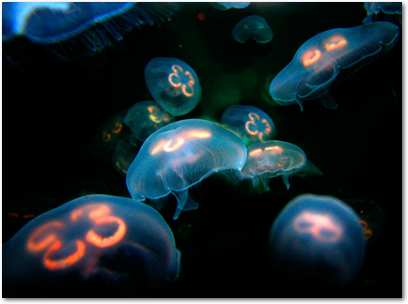
Jellyfish can reproduce both sexually and asexually. There are advantages and disadvantages to each type of reproduction.
Asexual reproduction allows an organism to reproduce quickly. Asexual reproduction requires just one parent organism. Also, all offspring of asexual reproduction can reproduce, not just female offspring. Lastly, because offspring of asexual reproduction are genetically identical to their parent, all of the parent’s favorable traits are always passed on to the offspring.
However, asexual reproduction has a disadvantage. Because offspring are genetically identical to their parent, individuals of a particular species will remain very similar to their parents from generation to generation. This lack of genetic variation makes it less likely that individuals will have traits that are well-adapted to changes in the environment.

At first, sexual reproduction seems to be less favorable than asexual reproduction. Sexual reproduction requires two parents, and it can be a very slow process compared to asexual reproduction. Also, only females can produce new offspring. However, sexual reproduction does have one major advantage. Because offspring share traits from both parents, the offspring of sexual reproduction can be different from their parents. This genetic variation makes it more likely that individuals will have traits that are well-adapted to changes in the environment.

This young girl’s hair is a different color from her father’s hair. That is due to the combination of genes she received from her mother and father.
Question 16
16.
Question 17
17.
Question 18
18.
An advantage of sexual reproduction is __________. A disadvantage is __________.
Question 19
19.
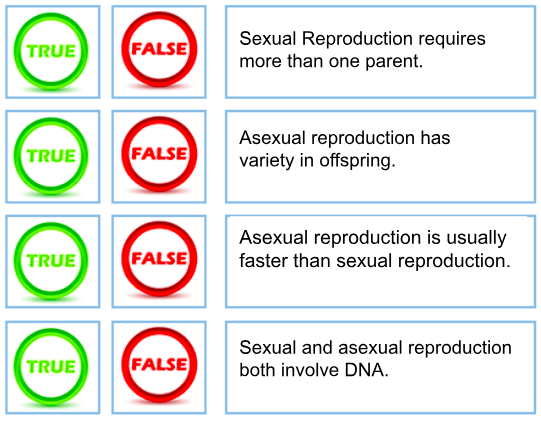
Decide if the statement is true or false.
Question 20
20.
Sperm from the male fertilizes the egg of the female. This zygote develops into a unique organism.__________
A tree sends out roots from which a new tree develops.__________
Pollen from one flower sticks to a hummingbird’s head and fertilizes another flower as the hummingbird feeds.__________
Where do you think organisms get their inherited traits?
their siblings
their parents
themselves
their offspring
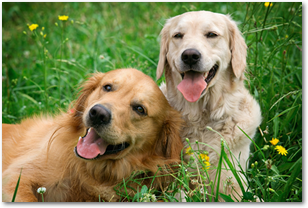
Which inherited trait do these dogs have in common?
fur color
curly fur
floppy ears
Which inherited trait do these two corgis siblings have in common?
fur color
short legs
floppy ears
Which of these is an inherited trait?
favorite food
tooth shape
fur color
style of clothes
Which inherited trait does this boy share with his father, but not his mother?
hair color
skin color
shirt color
Organisms pass on their acquired traits to their offspring.
True
False
You just learned that an acquired trait is not passed on to offspring. Which of these is an acquired trait that a human might have?
hair color
freckles
eye shape
ability to read
Aiden's mom is a good cook. Aiden is an incredible cook too. Everyone says he got his cooking skills from his mom. Is this statement true?
No because cooking ability is an inherited trait.
Yes because cooking ability is an inherited trait.
Yes because cooking ability is an acquired trait.
No because cooking ability is an acquired trait.
Both sets of parents have blue eyes. Their offspring has blue eyes. This is an example of...
inherited trait
found trait
acquires trait
learned trait
Some birds use sticks to get worms out of tight places. Which type of trait is this?
inherited, obtained from their parents' genes
acquired, obtained from a parents' genes
inherited, learned from the environment
acquired, learned from the environment
How many parents are involved in asexual reproduction?
two
three
one
many
Sexual and asexual reproduction are different because __________.
sexual reproduction involves 1 parent, and asexual reproduction has 2.
sexual reproduction involves 2 parents and asexual reproduction only has 1.
sexual reproduction gives 100% of the DNA from one parent, while asexual gives half from one parent and half from the other.
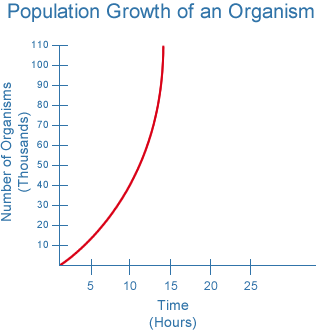
Based on the graph, which type of reproduction is occurring?
sexual, because reproduction is happening quickly
asexual, because most offspring are surviving
sexual, because offspring are not genetically identical to their parents.
asexual, because reproduction is happening quickly
Some plants can produce both sexually and asexually. In which scenario would it most benefit the plant to reproduce sexually? (Hint: Think about the advantage of sexual reproduction)
when the environment stays the same
when there are major changes in the environment
when the soil has all of the nutrients the plants need