End of Unit test for the Amplify Traits and Reproduction unit
Required
11 points
11
Question 1
1.
Match the vocabulary word with the definition.
Draggable item
arrow_right_alt
Corresponding Item
ribosomes
arrow_right_alt
a specific form of a gene that provides instructions for making a particular protein molecule; a gene version
gene
arrow_right_alt
a characteristic that all members of a species have
mutation
arrow_right_alt
when a male and a female reproductive cell combine to create an offspring
offspring
arrow_right_alt
an instruction for making a protein molecule
feature
arrow_right_alt
to receive genes from a parent
fertilization
arrow_right_alt
a random change to a gene that sometimes results in a new trait
inherit
arrow_right_alt
the part of a cell where genes are found
trait
arrow_right_alt
an organism produced as a result of reproduction
variation
arrow_right_alt
the parts of the cell that build protein molecules based on instructions from genes
nucleus
arrow_right_alt
a specific characteristic of an individual organism
allele
arrow_right_alt
any difference in traits between individual organisms
Required
3 points
3
Question 2
2.
Match the term with the genotype.
Draggable item
arrow_right_alt
Corresponding Item
Homozygous Dominant
arrow_right_alt
TT
Homozygous Recessive
arrow_right_alt
tt
Heterozygous
arrow_right_alt
Tt
Required
2 points
2
Question 3
3.
Only one parent is needed for ____________ reproduction. Two parents are necessary for ___________ reproduction.
Other Answer Choices:
Asexual
Sexual
Required
2 points
2
Question 4
4.
Sh’qira reads an article about a family of wildcats. One of them had a mutation for tooth sharpness. Which of these statements about the wildcat with the mutation is true?
Required
2 points
2
Question 5
5.
There are two junco birds that each have different proteins in their cells for beak pointiness. They have different parents. What can you say about the birds' beak pointiness?
Required
2 points
2
Question 6
6.
Two rabbits have different parents. One rabbit has ears that flop over, and the other rabbit has ears that stand straight up. Why do the rabbits have ears with different shapes?
Required
2 points
2
Question 7
7.
A father sheep has curly wool while a mother sheep has straight wool. Which of these statements explains why one of their baby lambs has curly wool?
Required
2 points
2
Question 8
8.
Two sharks have different parents. The two sharks have different proteins in their cells for the dark color on the tip of their fins. What can you say about the color on the tip of the two sharks' fins?
Required
2 points
2
Question 9
9.
Two fruit flies have different parents. One fruit fly has orange eyes while the other has red eyes. Why do the fruit flies have different eye colors?
Required
2 points
2
Question 10
10.
A father parakeet has blue chest feathers while a mother parakeet has green chest feathers. Which of these statements explains why their baby parakeet has blue chest feathers?
Required
1 point
1
Question 11
11.
What is a mutation and how does it affect genes
Required
1 point
1
Question 12
12.
What do gene versions do?
Required
1 point
1
Question 13
13.
How do different protein structures in cells determine traits?
Required
1 point
1
Question 14
14.
How do organisms get their traits?
Required
1 point
1
Question 15
15.
Why do siblings with the same parents differ from each other?
Required
1 point
1
Question 16
16.
How does sexual reproduction result in a variation among offspring?
Required
1 point
1
Question 17
17.
What you see, or the physical appearance.
Required
1 point
1
Question 18
18.
The genes for a trait of an organism
Required
2 points
2
Question 19
19.
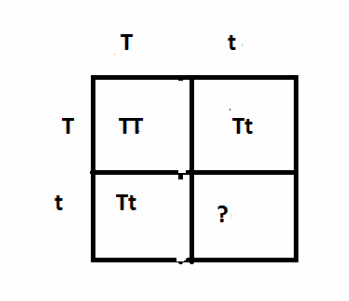
In the Punnett Square below, what belongs in the missing square T = tall and t = short
Required
2 points
2
Question 20
20.
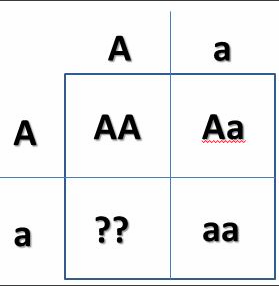
What allele combination should go in the missing box?
Required
1 point
1
Question 21
21.
What does a Punnett square show?
Required
2 points
2
Question 22
22.
Black fur(B) in guinea pigs is dominant over white fur(b). Find the probability of a homozygous offspring in a cross: BB x BB.
Required
2 points
2
Question 23
23.
Black fur(B) in guinea pigs is dominant over white fur(b). Find the probability of a white offspring in a cross between two heterozygous guinea pigs.
Required
2 points
2
Question 24
24.
Black fur(B) in guinea pigs is dominant over white fur(b). Find the probability of a white offspring in a cross: Bb x bb
Required
6 points
6
Question 25
25.
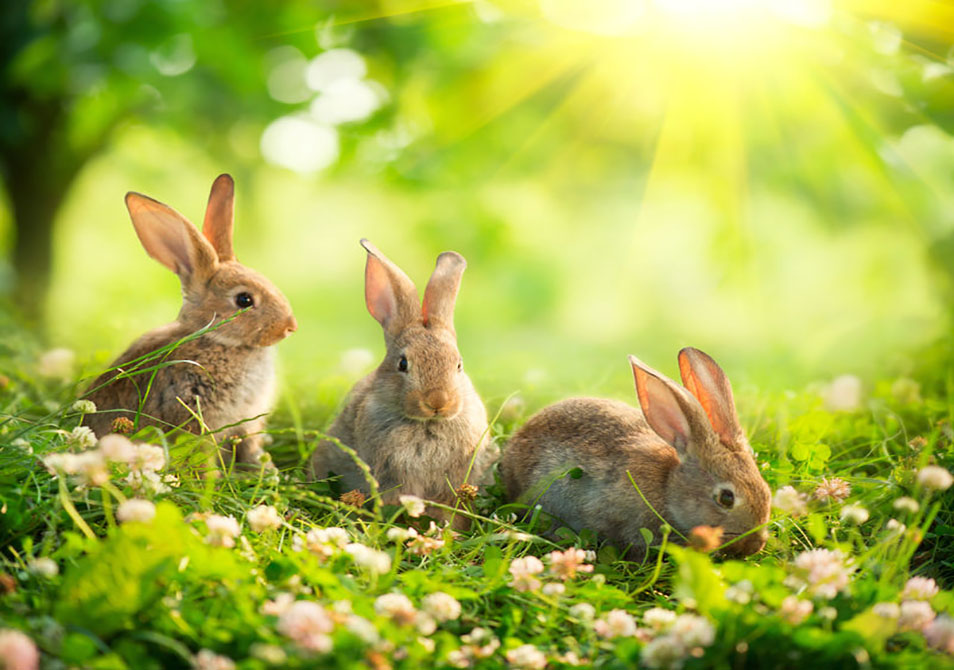
These little bunnies (A,B, and C) were born in the same litter to the same parents, but they have different traits for the feature of ear thickness. Bunny A has thick ears, bunny B has average ears, and bunny C has thin ears.
How did these bunnies end up with ear thicknesses that are different from one another even though they have the same parents?
How did the gene combinations result in the different traits?